

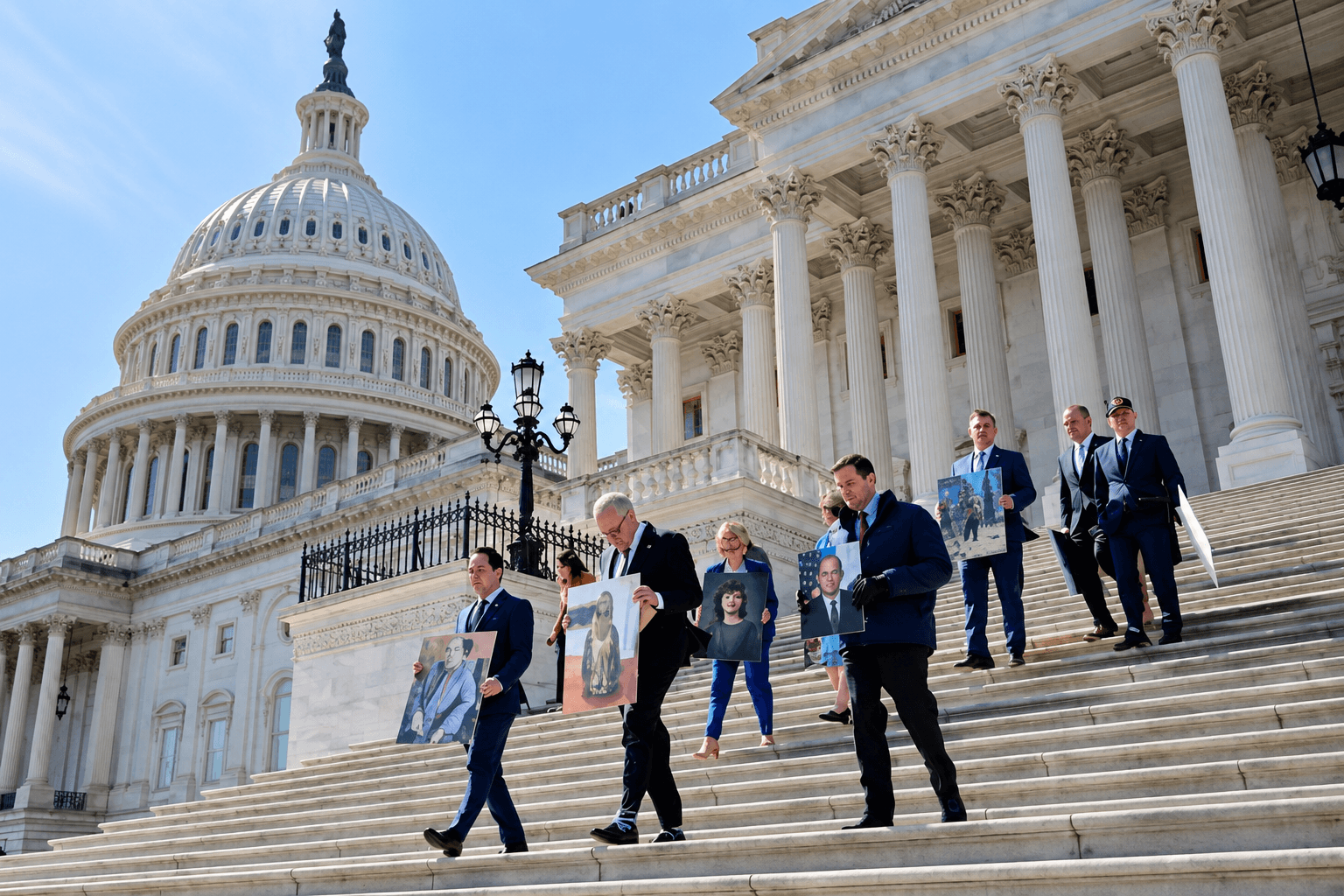
The race for control of the US Congress is entering its final stretch, with Republicans fighting to hold on to their narrow majorities and Democrats hoping to regain power in Washington. The November 3 midterm elections will determine how much freedom President Donald Trump has to pursue his agenda during the final two years of his current term.
Although Trump is not running for office in these elections, his presidency has become a major issue in congressional races across the country. Voters are weighing concerns about the cost of living, fuel prices, immigration, healthcare and the administration’s handling of the war with Iran. These issues have created opportunities for Democrats in several districts and states where Republicans had hoped to face a more comfortable contest.
The stakes go beyond which party controls Congress. A Republican victory would allow Trump to continue working with a Congress largely aligned with his agenda. Democratic gains, on the other hand, could bring tougher scrutiny of the administration, complicate the passage of legislation and shift debates over government spending, trade and foreign policy.
Recent polling has given Democrats an advantage in the national congressional vote. A Reuters/Ipsos survey completed on October 26 showed Democrats leading Republicans among registered voters by 47% to 36%. However, a national polling lead does not automatically translate into seats. The outcome in individual districts and states will depend on local candidates, voter turnout and the competitiveness of each race.
With early voting underway and more than 30 million Americans reportedly having already cast their ballots, both parties are stepping up their campaigns. The results could reshape Washington's political landscape and determine how easily Trump can advance his priorities over the next two years.
THE HOUSE: REPUBLICANS FIGHT TO HOLD ON TO THEIR NARROW MAJORITY
The House of Representatives offers Democrats one of their strongest opportunities to regain control of Congress. Republicans currently hold a slim majority, leaving little room for defections when important legislation comes to a vote. Even a relatively small shift in seats could put Democrats back in control.
National dissatisfaction with the administration is shaping the contest, but local issues remain important. Democrats are targeting competitive districts where voters are frustrated with rising prices and government policies. Republicans, meanwhile, are urging voters to stick with them, arguing that a Democratic-controlled House would make it harder for Trump to deliver on his promises.
A Washington Post report published on October 26 suggested that Democrats were well positioned to retake the House, although the size of any potential majority remained uncertain. Many of the closest contests are in Republican-held districts. The result will depend partly on whether unhappy voters switch their support to Democrats, stay home on election day or continue backing Republican candidates despite their concerns about the administration.
Winning the House would give Democrats control of key committees, greater influence over the legislative agenda and more power to investigate the administration. They could increase scrutiny of executive decisions involving tariffs, immigration and the war with Iran.
However, taking control of the chamber would not give Democrats a free hand to implement their own policies. Legislation would still need to clear the Senate where required, and Trump could veto bills that reach his desk. A Democratic majority would provide a stronger check on the president, but it would not automatically reverse his agenda.
THE SENATE: A MUCH HARDER PATH FOR DEMOCRATS
The Senate presents a tougher challenge. According to Reuters' election analysis, Democrats need to flip four Republican-held seats while defending their own vulnerable seats to secure a majority. That means winning several competitive races, including contests in states where Republicans have traditionally been strong.
Republicans are defending seats in states where Trump continues to have considerable political influence. Democrats are hoping that concerns about inflation, the Iran conflict and healthcare costs will persuade enough voters to support their candidates instead.
Races in states such as Texas, Ohio, Alaska and North Carolina have attracted growing attention. However, polling and election forecasts differ on how likely Democrats are to make the gains they need.
The Senate's importance extends well beyond passing legislation. It confirms Cabinet members, ambassadors and federal judges, giving the party in control significant influence over the administration and the federal judiciary.
If Democrats win both the House and Senate, they would have greater opportunities to scrutinise the administration and influence legislation and nominations. Even then, their power would have limits. Trump would retain his veto authority, while Senate rules and procedural hurdles could make it difficult to pass major bills.
The Senate result could therefore play a crucial role in determining whether Washington faces divided government, more confrontational political battles or continued Republican control of both chambers.
COST OF LIVING BECOMES A MAJOR CAMPAIGN ISSUE
Economic concerns have emerged as one of the defining themes of the campaign. Many Americans are struggling with the cost of groceries, housing, healthcare and fuel, raising questions about whether household incomes are keeping pace with everyday expenses.
A Reuters/Ipsos poll completed on October 26 found that 73% of respondents believed the cost of living was heading in the wrong direction. The survey also gave Democrats a slight advantage over Republicans on economic management.
The war with Iran has added to these concerns by putting pressure on energy markets. Higher petrol and diesel prices can increase transportation costs and push up expenses elsewhere in the economy. However, the conflict is not the only factor that influences fuel prices or broader inflation.
Democrats are using affordability concerns to argue that the administration has failed to deliver the economic relief many voters expected. Republicans counter that their policies are intended to strengthen American industry, secure the country's borders and advance national interests, even if some benefits take time to materialise.
The election will show which argument resonates more strongly with voters. If household expenses remain their biggest concern, Republicans could lose support even in some traditionally conservative districts. If immigration, national security or loyalty to Trump carries greater weight, the party may be better placed to defend its seats.
TRUMP PUTS HIS PRESIDENCY AT THE CENTRE OF THE CAMPAIGN
Trump has increased his campaigning for Republican candidates as election day approaches. On October 26, he visited Mississippi to support Senator Cindy Hyde-Smith, who is facing a stronger-than-expected challenge from Democrat Scott Colom.
The race has attracted attention because Mississippi is traditionally a Republican stronghold. Colom is hoping to capitalise on concerns about inflation and the president's policies to make the contest more competitive, although Hyde-Smith remains favoured.
Trump has also scheduled campaign appearances elsewhere as Republicans try to protect their congressional majorities.
Vice President JD Vance has been campaigning for Republican candidates as well, including in Kansas and Montana. Republican leaders are warning voters that a Democratic-controlled Congress would obstruct Trump's agenda and make it harder for the administration to deliver on its priorities.
Trump's involvement could help Republicans in some races, but it also carries risks. His rallies can energise supporters and draw national attention to local contests. At the same time, making the midterms a referendum on his presidency could leave Republican candidates vulnerable to dissatisfaction with his administration.
A Reuters/Ipsos poll put Trump's approval rating at 32%, one percentage point above its previous record low. The same survey showed Democrats leading in the national congressional vote, pointing to a difficult political environment for Republicans in the final days of the campaign.
WHAT A CHANGE IN CONGRESSIONAL CONTROL COULD MEAN
The consequences of the election will depend on which party wins and how large its majority becomes.
If Republicans retain both chambers: Trump would have a clearer path to advancing legislation, confirming nominees and securing congressional backing for his agenda.
If Democrats win the House: They would control House committees and oversight proceedings, giving them greater scope to investigate administration policies and influence negotiations over federal spending.
If Democrats win both chambers: They would gain more influence over legislation, nominations and investigations, although presidential veto powers and Senate procedures would still limit what they could achieve.
If control is divided: Budget negotiations, government funding and the debt ceiling could become major points of conflict, increasing the risk of political gridlock.
Whatever the result, neither party is guaranteed an easy path to governing. Narrow majorities can give individual lawmakers considerable influence, while disagreements within each party can make it harder to build support for legislation.
RISKS
1. Political gridlock deepens
A divided Congress could struggle to reach agreements on budgets, taxes, healthcare and other major priorities. Extended disputes over government funding could create uncertainty for federal agencies and financial markets.
2. Economic concerns remain unresolved
Even a clear election victory will not immediately lower household expenses. Energy prices, housing costs and wider economic conditions will continue to shape public confidence in the government's performance.
3. Election disputes intensify
Closely contested races could lead to recounts, legal challenges and disputes over certification. Any allegations of wrongdoing will need to be assessed on the available evidence and legal merits rather than treated as proof of widespread misconduct.
4. Congressional oversight becomes more partisan
A change in committee control could trigger more hearings and investigations. Oversight is an important part of Congress's role, but prolonged partisan disputes could leave less time for legislative work.
5. Foreign policy becomes a bigger congressional battleground
The war with Iran and US trade policy could face closer scrutiny if Democrats gain control of either chamber. Congress can influence these issues through legislation, funding and oversight, although the president retains significant authority over foreign policy.
WHAT TO WATCH NEXT
November 3 voting: The number of seats won by each party will determine control of the House and Senate.
Final polling in competitive races: Late shifts in battleground districts and states could offer clues about which party is gaining momentum.
Voter turnout: The ability of each party to mobilise its supporters could decide several closely contested races.
The Senate battleground: Democratic victories in Republican-leaning states will be critical to the party's hopes of taking control of the chamber.
Election certification and recounts: Results in particularly close races could take longer to resolve if recounts or legal challenges become necessary.
The first legislative battles of 2027: Government funding, the debt ceiling, healthcare and economic policy could quickly test the new Congress.
FACT CHECK METER
96% — Confidence in the core election facts
Well supported by published reporting
The US midterm elections are scheduled for November 3, 2026.
Republicans are defending narrow majorities in Congress.
Recent polling shows Democrats leading in the national congressional preference measure.
The cost of living, immigration and the Iran conflict are prominent campaign issues.
A change in congressional control would affect legislation, oversight and the confirmation of government nominees.
Important distinctions
National polling does not directly predict the outcome in individual districts or states.
Democrats appear to have a more achievable path to winning the House than the Senate, but neither outcome is guaranteed.
Even if Democrats win both chambers, Trump would retain executive powers and the ability to veto legislation.
Polls reflect public opinion at the time they are conducted and can change before election day.
AWX verdict: The fight for control of Congress could significantly shape the final two years of Trump's current term. Democrats have reasons to be optimistic, particularly in the House, but the Senate presents a more difficult challenge. The final outcome remains uncertain.
THE AWX BOTTOM LINE
The November 3 midterms are shaping up to be a major test for both parties. Republicans want to preserve their ability to govern alongside Trump, while Democrats see an opportunity to regain congressional control and strengthen oversight of the administration.
The rising cost of living has become a major vulnerability for Republicans, and recent polling suggests Democrats are entering the final stretch with an advantage. But a national polling lead does not guarantee a majority, especially in the Senate, where Democrats must win several difficult races.
The consequences will reach well beyond party politics. Control of Congress will influence budget negotiations, economic legislation, federal appointments and scrutiny of the White House. With election day approaching, the central question is whether voter dissatisfaction will translate into enough seat changes to shift the balance of power in Washington.
ATTLAS NEWS | AWX WORLD NEWS
Real Stories. Lasting Impact.
Comments
No comments yet.