

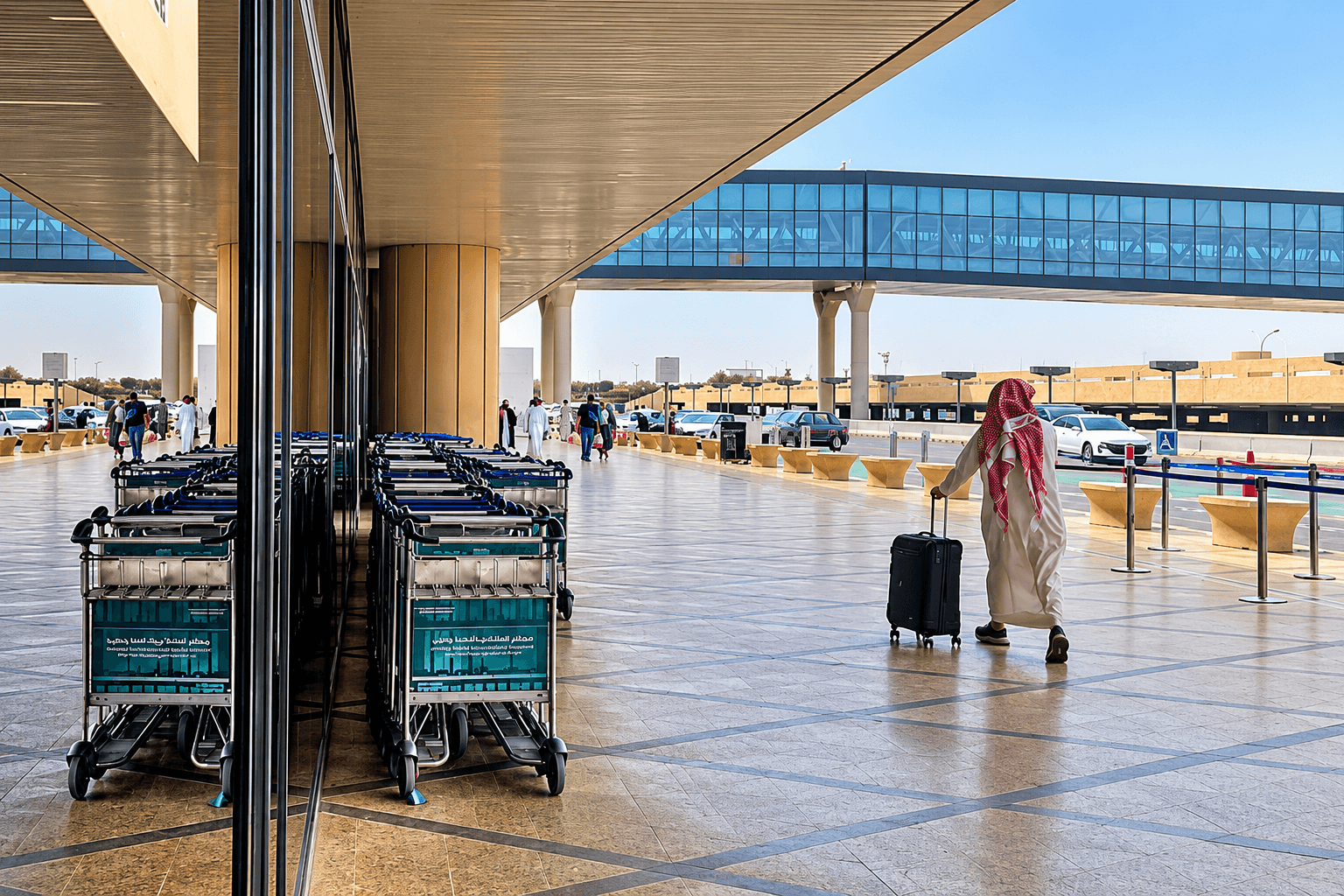
Saudi Arabia has begun restoring air services at Riyadh's King Khalid International Airport following a temporary shutdown linked to security concerns earlier this month. Selected domestic flights have resumed, offering some relief to passengers, but the airport has yet to return to its normal schedule.
The partial reopening marks a step forward for the Kingdom's aviation sector after days of disruption affected passengers, airlines and airport operations. Some Saudi carriers have restarted services, while aviation authorities continue to impose additional controls on aircraft movements.
Reports published by The Associated Press and The Washington Post on 21–22 October indicate that the airport's closure followed repeated attacks attributed to Yemen's Houthi movement. Limited services have since resumed following safety reviews and the introduction of tighter operating requirements.
Airlines are required to obtain prior approval from Saudi Arabia's General Authority of Civil Aviation (GACA) before operating flights under the current arrangements. Several international carriers are also continuing to suspend or restrict services to Riyadh, making it clear that the airport's reopening does not signal a full return to normal operations.
The challenge for Saudi Arabia is to restore essential air connections while protecting critical infrastructure from further security threats. Riyadh serves as a major hub for business, government and tourism, making reliable air travel important to the Kingdom's wider economic ambitions.
LIMITED FLIGHTS RETURN AFTER SECURITY SHUTDOWN
King Khalid International Airport, one of Saudi Arabia's busiest aviation hubs, temporarily suspended operations following security incidents earlier in October.
The shutdown prompted authorities to assess airport facilities and review safety procedures. Disruptions to flight schedules also forced airlines to reconsider their operations, leaving passengers facing cancellations, delays and uncertainty over their travel plans.
Selected services have now resumed, allowing domestic connections to begin returning under tighter operating conditions.
However, the restart remains limited. Airlines cannot assume that their usual departure and arrival arrangements will be available, and flights remain subject to the necessary regulatory approvals.
An airport reopening does not automatically mean that its full commercial schedule can resume. Airlines must also consider aircraft availability, crew arrangements, insurance requirements and the risks associated with operating in an unstable security environment.
For passengers, the return of selected flights is encouraging, but further disruption remains possible. Travellers may still face schedule changes, cancellations or delays as operations gradually recover.
GACA KEEPS STRICT CONTROLS IN PLACE
Saudi Arabia's General Authority of Civil Aviation is central to the airport's recovery.
The regulator oversees aviation safety and helps ensure that aircraft movements comply with the necessary operational requirements. Under the reported arrangements, airlines must secure prior authorisation before operating arrivals or departures.
These measures allow authorities to manage traffic carefully while security assessments continue.
The restrictions may also complicate plans for airlines seeking to divert aircraft to Riyadh at short notice. Depending on the circumstances, carriers may need to consider alternative airports rather than assume an unscheduled landing will be permitted.
The approach reflects the difficult balance facing aviation authorities: restoring air connectivity while limiting exposure to further security incidents.
Any expansion of the current schedule will depend on updated safety assessments, operational readiness and decisions by the regulator. Until then, airlines will need to plan around the restrictions.
AIRLINES CONTINUE TO REVISE FLIGHT SCHEDULES
The airport's reopening has not brought an end to the disruption across Saudi Arabia's aviation network.
Some domestic services have resumed, but several international airlines continue to cancel or postpone flights to Riyadh. Reports published this week indicate that certain carriers have extended their suspensions into November as concerns about regional security persist.
Airlines weigh several factors when deciding whether to operate, including official travel advisories, insurance conditions, crew safety and confidence in airport operations.
A destination can be technically open while individual carriers still consider it too risky or impractical to resume their usual schedules.
These decisions affect more than holidaymakers. Business travellers, passengers connecting to other international destinations and people travelling for work or family reasons may all face difficulties.
Air cargo operations could also be affected, particularly where shipments depend on reliable schedules to reach their destinations on time.
The pace of recovery will therefore depend on more than the airport's operational status. Airlines must also be confident that they can run services consistently and safely before restoring their full schedules.
REGIONAL SECURITY REMAINS A MAJOR CONCERN
The partial reopening comes amid continuing tensions involving Saudi Arabia, Yemen's Houthi movement, Iran and other regional actors.
Attacks and threats targeting civilian infrastructure have raised concerns about the security of airports, energy facilities and other essential services. Saudi authorities must continue assessing those risks while protecting passengers, airport employees and transport networks.
The Houthis have previously claimed attacks against Saudi targets, including aviation-related facilities. However, the responsibility for individual incidents and the circumstances surrounding them should be established through official statements and independently verified reporting.
The wider security situation has also affected diplomatic activity. Reports indicate that the United States has ordered non-essential diplomatic personnel and eligible family members to leave Saudi Arabia amid concerns about possible further attacks.
Such precautionary measures highlight the seriousness of the situation, but they do not, by themselves, establish that another attack is imminent.
For Riyadh, restoring airport services is part of a broader effort to keep essential infrastructure functioning while maintaining appropriate security precautions.
ECONOMIC IMPACT REACHES BEYOND PASSENGER TRAVEL
Flight disruptions can quickly spread beyond the aviation sector.
Riyadh's airport supports business travel, tourism, government activity and international commercial links. When flights are cancelled or schedules become unreliable, companies may face missed meetings, additional accommodation costs and delays in moving employees or equipment.
Hotels, travel agencies, airport retailers, ground transport operators and other businesses that rely on regular passenger traffic can also feel the effects.
Saudi Arabia's Vision 2030 programme places significant emphasis on tourism, logistics and international investment. Reliable air connections are an important part of those ambitions, helping businesses attract visitors and maintain links with global markets.
The longer disruptions continue, the more likely travellers and companies are to seek alternative arrangements. The overall economic cost, however, will depend on the duration of the restrictions, the number of flights affected and how quickly regular services return.
The partial reopening is a positive development, but a lasting recovery will require more predictable operations for both airlines and passengers.
PASSENGERS ADVISED TO CHECK FLIGHTS BEFORE TRAVELLING
Travellers departing from or connecting through Riyadh should confirm their flight status directly with their airline before heading to the airport.
Even if a flight appears on the original schedule, it may still be delayed, diverted or cancelled because of operational restrictions or changes in the security situation. Passengers with connecting journeys should also confirm that their onward flights are operating as planned.
Airlines may issue revised instructions covering check-in times, rebooking options and refunds as schedules change.
Travellers should follow official notices from GACA and their airline rather than relying solely on announcements that the airport has reopened.
This is particularly important for international passengers because some foreign carriers may continue to suspend services even while selected flights are operating at Riyadh.
The return of limited services is a welcome development, but passengers should remain flexible and prepare for possible changes to their plans.
THE ROAD TO FULL OPERATIONS
Restoring a reliable flight schedule will take time and depend on several factors.
Airport authorities must remain satisfied that facilities and operating procedures meet safety requirements. Airlines need the necessary approvals and must determine when they can resume services reliably. Security agencies will also need to monitor threats that could affect civilian aviation.
A gradual increase in flights would give authorities and carriers an opportunity to assess conditions before allowing traffic to expand further.
Domestic and international services may recover at different rates, depending on airline decisions, aircraft availability and the requirements attached to individual operations.
For now, there is no confirmed timeline for a complete return to normal operations. A broader reopening will depend on official assessments and whether the regional security situation becomes more stable.
The immediate priority is to maintain safe, controlled operations rather than restore the entire flight schedule as quickly as possible.
FACT CHECK METER
Accuracy assessment: Requires independent verification before publication
Key claims to verify:
King Khalid International Airport has resumed limited operations following its reported shutdown earlier in October.
Selected domestic flights have restarted, although schedules remain disrupted.
GACA requires prior authorisation for arrivals and departures under the current operating arrangements.
Several international carriers continue to suspend or restrict services to Riyadh.
Regional security concerns remain a significant factor in aviation decisions.
Important distinctions:
A partial reopening does not mean all domestic and international routes have returned to normal.
An airport's operating status is different from the status of an individual airline's flights.
Precautionary diplomatic departures indicate heightened concern but do not prove that another attack is imminent.
The date for a complete operational recovery remains uncertain and should not be presented as confirmed.
AWX VERDICT: Riyadh's reported partial reopening represents a potentially important step towards restoring domestic air travel. However, the reported flight-approval requirements, continuing airline suspensions and wider security concerns suggest that recovery remains incomplete. The latest airport status, regulatory instructions and airline announcements should be independently confirmed before publication.
WHAT TO WATCH NEXT
Domestic flight schedules: Watch for the restoration of services between Riyadh and major Saudi cities, including Jeddah, Dammam and Abha.
GACA decisions: Track any changes to operating restrictions and approval requirements for airlines.
International airline services: Check whether foreign carriers resume flights or extend their existing suspensions.
Airport security: Follow official updates on safety inspections, protective measures and incidents affecting civilian aviation.
Passenger disruption: Monitor cancellations, diversions and rebooking arrangements as schedules change.
Regional developments: Watch for changes in security tensions involving Saudi Arabia and Yemen's Houthi movement.
Economic recovery: Assess whether more reliable flight operations help restore business travel, tourism and air cargo activity.
THE AWX BOTTOM LINE
Riyadh's King Khalid International Airport is reported to have taken an important step towards recovery by resuming limited flight operations following a security-related shutdown.
The return of selected domestic services could ease some pressure on passengers and businesses, but the wider aviation network remains disrupted. Regulatory approvals, international airline suspensions and regional security concerns continue to complicate the return to normal schedules.
For Saudi Arabia, the challenge is to restore connectivity without compromising passenger safety. For travellers, the most important step is to confirm flight details directly with their airline and remain prepared for last-minute changes.
The reported reopening is only the beginning. Restoring dependable air travel will require sustained security, regulatory confidence and the gradual return of airlines to regular operations.
ATTLAS NEWS | AWX WORLD NEWS
Real Stories. Lasting Impact.
Comments
No comments yet.