

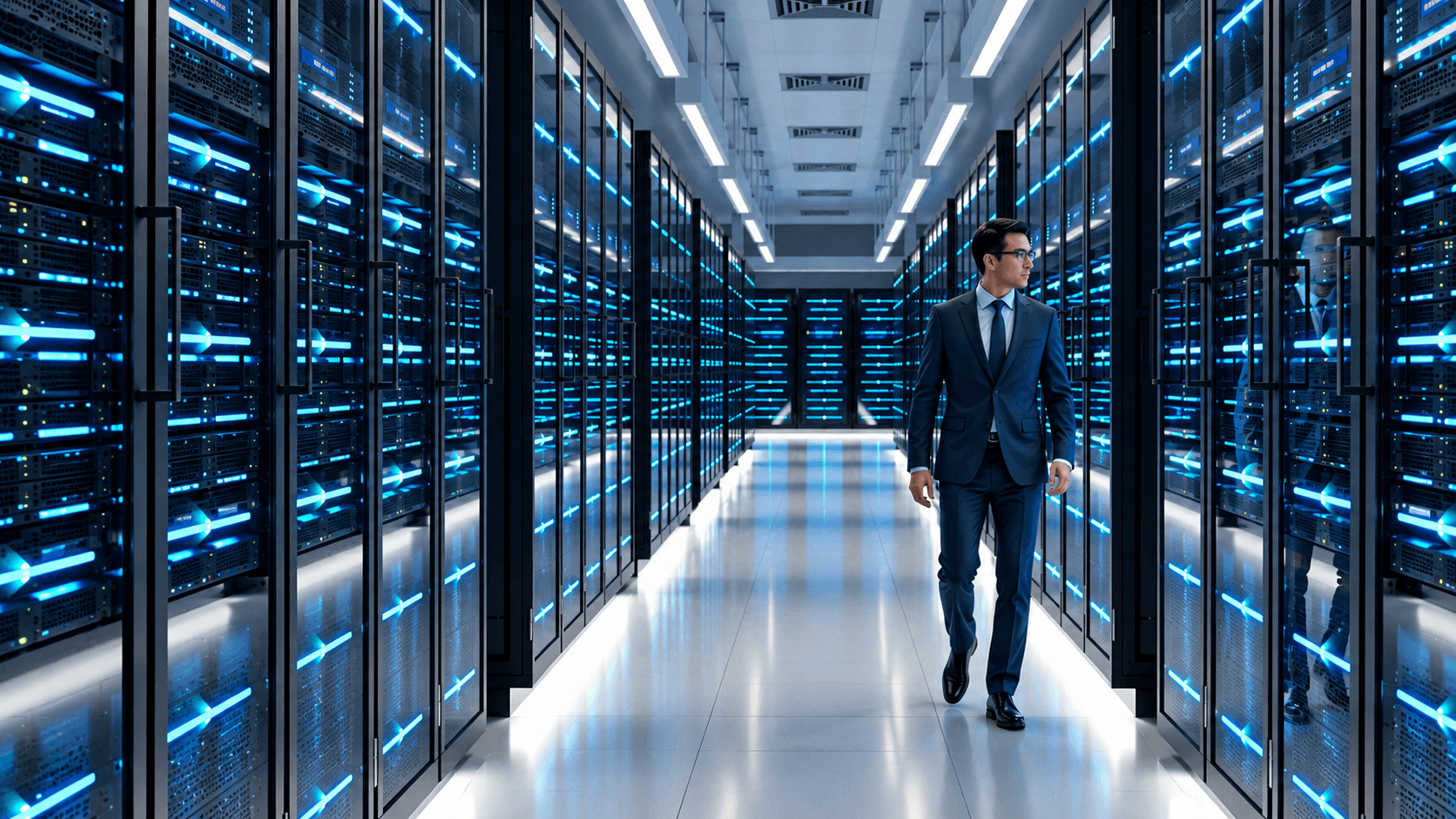
Japan is preparing for one of its largest planned investments in artificial intelligence infrastructure. The proposed $15 billion project in Chiba, near Tokyo, aims to tackle a growing challenge for the AI industry: securing enough reliable electricity to power increasingly demanding computing systems.
JERA, Japan's largest power generator, is joining forces with US technology company Dell Technologies and UK-based AI infrastructure developer RHAELM to develop a hyperscale AI data centre at JERA's thermal power station in Chiba. The facility is planned to have up to 400 megawatts of capacity, potentially making it one of Japan's largest single-site AI infrastructure developments.
The companies announced their partnership on 1 October 2026. Their plan brings together power generation, data-centre development and AI computing infrastructure at a single location. Apollo Global Management is also expected to participate as a strategic investment and financing partner for RHAELM's development.
The proposed investment exceeds $15 billion, or approximately ¥2.3 trillion, covering several stages of development, including land, power infrastructure, construction and computing equipment. Operations are targeted to begin around 2028, with the facility expected to reach full capacity in 2029.
The timing reflects a broader shift in the AI industry. As businesses invest more heavily in advanced AI systems, demand is growing for the data centres, specialised hardware and electricity needed to train and run them.
For Japan, this project is about more than building another data centre. It is an effort to combine the country's established energy and industrial capabilities with the computing power needed to compete in the next phase of the AI economy.
There is, however, an important distinction between the ambition and the current status. The companies have announced a memorandum of understanding and agreed initial terms for the Chiba project. The proposed investment should not be taken as confirmation that all financing, construction and customer agreements are finalised.
WHY JAPAN IS MAKING A $15 BILLION AI BET
The global AI race is increasingly being shaped by physical infrastructure. Developing advanced AI systems requires powerful processors, high-bandwidth memory, fast networking, specialised cooling and enormous amounts of electricity.
Training and running these systems at scale can demand facilities far larger and more complex than conventional enterprise data centres.
Japan wants to expand its domestic computing capacity to meet that demand. The country has considerable strengths in precision engineering, industrial equipment and advanced materials, but building AI infrastructure at the required pace remains a challenge.
A large data centre needs much more than land and servers. Developers must secure reliable electricity, install complex electrical systems, build cooling infrastructure and ensure the facility can operate around the clock.
In many markets, access to power and grid connections has become a major obstacle to data-centre development.
The Chiba project aims to ease that pressure by placing the proposed facility beside an existing JERA power station. The approach could reduce dependence on lengthy grid-connection and transmission infrastructure projects, although the actual benefits will depend on engineering requirements, approvals and construction progress.
A different approach to data-centre development
Traditionally, developers have had to coordinate land acquisition, electricity supply, grid access, construction and computing equipment through separate arrangements. JERA, Dell and RHAELM want to bring these elements together under a more standardised model.
Under the proposed partnership:
JERA will contribute the site and its power-generation capabilities.
RHAELM will lead data-centre development, construction, operations and financing.
Dell Technologies will supply standardised rack-scale AI infrastructure.
Apollo Global Management plans to act as a strategic investment and financing partner for RHAELM's deployment.
The goal is to create a model that can be replicated at other locations instead of designing every facility from scratch.
If the approach proves commercially viable, the partners believe it could be expanded to additional sites across Japan and potentially into other markets.
CHIBA PROJECT: THE KEY NUMBERS
Project detail
Planned target
Total investment
More than $15 billion
Maximum planned capacity
400 megawatts
Target for initial operations
Around 2028
Expected full-capacity target
2029
Proposed location
JERA's power station in Chiba, Japan
Broader ambition
Multi-gigawatt AI infrastructure during the 2030s
Source: JERA's 1 October announcement and Reuters reporting. These figures describe planned targets, not completed construction or operating capacity.
The $15 billion-plus estimate covers the broader infrastructure needed to establish and operate the facility. It is not simply a budget for buying AI chips or servers.
A hyperscale AI campus requires major investment in buildings, electrical systems, cooling, networking and computing hardware. Spending is likely to be spread across multiple development phases as the facility's capacity expands.
In other words, the announcement represents a long-term infrastructure commitment. It does not mean that the entire amount has already been spent.
WHY BUILD AN AI DATA CENTRE NEXT TO A POWER STATION?
Electricity is becoming one of the biggest constraints on AI expansion.
A large AI facility can consume far more power than an ordinary office building or a conventional data centre. That supply must also be dependable, since interruptions can affect computing workloads, equipment and service reliability.
Japan imports much of its energy, making the relationship between fuel supply, electricity generation and rising industrial demand particularly important.
JERA is central to the Chiba proposal because it already operates power-generation assets and has experience in the liquefied natural gas supply chain.
By locating the proposed data centre near an existing power station, the partners hope to simplify electricity delivery and avoid some of the delays associated with developing new grid connections.
The plan involves a behind-the-meter arrangement, under which the facility is intended to receive electricity directly from the generation site rather than depending entirely on a new connection to the public transmission network.
That could shorten parts of the development process, but it will not remove every infrastructure challenge. The project will still need suitable electrical distribution, cooling, backup systems, network connectivity and operational safeguards.
Its eventual performance will depend on engineering execution, regulatory approvals, power availability and the cost of running the facility.
A long-term power commitment
Reuters has reported that JERA plans to provide up to 400 megawatts of power capacity under an arrangement expected to last between 15 and 25 years.
A long-term power arrangement could give the project greater certainty over one of its most important operating requirements.
It also reflects a wider change in the AI economy. Energy companies are becoming more directly involved in digital infrastructure development, rather than simply supplying electricity to conventional customers.
For power generators, large AI campuses offer the prospect of substantial long-term demand. For technology companies, partnerships with energy providers can help address one of the biggest obstacles to expanding computing capacity.
The arrangement will still need to be assessed in terms of cost, reliability and environmental impact. How the electricity is generated, how efficiently it is used and whether the project affects supply for other customers will all matter.
DELL'S ROLE IN THE AI INFRASTRUCTURE RACE
Dell Technologies will supply standardised rack-scale AI infrastructure for the proposed facility.
Its role goes beyond providing individual servers. Large AI deployments rely on coordinated systems of computing hardware, networking and other components that must work together reliably at scale.
Standardised infrastructure can simplify procurement, installation and maintenance. It may also make it easier to reproduce similar configurations at other locations, reducing some of the complexity involved in future projects.
As businesses adopt AI, demand is growing for the infrastructure needed not only to train models but also to run them for customers and commercial applications.
Cloud providers, large enterprises, research institutions and AI developers all need access to computing capacity.
Dell's involvement gives the project a technology partner with experience in enterprise and data-centre infrastructure. However, the final hardware configuration, customer commitments and deployment schedule will depend on further project development.
The facility's success will ultimately depend on more than the equipment installed. Computing performance, electricity supply, cooling efficiency, network capacity and operating costs will all play a part.
APOLLO'S ROLE IN FINANCING THE PROJECT
The proposed development also highlights the growing interest in AI infrastructure among large institutional investors.
Apollo Global Management is expected to participate as a strategic investment and financing partner for RHAELM's deployment.
Projects of this scale can require substantial funding over several years. Financing arrangements must account for construction risks, equipment purchases, operating expenses and the time it takes to secure customers.
Institutional investors may see long-term opportunities in data centres because demand for computing services could support these assets for many years.
But the potential returns come with significant risks. Construction delays, rising equipment costs, slower customer adoption or a slowdown in AI investment could affect the project's financial performance. Facilities also require ongoing spending on maintenance, electricity and technology upgrades.
Apollo's proposed involvement is an important part of the financing plan, but it does not establish that the entire $15 billion-plus investment has been fully financed or guarantee any particular return.
JAPAN'S PLAN TO EXPAND AI CAPACITY
The Chiba facility is intended to be the first step in a broader effort to develop AI infrastructure across Japan.
JERA and its partners have said they will explore similar projects at other JERA sites, with a longer-term ambition of supporting multi-gigawatt-scale AI infrastructure during the 2030s.
One gigawatt equals 1,000 megawatts. Reaching several gigawatts would therefore require capacity many times greater than the planned 400-megawatt Chiba facility.
The broader ambition reflects the scale of the challenge. Japan's future AI computing needs are unlikely to be met by a single data centre.
Additional facilities could spread computing capacity across different locations, improve resilience and bring services closer to customers. However, each new site would need suitable land, dependable electricity, financing and the necessary technical infrastructure.
The partners are also looking to establish a repeatable development framework that could make future projects faster and less complicated to deliver.
If successful, the model could help Japan attract further AI investment and strengthen its domestic computing capabilities. Each additional development, however, will depend on its own commercial case and technical requirements.
THE GOVERNMENT'S WIDER AI AMBITION
The private-sector initiative fits into Japan's broader push to strengthen its position in strategic technologies.
Prime Minister Sanae Takaichi's government has emphasised artificial intelligence, semiconductors and other advanced industries as priorities for improving the country's international competitiveness.
In January 2026, the prime minister said the government would use more than ¥10 trillion in public support under its AI and semiconductor industrial infrastructure framework and related funds to encourage more than ¥50 trillion in public-private investment. The government also projected a potential economic ripple effect of approximately ¥160 trillion.
These figures relate to Japan's wider industrial strategy, not the Chiba project itself. They should not be treated as part of the proposed $15 billion investment or added to its cost.
The government's approach reflects the growing importance of AI to manufacturing, logistics, healthcare, productivity and economic security.
Reliable computing infrastructure is essential to that strategy. Japanese businesses will need access to advanced computing resources if they are to develop AI applications and put existing models to practical use.
Still, building data centres alone will not guarantee success. Japan will also need skilled workers, useful AI applications, strong international partnerships and businesses willing to adopt the technology.
The Chiba project could support that wider effort, but its economic impact will depend on how the computing capacity is ultimately used.
THE RISKS: POWER, COSTS AND EXECUTION
The project's scale creates several challenges that will need to be addressed before the facility can reach full capacity.
Energy supply and efficiency
A 400-megawatt facility would represent a significant concentration of electricity demand.
Locating the data centre beside a power station is intended to simplify power delivery, but the partners will still need to demonstrate that the site can provide reliable electricity at a commercially viable cost.
Japan will also need to consider how the expansion of data centres and other electricity-intensive industries affects its wider power system.
Construction and technology costs
Large AI facilities require specialised equipment, complex cooling systems and extensive electrical infrastructure. Delays in construction or equipment delivery could increase costs and push back the operating timetable.
AI hardware is also evolving rapidly. The partners will need to ensure that the infrastructure remains competitive as processors, server designs and cooling technologies improve.
Customer demand
A facility of this size needs substantial, sustained demand for computing services.
The partners will need to attract customers willing to pay enough to justify the cost of building and operating the infrastructure. Growing interest in AI creates an opportunity, but future demand will depend on adoption rates, service pricing and the commercial benefits businesses receive from their AI investments.
Financing and project delivery
The investment estimate covers multiple development phases. Although the partnership and initial arrangements have been announced, the project should not be described as fully financed, operational or complete without further confirmation.
Permits, final agreements, customer commitments and construction milestones will be important indicators of whether the project is progressing as planned.
WHAT SUCCESS WOULD LOOK LIKE
The first major test will be whether the partners can turn the announced framework into a fully executable development plan.
Investors and industry observers will be watching for progress on financing, site preparation, power infrastructure, equipment deployment and construction.
The next test will be whether the facility begins operations around 2028 and moves towards its planned 400-megawatt capacity by 2029.
Commercial performance will matter just as much. The project will need to attract enough customers to justify its costs and operate efficiently over the long term.
Finally, the partners will need to show that the development model can be replicated at other sites without introducing unacceptable financial, energy or operational risks.
If these milestones are met, the Chiba project could offer Japan a useful template for developing large-scale AI infrastructure.
If financing, construction or customer demand falls short of expectations, the project could take longer and cost more than initially planned.
FACT CHECK METER
FACT METER: 98% — PARTNERSHIP AND PLANNED INVESTMENT REPORTED; DELIVERY REMAINS A FUTURE TARGET
STATUS: JERA, Dell Technologies and RHAELM announced a memorandum of understanding on 1 October 2026 to develop a standardised AI infrastructure model in Japan. The first proposed facility is planned for Chiba, with investment expected to exceed $15 billion and capacity of up to 400 megawatts. Operations are targeted to begin around 2028.
CONFIRMED DETAILS
JERA, Dell Technologies and RHAELM have announced a partnership focused on AI infrastructure development.
The proposed Chiba project has an estimated investment of more than $15 billion across its development phases.
The facility is planned to have up to 400 megawatts of capacity.
Apollo Global Management is expected to participate as a strategic investment and financing partner for RHAELM.
Operations are targeted for around 2028, with full capacity expected in 2029 according to Reuters reporting.
IMPORTANT DISTINCTIONS
The $15 billion-plus figure is an estimated total investment covering land, power infrastructure, construction and computing capacity.
The announcement describes a proposed project, not a fully operational data centre.
The broader ambition to develop multi-gigawatt AI infrastructure during the 2030s depends on further investment and development.
Final costs, financing arrangements, customer demand and delivery dates may change.
AWX VERDICT: Japan's proposed Chiba project represents a significant effort to bring energy infrastructure and large-scale AI computing together. Its defining feature is the plan to develop the facility beside an existing power station. The opportunity is substantial, but financing, construction, reliable power and customer demand will determine whether the project delivers on its ambitions.
WHAT TO WATCH NEXT
Financing milestones: Look for further details on investment commitments, funding arrangements and progress towards a final development decision.
Construction progress: Site preparation and electrical infrastructure work will help indicate whether the 2028 operating target remains achievable.
Power delivery: Reliable electricity at the planned scale will be central to the facility's performance.
Dell's infrastructure deployment: More information about the computing hardware and technical configuration could clarify the facility's intended capabilities.
Customer commitments: Major customers or long-term computing agreements would provide a clearer indication of commercial demand.
Operating costs: Electricity prices, cooling efficiency and hardware expenses will shape the project's long-term economics.
Expansion plans: Watch for announcements about additional JERA sites and the proposed multi-gigawatt infrastructure network.
Government AI policy: New investment measures and infrastructure initiatives could influence Japan's broader AI development plans.
Environmental impact: The facility's electricity needs and power-generation arrangements will be important when assessing its long-term sustainability.
THE AWX BOTTOM LINE
Japan's proposed $15 billion AI infrastructure project in Chiba brings together a major power generator, a global technology supplier, an infrastructure developer and an institutional financing partner.
The idea is straightforward: build large-scale AI computing infrastructure where substantial power-generation capacity is already available, then develop a model that can potentially be repeated at other sites.
If the plan succeeds, it could help Japan address one of the biggest constraints on AI expansion and lay the groundwork for further data-centre investment during the 2030s.
But the announcement is only the beginning. Financing, construction, power delivery, hardware deployment and customer demand will all have to come together before the project can fulfil its promise.
Japan has set out an ambitious plan on paper. The next few years will show whether it can become a major milestone in the country's investment in the infrastructure behind artificial intelligence.
ATTLAS NEWS | AWX WORLD NEWS
Real Stories. Lasting Impact.



Comments
No comments yet.