

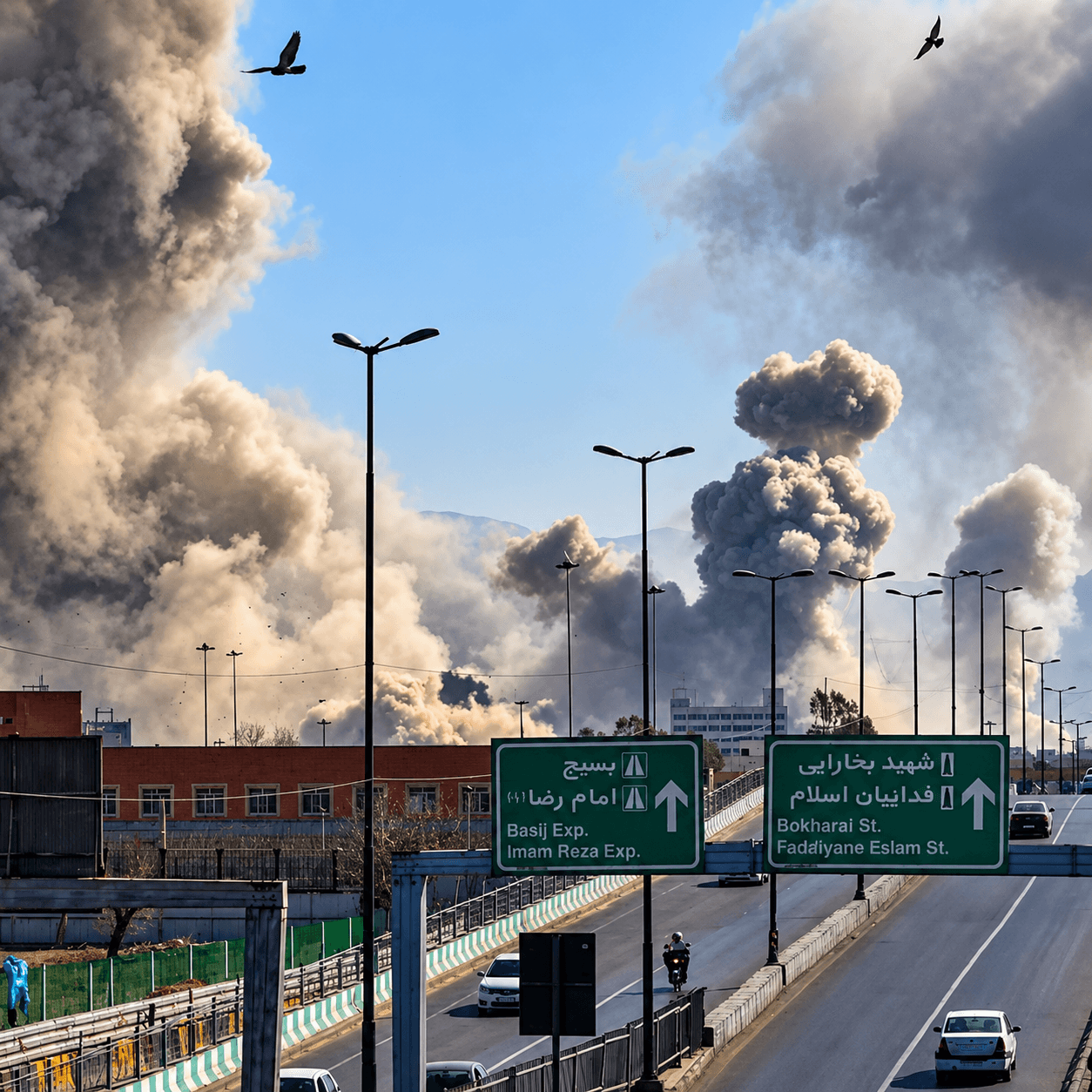
With the US midterm elections approaching on November 3, the cost of living and the war with Iran are emerging as major concerns for voters. Rising fuel prices, expensive everyday essentials and uncertainty over the conflict are shaping the campaign debate, creating a challenge for President Donald Trump and Republicans fighting to retain control of Congress.
Recent polls suggest that affordability is a concern for voters across party lines. An AP-NORC survey published on October 22 found that roughly eight in ten registered voters wanted the next Congress to focus on lowering the cost of living. Around seven in ten also wanted lawmakers to prioritise ending the war in Iran.
The challenge for Republicans is that the conflict overseas is increasingly affecting how Americans feel about their finances at home. Disruptions to energy supplies have pushed up fuel and transportation costs, while businesses are facing higher expenses to move goods and deliver services. Democrats are using these pressures to argue that the administration has fallen short of its promises to make life more affordable.
The November 3 election will determine whether Republicans hold on to their narrow congressional majorities or Democrats gain control of one or both chambers. Local issues and individual candidates will still matter in closely contested races, but the wider debate is increasingly focused on a simple question: are Americans better off financially, and is the administration's handling of the Iran conflict making everyday life more expensive?
COST OF LIVING TOPS THE VOTER AGENDA
Recent polling highlights just how much household finances are influencing the election.
According to the AP-NORC Center for Public Affairs Research, 85% of voters surveyed said the economy was one of the most important issues in deciding their vote, while 84% pointed to the cost of living. The war with Iran was identified as a major election issue by 64% of respondents. The survey was conducted from October 8 to 12 among 1,119 US adults, with a margin of sampling error of plus or minus 3.9 percentage points.
These concerns extend across party lines. Republicans and Democrats may disagree over immigration, healthcare, government spending and foreign policy, but the cost of everyday essentials remains a shared worry.
A separate Pew Research Center report published on October 8 found that 84% of registered voters considered the economy very important to their midterm vote. The findings reinforce the pressure on candidates to address financial concerns rather than rely solely on national security arguments or party loyalty.
For many households, affordability comes down to everyday expenses: the weekly grocery shop, the cost of driving to work, rent or mortgage payments, health insurance and the money left over after the bills are paid. Even when prices in some categories stabilise, the combined pressure of essential expenses can leave families struggling to make ends meet.
IRAN WAR BRINGS FOREIGN POLICY CLOSER TO HOME
The war with Iran has become a major political issue partly because its economic effects are being felt well beyond the battlefield.
Disruptions to oil shipments from the Middle East have pushed up fuel prices. An Associated Press report in October put the US national average for regular gasoline at $4.33 a gallon, around 45% above its prewar level. Diesel was reported at approximately $6.33 a gallon, roughly 68% higher than before the conflict.
The impact goes well beyond what drivers pay at the pump. Diesel powers much of the freight transport network and is widely used in agriculture and goods distribution. When fuel prices climb, trucking companies, delivery services and manufacturers face higher operating costs. Businesses may absorb some of those expenses, pass them on to customers through higher prices and surcharges, or adjust their services.
Air travel has also become more expensive. The AP reported that US airfares were about 22% higher in September than a year earlier, as airlines raised ticket prices and fees and adjusted flight schedules amid elevated fuel costs.
The effect on grocery prices is more complicated. Transportation and refrigeration contribute to food costs, but tariffs, weather, labour expenses and agricultural conditions also play a role. It would be inaccurate to blame every increase in supermarket prices on the Iran war alone.
Even so, prolonged disruption to energy supplies could push up the cost of a wider range of goods over time. For households already worried about inflation, the prospect of further increases is another source of frustration.
A conflict with economic consequences
The economic fallout has made it harder for the Trump administration to keep foreign policy separate from domestic concerns. A conflict that might otherwise be judged mainly on national security, military objectives and regional stability is now also being measured against its impact on household budgets.
Reuters reported on October 24 that voters were increasingly linking the administration's approach to the Iran war and tariffs with rising prices. A Reuters/Ipsos poll cited in the report found that 78% of Americans blamed Trump's policies for prices rising faster than their earnings.
That finding does not mean every price increase is the result of the administration's decisions or the war. It does, however, highlight the political risk when voters believe government policies are making everyday life more expensive.
REPUBLICANS FACE A DIFFICULT MIDTERM TEST
Republicans entered the final stretch of the campaign with narrow majorities in both the House of Representatives and the Senate. According to a Reuters election explainer published on October 20, Democrats would need a net gain of four seats to take control of either chamber.
The party occupying the White House often faces a difficult midterm election, as voters use congressional races to express their approval or frustration with the president's performance. In 2026, economic pressures and the Iran conflict have added to that challenge for Republicans.
Trump has remained at the centre of the campaign, urging voters to view congressional races as a judgement on his presidency. That strategy could energise his supporters, but it also leaves Republican candidates having to defend decisions made by the administration.
Democrats have focused on the gap between Trump's promises to lower costs and the financial pressures many households continue to face. They argue that voters have an opportunity to demand a different economic approach and stronger congressional oversight of the administration.
Republicans, meanwhile, need to convince voters that their economic and security policies will deliver results while defending the administration's handling of the Iran conflict.
Still, national polling alone cannot determine the outcome of individual races. Local concerns, candidate popularity, voter turnout and the dynamics of competitive districts will all play a part in deciding which party comes out ahead.
DEMOCRATS SEE AN OPENING, BUT THE OUTCOME REMAINS UNCERTAIN
The polling gives Democrats a clear message to take into competitive races: voters want relief from rising costs and a clearer path towards ending the war. The party has pledged to make affordability a central part of its legislative agenda if it wins control of either chamber.
An AP-NORC poll published in October found that nearly half of voters preferred Democrats to control the House, compared with 38% who wanted Republicans to remain in charge. For the Senate, 46% favoured Democratic control and 38% preferred Republicans, while the rest were undecided.
The figures suggest Democrats have an opportunity to make gains, but national preferences do not automatically translate into victories or predict the final balance of seats.
Republicans still have advantages among parts of the electorate, particularly on immigration and crime. Their challenge is to keep those issues in the spotlight while persuading financially stretched voters that the administration's economic policies will improve their circumstances.
The election could also reveal differences within both parties. Some Republican voters may support Trump's approach to Iran while remaining unhappy about rising prices. Some Democrats want Congress to investigate the administration, while others would rather see lawmakers concentrate on immediate economic concerns.
A new Congress would have considerable influence over spending, taxation, legislation and government oversight. However, it would not have sole control over the president's military decisions or the course of the war. Voters who want the conflict to end may therefore look at whether lawmakers use their powers to influence policy and hold the administration accountable.
RISKS TO THE US ECONOMY AND ELECTION OUTLOOK
1. Prolonged energy disruption
If shipping through the Strait of Hormuz remains disrupted, oil and fuel prices could stay high. That would continue to put pressure on drivers, freight operators, airlines and businesses that depend on transportation.
2. Higher costs spreading to more goods
Some companies have absorbed additional expenses rather than immediately passing them on to customers. If energy and freight costs remain elevated, however, businesses may find it harder to keep doing so, increasing the risk of further price rises.
3. Frustration spreading across party lines
Economic dissatisfaction is not confined to Democratic voters. If Republican supporters also feel that prices are rising faster than their incomes, the administration could struggle to maintain support among its own base.
4. Campaign rhetoric overshadowing policy details
Candidates may spend more time blaming their opponents than explaining how they would bring prices down. Proposals on affordability need to be judged on their likely effects, funding and practical implementation, not just campaign promises.
5. Uncertainty weighing on businesses and markets
Uncertainty over the Iran conflict, trade policy and energy supplies could make businesses more cautious about investment and complicate financial planning for households. The longer that uncertainty continues, the harder it may become for companies and consumers to plan ahead.
WHAT TO WATCH NEXT
November 3 election results: The balance of power in the House and Senate will determine how much legislative and oversight influence each party holds.
Gasoline and diesel prices: A sustained fall could ease some pressure on households, while further increases would keep affordability high on the political agenda.
Developments in the Iran conflict: A ceasefire, diplomatic breakthrough or fresh disruption to oil shipments could influence energy markets and voter sentiment.
New polling on economic confidence: Watch whether voters' views on inflation, household finances and Trump's economic performance improve or deteriorate.
Campaign promises on affordability: Housing, healthcare, groceries, fuel and taxes are likely to remain central as candidates make their final appeals to voters.
Congressional action after the election: The next Congress will face decisions on budgets, energy policy, economic oversight and the conflict. Whether lawmakers cooperate across party lines or remain divided will be important.
FACT CHECK METER
95% — Confidence in the core reporting
Status: Broadly supported by published polling and reporting
What the evidence supports
The economy and cost of living rank among voters' leading concerns ahead of the November 3, 2026, midterm elections.
AP-NORC polling found that 84% of surveyed voters considered the cost of living a major election issue, while 64% cited the Iran war.
Reported fuel prices are substantially higher than before the conflict, putting additional pressure on transportation and household budgets.
Republicans hold narrow congressional majorities, making the outcome of competitive races politically significant.
Important distinctions
Polls reflect voter opinion at the time they are conducted. They cannot predict the election result with certainty.
The Iran conflict has contributed to energy-market disruption, but not every increase in consumer prices can be attributed to the war.
The effects on groceries and other retail goods vary. Some businesses may absorb higher costs instead of immediately passing them on to customers.
National polling does not determine which party will win individual congressional districts or states.
AWX verdict: The central argument is supported by recent polling and reporting from established news organisations. However, the precise electoral consequences remain uncertain and will depend on turnout, local races, economic developments and events in the Middle East.
THE AWX BOTTOM LINE
The 2026 US midterms are shaping up to be a test of whether the Trump administration can convince voters that its policies are improving their lives. For many Americans, the issue is not an abstract economic statistic. It is the cost of filling the tank, buying groceries, paying for healthcare and covering monthly bills.
The war with Iran has made that challenge more difficult by linking foreign policy decisions to energy prices and household finances. Democrats see an opportunity to turn voter frustration into congressional gains, while Republicans must defend the administration's record and persuade voters that its approach will deliver results.
The outcome is far from settled. But with November 3 approaching, affordability and the Iran conflict have become more than campaign talking points. They are central tests of public confidence in the country's political leadership.
ATTLAS NEWS | AWX WORLD NEWS
Real Stories. Lasting Impact.




Comments
No comments yet.