

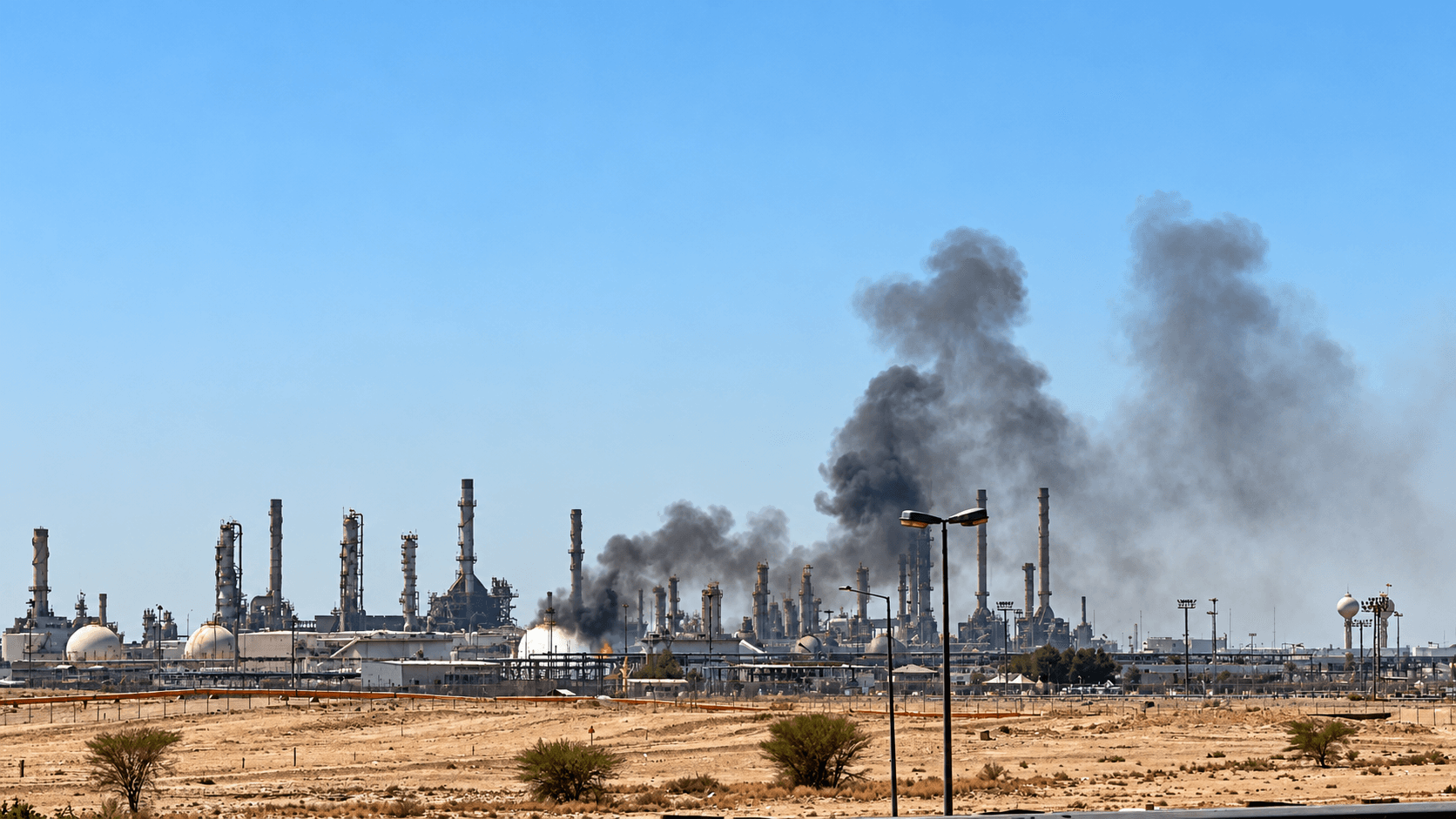
Global oil prices climbed above $115 a barrel on Wednesday after reports of a missile strike on a major Saudi Arabian refinery raised fresh concerns about energy supplies from the Middle East. The development has put oil traders on alert, with markets weighing the possibility of further attacks on energy infrastructure and the impact on fuel costs worldwide.
Brent crude futures rose $1.48, or 1.3%, to $115.36 a barrel in early trading on October 28, according to Reuters. US West Texas Intermediate (WTI) crude also moved higher, gaining $1.22, or 1.22%, to reach $101.12 a barrel.
The rebound followed a decline of nearly $2 in the previous session, when diplomatic discussions had briefly eased concerns about potential supply disruptions.
On Tuesday, Yemen’s Iran-aligned Houthi movement claimed it had launched a missile strike on Saudi Arabia’s largest oil refinery. The facility reportedly has a processing capacity of around 550,000 barrels a day. Saudi authorities had not immediately confirmed the reported attack, and the extent of any damage remained unclear.
The incident comes amid rising tensions involving Iran and its regional allies, adding to concerns about the safety of energy infrastructure and shipping routes across the Middle East.
For oil markets, the bigger question is whether the reported strike signals a wider threat to regional supplies. Further damage to refineries, production facilities or shipping infrastructure could tighten availability, increase transportation costs and push energy prices higher.
OIL PRICES RISE AS SUPPLY CONCERNS RETURN
The latest rally shows how quickly developments in the Middle East can change the mood in global oil markets.
Brent, the international oil benchmark, rose to $115.36 a barrel in early Wednesday trading, while WTI reached $101.12.
Prices had eased a day earlier as diplomatic efforts offered some hope of reducing regional tensions. The latest refinery reports, however, brought supply concerns back into focus.
Oil traders pay close attention to developments around major production sites, export terminals, pipelines and shipping routes. Even before damage or supply losses are confirmed, reports of a potential attack can influence prices as traders reassess the risks.
That does not necessarily mean global oil supplies have already suffered a major setback. Much depends on whether the reported strike caused significant damage, whether operations have been affected and whether further attacks follow.
If the refinery faces a prolonged shutdown, or if other energy facilities come under attack, prices could climb further. Confirmation that operations remain largely unaffected could help calm the market.
REPORTED SAUDI REFINERY STRIKE RAISES SECURITY QUESTIONS
The refinery mentioned in the reports has a processing capacity of approximately 550,000 barrels a day, making the incident significant for energy-market watchers.
Saudi Arabia is the world's largest crude oil exporter and a major player in global petroleum markets. Any disruption to its energy infrastructure can have consequences far beyond the country itself.
The Houthis have claimed responsibility for the reported missile strike, but Saudi authorities had not immediately confirmed the attack on the facility.
That distinction is important. A claim of responsibility does not establish how much damage occurred or whether refinery operations and fuel shipments have been disrupted.
Refineries turn crude oil into products such as petrol, diesel and aviation fuel. Damage to a major facility can therefore affect refined-fuel supplies even if crude oil production continues normally.
The scale of the impact depends on the extent of the damage, the availability of alternative refining capacity and how quickly normal operations can resume.
Traders will be looking for official updates from Saudi Arabia, confirmation of the refinery's operating status and any evidence that fuel production or exports have been affected.
MIDDLE EAST TENSIONS KEEP ENERGY MARKETS ON EDGE
The oil-price increase comes as the wider regional conflict continues to raise concerns about energy infrastructure and maritime transport.
Saudi Arabia has faced reports of attacks in recent days, while the Houthis have claimed strikes on additional targets. Saudi authorities have also reported intercepting missiles and drones.
The growing uncertainty has put important energy corridors under scrutiny, particularly routes linking the Persian Gulf with international markets.
One of the most sensitive is the Strait of Hormuz, a narrow passage through which a substantial share of the world's oil and liquefied natural gas shipments normally travels.
Any sustained disruption there could delay deliveries and affect energy supplies to major importing economies, particularly in Asia.
The Bab el-Mandeb Strait, which connects the Red Sea with the Gulf of Aden, is another important shipping route. Security threats in the area can force vessels to take longer journeys, adding to freight charges, transit times and insurance costs.
As a result, oil prices are responding not only to actual changes in production but also to the possibility that further attacks could disrupt shipments.
For now, the direct impact of the latest refinery report on oil supplies remains uncertain.
OTHER FACTORS ALSO SHAPE THE OIL MARKET
Geopolitical tensions have dominated attention, but they are not the only factor influencing crude prices. Inventory levels, production decisions and changing export patterns also play a role.
US crude inventories are one important indicator. A Reuters poll of eight analysts estimated that US crude stockpiles had increased by around 15,000 barrels in the week ended October 23. The expected increase was modest, although the actual figures could still influence market sentiment.
Traders are also watching the next OPEC+ meeting. According to three people familiar with the matter cited by Reuters, producers were expected to maintain their December output targets at the upcoming meeting.
However, official production targets do not always reflect the amount of oil actually reaching the market. Several core OPEC+ members have been producing below their stated targets, limiting the additional supply available.
Russian exports are another factor to watch. Traders have indicated that crude shipments from Russia's Baltic and Black Sea ports could decline next month as domestic refiners increase diesel production.
Taken together, these factors show why oil prices rarely move for just one reason. Geopolitical risks, inventories, production levels, shipping costs and expectations for global demand all influence trading.
WHAT HIGHER OIL PRICES COULD MEAN FOR INDIA
India is particularly vulnerable to sustained increases in international crude prices because it imports much of the oil it consumes.
When crude becomes more expensive, India's overall import bill can rise, putting pressure on the trade balance and increasing demand for foreign currency.
The rupee may also come under pressure, although its movement depends on other factors, including capital flows, export earnings, central-bank policy and broader market conditions. Higher oil prices can add to currency pressures, but they do not automatically determine the exchange rate.
Fuel costs are another concern. More expensive crude can raise the cost of producing petrol, diesel and other petroleum products. How quickly consumers feel the increase depends on domestic pricing decisions, taxes, refining margins and exchange-rate movements.
Airlines, transport companies, manufacturers and logistics businesses could also face higher operating costs if fuel prices remain elevated.
Over time, some of these expenses may be passed on to consumers through higher prices for goods and services, adding to inflationary pressure. Other businesses may absorb part of the increase or accept lower margins instead.
The impact will not be immediate or uniform across every sector.
For India, the key question is whether crude prices fall back once immediate supply concerns ease or remain high for an extended period.
KEY RISKS FOR THE GLOBAL ECONOMY
1. Further attacks on energy infrastructure
Additional strikes on refineries, pipelines, export terminals or production facilities could deepen concerns about the reliability of Middle Eastern supplies and drive prices higher.
2. Disruption to shipping routes
Any prolonged interruption to traffic through the Strait of Hormuz or Bab el-Mandeb could delay deliveries, raise freight costs and complicate energy supplies to major importing countries.
3. Higher fuel and transport expenses
If crude prices remain elevated, airlines, freight operators and other fuel-intensive businesses could face rising costs, some of which may eventually reach consumers.
4. Renewed inflationary pressure
More expensive energy can increase manufacturing, transport and distribution costs. A prolonged rise could make it harder for central banks to bring inflation under control.
5. Pressure on oil-importing economies
Countries that rely heavily on imported energy, including India, could face larger import bills and additional pressure on their trade balances.
6. Uncertainty over global production
OPEC+ decisions, actual output levels and changes in US and Russian inventories will help determine whether additional supplies can offset the risks created by geopolitical tensions.
WHAT TO WATCH NEXT
Saudi Arabia's official response: Confirmation of the reported strike, details of any damage and updates on the refinery's operations will be important.
Brent crude movements: A sustained rise could indicate that traders expect supply risks to persist, while a retreat may suggest that concerns are easing.
Shipping through the Strait of Hormuz and Red Sea: Further attacks, restrictions or changes in vessel movements could affect the cost and reliability of energy deliveries.
OPEC+ decisions: The group's next meeting should provide more clarity on production policy and the availability of additional supply.
US crude inventory figures: Actual stockpile data will help traders assess whether underlying supply conditions are tightening or easing.
The impact on India: International crude prices, rupee movements and domestic fuel-pricing decisions will help determine how much pressure households and businesses face.
FACT CHECK METER
95% — Confidence in the core reporting
STATUS: OIL-PRICE MOVEMENT REPORTED; SAUDI REFINERY ATTACK NOT IMMEDIATELY CONFIRMED BY SAUDI AUTHORITIES
Confirmed details
Brent crude futures rose to $115.36 a barrel in early trading on October 28, 2026.
US WTI crude climbed to $101.12 a barrel during the same period.
Yemen's Houthi movement claimed it had carried out a missile strike on a major Saudi refinery.
The facility was reported to have a processing capacity of approximately 550,000 barrels a day.
Saudi authorities had not immediately confirmed the reported strike on the refinery.
Oil prices had fallen in the previous session before rising again as concerns about regional supply disruptions returned.
Important distinctions
The quoted oil prices refer to early trading and may differ from later prices or the final settlement.
The Houthi claim does not independently establish the extent of damage or confirm that refinery operations have been disrupted.
Higher oil prices reflect market expectations and assessments of risk; they do not necessarily indicate that global production has already suffered a major loss.
The impact on Indian fuel prices will depend on international crude prices, exchange rates, taxes and domestic pricing decisions.
AWX VERDICT: The reported rise in crude prices above $115 a barrel reflects renewed concern about energy supplies following claims of a missile strike on a major Saudi refinery. However, the extent of any damage and the effect on operations remained unclear in the initial reports. Further official updates and developments in the regional conflict will determine whether the market reaction deepens or eases.
THE AWX BOTTOM LINE
Oil's move above $115 a barrel highlights how quickly geopolitical tensions can unsettle global energy markets. Reports of a missile strike on a major Saudi refinery have revived concerns about the security of Middle Eastern energy supplies at a time when the region is already facing significant instability.
For now, the market reaction reflects the risk of further disruption rather than confirmed evidence of a major loss of supply. Saudi Arabia's response, the refinery's operating status and developments along key shipping routes will help determine what happens next.
For India and other major oil importers, a prolonged price increase could mean higher import costs, pressure on businesses and additional inflation risks.
The coming days should provide a clearer picture of whether this is a temporary reaction to geopolitical uncertainty or the start of another extended period of energy-market volatility.
ATTLAS NEWS | AWX WORLD NEWS
Real Stories. Lasting Impact.




Comments
No comments yet.