

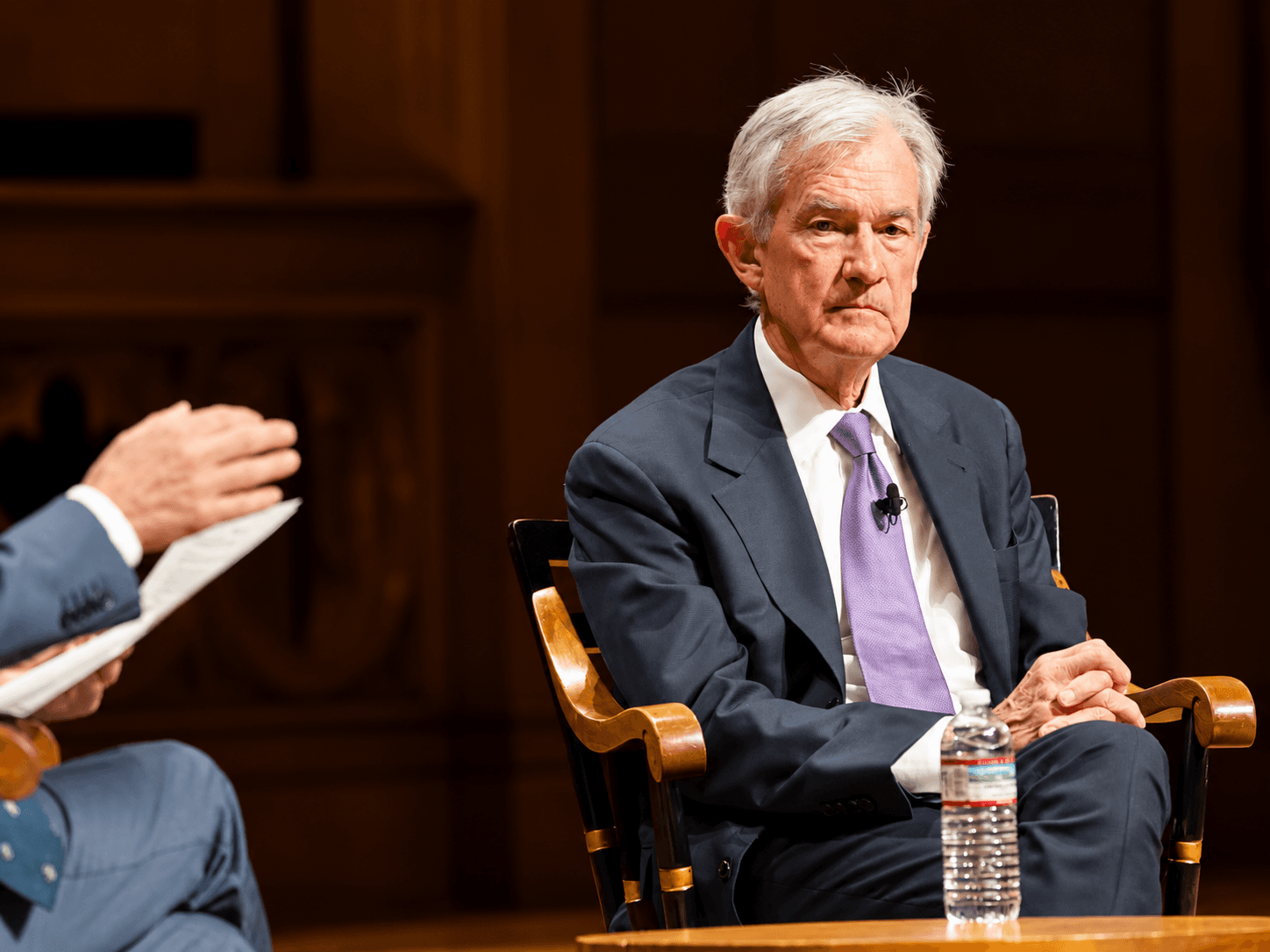
Global markets are heading into an important week as investors prepare for the US Federal Reserve's latest interest-rate decision. Inflation remains a concern, energy prices are climbing amid geopolitical tensions, and policymakers face a difficult balancing act: keeping prices under control without putting too much pressure on economic growth.
The Federal Open Market Committee (FOMC) is scheduled to meet on 27 and 28 October, with its decision expected on Wednesday. The timing is confirmed on the Federal Reserve's official meeting calendar.
Economists largely expect the Fed to leave its benchmark interest rate unchanged at 3.75%–4.00%. A Reuters poll published on 20 October found that nearly all surveyed economists anticipated a pause this month, while many expected another rate increase in December.
With a rate hold widely expected, investors are paying closer attention to the language surrounding the decision and the comments from Fed Chair Kevin Warsh. Markets will be looking for clues about how policymakers view persistent inflation, rising energy costs and the possibility of further tightening before the year ends.
The decision will matter well beyond the United States. US interest rates influence global borrowing costs, currency movements, investment flows and stock-market valuations. A tougher-than-expected message could strengthen the dollar and put additional pressure on emerging-market currencies. A more measured tone, on the other hand, could offer some relief to investors.
The central question is not simply whether the Fed keeps rates unchanged. It is whether policymakers believe they can afford to wait—or whether inflation could force them to tighten monetary policy again.
INFLATION VERSUS GROWTH — THE FED'S DIFFICULT CHOICE
Why the Fed may hold rates steady
The Federal Reserve has two key objectives: maintaining stable prices and supporting maximum employment. Balancing them becomes more difficult when rising costs threaten to keep inflation high while also squeezing households and businesses.
Higher oil prices can push up petrol, transport and manufacturing costs. These increases can feed into the prices of everyday goods and services, even as consumers face tighter budgets and companies deal with higher operating expenses.
The Fed must determine whether the latest price pressures are temporary or likely to become more persistent. That distinction will help shape its next move.
PIMCO's recent assessment points towards a rate hold in October, while leaving open the possibility of another increase in December. This reflects the challenge facing policymakers as they try to contain inflation without unnecessarily slowing the economy.
Holding rates steady would give officials more time to assess incoming economic data and the effects of previous rate increases. It would not, however, mean the inflation battle was over.
Why another rate hike remains on the table
Inflation has yet to provide policymakers with complete reassurance, and higher energy prices have added another complication. If officials believe price pressures are becoming entrenched, they may conclude that borrowing costs need to rise further.
Higher interest rates make borrowing more expensive for households and businesses. Mortgage costs, business loans and financing for new projects can all increase, potentially reducing spending and investment.
That is the intended effect of tighter monetary policy: weaker demand can help slow price increases. But there is a trade-off. If borrowing costs rise too quickly, companies may delay expansion plans and become more cautious about hiring.
Investors will therefore be listening closely to the Fed's wording. Any emphasis on persistent inflation or the need to maintain restrictive financial conditions could reinforce expectations of another increase. A more cautious approach would suggest officials want additional evidence before making their next move.
WALL STREET FACES A DOUBLE TEST — FED POLICY AND AI EARNINGS
The Fed meeting comes during a busy period for US stocks, with major technology companies reporting earnings and investors questioning whether heavy spending on artificial intelligence will deliver the returns they expect.
The combination of monetary policy, corporate earnings, financing costs and uncertainty ahead of the US midterm elections could test the strength of the recent stock-market rally.
Technology stocks under pressure
Technology companies can be particularly sensitive to changing interest-rate expectations. Much of their market value is based on earnings they are expected to generate years into the future.
When bond yields rise, those future profits become less valuable in today's terms. Higher borrowing costs can also make it more expensive to build data centres, purchase computing equipment and develop new products.
For companies investing heavily in AI, investors want to see more than ambitious spending plans. They want evidence that investments in chips, infrastructure and software can translate into sustainable revenue and profits.
A hawkish Fed message could put additional pressure on technology valuations if it pushes bond yields higher. A more measured outlook might support investor confidence, although individual earnings results and company guidance will remain important.
Bonds, gold and the dollar in focus
Government bond yields are likely to react to any change in expectations about the future path of US interest rates.
If investors conclude that rates will remain elevated for longer, Treasury yields could rise. That may also support the dollar by making US assets more attractive relative to investments elsewhere, although exchange rates depend on economic conditions in multiple countries.
Gold faces a different set of pressures. Because it does not pay interest, it can become less attractive when yields on interest-bearing assets rise. At the same time, geopolitical uncertainty and concerns about inflation can encourage investors to seek safety in gold.
Neither relationship is guaranteed. Much will depend on whether the Fed's decision surprises markets and how investors interpret its guidance for the months ahead.
THE DOLLAR AND EMERGING MARKETS — INDIA IN FOCUS
The Fed's decision is especially important for emerging economies, where shifts in US interest rates can affect currency stability, foreign investment and borrowing costs.
India is entering the week against a difficult backdrop of elevated crude oil prices and uncertain global risk sentiment. According to Reuters reporting dated 26 October, the rupee closed at ₹94.94 per US dollar on Friday, while India's benchmark 10-year government bond yield rose to 7.474% after increasing by nine basis points over the previous week.
Why a stronger dollar matters for India
If the Fed signals further rate increases, investors may favour dollar-denominated assets, particularly if US yields become more attractive relative to returns elsewhere. That shift can put pressure on emerging-market currencies and raise the cost of servicing dollar-denominated debt.
For India, a weaker rupee can make imported crude oil more expensive in domestic currency terms. That can increase the country's import bill and add to inflationary pressures, especially if international oil prices remain elevated.
A less hawkish Fed could ease some of this pressure, but it would not automatically strengthen the rupee. India's currency is also influenced by foreign investment flows, domestic growth, trade balances, oil prices and Reserve Bank of India policy.
Indian bond markets face their own challenges
Indian government bonds will remain sensitive to both international and domestic developments. Rising US Treasury yields can influence global borrowing costs, while expensive oil can raise concerns about inflation and the country's external balance.
If investors begin pricing in tighter monetary conditions, Indian bond yields could rise as they demand higher returns. This can increase borrowing costs for the government and influence financing conditions across the wider economy.
Policymakers will need to balance financial stability with the need to support credit and investment. The Fed's decision will be an important part of that picture, but India's domestic economic data and policy choices will also matter.
WHAT THE FED'S DECISION COULD MEAN FOR GLOBAL MARKETS
Three possible outcomes are likely to dominate investor discussions this week.
1. Rates stay unchanged, but the message is hawkish.
The Fed holds rates steady while warning that further increases remain possible. If that stance is tougher than markets expect, bond yields and the dollar could move higher, putting pressure on equities and emerging-market currencies.
2. Rates stay unchanged, with a more measured outlook.
Policymakers stress that they need more economic data before deciding on another move. If investors interpret the message as less restrictive than expected, stocks and other risk-sensitive assets could receive a boost.
3. The Fed unexpectedly raises rates.
Economists broadly expect a pause, so an increase would come as a significant surprise. It could trigger sharp moves in bond yields, currencies, equities and commodities as investors reassess the outlook.
These are possible scenarios, not predictions. The actual market response will depend on how the decision compares with expectations already reflected in asset prices.
Investors will also be looking for clues about the December meeting. Without fresh economic projections at the October gathering, the policy statement and the chair's remarks could carry particular weight.
WHAT TO WATCH NEXT
Fed rate decision — 28 October: Whether the FOMC holds the benchmark rate at 3.75%–4.00% or delivers an unexpected move.
Kevin Warsh's press conference: What the Fed chair says about inflation, economic growth and the possibility of further tightening.
December rate expectations: Whether markets continue to price in another increase before the end of 2026.
US Treasury yields and the dollar: How investors respond to the Fed's guidance and whether global borrowing conditions change.
Wall Street earnings: Whether major technology companies can demonstrate that their AI investments are delivering meaningful returns.
Oil prices: Whether crude remains above $110 a barrel and adds to concerns about inflation.
India's rupee and bond yields: Whether global financial conditions create further pressure on the currency and government borrowing costs.
Upcoming US economic data: Inflation, employment and growth figures that could influence the Fed's next decision.
FACT CHECK METER
97% — Strongly supported core reporting
Status: Supported, with forward-looking scenarios clearly distinguished from confirmed facts.
This percentage represents an editorial assessment of the reporting, not a statistically calculated probability.
Confirmed details
The Federal Reserve's October meeting is scheduled for 27–28 October.
A Reuters poll published on 20 October found that economists overwhelmingly expected the Fed to hold rates steady in October, with another increase possible in December.
The benchmark policy rate was reported at 3.75%–4.00% ahead of the meeting.
Reuters reported pressure on India's rupee and government bond markets amid elevated oil prices and global uncertainty.
Important distinctions
The expected rate hold is a forecast, not an announced decision.
Keeping rates unchanged would not necessarily mean the Fed has finished tightening monetary policy.
The effects on currencies, bonds, equities and commodities will depend on the decision, the accompanying guidance and broader economic conditions.
Any future rate increase remains uncertain until the FOMC announces its decision.
AWX VERDICT: The Fed's October meeting is a major event for global financial markets. A pause is widely expected, but investors will be looking for signs of whether policymakers are preparing to tighten again in response to persistent inflation and rising energy costs.
THE AWX BOTTOM LINE
The Federal Reserve is approaching this meeting with little room for an easy decision. Inflation remains a concern, oil prices have climbed amid geopolitical uncertainty, and investors are trying to gauge how much further borrowing costs might rise before the end of the year.
A rate hold could offer markets some short-term stability, but it would not settle the debate over inflation. If price pressures persist, another increase could still be on the table. If economic growth weakens, policymakers will have to consider the risks of keeping financial conditions too tight for too long.
For investors, the Fed's statement and press conference may prove just as important as the rate decision itself. For India and other emerging economies, the effects could spread through exchange rates, bond yields, foreign investment and the cost of imported energy.
The message markets are waiting for is straightforward: does the Fed believe inflation is finally moving towards control, or should businesses, households and investors prepare for interest rates to stay higher for longer?
ATTLAS NEWS | AWX WORLD NEWS
Real Stories. Lasting Impact.




Comments
No comments yet.