

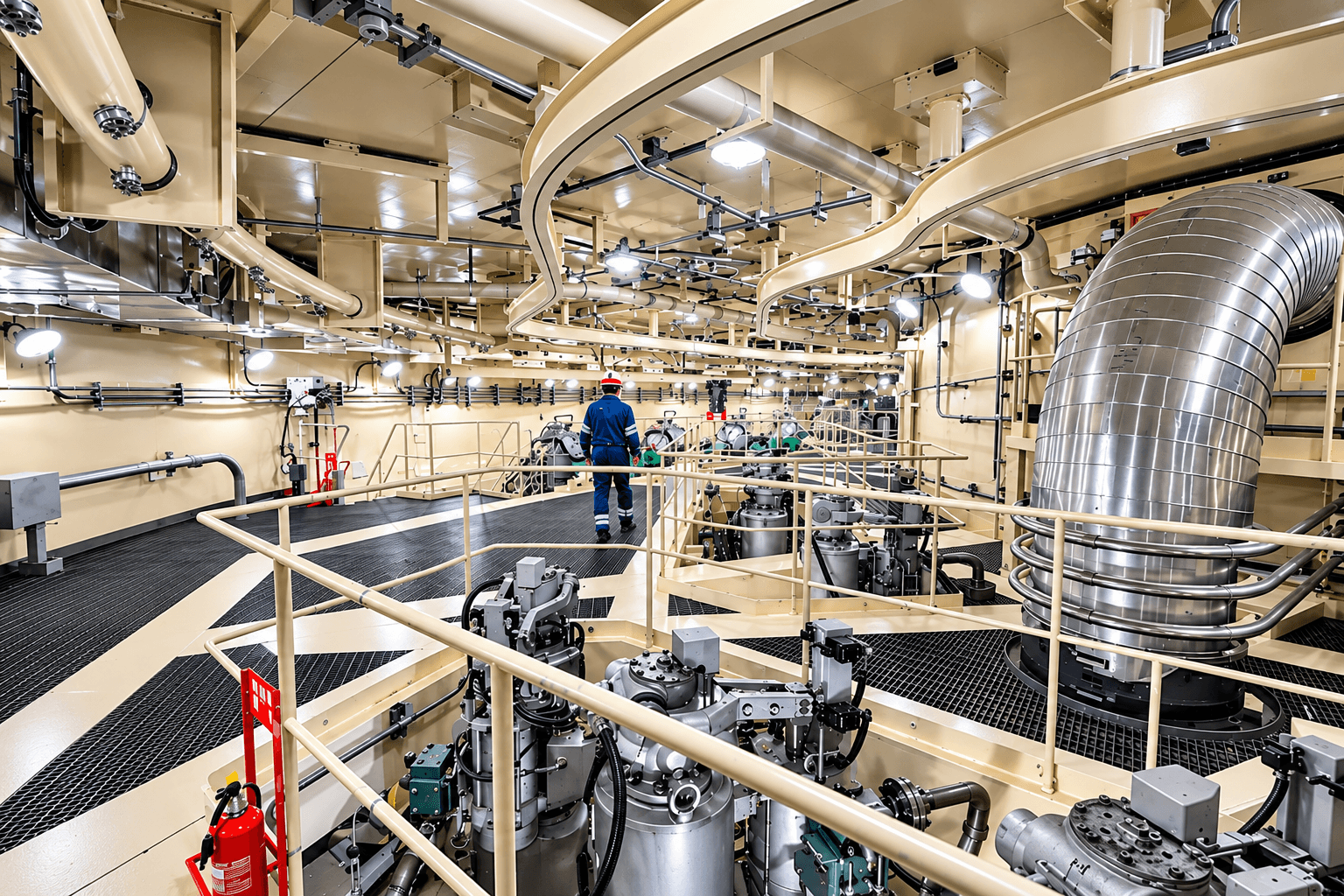
More than 15 years after the Fukushima nuclear disaster, Japan is still working through one of the most difficult nuclear decommissioning projects in history. On 2 October, Tokyo Electric Power Company Holdings (TEPCO) resumed a long-delayed investigation inside Unit 2 of the Fukushima Daiichi nuclear power plant, deploying a remotely operated robotic arm to examine the reactor’s damaged interior.
The goal is to give engineers a better understanding of conditions inside the containment vessel, where radiation levels make direct human access impractical. The information gathered will help determine how radioactive fuel debris can eventually be removed, handled and stored safely.
The robotic arm measures approximately 22 metres in length and weighs 4.6 tonnes. Equipped with cameras and specialised tools, it can reach areas that have remained difficult to inspect since the disaster in March 2011. During this phase, TEPCO plans to clear obstacles, capture images and collect three-dimensional data to build a clearer picture of the reactor’s internal condition.
The restart is an important step, but it does not mean large-scale fuel-debris removal is about to begin. For now, engineers are focused on understanding what lies inside the damaged reactor and identifying the safest way to approach the next stage of the operation.
The challenge facing TEPCO goes well beyond keeping the facility stable. The company must develop reliable ways to inspect the damaged structures, reach radioactive material and eventually remove it from an environment that remains difficult and dangerous to access.
WHY THE INVESTIGATION MATTERS
The Fukushima Daiichi disaster began on 11 March 2011, when a powerful earthquake and tsunami struck northeastern Japan. The disaster disrupted electrical power and cooling systems at the plant, leading to severe reactor damage and meltdowns in three units.
The accident left behind a complex mixture of melted nuclear fuel, structural components and other materials. Known as fuel debris, this radioactive material remains one of the biggest obstacles to completing the plant’s decommissioning.
Engineers still do not have a complete picture of its location, shape, composition or physical condition. Those details matter because the equipment used to retrieve the debris must be designed around the actual conditions inside the reactors.
At Unit 2, earlier trial operations recovered approximately 0.9 grams of fuel debris across two rounds. Although those efforts provided valuable experience, the amount recovered remains tiny compared with the material that must eventually be removed.
The latest investigation is intended to narrow the information gap. Detailed images and three-dimensional measurements could help engineers understand the layout of damaged structures, identify potential obstacles and develop equipment suited to the conditions inside the containment vessel.
Without that information, planning larger retrieval operations would involve considerable uncertainty.
INSIDE THE REACTOR: A ROBOTIC ARM LEADS THE WAY
Radiation levels inside the damaged reactor make direct human entry impractical, leaving remotely operated machinery to handle much of the inspection work.
The robotic arm is designed to reach areas that conventional inspection equipment cannot easily access. Its cameras can record the reactor’s interior, while specialised tools can help operators deal with obstacles that might otherwise prevent further investigation.
One of the immediate tasks involves removing rails and cables that could interfere with the arm’s movement. TEPCO plans to use high-pressure water jets to cut through these obstructions before collecting additional images and three-dimensional measurements, including information from areas near the lower part of the reactor pressure vessel.
The equipment can also be adapted for different stages of the operation. Depending on the task, the arm can carry cameras, cutting tools or equipment intended for future debris retrieval.
The broader investigation programme is expected to take around six months, although the timetable could change as engineers assess conditions and determine what can be done safely.
The operation was originally scheduled to begin earlier, but technical problems involving the robotic arm and the time needed to replace components contributed to the delay. The setback highlights the difficulties of deploying sophisticated machinery inside a reactor that cannot be fully inspected in advance.
For TEPCO, the priority is to ensure the equipment can operate reliably before moving on to more demanding tasks.
THE ROAD TO FUEL-DEBRIS REMOVAL
Why even a small sample matters
Removing fuel debris is one of the most technically demanding parts of the Fukushima Daiichi decommissioning programme.
The material is not simply intact nuclear fuel that can be lifted out of the reactor. During the 2011 accident, nuclear fuel and surrounding structural materials melted together and later solidified into irregular, complex masses.
Before engineers can remove these materials on a larger scale, they need to understand their physical properties, radiation levels and surrounding conditions. They must also develop equipment capable of operating in confined spaces where visibility is limited and human intervention is severely restricted.
The small quantities recovered during earlier trials have helped TEPCO gain practical experience with the retrieval process. The next stage is expected to build on those efforts by improving access to the reactor’s interior and gathering more detailed information about the debris.
The aim is to make future operations more predictable and reduce the risk of equipment failure, contamination or the unintended disturbance of radioactive material.
Even a small sample can provide useful information. Laboratory analysis may help researchers better understand the debris and refine the methods needed to handle it safely.
What happens after the inspection?
The images and three-dimensional data collected during the investigation will help engineers plan the next phase of work. TEPCO has indicated that a future trial could aim to retrieve several grams of fuel debris, with further work potentially extending into 2027.
That remains a target rather than a guaranteed outcome. Progress will depend on what the investigation reveals, whether the necessary equipment performs as expected and whether the operation can proceed safely.
Even if the next trial succeeds, the quantity recovered would represent only a small fraction of the radioactive material remaining inside the damaged reactors.
The wider decommissioning programme will require repeated inspections, equipment testing, careful retrieval operations and secure arrangements for handling and storing the material. Each stage will depend heavily on the findings of the one before it.
SAFETY REMAINS THE TOP PRIORITY
More than a decade and a half after the accident, the damaged reactors at Fukushima Daiichi continue to present serious radiation hazards. The containment vessel remains an environment where direct human work is not practical.
Remote-operated equipment helps limit workers’ exposure, but it brings its own challenges. Robots can malfunction, become stuck or encounter obstacles that were not anticipated during design and testing.
When something goes wrong, operators may need to stop the work, replace components or change their approach. These interruptions can delay progress, but they also underline why the investigation must proceed cautiously.
The conditions inside the reactor cannot be mapped completely in advance. Engineers must gather information step by step and adapt their equipment as new details emerge.
That approach may be slow, but moving too quickly without understanding the environment could create greater technical and safety risks later.
Progress should therefore be measured not only by the amount of debris recovered, but also by whether each operation improves engineers’ understanding while protecting workers and the surrounding environment.
WHAT FUKUSHIMA MEANS FOR JAPAN’S NUCLEAR FUTURE
The decommissioning of Fukushima Daiichi remains a major test of Japan’s ability to manage the long-term consequences of a nuclear accident. The outcome will influence discussions about nuclear safety, emergency preparedness, public confidence and the cost of managing damaged nuclear facilities.
The lessons also matter beyond Japan. Nuclear operators and regulators worldwide have an interest in technologies that can inspect highly radioactive environments, map damaged structures and retrieve hazardous materials while limiting the need for human exposure.
At the same time, Fukushima demonstrates how difficult these operations remain. Even after more than 15 years, engineers are still working to understand parts of the damaged reactors and develop practical ways to reach the remaining fuel debris.
Successful inspections and future sample recoveries could provide information that improves decommissioning plans. However, no single robotic operation can resolve all the challenges involved in removing, transporting and storing the radioactive material.
For Japan, the task is to turn these incremental advances into a workable long-term strategy. The latest investigation is another step in that process, but substantial technical work remains ahead.
WHAT TO WATCH NEXT
Robotic inspection findings: Updates on the images and three-dimensional data could reveal more about the condition of the containment vessel and the obstacles engineers face.
Preparation of access routes: Clearing rails and cables will be important in determining whether the robotic arm can reach its intended inspection areas.
The next debris-retrieval trial: Watch for confirmation of its schedule, the quantity of material targeted and the amount actually recovered.
Equipment reliability: Further malfunctions or design changes could affect the timetable and require additional preparation.
Decommissioning milestones: Future announcements should explain how the latest findings will influence the design of fuel-debris removal equipment.
Safety and radiation monitoring: Information about radiation conditions, operating procedures and protective measures will remain essential to assessing progress.
FACT CHECK METER
98% — STRONGLY VERIFIED
Assessment based on the claims presented in the supplied report. The percentage is an editorial rating, not an independent statistical measure of accuracy.
Confirmed details
The report states that TEPCO began the Unit 2 containment-vessel investigation on 2 October 2026.
The robotic arm is described as approximately 22 metres long and weighing 4.6 tonnes.
The operation is intended to clear obstructions and collect images and three-dimensional data.
Earlier trial operations reportedly recovered approximately 0.9 grams of fuel debris in total.
The investigation is expected to take around six months, subject to technical conditions and safety requirements.
Important distinctions
The current operation is an investigation and preparation for future retrieval, not large-scale fuel-debris removal.
The six-month timetable is an estimate and could change.
The proposed recovery of several grams in a future trial is a target, not a confirmed result.
The investigation concerns Unit 2 at Fukushima Daiichi. Conditions and progress may differ across the plant’s damaged reactor units.
The specific operational details and dates should be checked against current TEPCO announcements and independent reporting before publication.
AWX Verdict: The reported restart represents a potentially important step in understanding the damaged reactor. However, the operation remains focused on inspection and preparation. The larger challenge of safely retrieving the remaining fuel debris is still ahead.
THE AWX BOTTOM LINE
TEPCO’s renewed investigation inside Fukushima Daiichi’s Unit 2 marks another stage in Japan’s long effort to decommission the nuclear plant damaged in the 2011 disaster.
The 22-metre robotic arm will help engineers examine areas that remain inaccessible to people, clear obstacles and collect information needed to develop future fuel-debris removal equipment. What it discovers could shape the next phase of a project that has advanced through small-scale trials rather than large-scale recovery.
But the difficulties remain substantial. Extreme radiation, uncertain internal conditions and the risk of equipment failure mean that every step requires careful planning and testing.
The bottom line: Fukushima’s decommissioning work is continuing, but this investigation is about understanding how to remove the remaining radioactive material safely—not removing it all at once. The next major milestone will be whether the new findings help engineers carry out more reliable fuel-debris retrieval operations.
ATTLAS NEWS | AWX WORLD NEWS
Real Stories. Lasting Impact.


Comments
No comments yet.