

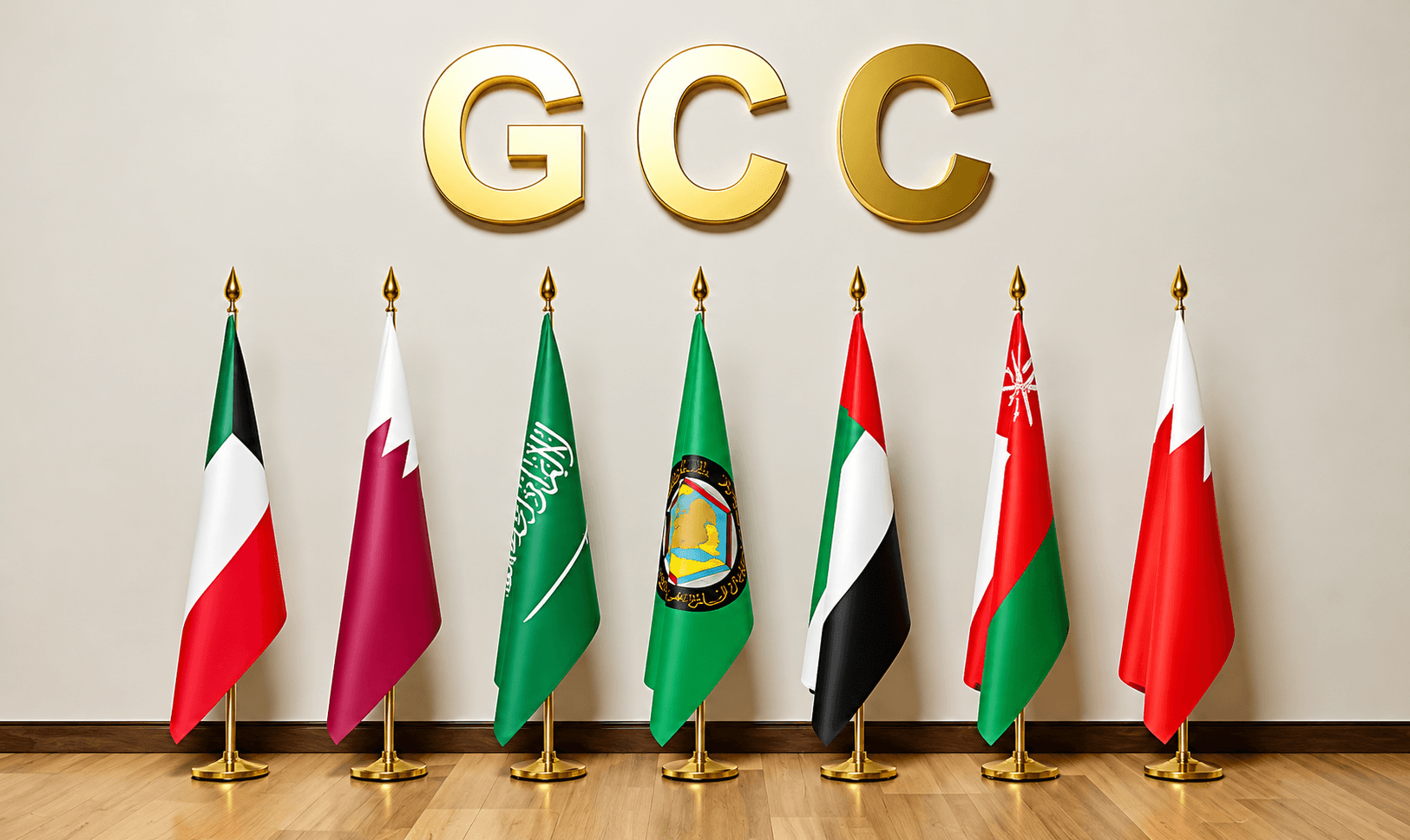
The Gulf Cooperation Council (GCC) is stepping up efforts to bring its six member economies closer together, with officials calling for greater cooperation on investment, industrial development and regional trade.
The issue took centre stage at the ninth World Investment Forum 2026 in Doha, Qatar. During discussions on 25 October, Gulf officials highlighted the need for stronger industrial coordination, investment across national borders and better connections between regional markets.
The broader goal is to help Bahrain, Kuwait, Oman, Qatar, Saudi Arabia and the United Arab Emirates work more closely as a regional economic bloc rather than operate primarily as separate markets competing for investment.
The GCC already has considerable financial resources to support that ambition. Secretary-General Jasem Mohamed Albudaiwi put the bloc’s combined gross domestic product at approximately $2.4 trillion, with sovereign wealth fund assets exceeding $5 trillion. He also pointed to growing investment between member states as a sign that their economies are becoming more interconnected.
The challenge now is to turn that financial strength into tangible economic results. Governments will need to make cross-border business easier, coordinate regulations and prioritise projects that generate jobs, improve productivity and deliver lasting value.
The key question is whether the Gulf can turn closer cooperation into a more integrated and competitive regional economy.
SIX ECONOMIES, ONE LARGER INVESTMENT OPPORTUNITY
The GCC has spent years building the foundations for closer economic cooperation through initiatives covering customs, trade, payments and infrastructure.
The Customs Union and Gulf Common Market have helped establish a framework for stronger regional ties. Plans for the GCC Railway Project and connections between regional payment systems are also part of the wider effort to make it easier to move goods, money and services across borders.
The latest discussions suggest that officials want to build on this progress by identifying projects that deliver benefits across several member states.
For example, one country might provide manufacturing facilities, another could supply financing, while a third offers logistics expertise or access to international markets. Coordinating these strengths could help businesses expand without every country having to develop identical industries and infrastructure.
A more connected market could also make the region more attractive to international investors. Companies could plan their operations across multiple GCC countries, creating regional supply chains instead of treating each market as a separate investment destination.
However, closer integration will require practical changes. Different licensing requirements, technical standards, customs procedures and investment rules can still complicate cross-border projects. Addressing these differences will be essential if the GCC wants cooperation to translate into real commercial opportunities.
JOINT INVESTMENT TAKES CENTRE STAGE
The Gulf's financial resources give the region a strong starting point for expanding joint investment.
Figures presented by the GCC secretary-general at the Doha forum showed that the total stock of foreign direct investment in GCC countries exceeded $792 billion in 2025. More than $171 billion represented investment between member states, accounting for approximately 22% of the total stock.
These figures highlight the role that regional investment already plays in connecting Gulf economies. The next step is to direct more capital towards projects that strengthen shared industrial, technological and infrastructure capabilities.
Potential opportunities include:
Manufacturing: Developing cross-border production networks that connect suppliers, factories and industrial zones.
Transport and logistics: Improving connections between ports, distribution centres and export markets.
Digital infrastructure: Investing in data centres, cloud computing and artificial intelligence capabilities.
Energy and industrial development: Supporting renewable energy and other projects that contribute to economic diversification.
Small-business growth: Helping smaller companies reach customers and business partners across the wider GCC market.
The focus should be on the quality of investment, not just the amount of money committed. Projects that build productive capacity, transfer technology and develop skilled workers are more likely to deliver lasting benefits than investments that simply duplicate existing facilities.
Officials have emphasised the need to identify genuine market demand and commercially viable opportunities. Turning broad investment ambitions into projects that businesses can sustain will be a critical test of the strategy.
INDUSTRIAL COORDINATION COULD STRENGTHEN REGIONAL SUPPLY CHAINS
Closer coordination of industrial policy is emerging as an important part of the GCC's economic agenda.
Gulf countries have invested heavily in diversification, infrastructure and manufacturing. Better coordination could help them build stronger regional supply chains, reduce unnecessary duplication and identify products that can be manufactured competitively within the bloc.
Bahrain's Industry and Commerce Minister Abdulla bin Adel Fakhro argued that governments should help identify products that could be produced locally to replace imports, while ensuring that new manufacturing responds to actual market demand.
This approach could create opportunities in industrial components, processed materials, food-related industries and specialised equipment, among other sectors.
However, replacing imports with domestic production does not automatically make economic sense. If local factories cannot compete on cost, quality or reliability, the result could be higher prices rather than stronger industries.
The aim should be to develop businesses that can compete effectively, both within the Gulf and internationally.
A coordinated approach could give manufacturers access to a larger customer base while allowing them to share infrastructure, research costs and specialised expertise. It could also help the region withstand disruptions to global shipping and supply chains.
Ultimately, success will depend on whether industrial cooperation improves productivity, creates competitive businesses and supports exports rather than simply moving costs between countries.
AI AND DATA CENTRES CREATE NEW OPPORTUNITIES
Artificial intelligence and digital infrastructure are becoming increasingly important to the Gulf's investment plans.
At the World Investment Forum, officials discussed data centres, AI capabilities and advanced technologies as potential areas for regional cooperation and economic diversification.
The GCC has several advantages in pursuing these opportunities, including access to capital, international business connections and ongoing investment in digital infrastructure. Coordinated planning could help attract technology companies looking for computing capacity, cloud services and access to customers across the Middle East.
Joint investment could also support cybersecurity, digital payments, logistics technology and AI applications in sectors such as energy, finance, transport and healthcare.
There are significant costs to consider, however. Data centres need reliable electricity, cooling systems, strong connectivity and skilled technical teams. Building facilities faster than demand develops could leave investors with expensive assets that take years to generate adequate returns.
Governments and investors will therefore need to assess projects carefully, taking account of customer demand, energy availability, operating costs and the benefits for local businesses.
The opportunity is considerable, but long-term success will depend on matching technological ambition with commercial realities.
LOGISTICS CORRIDORS COULD GIVE REGIONAL TRADE A BOOST
Transport and logistics are another major part of the GCC's integration plans.
Proposals to develop logistics corridors aim to improve the movement of goods between member states and provide businesses with better access to international markets. Stronger links between ports, industrial zones and distribution centres could reduce delays and make regional supply chains more reliable.
These efforts are particularly relevant at a time when geopolitical tensions and disruptions to major shipping routes continue to create uncertainty for global trade.
For manufacturers and exporters, better logistics can mean shorter delivery times, lower inventory costs and more predictable operations. For investors, reliable transport connections can make the difference between a viable industrial project and one that struggles to compete.
Building effective corridors will require more than constructing roads or railways. Border procedures, customs systems, port operations and infrastructure across neighbouring countries must work together.
Even a well-designed transport link can deliver limited benefits if goods face long border delays or connections with neighbouring networks remain incomplete.
The GCC will need coordinated planning, clear project priorities and practical arrangements for moving cargo across borders if its logistics ambitions are to deliver meaningful results.
THE GLOBAL INVESTMENT OUTLOOK: STRONG POTENTIAL, REAL RISKS
The push for closer economic integration comes as the Gulf continues to attract substantial investment, although the outlook remains vulnerable to geopolitical tensions and changing market conditions.
An advance copy of the United Nations Conference on Trade and Development's 2026 Gulf Cooperation Council Investment Report said foreign direct investment inflows to GCC countries rose 18% to approximately $99 billion in 2025. Outward investment increased 11% to $130 billion.
The report also indicated that preliminary data for the first half of 2026 pointed to a sharp regional slowdown in investment activity amid disruption around the Strait of Hormuz.
The figures underline both the region's financial strength and its exposure to external shocks. The Gulf remains an important source and destination of investment, but geopolitical uncertainty, higher project costs and changes in investor confidence can affect the pace of new commitments.
Investment is also concentrated in a few markets. According to the UNCTAD report, the UAE and Saudi Arabia together received more than four-fifths of GCC foreign direct investment inflows in 2025.
That concentration presents a challenge for deeper regional integration. Smaller economies could benefit from shared infrastructure and cross-border industrial projects, but they will need opportunities suited to their strengths and capable of generating measurable returns.
The goal is not necessarily to attract the same amount of capital to every member state. It is to build a regional economy in which investment in one country creates opportunities for businesses, workers and suppliers across the wider bloc.
RISKS THAT COULD SLOW ECONOMIC INTEGRATION
1. Different regulations
Differences in licensing, technical standards and business requirements can make cross-border operations more complicated. Without practical regulatory coordination, companies may continue to face separate obstacles in each market.
2. Uneven distribution of investment
Larger economies may continue to attract most of the capital, technology and skilled workers. If smaller member states see limited economic benefits, support for deeper integration could weaken.
3. Duplicated infrastructure
Competing national priorities can lead to overlapping industrial zones, manufacturing facilities, ports and data centres. Without sufficient demand, these investments may struggle to deliver acceptable returns.
4. Geopolitical uncertainty
Regional tensions and disruptions to major shipping routes can increase transport costs, delay investment decisions and undermine confidence in long-term projects.
5. Exposure to energy markets
Economic diversification remains a priority, but public finances and investment programmes are still exposed to changes in global energy prices. A prolonged decline in revenue could put pressure on budgets and project funding.
6. Project execution and financing
Large cross-border projects require clear governance, realistic timelines and agreements on how costs, risks and benefits will be shared. Delays or disputes can weaken investor confidence.
7. Shortages of skills and technical capacity
Expanding AI infrastructure, advanced manufacturing and digital services requires specialised workers, reliable electricity and strong technical capabilities. Investment alone cannot guarantee successful operations.
8. Announcements without measurable results
Investment pledges can attract attention, but they do not guarantee completed projects, new jobs or higher productivity. Governments will need transparent ways to measure implementation and economic impact.
WHAT TO WATCH NEXT
Formal GCC policy announcements: Look for concrete decisions on industrial coordination, joint investment frameworks and cross-border business rules.
New regional investment agreements: Watch for projects involving governments, sovereign investors and private companies from multiple GCC countries.
Railway and logistics progress: Track developments in transport connections, customs coordination and export corridors.
AI and data-centre investment: Look for confirmed funding, construction milestones, power agreements and evidence of commercial demand.
Growth in intra-GCC investment: Monitor whether the reported $171 billion in cross-border investment stock increases and whether capital reaches a broader range of countries and sectors.
Private-sector participation: Watch for joint ventures involving manufacturers, technology firms, logistics operators and small and medium-sized businesses.
Investment resilience: Follow changes in foreign investment, project financing and business confidence as geopolitical and shipping risks evolve.
FACT CHECK METER
96% — Strong factual basis
Status: Supported by reported official statements and investment figures.
Confirmed details
GCC officials discussed deeper economic integration and joint investment at the World Investment Forum in Doha on 25 October 2026.
The GCC secretary-general cited combined regional GDP of approximately $2.4 trillion and sovereign wealth fund assets exceeding $5 trillion.
Figures presented at the forum put intra-GCC investment stock above $171 billion in 2025.
UNCTAD's advance-copy report recorded approximately $99 billion in GCC inward FDI in 2025, an increase of 18% from the previous year.
Important distinctions
Industrial coordination, AI investment and logistics corridors remain areas of proposed cooperation; they should not all be described as completed projects.
Investment stock measures accumulated investment, not just new capital invested during a single year.
Strong regional investment figures do not guarantee that every member state will benefit equally.
The impact of closer integration will depend on implementation, commercial demand and regional stability.
AWX Verdict: The push for deeper GCC integration is supported by official statements and reported investment data. Whether it creates a more productive and balanced regional economy will depend on how effectively governments turn proposals into coordinated projects and measurable results.
THE AWX BOTTOM LINE
The GCC wants to move beyond six powerful national economies towards a more connected regional system for investment, manufacturing and trade.
The region has the financial resources, international business links and growing digital ambitions to make that possible. Closer industrial coordination, shared infrastructure and cross-border investment could strengthen supply chains, reduce unnecessary duplication and create new opportunities for businesses.
But progress will depend on practical action. Governments need to make cross-border business easier, choose projects with genuine commercial demand and ensure that the benefits of investment reach beyond a handful of markets.
The real measure of success will be completed infrastructure, stronger regional supply chains, productive jobs and sustainable returns — not simply the value of investment announcements.
The GCC's greatest opportunity may lie not only in the capital its members possess, but in how effectively they combine their markets, resources and expertise to compete as a connected region.
ATTLAS NEWS | AWX WORLD NEWS
Real Stories. Lasting Impact.




Comments
No comments yet.