

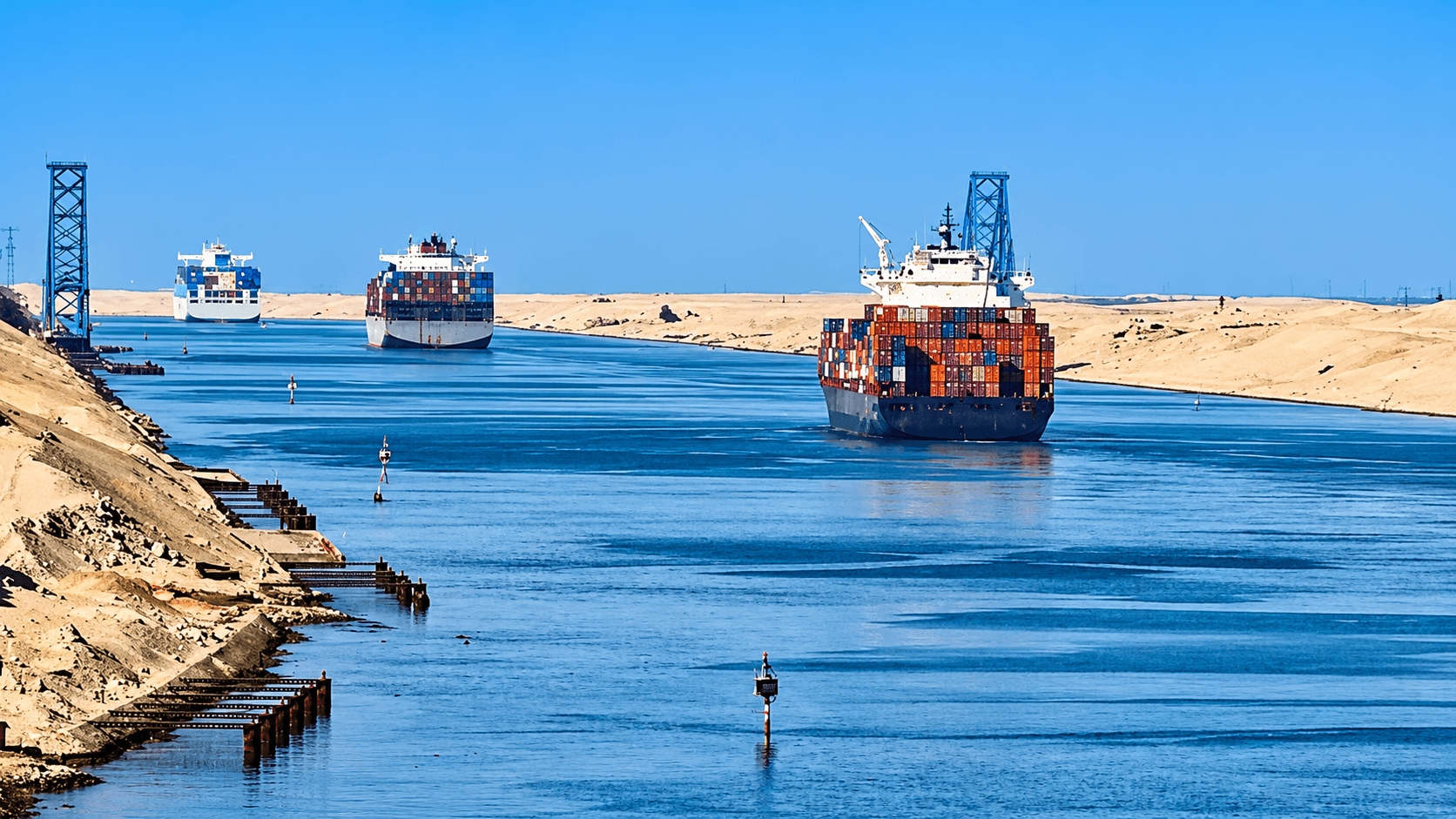
Global trade has held up better than many expected, but businesses are operating in an increasingly uncertain environment. Changing tariff policies, geopolitical tensions and disruptions to major shipping routes are forcing manufacturers, retailers and logistics companies to rethink their plans, particularly as they prepare for the busy year-end trading season.
The World Trade Organization (WTO) has raised its forecast for global merchandise trade volume growth in 2026 to 3.9%, up from its earlier estimate of 1.9%. Strong demand for artificial intelligence-related products, including semiconductors and servers, has helped support trade despite disruptions caused by the conflict in the Middle East.
However, the stronger forecast does not mean every industry is benefiting equally. Technology-related goods are performing well, while transport and travel services face greater pressure from rising costs and geopolitical uncertainty.
For businesses, the challenge goes beyond finding the cheapest supplier. They must also consider whether trade rules could change at short notice, whether shipments will arrive on time and how much additional cost they can absorb before raising prices or delaying investment.
As a result, flexibility and reliability are becoming just as important as keeping costs down.
TARIFF UNCERTAINTY FORCES BUSINESSES TO RETHINK COSTS
Tariffs have become a major concern for companies involved in international trade. When governments introduce new import duties or change existing rules, businesses may need to reconsider supplier contracts, adjust prices and even move production to different countries.
The WTO's March 2026 trade outlook identified more than 60 tariff actions introduced since the beginning of 2025. Based on 2024 trade values, these measures covered approximately 11% of global trade. This figure refers to trade exposed to tariff measures, not shipments that all experienced the same increase in costs or a decline in demand.
Even the possibility of higher tariffs can influence business decisions. Some companies bring orders forward to avoid expected increases, while others look for suppliers in alternative markets. Businesses may also renegotiate contracts or pass part of the additional expense on to customers.
Changing suppliers, however, is rarely as simple as placing an order elsewhere. Companies may need to conduct product testing, complete regulatory checks, negotiate new contracts and arrange different transport routes. In some cases, an alternative supplier may depend on the same raw materials or manufacturing centres, offering less protection than expected.
This uncertainty also makes financial planning harder. Finance teams must account for potentially changing margins, while procurement and compliance departments have to keep track of more trade regulations, customs procedures and documentation requirements.
For many businesses, the cost of uncertainty starts well before a new tariff officially takes effect.
SHIPPING AND ENERGY DISRUPTIONS ADD TO SUPPLY-CHAIN PRESSURE
Tariffs are only part of the problem. Geopolitical tensions and instability in energy and transport markets are creating additional challenges for companies that depend on reliable international deliveries.
According to the WTO, the conflict in the Middle East disrupted energy, fertiliser and transport markets during the first half of 2026. Crude oil exports from the region fell by roughly 24%, while liquefied natural gas exports declined by 47%. Alternative suppliers and rerouted shipments helped limit the wider impact, but adjusting to these changes has not been easy or inexpensive.
Longer shipping routes can increase fuel consumption, insurance premiums and delivery times. Manufacturers relying on imported components may have to slow production if an essential part fails to arrive. Retailers can lose valuable sales opportunities when products arrive late, while businesses transporting perishable goods face the risk of spoilage and additional losses.
Higher shipping and energy costs can also spread across the economy. Companies may initially absorb some of the increase, but persistent pressure can eventually lead to higher prices for customers.
The impact varies considerably depending on the industry, shipping route, contractual arrangements and availability of alternative suppliers.
Recent supply-chain reporting has also highlighted concerns about supplier delivery times, inventory accumulation and freight expenses as companies respond to uncertain market conditions.
For businesses, the message is clear: a disruption in one part of the supply chain can quickly create problems elsewhere.
BUSINESSES LOOK FOR MORE FLEXIBLE SOURCING OPTIONS
With trade risks becoming harder to predict, companies are reviewing how heavily they depend on individual suppliers, countries and shipping corridors.
Some are expanding their supplier networks, shifting part of their production closer to major markets or keeping additional stocks of essential components. Others are reviewing contracts to establish who will bear the cost of new tariffs, delayed shipments or changes in customs requirements.
These steps can help businesses manage disruption, but they come with trade-offs. Maintaining larger inventories ties up working capital and increases storage costs. Moving production requires investment in equipment, workers and infrastructure, while new suppliers may need time to meet quality and regulatory standards.
Diversification can also introduce new risks if companies replace one dependency with another.
A Thomson Reuters report highlights how seriously trade professionals view the uncertainty. In its survey, 72% of respondents identified US tariff volatility as a highly impactful regulatory or customs change, compared with 41% in the previous year's survey. Supply-chain management also emerged as a major strategic priority among the organisations surveyed.
These figures reflect the views of survey participants rather than the experience of every business worldwide, but they illustrate the growing importance of trade risk management.
Smaller importers and exporters may find it particularly difficult to adapt. Large multinational companies often have dedicated customs teams, multiple distribution networks and greater bargaining power with suppliers. Smaller businesses may have fewer alternatives when tariffs, freight charges or compliance costs rise unexpectedly.
Companies that can identify problems early and adjust their operations quickly may be better positioned to protect their margins and maintain reliable service.
MAJOR ECONOMIES SEEK STRONGER TRADE PARTNERSHIPS
Governments are also looking for ways to reduce their exposure to trade disruptions by building new partnerships and diversifying access to essential supplies.
On October 28, German Chancellor Friedrich Merz urged Japan to join a proposed alliance of countries seeking to defend rules-based trade and coordinate responses to tariffs and economic pressure. Germany and Japan also discussed closer cooperation on critical raw materials and stronger commercial ties with other partners.
China responded by calling for a more objective approach while expressing support for stable trade and supply chains.
These discussions reflect a wider concern among governments: relying too heavily on a limited number of suppliers can leave economies vulnerable when political relations deteriorate or export restrictions are introduced.
Critical minerals, semiconductors, energy supplies and advanced manufacturing equipment are particularly important because they support a wide range of industries. Governments are exploring alternative sources, domestic production, recycling initiatives and strategic reserves to reduce the risk of sudden shortages.
But rebuilding supply networks takes time. Existing trade relationships are supported by infrastructure, skilled workers, investment and established business arrangements. Replacing a major supplier or changing a transport route cannot always be done quickly or without significant expense.
There is also a broader risk. If governments increasingly favour separate trading blocs in the name of economic security, companies could face conflicting regulations, duplicated supply networks and more complicated compliance requirements.
Efforts to make trade more secure could therefore make international business more fragmented if countries fail to maintain cooperation.
GLOBAL TRADE GROWTH MASKS AN UNEVEN RECOVERY
Despite these challenges, international trade has not come to a standstill. The WTO's October outlook projects global merchandise trade volume growth of 3.9% in 2026, followed by 4.1% in 2027.
The organisation also reported that trade in AI-enabling goods grew by 67% year on year in the first half of 2026. These products accounted for 47% of global merchandise trade growth during that period.
Demand for semiconductors, servers and other technology-related equipment has provided an important boost, helping offset some of the pressure from geopolitical tensions and transport disruptions.
However, the benefits remain uneven across regions and industries. The WTO expects Asia to lead merchandise export growth in 2026, while exports from the Middle East are forecast to contract sharply amid the continuing conflict and related disruptions.
The outlook for services is less encouraging. The WTO lowered its forecast for commercial services trade growth in 2026 to 3.3%, down from 4.8% in March.
This uneven performance means that strong headline trade figures do not necessarily reflect conditions across the wider economy. A company supplying AI infrastructure may be experiencing rising demand, while a transport operator, travel business or energy-intensive manufacturer struggles with higher costs and weaker activity.
The key question is whether growth in technology-related trade can continue to offset the pressures affecting other sectors.
For businesses, understanding conditions within their own industries and markets will be more useful than relying on global growth figures alone.
RISKS AND KEY ISSUES TO WATCH
Further tariff changes: New import duties or revised trade rules could increase costs, disrupt pricing strategies and force businesses to renegotiate supplier agreements.
Shipping and energy disruptions: Continued instability around major maritime routes could push up freight, fuel and insurance costs while extending delivery times.
Supplier concentration: Businesses that rely on a limited number of suppliers or production centres remain vulnerable to sudden restrictions, operational failures and political disputes.
Higher consumer prices: If companies cannot absorb rising import and logistics costs, some of the additional expense may eventually be passed on to customers.
Fragmentation of global trade: Competing trade blocs and inconsistent regulations could make cross-border operations more complicated, particularly for smaller businesses.
Uneven demand across industries: Growth in AI-related goods may support overall trade figures even as other sectors face weaker demand and rising operating expenses.
WHAT TO WATCH NEXT
New tariff announcements: Changes in duties, exemptions and trade negotiations involving the United States, China, the European Union and major Asian economies could influence sourcing and investment decisions.
Upcoming WTO trade data: New figures on merchandise volumes and services activity will help determine whether global trade growth is spreading across more industries or remains heavily dependent on technology-related demand.
Freight rates and delivery times: Shipping costs, port activity and supplier lead times will offer practical signs of whether supply-chain pressures are easing.
Corporate earnings and business forecasts: Updates from manufacturers, retailers and logistics companies could reveal how much of the additional tariff and freight burden businesses are absorbing or passing on to customers.
New supply-chain investments: Manufacturing projects, alternative sourcing agreements and critical-material partnerships will show how seriously companies and governments are addressing supplier concentration risks.
FACT CHECK METER
94% — Strongly supported
Overall assessment of the article's factual support, not a statistical probability.
Confirmed details
The WTO's October 2026 outlook projects global merchandise trade volume growth of 3.9% in 2026 and 4.1% in 2027.
More than 60 tariff actions recorded since early 2025 covered trade flows representing approximately 11% of global trade, based on 2024 trade values.
Demand for AI-related goods has supported international trade despite geopolitical and transport disruptions.
Germany and Japan discussed closer cooperation on rules-based trade and critical raw-material supplies on October 28.
Important distinctions
Global trade continues to grow; the available figures do not support describing it as being in a general collapse.
Trade exposed to tariff measures does not mean every affected shipment incurred the same additional cost.
Supply-chain risks differ across industries, countries and transport routes.
Global growth forecasts do not guarantee stronger performance for every business or region.
AWX VERDICT
The headline reflects documented trade-policy uncertainty and supply-chain pressures. The broader picture, however, is one of resilience under strain rather than a collapse in global commerce. Trade continues to expand, but changing tariffs, geopolitical risks and uneven demand are making costs and business planning less predictable.
THE AWX BOTTOM LINE
Global trade is entering a more challenging phase. Businesses still have opportunities to grow, particularly in technology-related industries, but they must contend with changing tariffs, unreliable shipping conditions and increasing pressure to diversify their suppliers.
For many companies, the response will involve balancing cost control with resilience. More careful sourcing, stronger risk monitoring, improved customs compliance and investment in alternative supply routes can help reduce exposure, although they cannot eliminate the effects of geopolitical disruption or unpredictable trade policies.
Governments face a similar balancing act. Protecting economic and national security interests is important, but escalating trade restrictions could increase costs and make international commerce more complicated for everyone.
For businesses, preparation and flexibility will be essential. Those that understand their vulnerabilities and respond quickly may be better equipped to manage disruption without losing competitiveness.
Global trade is still moving forward. But in an increasingly uncertain environment, the ability to move goods across borders reliably, affordably and on time may matter as much as the ability to produce them.
ATTLAS NEWS | AWX WORLD NEWS
Real Stories. Lasting Impact.



Comments
No comments yet.