

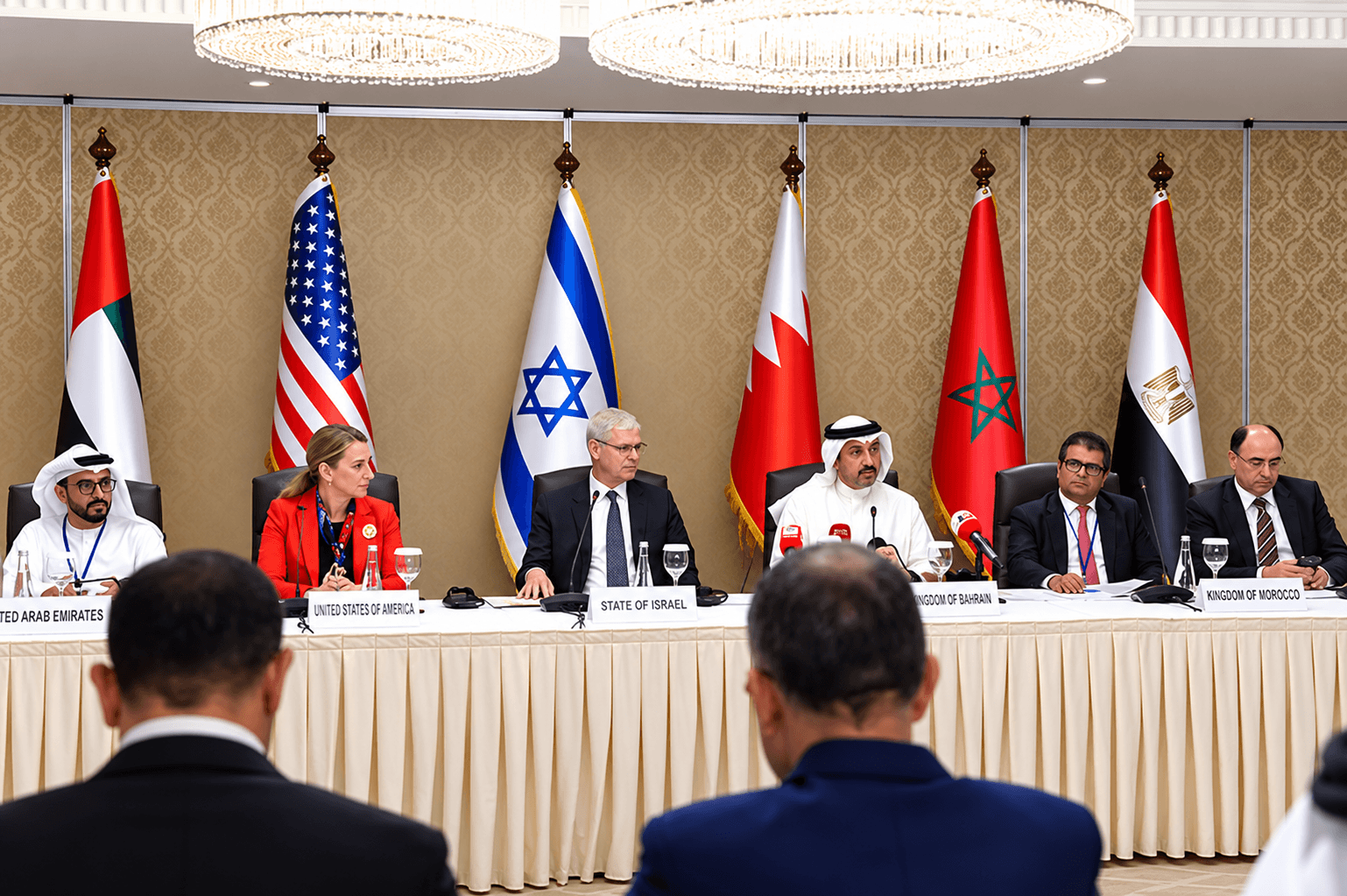
Diplomatic efforts across the Gulf are gathering pace as regional governments work to prevent the conflict involving Iran, the United States and Israel from spreading further. Recent talks in Tehran, mediation efforts led by Qatar and renewed calls for a regional security framework have opened additional channels for dialogue. However, military threats and attacks continue to cast a shadow over these efforts.
On October 26, senior officials from Saudi Arabia, Türkiye and Pakistan met Iranian leaders in Tehran to discuss ways to prevent further escalation and strengthen regional security. A day later, Qatar called for practical steps to reduce threats against Gulf states and protect freedom of navigation.
The diplomatic push comes at a sensitive moment. Disruptions around the Strait of Hormuz and attacks affecting Saudi Arabia have raised concerns about energy supplies, commercial shipping and the possibility of a broader confrontation.
A FRESH DIPLOMATIC PUSH TAKES SHAPE
The latest talks bring together countries with different political and security priorities, but they share a common concern: a prolonged conflict could destabilise the Gulf and carry serious economic consequences for the entire region.
Saudi Arabia, Türkiye and Pakistan sent senior representatives to Tehran for discussions with Iranian officials. Reports indicate that the talks covered regional security, the conflict involving Iran and the United States, Houthi attacks on Saudi Arabia, access through the Strait of Hormuz and the US blockade of Iranian ports.
The four countries also agreed to continue discussions on regional peace and security, keeping the door open for further diplomatic engagement.
Qatar and Pakistan have meanwhile continued efforts to carry messages and proposals between Washington and Tehran. Qatar has said diplomatic communications remain active, while urging Iran to demonstrate its commitment to regional stability through concrete action.
These contacts suggest that regional governments are determined to keep negotiations alive despite sharp disagreements among the main parties. But continued dialogue should not be confused with a breakthrough. No comprehensive settlement has been confirmed, and major differences remain unresolved.
QATAR AND PAKISTAN KEEP MEDIATION CHANNELS OPEN
Qatar has taken an increasingly active role in efforts to reduce tensions, using its diplomatic relationships to keep communication between regional governments and the main parties to the conflict open.
Doha's position centres on respect for national sovereignty, non-aggression and safe maritime passage. On October 27, Qatar said it was working with Pakistan, Saudi Arabia and other partners to advance a regional security framework. At the same time, it urged Tehran to address concerns about threats to neighbouring countries and freedom of navigation through the Strait of Hormuz.
Pakistan's involvement offers another channel for communication between Tehran, Washington and regional capitals. Yet the differences between Iran and the United States remain a major obstacle.
According to reporting on October 28, a proposal delivered through Qatari mediation was rejected by a senior Iranian official. The disagreement reportedly centres on which issues should be addressed first. Washington wants Iran's nuclear programme dealt with early in the process, while Tehran is seeking action on the blockade and restrictions affecting its oil exports.
This leaves mediators with a difficult task. They must find a sequence of steps that both sides can accept without feeling that they are giving up their essential security interests.
Keeping talks alive is important, but progress will depend on whether those conversations can produce practical compromises.
OMAN PUSHES FOR A BROADER REGIONAL SECURITY FRAMEWORK
Beyond the immediate crisis, some regional leaders are looking for ways to prevent similar confrontations from recurring.
Oman's Foreign Minister, Badr Albusaidi, has advocated a non-aggression arrangement involving the six Gulf Cooperation Council (GCC) states, Iran and Iraq. The proposal would place greater emphasis on regional dialogue and collective security rather than depending primarily on outside powers.
If adopted, such an arrangement could establish regular channels for crisis communication, encourage commitments against attacks on neighbouring countries and provide a way to address disputes before they escalate.
However, reaching an agreement would be difficult. Gulf governments remain concerned about missile and drone attacks, threats to critical infrastructure and the activities of armed groups across the region. Iran, for its part, has its own security concerns and continues to oppose aspects of the US position.
A lasting framework would require more than a general promise to maintain peace. Governments would need to agree on specific commitments, ways to verify compliance and procedures for responding to alleged violations.
Without those safeguards, even a promising diplomatic initiative could struggle to make a meaningful difference on the ground.
THE STRAIT OF HORMUZ REMAINS A KEY FLASHPOINT
The Strait of Hormuz remains central to the regional crisis. The narrow waterway connects major Gulf energy producers with international markets, making it vital to global oil supplies and commercial shipping.
Any prolonged restriction on traffic through the strait could push up transport costs, insurance premiums and energy prices, adding pressure to economies already dealing with uncertainty.
At its October 18 ministerial meeting in Manama, the GCC stressed the importance of freedom of navigation through the Strait of Hormuz, Bab el-Mandeb and the Red Sea. The council called for a return to diplomacy and backed regional and international mediation efforts.
It also highlighted security concerns that any broader settlement would need to address, including Iran's nuclear programme, missile and drone capabilities, and support for armed groups operating across the region.
The economic risks extend well beyond oil. Commercial vessels carry food, medicines, fertilisers and other essential goods. A prolonged disruption to shipping could therefore affect businesses and households far beyond the Middle East.
For diplomatic progress to be convincing, it will need to produce visible improvements at sea: fewer threats against vessels, safer passage through key waterways, reduced military activity and reliable procedures for handling maritime incidents.
REGIONAL COORDINATION GROWS AS SECURITY CONCERNS PERSIST
Governments across the region are also stepping up coordination as they prepare for the possibility of further attacks.
Following talks in Istanbul on October 23, Egypt, Saudi Arabia, Türkiye and Pakistan condemned Houthi attacks on Saudi Arabia and commercial shipping. Their joint position called for diplomatic solutions, protection of civilians and the restoration of safe passage through the Strait of Hormuz.
Saudi Arabia and the United Arab Emirates have also called for closer coordination among Gulf states, reflecting growing concern that the conflict could spread and become harder to contain.
The underlying message is clear: no country in the region can fully shield itself from the consequences of a wider crisis. Attacks on infrastructure, threats to shipping and renewed military action can quickly affect neighbouring states and disrupt several economies at once.
Still, regional cooperation does not mean that all governments agree on how the crisis should be resolved. Countries may share an interest in preventing a wider war while holding different views on Iran's regional role, the future of Yemen, the terms of a US-Iran settlement and the security guarantees needed to sustain peace.
Those differences could complicate negotiations even as diplomatic contacts become more frequent.
RISKS AND KEY ISSUES TO WATCH
1. A breakdown in negotiations
If Washington and Tehran remain divided over nuclear policy, sanctions and maritime restrictions, current proposals could collapse before a broader agreement takes shape.
2. Further attacks on Saudi Arabia
Continued missile or drone attacks attributed to the Houthis could trigger retaliation and weaken efforts to rebuild trust among regional powers.
3. Disruption to the Strait of Hormuz
Restrictions on shipping or threats against commercial vessels could keep energy prices, insurance premiums and transport costs elevated, placing additional pressure on import-dependent economies.
4. A fragile regional security framework
A proposed non-aggression agreement will have limited impact unless participating countries settle its terms, establish monitoring arrangements and agree on how violations should be handled.
5. Competing demands from external powers
US and Israeli security objectives may not always align with the priorities of Gulf governments seeking to avoid a wider conflict. Those differences could make mediation more difficult.
WHAT TO WATCH NEXT
1. The next round of regional talks
Further meetings involving Iran, Saudi Arabia, Türkiye and Pakistan could reveal whether the current diplomatic effort is moving towards a more structured negotiating process.
2. Qatar's mediation efforts
Responses from Tehran and Washington to the latest proposals will help show whether either side is prepared to narrow the differences standing in the way of an agreement.
3. Developments in maritime security
Changes in shipping access, threats against commercial vessels and military activity around the Strait of Hormuz will be important indicators of whether tensions are genuinely easing.
4. Progress on a non-aggression initiative
Further details from Oman or other Gulf governments could show whether the proposed regional security framework is attracting wider support.
5. The situation in Yemen
Any reduction in Houthi attacks—or a fresh escalation—could influence the diplomatic climate and affect how Gulf governments assess their security priorities.
FACT CHECK METER
88% — SUBSTANTIALLY SUPPORTED
Status: Developing story
This percentage represents an editorial assessment of the available supporting evidence, not a statistical probability.
Confirmed details
Senior officials from Saudi Arabia, Türkiye and Pakistan held talks with Iranian leaders in Tehran on October 26.
Qatar and Pakistan have been involved in diplomatic efforts to maintain communication between Washington and Tehran.
Qatar has publicly called for a regional security framework based on respect for state sovereignty and mutual non-aggression.
The GCC has reiterated its support for diplomacy and freedom of navigation through key regional waterways.
Important distinctions
Diplomatic engagement is confirmed, but no comprehensive peace agreement has been established.
Reporting indicates that Iran has resisted a recent proposal delivered through Qatari mediation.
A regional non-aggression framework remains a proposal rather than an operational security agreement.
Continued diplomatic contact does not, by itself, establish that military tensions have eased.
AWX VERDICT
The headline reflects the renewed diplomatic efforts by Gulf states and neighbouring powers to contain the crisis. However, describing the talks as a breakthrough would be premature. Negotiations are continuing amid security threats, maritime disruption and substantial disagreements over the terms of a possible settlement.
THE AWX BOTTOM LINE
Diplomacy across the Gulf is gaining urgency as regional governments confront the growing cost of continued escalation. Qatar and Pakistan are helping keep communication channels open, Saudi Arabia is engaging with Iran through regional diplomatic contacts, and Oman is advocating a broader security arrangement aimed at reducing the risk of future crises.
But the success of these efforts will depend on what happens next, not simply on how many meetings take place.
Safer shipping, fewer attacks, credible security commitments and progress on the central disputes between Iran and the United States would provide stronger evidence that the region is moving towards de-escalation.
For now, diplomatic channels remain open, but a lasting settlement is far from certain.
ATTLAS NEWS | AWX WORLD NEWS
Real Stories. Lasting Impact.



Comments
No comments yet.