

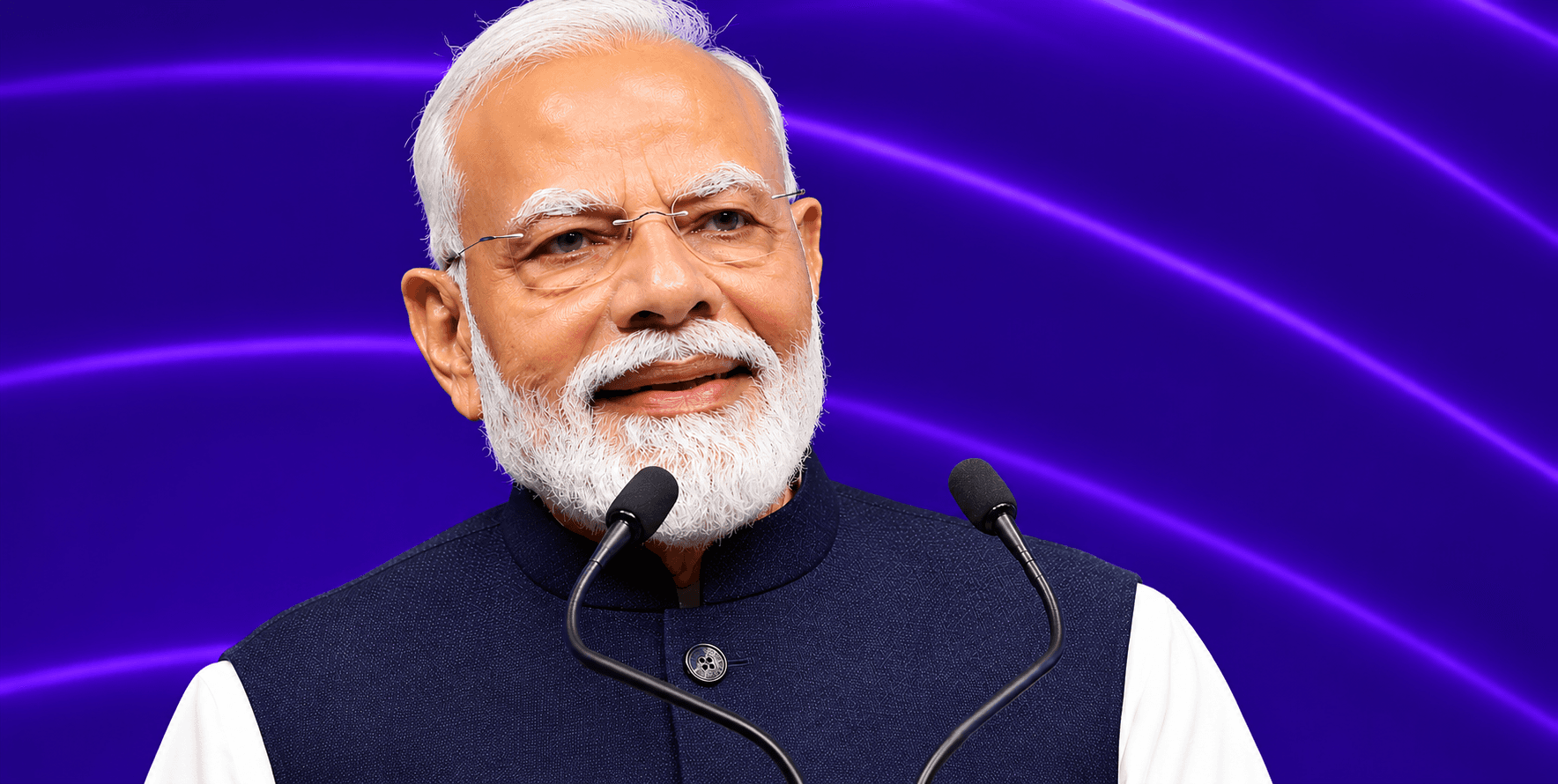
Prime Minister Narendra Modi’s two-day visit to Gujarat on October 30 and 31 focused on several key areas of development, including infrastructure, agriculture, dairy farming, transport and rural welfare.
One of the biggest announcements came in Banaskantha, where projects worth more than ₹14,000 crore were launched, inaugurated or dedicated to the nation. The visit also saw the release of the 24th instalment of the Pradhan Mantri Kisan Samman Nidhi (PM-KISAN), initially announced at around ₹19,000 crore, along with the launch of two railway services and new initiatives for horticulture and livestock development.
The announcements reflect the government's broader effort to strengthen rural economies while improving connectivity and expanding access to essential infrastructure.
Modi also travelled to Ekta Nagar, where he took part in events marking the 151st birth anniversary of Sardar Vallabhbhai Patel, including Rashtriya Ekta Diwas celebrations at the Statue of Unity.
With investments spanning several sectors, the visit has renewed attention on Gujarat's development plans and the role of infrastructure and direct financial assistance in supporting India's agricultural economy.
₹14,000-CRORE DEVELOPMENT PACKAGE PUTS BANASKANTHA IN THE SPOTLIGHT
During his visit to Banaskantha on October 30, Modi laid foundation stones, inaugurated completed projects and dedicated several initiatives to the nation. The combined value of these projects exceeds ₹14,000 crore.
The package covers agriculture, animal husbandry, food processing, roads, transport and social infrastructure. According to the government, these investments are aimed at improving connectivity and creating better economic opportunities for farming and dairy communities across North Gujarat.
A major announcement was the proposed expansion of the Ahmedabad–Mehsana highway from four lanes to eight lanes. Estimated at around ₹2,600 crore, the project is expected to make travel between Ahmedabad and North Gujarat faster and more convenient.
The government also laid the foundation stones for two extensions of the Ahmedabad Metro:
Phase 2A – Airport Extension: A stretch of more than 6 kilometres, featuring five stations between Koteshwar Road and the airport.
Phase 2B – GIFT City Extension: A stretch of more than 3.3 kilometres, with three stations connecting GIFT City to Shahpur.
Both extensions are expected to improve access to important business and transport hubs while expanding Ahmedabad's public transport network.
Another important initiative involves the development of 4,030 new child-friendly Anganwadi centres and the inauguration of 361 completed centres across Gujarat. The programme involves an investment of approximately ₹800 crore and is expected to benefit more than four lakh people, including children and pregnant women.
The package also includes 521 completed projects under the Agriculture Infrastructure Fund, with a combined project cost of approximately ₹4,950 crore.
These projects cover cold storage facilities, warehouses, silos, greenhouses, processing centres and cold-chain infrastructure. Better storage and processing facilities could help farmers reduce post-harvest losses, preserve the quality of their produce and reach markets more efficiently.
PM-KISAN'S 24TH INSTALMENT PROVIDES FINANCIAL SUPPORT TO FARMERS
Farmer welfare was another major focus of the visit, with Modi releasing the 24th instalment of the PM-KISAN scheme.
The instalment was initially announced at approximately ₹19,000 crore. However, following the release, the Prime Minister's Office reported that more than ₹18,000 crore had been transferred directly into the bank accounts of around 10 crore farmers.
The difference between the announced amount and the reported disbursement is worth noting when assessing the final figures.
Under PM-KISAN, eligible farmer families receive ₹6,000 annually through three equal instalments of ₹2,000. The money is transferred directly into beneficiaries' bank accounts to help meet agricultural and household expenses.
The scheme has become an important source of direct financial assistance for farming households, particularly small and marginal farmers.
During the Gujarat programme, Modi also highlighted the government's wider support for agriculture, including fertiliser subsidies, minimum support price payments and crop insurance.
The latest instalment comes at a time when farmers continue to deal with rising input costs, unpredictable weather and changing agricultural market prices. While direct transfers offer some immediate financial relief, improving farm incomes over the longer term will also require better market access, affordable inputs and stronger agricultural infrastructure.
DAIRY AND LIVESTOCK SECTOR GETS A TECHNOLOGY BOOST
Dairy development featured prominently during Modi's visit, particularly with the inauguration of the Bharat Bovine Breeding and Research Centre (BBBRC) at Bhildi in Banaskantha.
Spread across 127 acres, the centre has been established as a Centre of Excellence for cattle breeding, genetic improvement and advanced reproductive technologies. One of its key priorities is the development of indigenous cattle breeds, particularly the Kankrej breed, which has strong roots in the region.
The facility will use modern techniques such as embryo transfer and in-vitro fertilisation to improve cattle genetics and accelerate breeding programmes.
According to government projections, these technologies could speed up breed improvement by 10 to 20 times compared with conventional methods.
Modi also visited the facility's Embryo Transfer Technology-In Vitro Fertilisation Laboratory, highlighting the growing role of scientific research in improving livestock productivity.
For Gujarat, where dairy cooperatives and livestock farming support millions of rural livelihoods, better breeding practices and improved animal productivity could create significant economic opportunities.
The visit also included the foundation stone ceremony for two Bio-CNG plants associated with Banas Dairy, proposed at Tharad and Radhanpur.
The plants are designed to process 75 metric tonnes and 100 metric tonnes of cattle dung per day, respectively. The aim is to turn livestock waste into cleaner fuel while creating additional value from resources generated by the dairy sector.
However, the success of these facilities will depend on a consistent supply of raw material, efficient operations and the commercial viability of the fuel produced.
HORTICULTURE CLUSTERS AIM TO CONNECT FARMERS WITH BETTER MARKETS
Horticulture was another important part of the development programme.
The government highlighted the launch of on-ground activities under 12 approved horticulture clusters covering approximately 1.46 lakh hectares. These clusters are expected to benefit more than 1.3 lakh farmers.
The selected crops include potatoes, tomatoes, chillies, grapes, bananas, onions, oranges, pomegranates and cocoa. Two of the clusters in North Gujarat are focused on potato cultivation, an important agricultural activity in Banaskantha and Sabarkantha.
The cluster-based approach aims to bring farming, storage, processing and marketing activities closer together. Better coordination across the agricultural supply chain could help farmers improve produce quality, reduce wastage and access more organised markets.
The Agriculture Infrastructure Fund projects announced during the visit are expected to complement these efforts.
Facilities such as warehouses, cold storage units and processing centres can address a longstanding challenge in Indian agriculture: ensuring that produce is properly stored and reaches buyers without unnecessary losses.
Still, the success of these clusters will depend on how effectively they are implemented, how many farmers participate and whether producers can establish reliable links with buyers.
For potato-growing communities in North Gujarat, improved processing facilities and transport connectivity could open up new opportunities and strengthen agricultural value chains.
TWO NEW TRAIN SERVICES TO IMPROVE CONNECTIVITY
Rail connectivity also featured in the Gujarat announcements, with Modi flagging off two new train services aimed at improving passenger movement within the state and beyond.
The services include:
Ahmedabad (Sabarmati)–Varanasi Express: Expected to strengthen rail connectivity between Gujarat and Uttar Pradesh.
Mehsana–Becharaji–Sabarmati MEMU: Designed to improve regional passenger connections across parts of North Gujarat and Ahmedabad.
The new services are expected to benefit commuters, students, workers and other passengers travelling between these destinations.
These railway initiatives form part of a wider transport development programme that includes highway expansion and Ahmedabad Metro extensions.
Together, the projects aim to improve connections between cities, industrial centres and agricultural regions. However, their actual impact will depend on service frequency, affordability, passenger capacity and the reliability of operations.
EKTA NAGAR PROJECTS AND NATIONAL UNITY DAY CELEBRATIONS
The second part of Modi's Gujarat visit focused on Ekta Nagar, home to the Statue of Unity and the annual celebrations marking Sardar Vallabhbhai Patel's birth anniversary.
On October 30, the Prime Minister inaugurated Bharat Parv 2026, a cultural and tourism festival showcasing India's regional traditions, cuisine, handicrafts, performances and tourist attractions.
He also witnessed Ekta Prakash Parv, an illumination festival highlighting India's cultural diversity and national identity.
The following day, October 31, Modi paid floral tributes to Sardar Vallabhbhai Patel at the Statue of Unity and participated in celebrations marking his 151st birth anniversary, observed as Rashtriya Ekta Diwas or National Unity Day.
During the programme, the Prime Minister also inaugurated and laid foundation stones for development projects worth more than ₹400 crore in Ekta Nagar.
The initiatives include water and sewage treatment facilities, improvements to Narmada Ghat, tourism infrastructure, road development and waste-management projects.
The celebrations also featured the Ekta Parade, with participation from security forces and police organisations, alongside cultural performances celebrating India's diversity and national integration.
The new tourism facilities are expected to strengthen Ekta Nagar's appeal as a destination for visitors while creating opportunities for local businesses and employment.
WHAT THE GUJARAT DEVELOPMENT PACKAGE MEANS FOR INDIA
The announcements during Modi's visit bring together several priorities of the government's development agenda, from large infrastructure investments to agricultural modernisation and direct financial assistance.
Highway expansion and metro extensions are expected to improve transport connectivity. The bovine research centre and proposed Bio-CNG plants focus on livestock productivity and better use of agricultural waste.
Meanwhile, horticulture clusters and agricultural infrastructure projects aim to strengthen the journey from farm production to storage, processing and final markets.
The PM-KISAN instalment adds another layer of support by providing financial assistance to eligible farmers across India, not just those in Gujarat.
However, the value of announced investments should not be confused with completed development. Some projects have already been inaugurated, while others are still at the foundation stone or implementation stage.
Their long-term contribution will depend on timely construction, effective management, job creation and measurable improvements in the lives of farmers and local communities.
Ultimately, the success of the Gujarat development package will be judged not by the size of the announcements but by the benefits people experience on the ground.
RISKS AND KEY ISSUES TO WATCH
Project implementation delays: Large infrastructure projects will need to progress on schedule if they are to deliver their expected economic benefits.
Farmer income pressures: PM-KISAN offers direct financial support, but farm profitability also depends on input costs, crop prices and market access.
Dairy-sector adoption: Advanced breeding technologies must be affordable and accessible to farmers to make a meaningful difference.
Horticulture infrastructure: Storage and processing facilities need to become fully operational and accessible to participating farmers.
Transport capacity: New railway and metro connections will require reliable services and sufficient passenger capacity.
Bio-CNG viability: The proposed plants will need regular feedstock supplies, efficient waste collection and commercially sustainable operations.
Regional development gaps: The benefits of new investments must reach smaller farmers, rural communities and local businesses.
WHAT TO WATCH NEXT
PM-KISAN transfers: Whether eligible farmers receive their 24th instalment successfully and how the government reports the final disbursement figures.
Ahmedabad Metro extensions: Progress on the proposed Airport and GIFT City extension projects.
Ahmedabad–Mehsana highway: Construction milestones for the planned eight-lane expansion.
Bovine research centre: Its operational performance and the adoption of advanced breeding technologies.
Horticulture clusters: Progress in developing the 12 clusters and connecting farmers with storage and processing facilities.
Bio-CNG plants: Construction and commissioning timelines for the Tharad and Radhanpur facilities.
Agricultural infrastructure: Whether the 521 Agriculture Infrastructure Fund projects translate into better storage and processing capacity.
Ekta Nagar tourism: Whether the new facilities and Bharat Parv 2026 help generate sustained visitor numbers and local employment.
FACT CHECK METER
EDITORIAL CONFIDENCE: 98%
STATUS: STRONGLY SUPPORTED — OFFICIAL GOVERNMENT RECORDS
CONFIRMED DETAILS
Modi visited Gujarat on October 30–31, 2026.
Projects worth more than ₹14,000 crore were launched, inaugurated or dedicated in Banaskantha.
The 24th PM-KISAN instalment was released, with the government subsequently reporting transfers of more than ₹18,000 crore to around 10 crore farmers.
The Bharat Bovine Breeding and Research Centre at Bhildi was inaugurated.
Two railway services were flagged off.
Foundation stones were laid for the Ahmedabad Metro Airport and GIFT City extensions.
Development projects worth more than ₹400 crore were announced for Ekta Nagar.
IMPORTANT DISTINCTIONS
The approximately ₹19,000-crore PM-KISAN figure was the announced amount. The subsequent government statement reported that more than ₹18,000 crore had actually been transferred.
The ₹14,000-crore project package includes initiatives at different stages, from completed inaugurations to foundation stone ceremonies. It does not mean the entire amount has already been spent or that every project is operational.
The projected benefit of more than 1.3 lakh farmers from the 12 horticulture clusters is an expected outcome, not a confirmed result.
The projected 10–20-fold acceleration in breed improvement is a government estimate associated with the new research centre.
AWX VERDICT
Modi's Gujarat visit brought together a substantial package of infrastructure, agricultural modernisation and farmer-support initiatives. The major announcements are supported by official government records.
However, the actual economic impact will depend on how effectively these projects are implemented and whether they lead to measurable improvements in farmers' incomes, transport connectivity and rural employment.
The percentage represents AWX's editorial confidence in the factual reporting. It is not a statistical probability or an official government rating.
THE AWX BOTTOM LINE
Prime Minister Narendra Modi's Gujarat visit has put infrastructure development, agricultural modernisation and farmer welfare firmly in the spotlight.
The more than ₹14,000-crore package for Banaskantha includes highway and metro expansion, dairy research, agricultural infrastructure, food processing and child-friendly Anganwadi facilities. The release of the 24th PM-KISAN instalment adds another major financial-support measure, with the government reporting that more than ₹18,000 crore reached around 10 crore farmers.
The visit also highlighted the growing importance of livestock technology, horticulture clusters and better transport connectivity in strengthening rural economies.
But announcements alone do not guarantee progress. The real measure of success will be completed projects, dependable public services, stronger agricultural supply chains and lasting improvements in farmers' livelihoods.
Gujarat has received a significant development push. The challenge now is to turn these investments and commitments into tangible benefits for people and businesses across the region.
ATTLAS NEWS | AWX WORLD NEWS
Real Stories. Lasting Impact.



Comments
No comments yet.