

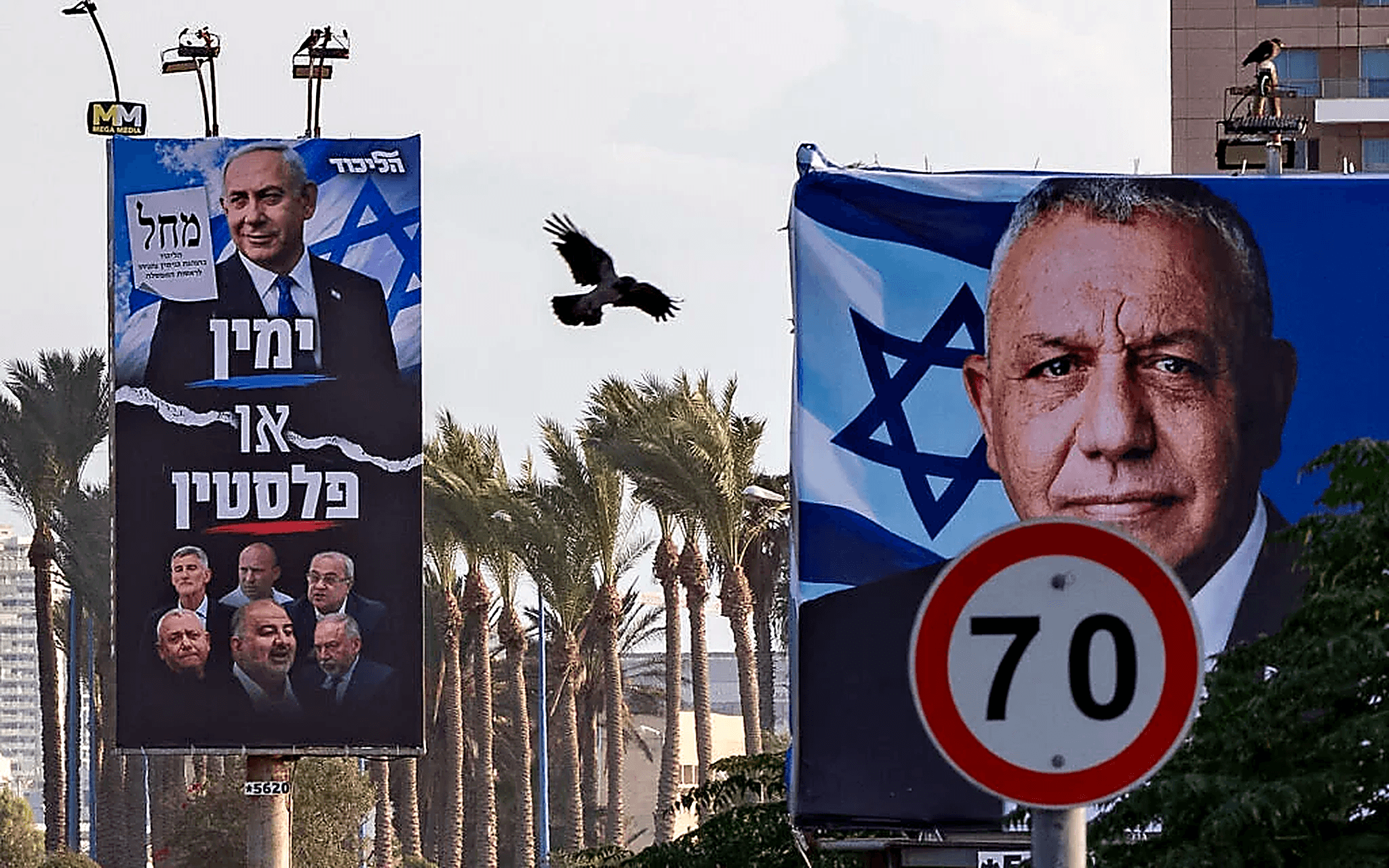
Israel is heading into a period of political uncertainty after its latest general election failed to give any political bloc enough seats to form a government independently.
The final results show that Prime Minister Benjamin Netanyahu's Likud-led bloc secured 53 seats in the 120-member Knesset. The opposition grouping led by former military chief Gadi Eisenkot won 48 seats, while Arab-led parties collectively secured 19.
With 61 seats needed for a parliamentary majority, both major camps are now looking for political partners to strengthen their position.
The result puts Netanyahu under considerable pressure. Although Likud remains the largest individual party with 27 seats, his wider right-wing and religious alliance has lost the majority it previously held.
Meanwhile, Eisenkot sees an opportunity to build an alternative government, potentially with support from Arab-led parties. However, disagreements within the opposition over accepting that support could make negotiations difficult.
For now, the election has shifted Israel's political battle from the campaign trail to coalition negotiations, with the country's next government still uncertain.
NETANYAHU'S BLOC FALLS SHORT OF A MAJORITY
The final results have confirmed that Netanyahu's existing political alliance does not have enough seats to continue governing without additional support.
The 120-seat Knesset is divided as follows:
Political grouping
Seats
Netanyahu's Likud-led bloc
53
Eisenkot-led opposition bloc
48
Arab-led parties
19
Total
120
A government needs at least 61 seats to command a parliamentary majority. Netanyahu's bloc is eight seats short, while Eisenkot's opposition grouping needs another 13 seats to reach that threshold.
The outcome marks a setback for Netanyahu compared with the previous parliament, where his governing coalition held 64 seats. While Likud remains the largest party, that position alone does not guarantee another term as prime minister.
Netanyahu has indicated that he intends to remain aligned with his traditional far-right and ultra-Orthodox partners, including Itamar Ben-Gvir and Bezalel Smotrich.
However, keeping those allies together will not resolve the numbers problem. Netanyahu must now find additional lawmakers willing to support his government or consider a broader political arrangement that could require difficult compromises.
EISENKOT EMERGES AS NETANYAHU'S MAIN POLITICAL CHALLENGER
Opposition leader Gadi Eisenkot has become a central figure in the effort to form Israel's next government.
A former chief of the Israel Defense Forces, Eisenkot leads the centrist Yashar party. His campaign focused on replacing Netanyahu's government, addressing the failures surrounding the October 7, 2023 attacks and pushing for changes to major domestic policies, including military service.
His opposition grouping secured 48 seats, putting it in a position to challenge Netanyahu's leadership.
Eisenkot could potentially reach a parliamentary majority by securing the backing of Arab-led parties. Together, the opposition grouping and those parties hold 67 seats.
He has also begun discussions with other opposition figures, including former prime minister Naftali Bennett, to explore whether different political groups can work together.
But the numbers alone do not guarantee success. Some opposition leaders have previously expressed reservations about relying on Arab-party support, even if those parties do not formally join the government.
This disagreement could become one of the biggest obstacles to Eisenkot's efforts. Bringing together parties with different political priorities will require compromises on issues that have long divided Israel's political establishment.
ARAB-LED PARTIES COULD HOLD THE KEY TO GOVERNMENT FORMATION
The performance of Arab-led political parties is one of the most important developments to emerge from the election.
Together, these parties secured 19 seats, giving them considerable influence over the negotiations now taking place. Their support could help Eisenkot's opposition reach 67 seats and establish a potential parliamentary majority.
The Joint List and United Arab List (Ra'am) could therefore play a decisive role in determining whether Netanyahu remains in office or an alternative government takes shape.
However, their position is politically sensitive. Some opposition figures remain uncomfortable with depending on Arab-party support, reflecting wider disagreements over national identity, security and the political role of Arab citizens in Israel.
The election has also been followed by controversy over allegations of irregularities in Arab communities. Netanyahu and Likud raised concerns about possible foreign-backed interference, but Israeli police and election officials reportedly rejected claims of widespread fraud or that the election had been stolen. Qatar also denied allegations that it had interfered in the vote.
President Isaac Herzog has urged political leaders to avoid language that could undermine the legitimacy of an entire community.
These tensions have added another complication to the coalition talks. Whether the opposition is prepared to work with Arab-led parties could ultimately determine whether it has a realistic path to forming a government.
THREE POSSIBLE PATHS TO A NEW GOVERNMENT
Israel's election result has created several possible scenarios. Each would require difficult negotiations and political compromises.
1. A Netanyahu-led government
Netanyahu could try to rebuild a right-wing majority by attracting lawmakers from other parties. However, this would require negotiations and potentially significant concessions to secure additional support.
2. An Eisenkot-led government
Eisenkot could bring together centrist and opposition parties and seek parliamentary backing from Arab-led groups. The combined numbers would be sufficient for a majority, but political disagreements could prevent the arrangement from moving forward.
3. A national unity government or another election
If neither side can secure enough support, a broader national unity government could become an alternative. Reuters has reported that a possible Likud-led unity arrangement involving centrist and right-wing opposition parties could command 66 seats.
Such an arrangement, however, could require Netanyahu to reconsider his relationship with some of his existing far-right partners.
If negotiations fail within the constitutional timeframe, Israel could also be forced to hold another election.
The situation highlights how much influence smaller political groups and coalition agreements can have when no single bloc wins a clear majority.
BEN-GVIR AND SMOTRICH REMAIN CENTRAL TO NETANYAHU'S STRATEGY
Netanyahu's relationship with far-right leaders Itamar Ben-Gvir and Bezalel Smotrich is expected to play an important role in the coming negotiations.
Both politicians have been influential members of his governing alliance, particularly on national security, settlement policy and domestic affairs.
Following the election, Netanyahu reportedly indicated that he intends to continue working with his far-right partners rather than immediately breaking away from the existing alliance.
However, this position could limit his options. With only 53 seats, he needs support from outside his current bloc to form another government.
Centrist and more moderate opposition figures may demand policy changes or insist that certain far-right leaders be excluded from a broader coalition.
That could put Netanyahu in a difficult position. Maintaining his existing political partnerships may help preserve his support among right-wing voters, but it could also make it harder to attract new coalition partners.
For Ben-Gvir and Smotrich, the outcome will determine whether they retain their influence over the country's security and domestic policy.
ISRAEL'S POLITICAL UNCERTAINTY COULD AFFECT REGIONAL DIPLOMACY
The election comes at a sensitive time for Israel's regional relationships and security priorities.
The next government will have to address several major issues, including the situation in Gaza, developments in the occupied West Bank, relations with neighbouring Arab countries and wider regional security arrangements.
A government dominated by Netanyahu's current right-wing partners could continue a tougher approach towards Palestinian issues and security policy.
A broader coalition might bring different political priorities to the table. However, a change in government would not automatically lead to major changes in Israel's foreign policy.
The election has also exposed deeper divisions within Israeli society. Questions surrounding national security, military service, accountability for the October 7 attacks and the political participation of Arab citizens remain contentious.
Whoever forms the next government will have to deal with these internal disagreements while managing ongoing regional challenges.
RISKS AND KEY ISSUES TO WATCH
Prolonged political deadlock: Neither major bloc has secured the 61 seats required for a majority, increasing the possibility of lengthy negotiations.
Divisions within the opposition: Disagreements over cooperation with Arab-led parties could prevent Eisenkot from assembling a government.
Far-right influence: Netanyahu's commitment to Ben-Gvir and Smotrich may make it harder to attract more moderate coalition partners.
Growing political polarisation: Disputes surrounding election allegations and Arab political participation could deepen existing divisions.
Uncertainty over policy decisions: A delayed government formation could affect decisions on security, economic priorities and regional diplomacy.
The possibility of another election: If no political camp succeeds in forming a government within the constitutional process, Israelis could be asked to vote again.
WHAT TO WATCH NEXT
President Herzog's consultations: The president will consult political parties before deciding which candidate has the strongest chance of forming a government.
Eisenkot's coalition strategy: His ability to bring opposition groups together and secure support from Arab-led parties will be crucial.
Netanyahu's negotiations: Watch whether the prime minister can attract additional lawmakers without losing his existing coalition partners.
Ben-Gvir and Smotrich's positions: Their willingness to compromise could influence the chances of a broader government.
Final certification of results: The Central Elections Committee's formal announcement will provide the basis for the next stage of government formation.
Prospects for a unity government: If both major camps struggle to secure a majority, a broader political arrangement could gain support.
FACT CHECK METER
97% — STRONGLY SUPPORTED
Coalition deadlock
Editorial assessment of available reporting as of 30 October 2026, not a statistical probability.
CONFIRMED DETAILS
Netanyahu's Likud-led bloc secured 53 seats, compared with 48 for Eisenkot's opposition grouping.
Arab-led parties won a combined 19 seats.
Neither major bloc reached the 61 seats required to form a parliamentary majority.
Netanyahu has indicated that he intends to maintain his existing partnerships with far-right political leaders.
Opposition figures have started exploring possible coalition arrangements.
IMPORTANT DISTINCTIONS
The vote count is complete, but the formation of a new government remains unresolved.
Arab-led parties could provide enough parliamentary support for an alternative government, although cooperation remains politically contested.
Netanyahu remains in office while the government-formation process continues.
A national unity government or another election remains a possibility, not a confirmed outcome.
AWX VERDICT
The election has significantly weakened Netanyahu's parliamentary position and changed the balance of power in Israel's political system. However, the results have not yet established who will lead the next government. Coalition negotiations and the willingness of rival political groups to compromise will determine the outcome.
THE AWX BOTTOM LINE
Israel's October 27 election has changed the country's political balance without producing a clear winner. Netanyahu's Likud-led bloc remains the largest political alliance, but its 53 seats are not enough to secure a parliamentary majority.
At the same time, Gadi Eisenkot's opposition has a possible route to power through cooperation with Arab-led parties. Whether that opportunity becomes reality will depend on the opposition's ability to overcome internal disagreements and agree on a common political direction.
The coming weeks will be crucial. Netanyahu could attempt to rebuild his majority, Eisenkot could push ahead with an alternative coalition, or political leaders may eventually consider a national unity government. If all efforts fail, another election could be on the horizon.
The consequences will extend beyond the question of who becomes prime minister. The next government will shape Israel's security priorities, relations with Palestinians, regional diplomacy and domestic political stability.
For now, Israel has a new parliamentary balance, but the fight to form its next government is far from over.
ATTLAS NEWS | AWX WORLD NEWS
Real Stories. Lasting Impact.


Comments
No comments yet.