

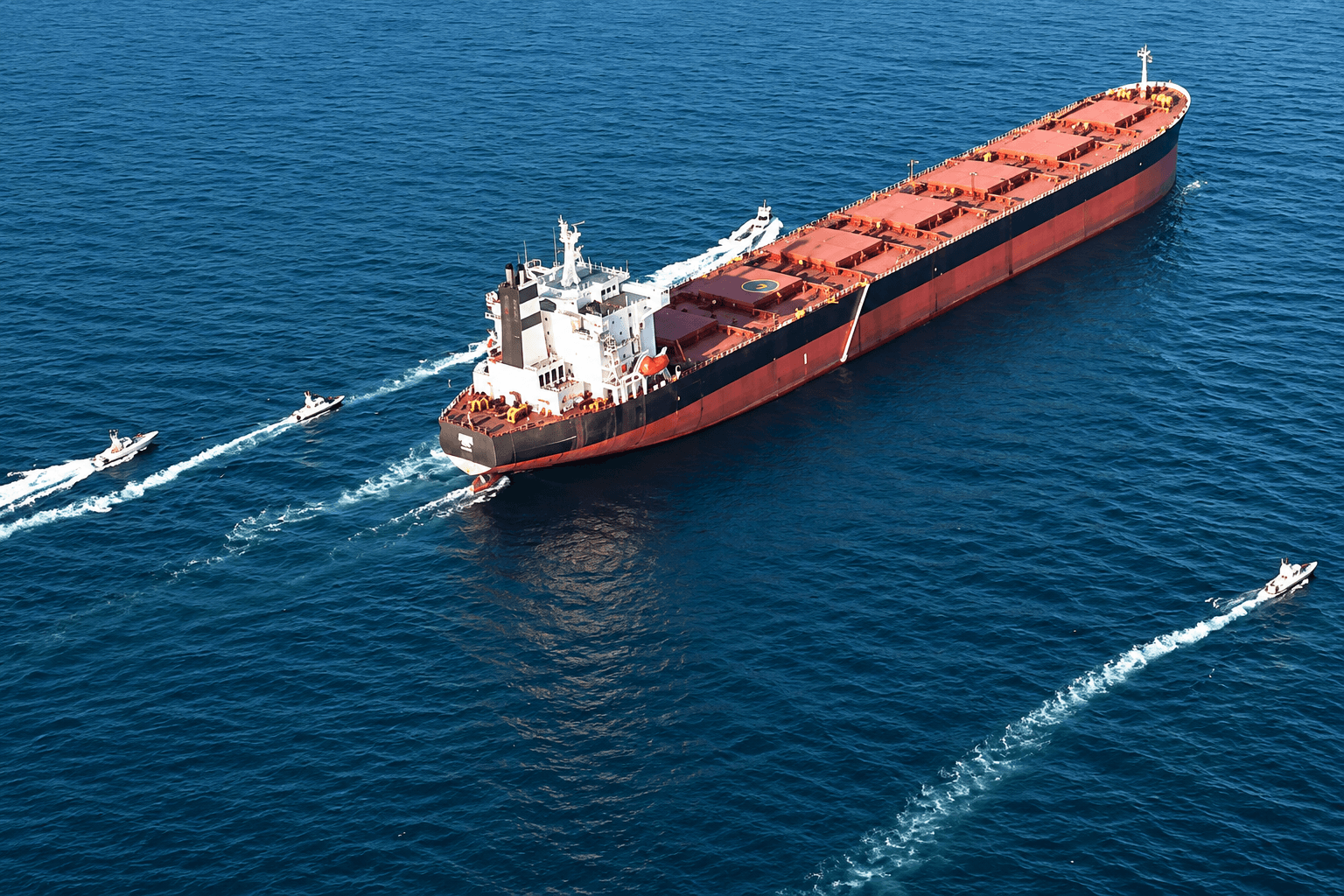
The Strait of Hormuz has become an increasingly dangerous route for commercial shipping, with a growing number of reported attacks threatening the movement of oil and natural gas from the Gulf to international markets.
October 2026 has been particularly difficult for the shipping industry. According to Reuters, the month has seen the highest number of reported attacks on commercial vessels in and around the strait since tracking began. Data compiled by the Washington Institute for Near East Policy recorded 28 confirmed and reported attacks during October, bringing the total to 113 since the US-Israeli war with Iran began on 28 February. The International Maritime Organization (IMO), which covers a broader area, has recorded 120 incidents across the strait and the wider Middle East.
These figures cover different geographical areas and reporting periods, so they should not be compared directly. However, both point to the growing security risks facing commercial vessels in the region.
The stakes are considerable. Before the conflict, roughly one-fifth of the world's oil and liquefied natural gas (LNG) flows passed through the Strait of Hormuz. Any prolonged disruption could affect energy supplies, fuel prices, shipping schedules and the cost of transporting goods across international markets.
Recent reports have described tankers and container ships being struck by unidentified projectiles, alongside concerns about naval mines. The United Kingdom Maritime Trade Operations (UKMTO) has repeatedly urged vessels to exercise caution and report suspicious activity. Although crews have remained safe in several reported incidents, damage to ships and the possibility of environmental harm remain serious concerns.
The problem extends beyond vessels directly targeted. Even when oil continues to move through the strait, repeated attacks can make voyages more expensive, discourage shipowners from accepting cargoes and leave energy buyers uncertain about future deliveries.
A STRATEGIC WATERWAY UNDER GROWING PRESSURE
The Strait of Hormuz lies between Iran and Oman, connecting the Persian Gulf with the Gulf of Oman and the Arabian Sea. Its location makes it one of the most important routes for moving energy from Gulf producers to international markets.
Countries across Asia and other regions depend on shipments passing through the waterway. Refineries, power plants and industrial businesses need reliable deliveries to manage inventories, maintain production and keep operating costs under control.
The current security crisis has made that increasingly difficult. Reuters has reported that Iran has changed its approach to targeting shipping as it seeks leverage in its confrontation with the United States. Tehran has also attempted to assert greater control over passage through the strait, while Washington has challenged Iran's claims of authority over the waterway.
The dispute reflects a wider struggle over regional security and access to a critical international shipping route. For commercial operators, however, the immediate concern is straightforward: can ships travel safely, arrive on schedule and complete their journeys at a reasonable cost?
A complete closure is not necessary to disrupt trade. Shipping companies may delay departures, seek additional security assurances or demand higher rates to compensate for the danger. Where alternative routes are available, some cargoes may be redirected, although doing so can add time and expense.
Energy markets are particularly sensitive to this uncertainty because prices respond not only to actual shortages but also to fears that supplies could become harder to obtain.
TANKER ATTACKS DRIVE UP SHIPPING COSTS
The growing number of reported attacks has created additional pressure for shipowners, charterers, energy traders and marine insurers.
Reuters has reported that more than 30 very large crude carriers (VLCCs) have been damaged in attacks since the conflict began, including 11 during October. A single VLCC can carry around two million barrels of crude oil. The vessels identified in the reporting represented approximately 3.5% of the global VLCC fleet.
Damage to a tanker can take it out of service for inspections or repairs, delay deliveries and reduce the capacity available to transport oil. When crews are injured or vessels have to be abandoned, the consequences extend well beyond the financial losses.
Ships that escape attacks can also face higher operating costs. As the perceived danger of sailing through the region increases, insurers may raise war-risk premiums or introduce stricter conditions. Shipowners may then charge more to transport cargo, leaving energy companies to pay a higher price for available vessels.
Reuters has reported that daily freight rates for some tankers exceeded $1 million as operators continued loading Gulf cargoes despite the risks.
These expenses can eventually reach refineries, fuel distributors, airlines, manufacturers and consumers. How much they affect the wider economy will depend on the duration of the disruption, the availability of alternative shipping capacity and the extent to which businesses absorb the additional costs.
OIL AND LNG MARKETS FACE A SUPPLY-RISK TEST
The Strait of Hormuz remains central to global energy security because so much oil and gas moves through it. Any sustained disruption could affect crude oil supplies, refined petroleum products and LNG deliveries.
Countries heavily dependent on imported energy may be particularly exposed, especially if they have limited storage capacity or few alternative suppliers.
Oil prices, however, do not move solely in response to shipping attacks. Traders also consider production levels, global demand, inventories, diplomatic developments and expectations about how long the disruption might last.
On 27 October, Reuters reported Brent crude trading at around $115.15 a barrel and US West Texas Intermediate at approximately $101.32. Hopes for diplomatic progress eased some market concerns, but continuing attacks kept supply risks in focus. These figures represent a snapshot of market conditions and may change as events develop.
If energy prices remain elevated, the effects could spread throughout the economy. Transport becomes more expensive, businesses face higher production costs, and households may pay more for fuel, electricity and everyday goods.
Central banks could also face difficult decisions. A prolonged rise in energy prices can push inflation higher while reducing household spending and discouraging business investment. This combination makes it harder to balance price stability with economic growth.
The security of the Strait of Hormuz is therefore more than a regional military issue. It is closely connected to global inflation, international trade, industrial activity and financial-market stability.
SHIPPING CONTINUES, BUT THE RISKS REMAIN
Despite the growing threat, maritime traffic through the Strait of Hormuz has not stopped entirely. Some vessels continue to pass through, and Gulf exporters have at times maintained or increased shipments even as security concerns have intensified.
Reuters reported in early October that Middle Eastern crude exports exceeded pre-war levels on several days in late September. At the same time, separate shipping data showed that vessel transits dropped sharply on some days following attacks.
The contrast highlights an important distinction: a threatened shipping route is not necessarily a completely closed one. Oil and gas can continue moving while the supply chain becomes more expensive, less predictable and more vulnerable to sudden interruptions.
Tracking maritime activity also presents challenges. Some vessels switch off their automatic identification system transponders, while other incidents may not be reported immediately. These gaps can make it difficult to establish exactly how many ships are passing through the region or how many attacks have occurred.
For governments and energy companies, monitoring actual cargo movements is therefore just as important as following security announcements. The number of vessels transiting the strait, the volume of oil delivered and the time taken to complete voyages can help show whether supply chains are stabilising or facing further disruption.
ALTERNATIVE ROUTES CAN HELP, BUT CANNOT REPLACE HORMUZ
Some Gulf producers have pipelines that allow part of their oil exports to bypass the Strait of Hormuz. Saudi Arabia's East-West Pipeline, which carries crude towards the Red Sea, is one example.
These alternatives can provide valuable relief, but they cannot necessarily replace all the oil and gas that normally passes through the strait. Available pipeline capacity, operating conditions, export terminals and access to onward shipping all affect how much additional supply can be redirected.
Moving more cargo through alternative ports can also create new bottlenecks. Storage facilities, loading terminals, tankers and onward transport networks may come under pressure as exporters seek different routes.
LNG presents additional challenges because it requires specialised liquefaction facilities, storage systems and purpose-built carriers. A major disruption to LNG shipments can be particularly difficult to offset quickly when buyers have limited alternative suppliers.
Diversifying energy sources and export routes can reduce vulnerability over time. In the short term, however, there is no easy substitute for safe and reliable passage through the Strait of Hormuz.
DIPLOMACY AND MARITIME SECURITY FACE A CRITICAL TEST
The shipping crisis is unfolding amid wider tensions involving Iran, the United States and other regional actors. Diplomatic efforts could help reduce the threat, but progress remains vulnerable to further attacks and military escalation.
Reuters reported on 27 October that Saudi Arabia, Turkey and Pakistan had held discussions with Iranian officials aimed at opening negotiating channels and preventing a renewed escalation. However, continuing attacks have made it difficult to predict when maritime conditions might improve.
Governments and international maritime organisations face several urgent priorities: protecting commercial vessels, keeping crews safe, preventing environmental damage and preserving freedom of navigation under international law.
Naval escorts and coordinated security operations may offer additional protection in certain circumstances, but they cannot eliminate every threat. Mines, unidentified projectiles and rapidly changing conditions make it difficult to guarantee safe passage.
A lasting improvement will require a reduction in attacks, reliable communication among the parties involved and credible arrangements that allow commercial vessels to operate without facing repeated threats.
RISKS: WHAT IS AT STAKE FOR THE GLOBAL ECONOMY?
1. Higher oil and fuel prices
Further attacks or a prolonged decline in tanker traffic could push energy prices higher. Import-dependent economies may face rising fuel bills, increased transport costs and additional inflationary pressure.
2. Disruption to LNG supplies
Delays to gas shipments could affect electricity generation and industrial production in countries that depend on imported LNG. Alternative supplies may be available, but securing them can take time and cost more.
3. Rising shipping and insurance costs
Higher war-risk premiums, charter rates and security expenses can increase the cost of delivering energy and other goods. Smaller operators may find it particularly difficult to absorb these additional expenses.
4. Environmental damage
An attack on an oil tanker can create the risk of leaks, fires and marine pollution. The extent of the damage would depend on the cargo, the condition of the vessel, its location and the speed of the emergency response.
5. Crew safety and humanitarian concerns
Seafarers face the immediate danger of explosions, fires, evacuation and prolonged uncertainty. Rescue operations may also become more difficult when military activity intensifies.
6. Supply-chain disruption
Delays to energy deliveries can affect refineries, petrochemical producers, airlines, shipping companies and manufacturers. Businesses may need to use existing inventories, find more expensive alternatives or cut production.
7. Regional escalation
An attack that causes significant casualties or major environmental damage could trigger retaliation and increase the risk of a wider confrontation. Further escalation would make it harder to restore safe maritime passage.
8. Slower growth and persistent inflation
If energy costs remain high, households may have less money to spend elsewhere while businesses face rising operating expenses. The resulting pressure could weaken economic growth even in countries not directly involved in the conflict.
WHAT TO WATCH NEXT
UKMTO incident reports: Watch for new reports of attacks, suspicious activity, vessel damage and maritime safety warnings.
Daily shipping transits: Track whether tanker and LNG carrier movements recover, remain subdued or fall further.
Oil and LNG prices: Compare market movements with evidence of actual supply disruptions rather than assuming every price increase signals a physical shortage.
Insurance premiums and freight rates: Rising costs can indicate that shipowners and insurers continue to see significant risks, even when some vessels are still moving.
Diplomatic negotiations: Look for concrete measures to reduce attacks, restore predictable maritime access and prevent further escalation.
Alternative export routes: Monitor how much additional oil and gas pipelines and ports outside Hormuz can realistically handle.
Crew safety and environmental effects: Follow verified reports of casualties, rescue operations, fires and pollution from damaged vessels.
International maritime coordination: Watch for new measures by regional governments and international partners to protect commercial shipping and improve incident reporting.
FACT CHECK METER
96% — Strong factual basis
Status: Source-supported, with some figures requiring context.
Confirmed details
Reuters reported that October 2026 had recorded the highest monthly number of reported commercial shipping attacks in and around the Strait of Hormuz since tracking began.
The IMO and maritime security analysts have documented numerous incidents affecting vessels across the region.
Before the conflict, roughly one-fifth of global oil and LNG flows passed through the strait.
Reports of vessel damage, fluctuating traffic and higher freight rates illustrate the economic consequences of the security crisis.
Important distinctions
The figure of 28 reported attacks during October and the IMO's total of 120 incidents cover different reporting scopes and should not be treated as directly comparable.
Not every reported incident has the same level of independent verification, and some investigations may remain ongoing.
Ships continue to transit the strait, meaning that heightened danger does not necessarily amount to a complete closure.
Oil prices are influenced by several factors, including diplomacy, production, demand and expectations about future supply.
AWX Verdict: Available reporting supports the conclusion that attacks on commercial shipping are increasing risks to energy security and global trade. The extent of any further disruption will depend on whether vessels can continue operating safely, how much alternative export capacity is available and whether diplomatic efforts reduce the threat.
THE AWX BOTTOM LINE
The Strait of Hormuz has become a major pressure point for the global economy. Rising attacks on commercial vessels are putting a critical oil and LNG shipping route under pressure, increasing costs for shipowners and energy companies while creating uncertainty for consumers and businesses.
The danger is not limited to the possibility of a complete shutdown. Repeated attacks can make energy deliveries more expensive and less reliable even when cargoes continue to reach their destinations. Over time, that uncertainty can feed into fuel prices, inflation, industrial costs and financial markets around the world.
Alternative pipelines, strategic reserves and more diversified energy supplies can help cushion the impact, but they cannot fully replace the strait's importance in the short term.
For now, the priorities are clear: protect seafarers, reduce attacks, maintain safe maritime passage and prevent the conflict from escalating further. The crisis also highlights a broader lesson about energy security: having enough oil and gas to meet demand is only part of the equation. Those supplies must also be transported safely and reliably.
The world does not need the Strait of Hormuz to close completely to feel the consequences. If ships cannot move through it safely and predictably, the cost of securing energy supplies rises for everyone.
ATTLAS NEWS | AWX WORLD NEWS
Real Stories. Lasting Impact.


Comments
No comments yet.