

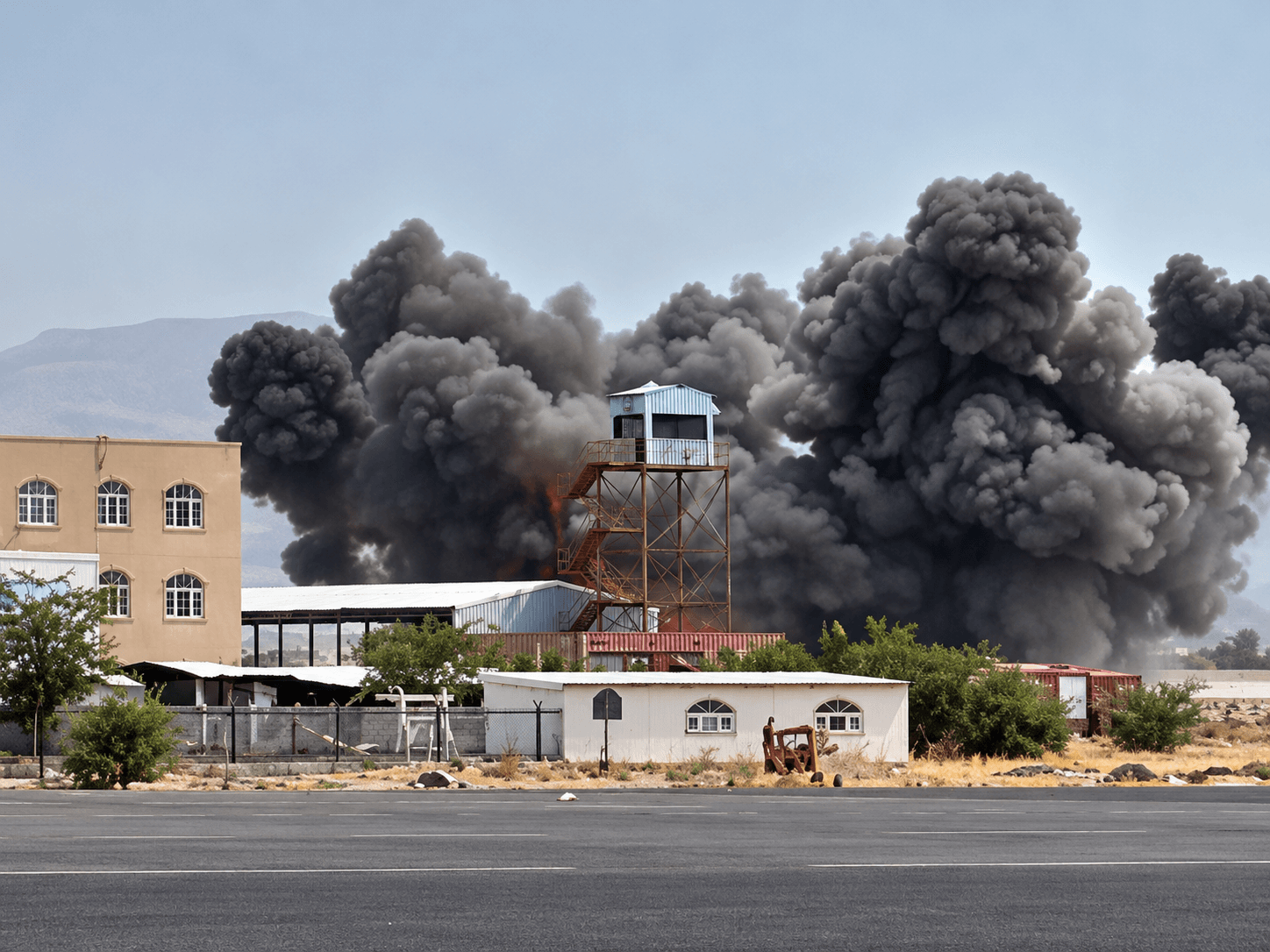
Saudi Arabia is on heightened alert after its air defences reportedly intercepted several missiles and drones launched from Yemen. The latest incidents have raised concerns about the safety of major cities and critical infrastructure as the wider Middle East conflict continues to intensify.
On October 27, the Saudi-led coalition supporting Yemen’s internationally recognised government said it had intercepted two ballistic missiles heading towards Riyadh and three aimed at the Eastern Province. Four drones reportedly launched towards southern Saudi Arabia were also brought down.
The interceptions did not leave the capital entirely unscathed. Saudi Civil Defence reported that debris from intercepted missiles damaged a building, a construction site and a vehicle in Riyadh. No casualties were initially reported in connection with the damage.
The alerts continued into October 28. According to the coalition, another ballistic missile heading towards Taif, in western Saudi Arabia, was intercepted. Authorities also issued warnings in Jeddah and Yanbu before later announcing that the immediate danger had passed.
The incidents come amid renewed fighting involving the Saudi-led coalition and Yemen’s Iran-aligned Houthi movement. The Houthis have claimed attacks on Saudi targets, including oil infrastructure and Riyadh airport, although claims of successful strikes on specific facilities have not all been independently verified.
For Saudi Arabia, the challenge is twofold: protecting its population and keeping essential services running while preventing the conflict from spreading further across the region.
RIYADH AND THE EASTERN PROVINCE FACE HEIGHTENED SECURITY CONCERNS
The latest interceptions have once again put Saudi Arabia’s major population centres and economic hubs under the spotlight.
According to the Saudi-led coalition, two ballistic missiles aimed at Riyadh and three directed towards the Eastern Province were intercepted on October 27. Four drones reportedly heading towards southern parts of the country were also destroyed.
The locations involved make the incidents particularly significant. Riyadh is Saudi Arabia’s political and administrative centre, while the Eastern Province is home to major oil-producing areas and important energy facilities.
Although the incoming projectiles were reportedly intercepted, falling debris caused property damage in the capital. The incident highlights a risk that remains even when air-defence systems successfully stop an attack: fragments can still threaten buildings, vehicles and people on the ground.
Authorities issued emergency alerts as they monitored the situation. Residents were urged to follow official instructions and exercise caution in areas where debris might have fallen.
The latest developments follow other reported interceptions in recent days, suggesting that Saudi security forces remain on alert for further launches.
Repeated attacks could put additional pressure on air-defence systems and complicate efforts to maintain normal life in affected areas.
HOUTHI CLAIMS PUT OIL FACILITIES AND AIRPORTS UNDER SCRUTINY
The threat extends beyond the immediate danger posed to residential neighbourhoods and government buildings.
The Houthis have claimed attacks on Saudi oil pumping stations and Riyadh airport, raising concerns about the security of infrastructure that supports the kingdom’s economy and international connections. However, claims of successful strikes need to be distinguished from confirmed interceptions and independently verified damage.
Oil pumping stations play an important role in moving crude between production areas and export terminals. Damage to these facilities could complicate transportation and export operations, even if production at oilfields and refinery activity continued.
Airports face a different set of risks. Threats to aviation facilities can lead to additional security checks, flight delays and temporary restrictions, even when incoming missiles or drones are intercepted before reaching their targets.
Saudi Arabia has also faced security concerns involving King Khalid International Airport in Riyadh. Any assessment of the current situation, however, needs to distinguish previously reported incidents from new, independently confirmed damage.
For now, the latest interceptions underscore the pressure on authorities to protect essential facilities while keeping transport and economic activity operating as normally as possible.
The extent of any wider disruption will depend on whether further attacks occur and whether there is verified damage to operational infrastructure.
YEMEN CONFLICT ADDS TO THE REGION'S SECURITY CHALLENGES
The latest exchanges are part of a conflict that has shaped Yemen and its neighbours for more than a decade.
The Houthis took control of Yemen’s capital, Sanaa, in 2014. In 2015, Saudi Arabia led a military coalition supporting the internationally recognised Yemeni government.
A UN-brokered truce in 2022 helped reduce direct fighting, but it did not produce a lasting political settlement. Renewed military activity has since raised concerns that the relative calm could give way to another prolonged period of escalation.
The conflict also has implications beyond Yemen’s borders. The Houthis have claimed attacks against Saudi targets, while coalition forces have reported strikes against Houthi military infrastructure, including missile-related facilities.
These exchanges have become increasingly difficult to separate from wider tensions involving Iran and other regional powers. As a result, developments in Yemen could affect security across the Gulf and the Red Sea, including routes used by international shipping.
Civilians remain among those most exposed to the consequences. Renewed fighting can disrupt food supplies, restrict access to healthcare and make it harder for humanitarian organisations to reach communities already struggling with years of instability.
The concern is that further escalation could make an already difficult situation even harder to contain.
OIL MARKETS AND SHIPPING ROUTES FACE FRESH UNCERTAINTY
Saudi Arabia’s role as a major oil exporter means that any credible threat to its energy infrastructure attracts close attention from global markets.
The latest missile interceptions have come amid concerns about possible attacks on oil facilities and disruption to important maritime routes. Even without confirmed damage to energy infrastructure, the risk of further escalation can influence market expectations.
The Strait of Hormuz is one of the world's most important routes for oil and liquefied natural gas shipments. A serious disruption there could affect supplies to major importing economies, particularly in Asia.
Further south, the Bab el-Mandeb Strait connects the Red Sea with the Gulf of Aden and serves as another key passage for international trade. Continued instability in Yemen can increase risks for vessels travelling through the area.
Shipping companies may respond by reviewing routes, strengthening security arrangements or facing higher insurance costs. Such measures can add to transportation expenses and delay deliveries.
Oil prices can also rise in response to fears about future supply shortages, even before a physical disruption is confirmed.
However, the reported missile interceptions do not, on their own, establish that Saudi oil production or exports have been affected. The actual economic impact will depend on whether facilities sustain damage, operations are interrupted or shipping routes become more difficult to use.
DIPLOMATIC EFFORTS FACE GROWING PRESSURE
As military tensions rise, regional governments face increasing pressure to prevent the conflict from spreading.
Diplomatic contacts involving Saudi Arabia, Iran, Turkey and Pakistan have drawn attention to efforts to improve regional coordination and reduce the risk of a wider confrontation. Whether these discussions can produce a meaningful reduction in hostilities remains uncertain.
Saudi Arabia has strong reasons to protect its territory and energy infrastructure while avoiding a prolonged conflict that could affect investment, trade and economic development.
Iran’s relationship with the Houthis is another important factor in the regional security debate. Tehran’s influence and the broader confrontation involving regional powers have added complexity to attempts to contain the fighting.
Diplomacy faces significant obstacles while missile launches, retaliatory operations and competing strategic interests continue. Even limited progress could be difficult to sustain without a broader commitment to reducing attacks.
The latest interceptions underline the gap between diplomatic efforts and the security situation on the ground.
The immediate test will be whether the parties can prevent further attacks and maintain communication before the conflict expands further.
KEY RISKS TO WATCH
1. Further missile and drone launches
Additional attacks against Saudi cities could increase pressure on air-defence systems and create further risks from falling debris.
2. Damage to energy infrastructure
Any verified strike on pumping stations, refineries or export facilities could affect operations and add uncertainty to global oil markets.
3. Disruption to airports and civilian transport
Continued threats to aviation infrastructure could result in flight delays, temporary restrictions and tighter security measures.
4. A wider regional confrontation
Further exchanges involving the Houthis, Saudi-led forces and other regional actors could draw more countries into the conflict.
5. Security risks to commercial shipping
Instability around the Strait of Hormuz and Bab el-Mandeb could increase shipping costs, delay deliveries and complicate energy exports.
6. Worsening humanitarian conditions
More intense fighting in Yemen could disrupt essential supplies and make access to food and medical care even more difficult.
WHAT TO WATCH NEXT
Further Saudi military updates: New statements from the Saudi-led coalition should clarify whether additional missiles or drones have been intercepted.
Verification of attack claims: Independent reporting will be important in establishing whether oil facilities or airports have suffered confirmed damage.
Airport operations: Any new restrictions or flight changes could indicate how authorities are responding to continuing aviation security concerns.
Oil prices and shipping costs: Movements in energy markets and freight rates may offer clues about how traders and shipping companies are assessing the risks.
Developments inside Yemen: Further coalition strikes or Houthi attacks could influence the scale and direction of the conflict.
Regional diplomacy: Progress in talks involving Saudi Arabia, Iran, Turkey and Pakistan could help reduce tensions and limit the risk of further escalation.
FACT CHECK METER
95% — Confidence in the core reporting
STATUS: AUTHORITIES HAVE REPORTED MISSILE INTERCEPTIONS; SOME CLAIMS OF SUCCESSFUL STRIKES REMAIN UNVERIFIED
Confirmed details
The Saudi-led coalition reported intercepting two ballistic missiles aimed at Riyadh and three directed towards the Eastern Province on October 27.
The coalition also reported intercepting four drones heading towards southern Saudi Arabia.
Saudi Civil Defence reported property damage in Riyadh caused by debris from intercepted missiles.
The coalition reported intercepting another ballistic missile heading towards Taif on October 28.
Authorities issued alerts in Jeddah and Yanbu before subsequently announcing that the immediate danger had passed.
The Houthis have claimed attacks involving Saudi energy infrastructure and Riyadh airport, but claims of successful strikes on specific facilities require independent verification.
Important distinctions
The interception figures are based on statements from Saudi authorities and the Saudi-led coalition.
Claims of successful attacks should not be treated as confirmed damage without supporting evidence.
The reported interceptions do not establish that Saudi oil production or exports have been disrupted.
The wider impact will depend on subsequent attacks, the condition of critical infrastructure and the progress of diplomatic efforts.
AWX VERDICT: Saudi Arabia faces renewed missile and drone threats as tensions involving the Houthis intensify. The reported interceptions and damage from falling debris highlight the risks to civilians and critical infrastructure. Claims involving oil facilities and airports should be assessed carefully until independently verified evidence becomes available.
THE AWX BOTTOM LINE
Saudi Arabia is facing renewed security pressure as missile and drone threats add to the instability surrounding Yemen and the wider Middle East. The reported interceptions over Riyadh and the Eastern Province, followed by another interception near Taif, highlight the continuing risks to the kingdom’s cities and essential infrastructure.
The consequences could extend well beyond Saudi Arabia if attacks begin to disrupt energy facilities, airports or major shipping routes. Given the kingdom’s role in global oil markets, even the threat of a prolonged disruption can attract international attention.
For now, the reported interceptions show that Saudi air defences are actively responding to incoming threats. But intercepting missiles does not remove every danger, particularly when falling debris can damage property and put civilians at risk.
The next few days will be important in determining whether the latest exchanges remain contained or lead to a broader regional escalation. Protecting civilians, securing vital infrastructure and maintaining credible diplomatic channels will be essential to limiting the damage.
ATTLAS NEWS | AWX WORLD NEWS
Real Stories. Lasting Impact.


Comments
No comments yet.