

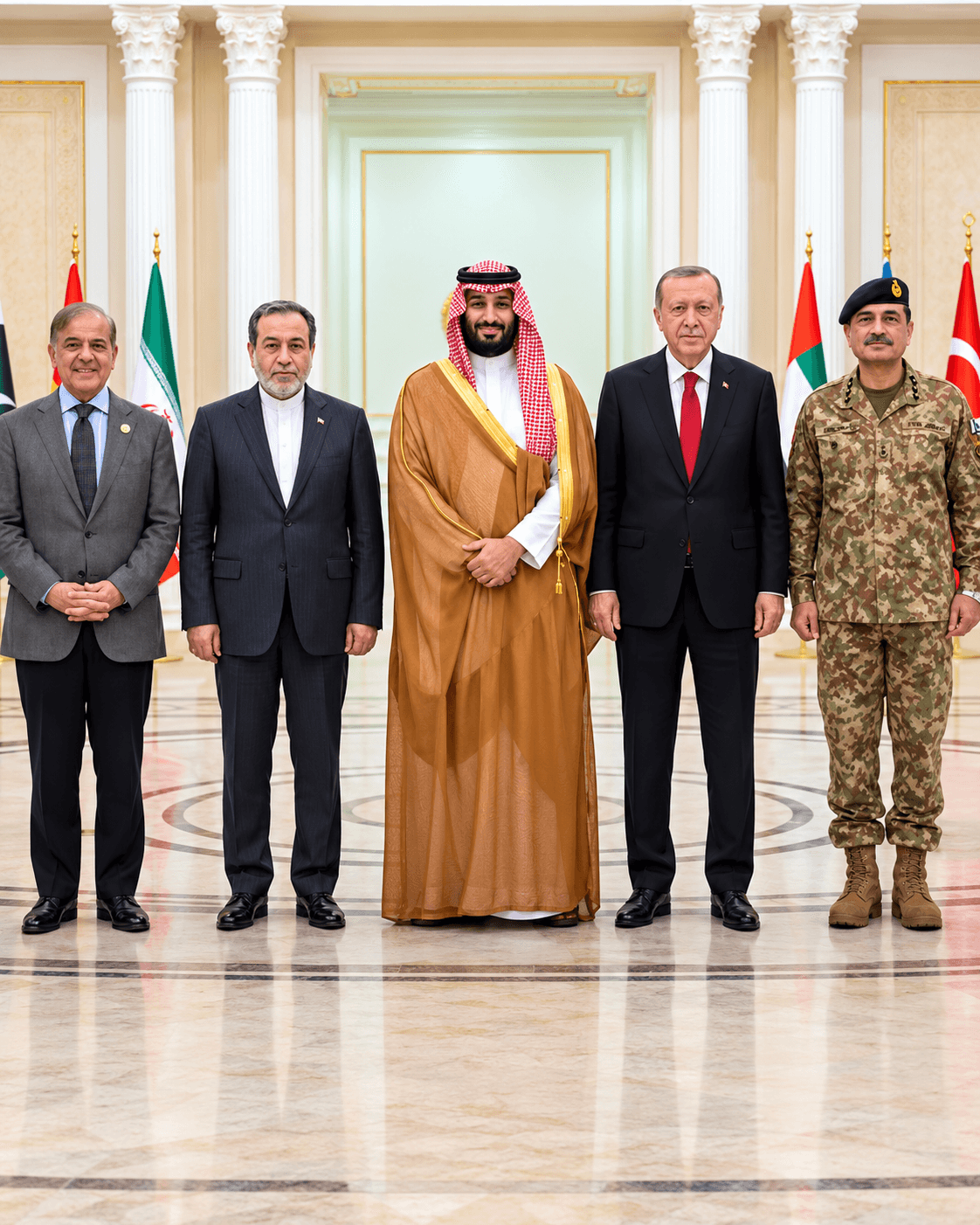
Saudi Arabia, Iran, Türkiye and Pakistan have agreed to continue diplomatic discussions as concerns grow over the widening conflict in the Middle East. The four countries want to strengthen regional cooperation, address security risks and keep communication open at a time when tensions are running high.
The agreement followed a high-level meeting in Tehran on 26 October. The talks came as Saudi Arabia faced renewed missile and drone threats and tensions involving Iran, the United States, Israel and Yemen’s Houthi movement continued to raise fears of a broader regional confrontation.
The meeting was significant because it brought Iran together with three countries linked through the Mecca mutual defence pact, signed in August. Despite their differing political and security interests, all four have reasons to prevent the conflict from escalating further. A wider war could threaten energy supplies, disrupt major shipping routes and put additional pressure on regional economies.
According to reports from Iranian state media, the four countries agreed to maintain dialogue and work towards greater cooperation on peace and security. However, the meeting did not produce a comprehensive peace agreement or a binding ceasefire.
DIPLOMACY GAINS IMPORTANCE AS REGIONAL TENSIONS GROW
The Tehran meeting brought together Saudi Defence Minister Prince Khalid bin Salman, Pakistan’s army chief Field Marshal Asim Munir and Türkiye’s intelligence chief Ibrahim Kalin. Iranian officials, including President Masoud Pezeshkian, Foreign Minister Abbas Araghchi and Supreme National Security Council Secretary Mohsen Rezaei, also took part in the discussions.
Saudi Arabia has presented the diplomatic engagement as an opportunity to open channels for negotiation and reduce the risk of further military escalation. Iran, meanwhile, has highlighted the potential for regional countries to work together on security arrangements.
The timing is important. Saudi Arabia has faced repeated threats attributed to Yemen’s Houthi movement, while the wider confrontation involving Iran has increased concerns about attacks on critical infrastructure and the possibility of further military action.
Keeping diplomatic channels open will not automatically resolve the differences between these governments. Still, direct communication could give them a way to discuss security concerns and explore alternatives to further confrontation.
A POSSIBLE REGIONAL NON-AGGRESSION AGREEMENT
One of the issues reportedly discussed in Tehran was the possibility of a regional non-aggression arrangement. According to a senior Pakistani security official cited by Reuters, the meeting focused on ways to prevent countries across the region from being drawn deeper into the conflict.
The reported agenda also covered US-Iran negotiations, Houthi attacks on Saudi Arabia, security around the Strait of Hormuz and the US blockade of Iranian ports. Developments in Palestine and Lebanon, along with the consequences of US and Israeli military operations against Iran, were also part of the wider discussions.
Pakistan has been working to maintain communication between Washington and Tehran. Türkiye and Saudi Arabia also have strong reasons to limit the conflict and protect their own security and economic interests.
Their participation suggests that regional governments are exploring diplomatic options alongside defence cooperation. Whether those efforts can lead to a lasting agreement, however, remains an open question.
So far, no final non-aggression agreement has been publicly confirmed. Details about possible commitments, enforcement arrangements and an implementation timetable also remain unclear.
SAUDI ARABIA SEEKS SECURITY WITHOUT WIDER ESCALATION
For Saudi Arabia, the diplomatic effort comes against the backdrop of continuing security concerns. Saudi authorities and the Saudi-led coalition have reported intercepting missiles and drones targeting parts of the kingdom as tensions involving the Houthis have intensified.
The Houthis have also claimed attacks on Saudi energy and transport infrastructure. Those claims need to be assessed individually, and reports of attacks should not automatically be taken as confirmation of damage.
Riyadh faces a difficult balancing act. It needs to protect its territory, energy facilities and transport networks while avoiding a wider confrontation that could threaten regional stability.
Engaging directly with Iran offers another channel for addressing those risks. At the same time, Saudi Arabia is seeking stronger cooperation with regional partners to improve its security.
Iran has also used the talks to advance its position that regional countries should play a leading role in managing their own security. Whether that approach can produce practical commitments acceptable to all sides remains uncertain.
PAKISTAN AND TÜRKİYE LOOK TO KEEP NEGOTIATIONS ALIVE
Pakistan is playing an important role in the latest diplomatic push. Islamabad maintains close defence ties with Saudi Arabia while also sharing a border and security interests with Iran. Its involvement gives Pakistan a reason to encourage dialogue before tensions spill further across the region.
Field Marshal Asim Munir's participation in the Tehran meeting reflects Islamabad's efforts to keep communication open during a period of heightened uncertainty.
Türkiye is contributing through its intelligence leadership and broader diplomatic engagement. Its involvement provides another channel for discussions among governments whose alliances, priorities and regional interests do not always align.
Reports suggest that a proposal intended to offer concessions to both Washington and Tehran was discussed during the diplomatic efforts. However, its terms have not been made public, and there is no confirmation that either government has accepted it.
The next challenge for Pakistan and Türkiye will be turning these initial discussions into concrete steps. Possible measures could include restarting negotiations, improving communication during security incidents and reducing the risk of attacks on critical infrastructure.
ENERGY SUPPLIES AND GLOBAL TRADE AT RISK
The outcome of these talks matters far beyond the Middle East. The region plays a major role in global energy supplies, and any serious disruption to oil infrastructure or shipping could affect prices, transport costs and inflation worldwide.
The Strait of Hormuz is particularly important. A substantial share of internationally traded oil and liquefied natural gas passes through the waterway, making its security a concern for energy producers, importers and shipping companies.
Any prolonged disruption could put further pressure on energy markets and complicate international trade. Higher fuel costs could also feed into transportation expenses and the prices paid by businesses and consumers.
For governments and markets, the key question is whether diplomacy can help reduce the risk of further attacks and restore confidence in regional shipping routes.
A meaningful diplomatic breakthrough could ease some of these concerns. But until there are clear signs of sustained de-escalation, uncertainty around energy supplies and regional security is likely to remain.
WHAT TO WATCH NEXT
The next round of talks: Whether the four governments announce another meeting or establish a regular channel for diplomatic discussions.
US-Iran negotiations: Whether Pakistan's mediation efforts produce a proposal that both Washington and Tehran are willing to consider.
Missile and drone activity: Whether reported attacks against Saudi Arabia and other regional targets decline or continue.
Security in the Strait of Hormuz: Whether shipping conditions improve and the risk of disruption to energy transport decreases.
A possible regional security agreement: Whether the countries publish concrete commitments on non-aggression, crisis communication or cooperation on regional security.
FACT CHECK METER
85% — STRONGLY SUPPORTED
Core event: The Tehran meeting and the agreement to continue dialogue have been reported by multiple news outlets.
Confirmed details
Senior representatives from Saudi Arabia, Iran, Türkiye and Pakistan met in Tehran on 26 October 2026.
The four countries agreed to continue discussions on regional cooperation, peace and security.
The meeting took place amid heightened regional tensions and reports of attacks attributed to Yemen's Houthi movement.
What remains unconfirmed
Whether the four countries will adopt a formal regional non-aggression agreement.
The exact terms and status of any reported proposal involving Washington and Tehran.
Whether the diplomatic initiative will lead to a ceasefire or a sustained reduction in hostilities.
AWX assessment: Available reporting supports the central account of the meeting and the decision to continue diplomatic engagement. However, the possible security framework and the longer-term impact of the talks remain uncertain. The 85% rating is an editorial confidence assessment, not a statistical measurement.
THE AWX BOTTOM LINE
Saudi Arabia, Iran, Türkiye and Pakistan are keeping the door to diplomacy open at a time when the Middle East faces mounting security and economic risks.
The Tehran meeting offers an opportunity to address regional tensions through dialogue, but it is not a peace settlement. The real test will be whether the four countries can turn their discussions into practical commitments, reduce the risk of further attacks and create space for wider negotiations.
For now, diplomatic efforts are moving ahead while serious disagreements and security threats remain. The next round of talks, along with developments on the ground, will help determine whether this initiative can deliver lasting progress or remain a limited attempt to contain the crisis.
ATTLAS NEWS | AWX WORLD NEWS
Real Stories. Lasting Impact.


Comments
No comments yet.