

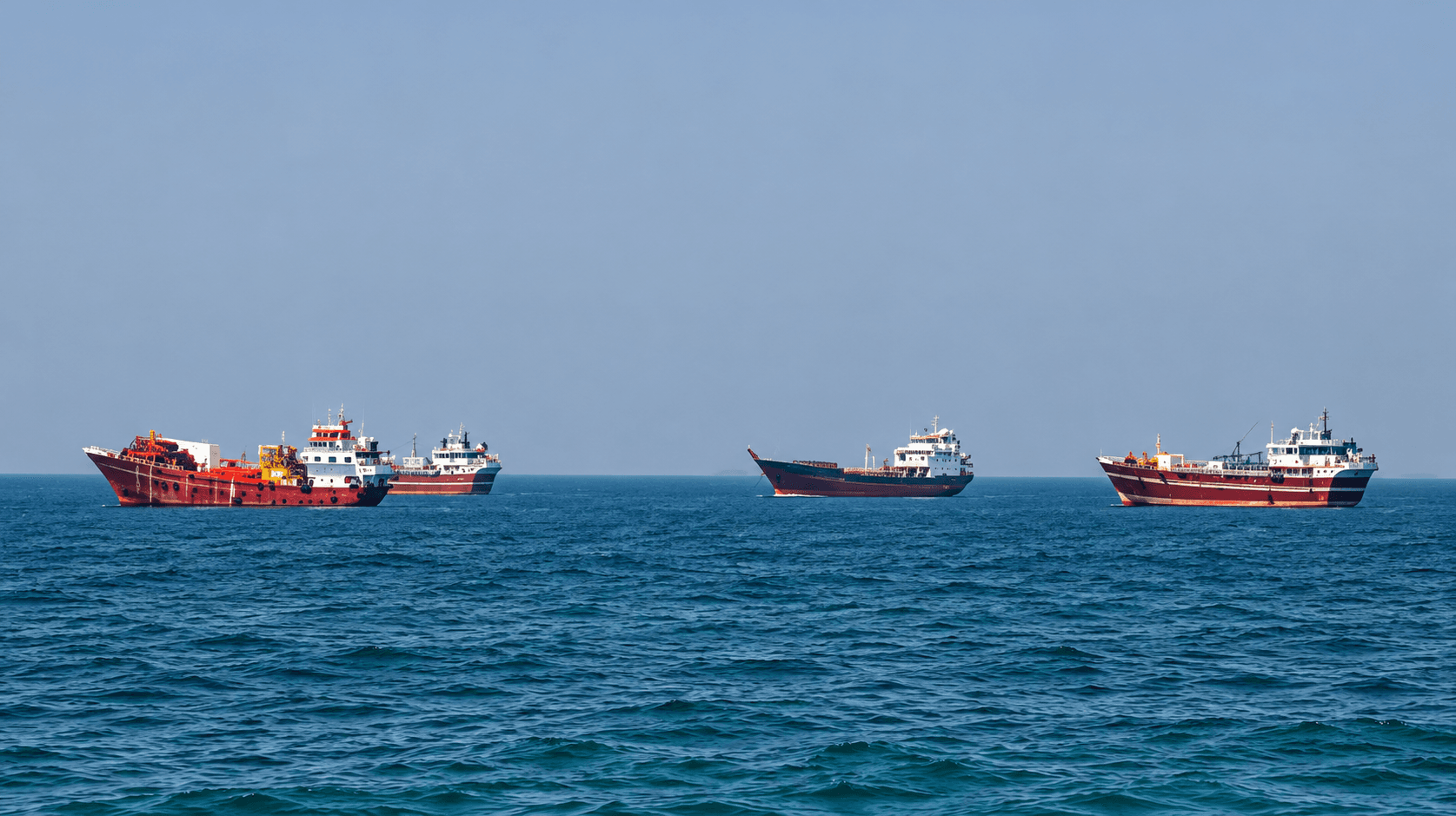
A tanker has been struck by an unidentified projectile off the coast of Oman, raising fresh concerns about the safety of commercial shipping near the Strait of Hormuz. The incident reportedly took place on 21 October, at a time when tensions across the Gulf continue to put pressure on one of the world's busiest energy shipping routes.
Indian media reports identified the vessel as the Kuwait-flagged oil product tanker M/T Al Dasma, which was carrying 21 Indian seafarers. India's Union Minister for Ports, Shipping and Waterways, Sarbananda Sonowal, said all the Indian crew members were safe. Authorities were monitoring the situation and coordinating with the vessel's management company.
The United Kingdom Maritime Trade Operations (UKMTO) also reported that a tanker had been hit by an unidentified projectile about 11 nautical miles off Bukha, Oman. The vessel caught fire and later anchored. All crew members were reported safe, and the initial assessment found no reported environmental impact.
The latest incident adds to a growing list of reported attacks and damage involving commercial vessels in and around the Strait of Hormuz. The waterway is a vital route for global oil and gas supplies, making any threat to shipping a concern for energy producers, importers and maritime operators.
The source of the projectile has not been publicly established. With tensions between Iran and the United States still unresolved, the incident has renewed questions about how safely commercial vessels can operate in the region.
TANKER ATTACK RENEWS CONCERNS OVER CREW SAFETY
The reported strike has once again drawn attention to the risks faced by civilian vessels travelling through waters near the Strait of Hormuz.
According to reports published on 22 October, M/T Al Dasma was struck while sailing off Oman. The presence of 21 Indian seafarers aboard the vessel brought the incident into focus for Indian officials, who have been monitoring developments.
UKMTO reported damage from an unidentified projectile and said the vessel had anchored following the incident. Authorities were assessing what happened and the extent of the damage.
The reported absence of casualties is welcome news, particularly given the danger posed by fires aboard oil tankers. Damage to cargo tanks, fuel systems or other critical equipment can create serious risks for crews and potentially lead to environmental damage.
The vessel may need a detailed inspection before it can resume its journey. The time required will depend on the severity of the damage, the condition of its equipment and any instructions issued by the operator or relevant authorities.
Investigators will also need to determine where the projectile came from, how the strike occurred and whether the incident points to an ongoing threat to nearby shipping.
Until more information becomes available, the attack should be treated as a serious maritime security incident. Responsibility should not be assigned without supporting evidence.
STRAIT OF HORMUZ REMAINS VITAL TO GLOBAL ENERGY SUPPLIES
The Strait of Hormuz links the Persian Gulf with the Gulf of Oman and the Arabian Sea. Its strategic location makes it one of the most important passages for international energy trade.
Large volumes of seaborne crude oil and petroleum products pass through the strait, alongside liquefied natural gas and other cargoes. Gulf energy producers depend on the route to reach customers across Asia and other international markets.
That dependence means security incidents can have consequences well beyond the immediate area.
Shipping companies may face higher insurance costs, additional security requirements and delays as they assess whether planned voyages can proceed safely. Some operators may adjust their schedules or consider alternative arrangements, although the geography of the Gulf limits the options available to ships serving ports within the region.
The latest strike highlights the risks commercial vessels can face even when they have no direct role in regional military tensions.
For countries that rely heavily on imported energy, prolonged disruption could increase transportation costs and put pressure on supply chains. Any effect on oil prices would depend on the scale and duration of the disruption, as well as the availability of alternative supplies.
For now, the key question is whether the incident remains isolated or becomes part of a wider pattern affecting commercial traffic.
INDIA CLOSELY MONITORS THE WELFARE OF ITS SEAFARERS
The incident has particular significance for India, whose nationals form a substantial part of the global maritime workforce.
The presence of 21 Indian seafarers aboard the tanker has made crew safety a central concern. Sarbananda Sonowal said the authorities were monitoring developments and coordinating with the vessel's management company.
Indian seafarers work across commercial shipping, offshore operations and energy transportation. When civilian vessels come under attack, the risks extend beyond shipowners and cargo operators to the workers who keep international trade moving.
The immediate priority is to ensure that all crew members remain safe and receive any assistance they may need. Depending on the vessel's condition, further inspections, repairs or changes to its planned voyage may be necessary.
India also has a wider economic interest in keeping Gulf shipping routes secure. Disruptions can affect energy imports, freight costs and trade with countries across the Middle East.
The incident underlines the importance of reliable maritime surveillance, emergency response arrangements and close communication between governments, shipping companies and port authorities.
REPEATED INCIDENTS ADD TO GULF SHIPPING RISKS
The strike comes amid a series of reported maritime security incidents around the Strait of Hormuz.
UKMTO has reported multiple incidents involving commercial vessels during October, including tankers and container ships struck by unidentified projectiles. Some reports have involved fires or vessel damage, while others have recorded no casualties.
The International Maritime Organization has also documented maritime security incidents across the wider Middle East during the current crisis.
Taken together, these reports point to a difficult operating environment for commercial shipping. However, the incidents vary in location, circumstances and consequences, and each needs to be assessed on its own evidence.
Investigators will need to establish whether the attacks are connected, whether similar methods were used and whether particular routes or vessel types face greater risks.
For ship operators, making decisions based on verified security advisories is essential. Speculation about who may be responsible can create confusion without helping crews navigate the immediate risks.
Governments and maritime agencies, meanwhile, face growing pressure to share intelligence, coordinate emergency responses and provide clear guidance to commercial operators.
IRAN–US TENSIONS KEEP REGIONAL SECURITY IN FOCUS
The latest maritime incident comes against the backdrop of continuing tensions between Iran and the United States.
Disputes over Iran's nuclear programme, sanctions, military pressure and maritime access have complicated efforts to reach a lasting diplomatic settlement. The Strait of Hormuz remains particularly sensitive because of its importance to global energy supplies and regional security.
Washington has emphasised the need to protect maritime access and commercial shipping, while Tehran has opposed US pressure measures and defended its interests in the region.
US pressure on Iranian maritime activity has added to an already tense environment, leaving shipping operators closely watching political and military developments.
However, the circumstances surrounding the latest tanker strike remain unclear. The fact that the attack occurred amid wider regional tensions does not establish that Iran, the United States or any particular armed group was responsible.
A credible assessment will require evidence about the projectile, the damage to the vessel, available surveillance information and any verified claim of responsibility.
Establishing who was responsible is important not only for accountability but also for avoiding misinformation and preventing an unverified allegation from contributing to further escalation.
SHIPPING OPERATORS FACE RISING COSTS AND DISRUPTION
Repeated security incidents can create significant costs for the shipping industry, even when vessels avoid major damage or casualties.
Insurers may reassess the risks associated with voyages through affected waters, potentially increasing premiums. Shipowners may also face higher security expenses, delays and difficult decisions about whether to send crews into areas considered dangerous.
For tanker operators, an interruption can disrupt delivery schedules and affect refineries, fuel suppliers and energy traders. Buyers may need to adjust inventories or arrange replacement cargoes if shipments are delayed.
Container shipping can face similar challenges when operators change schedules or divert vessels away from higher-risk areas. Longer journeys generally mean greater fuel consumption and less time available for ships to complete other voyages.
The overall impact will depend on whether these incidents remain limited or develop into a sustained disruption to regional shipping.
Operators will therefore be watching maritime security advisories, insurance guidance and diplomatic developments as they assess the risks of continuing to use the route.
MARITIME AUTHORITIES CALL FOR CAUTION
UKMTO has advised vessels operating in the area to proceed with caution and report suspicious activity. Such guidance helps commercial operators make informed decisions while authorities investigate incidents and assess potential threats.
Ships travelling through higher-risk waters generally rely on established communication procedures, navigational precautions, security assessments and emergency response plans.
After an incident, the immediate priorities are to confirm the crew's safety, assess damage to the vessel and determine whether there is any risk to the surrounding environment.
Environmental monitoring is especially important when an oil product tanker is involved. Damage to cargo systems could result in a spill, depending on the location and severity of the impact. UKMTO's initial report stated that no environmental impact had been reported, although further assessments may provide additional information.
The next steps will depend on the findings of the vessel's operator and the relevant maritime authorities. Coordination among the ship's management, flag state, coastal authorities and maritime security agencies will be important in determining whether the tanker can safely resume its voyage.
FACT CHECK METER
Accuracy assessment: Core incident details reported; responsibility and some operational details remain unconfirmed.
Key claims to verify:
Indian media reports identified the vessel struck off Oman on 21 October 2026 as the Kuwait-flagged oil product tanker M/T Al Dasma.
The vessel reportedly had 21 Indian seafarers aboard, all of whom were reported safe.
UKMTO reported that a tanker was struck by an unidentified projectile about 11 nautical miles off Bukha, Oman, caught fire and subsequently anchored.
The initial UKMTO assessment reported that all crew members were safe and no environmental impact had been reported at that time.
Further maritime incidents have been reported around the Strait of Hormuz during October 2026.
Important distinctions:
The projectile's origin and the identity of those responsible have not been publicly established.
The full extent of the vessel's damage and the timing of its return to service require confirmation.
The initial absence of a reported environmental impact does not rule out later findings.
Multiple maritime incidents do not, by themselves, prove a common perpetrator or motive.
AWX VERDICT: The reported tanker strike and the crew's safety are the central developments. The main unanswered questions concern responsibility for the attack, the extent of the damage and whether the incident signals a further deterioration in maritime security around the Strait of Hormuz.
WHAT TO WATCH NEXT
Vessel damage assessment: Watch for updates from the operator and maritime authorities on the condition of M/T Al Dasma and its next movements.
Crew welfare: Look for further official updates on the safety and support arrangements for the 21 Indian seafarers.
Investigation findings: Monitor efforts to establish the projectile's origin and the circumstances surrounding the strike.
UKMTO advisories: Track new warnings and reports involving tankers, container ships and other commercial vessels.
Environmental monitoring: Watch for any confirmed spill of oil or petroleum products and any response by the relevant authorities.
Insurance and freight costs: Assess whether further incidents lead to higher premiums, shipping delays or changes to vessel schedules.
Iran–US diplomacy: Follow diplomatic and maritime security developments that could ease or intensify risks to commercial shipping.
Energy markets: Monitor crude oil prices and Gulf export activity for signs of sustained disruption to regional supplies.
THE AWX BOTTOM LINE
The strike on a tanker near the Strait of Hormuz is another warning sign for commercial shipping in an increasingly tense maritime environment. The reported safety of all 21 Indian seafarers is encouraging, but questions remain about the vessel's condition and the origin of the projectile.
The broader concern is the cumulative effect of repeated incidents on shipping confidence. Even attacks that cause limited damage can increase insurance costs, delay cargo deliveries and make energy transportation more expensive.
For India and other major energy-importing economies, keeping Gulf shipping routes secure remains an economic priority. For shipowners and seafarers, the immediate focus is on safety, reliable information and clear operational guidance.
The challenge extends beyond getting one tanker back on its way. It is about ensuring that commercial vessels can continue travelling through one of the world's most important energy corridors without facing unacceptable risks.
ATTLAS NEWS | AWX WORLD NEWS
Real Stories. Lasting Impact.


Comments
No comments yet.