

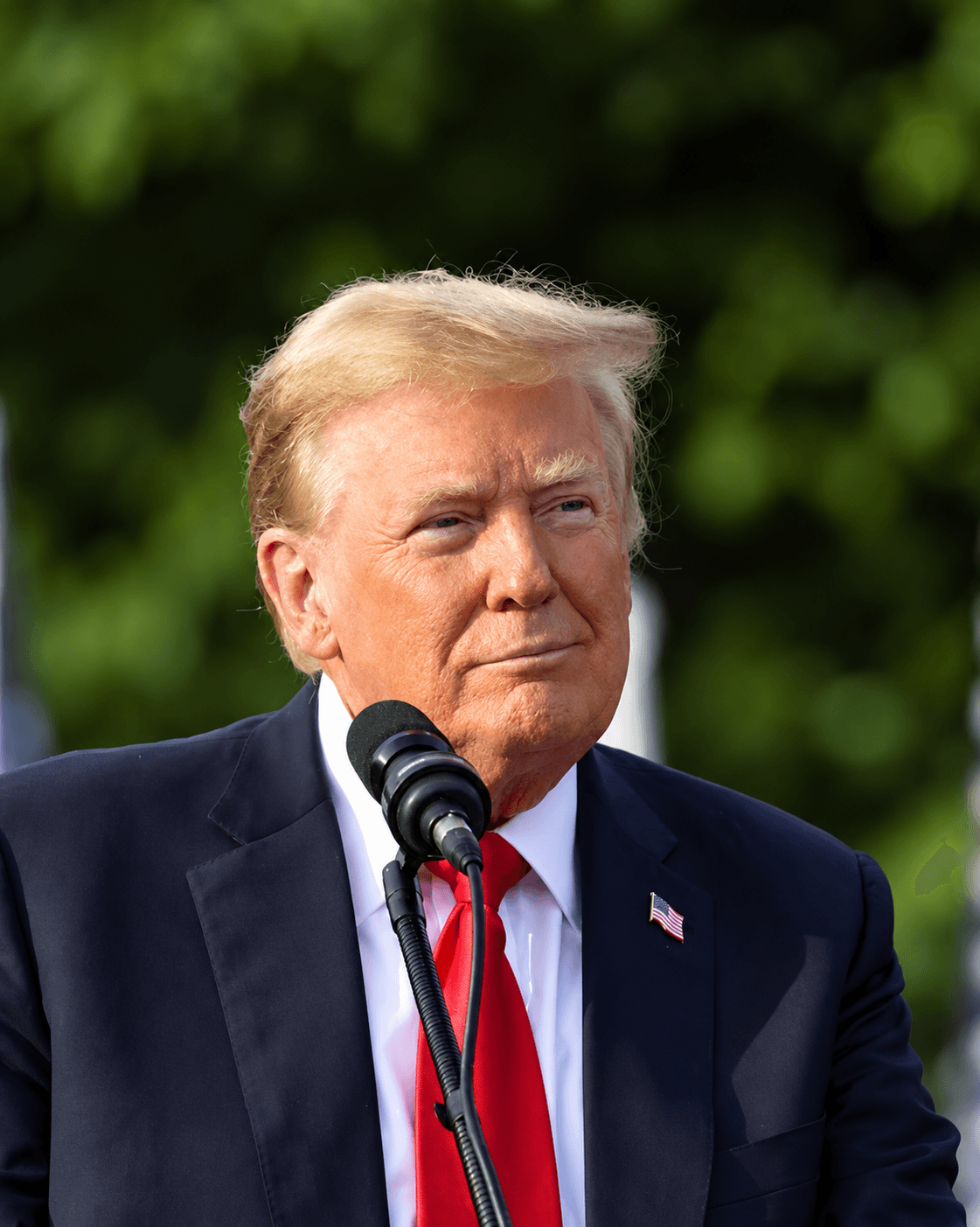
US President Donald Trump says the trade dispute with Canada could be resolved “pretty soon,” raising hopes of a breakthrough after months of rising tariffs and stalled negotiations. He made the remarks at a political rally in Port Huron, Michigan, on 25 October, just days before the November 3 midterm elections.
Trump defended his administration’s tariff policy, accusing Canada of taking advantage of the United States in trade. He also suggested that Ottawa was ready to make significant concessions, though he offered no details about what those concessions might involve and did not announce a formal agreement.
Reuters reported on 26 October that US and Canadian officials were discussing a possible deal to ease American tariffs on Canadian steel and automobiles. Sources familiar with the talks said an agreement could emerge before the midterms, although negotiations remain sensitive and the potential scope of a settlement is still unclear.
The developments offer a possible opening for two economies that depend heavily on each other for manufacturing, energy, agriculture and cross-border trade. Still, Trump's optimism does not mean the trade dispute is over. Until both governments confirm an agreement and publish its terms, businesses and workers will continue to face uncertainty.
HOW THE TRADE DISPUTE REACHED THIS POINT
Relations between Washington and Ottawa deteriorated after trade negotiations broke down in August 2026. The two governments failed to agree on tariff relief and other trade conditions, leading the United States to impose additional duties on Canadian products and Canada to respond with tariffs of its own.
The economic impact extends well beyond companies that directly import or export goods. The US and Canadian economies are closely connected, with raw materials, components and finished products regularly crossing the border during manufacturing. As a result, tariffs imposed on one country can also raise costs for businesses in the other.
The automotive industry is a clear example. Vehicle production relies on integrated supply chains, with parts sometimes crossing the US–Canada border several times before a car or truck is completed. Additional tariffs can make production more expensive, complicate sourcing decisions and eventually put pressure on prices.
Steel, forestry and agriculture have also been caught up in the dispute. Canadian exporters face higher costs when selling affected products in the US market, while American manufacturers that rely on Canadian materials may find themselves paying more for essential inputs.
Trump has argued that tariffs protect American workers and encourage companies to invest in domestic manufacturing. Canadian officials, meanwhile, have maintained that any agreement must protect Canada's economic interests and offer benefits to both countries.
The disagreement is about more than whether tariffs should be reduced. Both sides must decide which industries will receive relief, what concessions they are prepared to make and how they intend to manage trade relations going forward.
STEEL AND AUTOMOBILES AT THE CENTRE OF NEGOTIATIONS
The clearest sign of possible progress is the reported effort to negotiate relief from tariffs affecting Canadian steel and automobiles.
According to Reuters on 26 October, officials were discussing a potential agreement involving US tariffs of up to 50% on Canadian steel and 25% on automobiles. The reported discussions involve US Commerce Secretary Howard Lutnick and Canadian Trade Minister Dominic LeBlanc, alongside broader negotiations between the two governments.
Steel is essential to construction, infrastructure, machinery and vehicle production. Tariffs can make imported steel less competitive, potentially benefiting some domestic producers. However, they can also increase costs for American manufacturers that depend on steel to make their own products.
The automotive sector faces a similar challenge. Tariffs may encourage companies to move some production or investment to the United States, but they can also make cross-border parts and vehicle assembly more expensive. Policymakers must therefore balance efforts to protect domestic production against the economic benefits of an integrated North American supply chain.
The issue is particularly important in Michigan, where the automotive industry supports a significant share of regional manufacturing activity. Republican Congressman Mike Rogers, who is running in a competitive race against Democrat Abdul El-Sayed, has praised manufacturing investment associated with Trump's tariff policy while also raising concerns about the effects of automotive tariffs.
That tension helps explain why tariff relief has become politically important. The policy is being judged not just on its stated goals but also on its practical effects on factories, jobs, prices and businesses that depend on cross-border trade.
A deal may cover only selected industries
Even if negotiators reach an agreement, it may initially cover only certain industries or categories of products rather than settle every outstanding trade dispute.
Reuters reported that a narrower agreement was one possibility under discussion. Such a deal could provide relief to steelmakers, automakers and their suppliers without resolving wider disagreements over trade policy. It could also create a foundation for further negotiations.
For businesses, however, the details will matter as much as the announcement itself. Companies will need clarity on which products qualify for relief, when any changes take effect and how goods already in transit will be treated.
Until those questions are answered, it will be difficult for manufacturers and exporters to make confident decisions about costs, contracts and future investments.
MIDTERM ELECTIONS ADD TO THE PRESSURE
The timing of Trump's remarks is significant. The November 3 US midterm elections will determine whether Republicans retain control of Congress or Democrats make gains in the House of Representatives and Senate.
Tariffs have become a sensitive political issue in regions where manufacturers and exporters depend heavily on Canadian trade. Businesses dealing with higher input costs and workers worried about job security may be less convinced by arguments about long-term industrial benefits if the immediate economic impact remains difficult to manage.
The administration has already shown some flexibility. Reuters reported that Trump signed an order on 23 October removing 50% tariffs on certain Canadian agricultural and forestry products following a request from Republican Senator Susan Collins of Maine, a state affected by the trade dispute.
The move suggests that pressure from businesses and lawmakers can influence the administration's approach. However, it does not necessarily mean Washington is backing away from its wider tariff strategy.
For Trump, an agreement before election day could give Republicans an opportunity to point to progress in easing trade tensions while arguing that tariffs helped secure concessions. Canadian Prime Minister Mark Carney, meanwhile, needs any settlement to deliver meaningful relief without forcing Ottawa to accept terms it considers harmful to Canadian interests.
The election timetable may encourage both governments to move quickly, but speed comes with risks. A deal announced to demonstrate political progress could leave important disagreements unresolved, potentially setting the stage for further tensions.
CANADA SIGNALS PROGRESS, BUT THE TERMS REMAIN UNCLEAR
Canadian Prime Minister Mark Carney has indicated that discussions with Washington have gained momentum, while maintaining that Ottawa has not changed its position. Reuters reported that Carney suggested the progress reflected the United States moving closer to Canada's position.
His comments contrast with Trump's confident public statements and underline how carefully both governments are approaching the negotiations. Although each side has reasons to reach an agreement, neither has publicly confirmed a final settlement or provided a complete account of the concessions being considered.
Canada has a strong incentive to secure more predictable access to the US market, which remains crucial to its export economy. At the same time, Ottawa must show that it can defend Canadian industries and negotiate terms that are acceptable at home.
Washington faces its own competing priorities. The administration wants to demonstrate that tariffs can produce better trade terms, but prolonged uncertainty risks raising costs for American manufacturers and businesses that rely on Canadian goods.
Any lasting agreement will need to address more than tariff rates. It must also clarify which products qualify for relief, when the changes will take effect and whether either country will suspend or retain its retaliatory measures.
Without that clarity, businesses may struggle to determine whether a deal would materially improve their trading conditions.
WHAT A POSSIBLE AGREEMENT COULD MEAN
For American manufacturers: Lower tariffs on Canadian steel and automotive imports could reduce costs for companies that rely on cross-border materials and components. The benefits would depend on the products covered and how quickly the relief takes effect.
For Canadian exporters: Reduced duties could help Canadian companies compete in the US market and give businesses greater confidence when planning production, hiring and investment.
For consumers: Lower costs for manufacturers could eventually help limit price increases for some products, including vehicles and manufactured goods. However, tariff relief would not automatically lead to immediate price cuts, as businesses also face labour, energy, financing and other expenses.
For workers and industrial regions: An agreement could ease pressure on businesses exposed to the dispute. The longer-term effect on employment would depend on demand, investment decisions and whether trade conditions remain stable.
For the wider North American economy: A deal could help restore confidence in cross-border manufacturing and improve relations between the two countries. Lasting progress, however, would require a clearer understanding of how future trade disputes will be handled.
RISKS
1. Negotiations fail before the midterms
Expectations of a quick settlement could collapse if the two governments cannot agree on the terms. Businesses would then face continued uncertainty over tariffs and future costs.
2. Relief covers only selected industries
A limited agreement might benefit steel and automotive companies while leaving other exporters and importers exposed to existing tariffs and retaliatory measures.
3. Tariff costs remain reflected in prices
Even if duties are reduced, consumers may not see immediate savings. Companies may need time to adjust contracts, inventory and pricing.
4. Political pressure undermines a lasting settlement
If an agreement is driven mainly by short-term electoral considerations, unresolved disagreements could resurface after the election.
5. Businesses delay investment decisions
Manufacturers may postpone major investments until they have a clearer picture of future tariff rules. Even the prospect of lower duties may not be enough to restore confidence if trade policy remains unpredictable.
WHAT TO WATCH NEXT
An official announcement from Washington and Ottawa: A confirmed agreement would provide stronger evidence of a breakthrough than public statements suggesting one is close.
Details of steel and automotive tariff relief: The rates, eligible products, exemptions and implementation dates will determine how much practical relief businesses receive.
Statements from Trump and Carney: Their descriptions of any agreement could reveal whether the two governments have reached a shared understanding of its terms.
Changes to retaliatory tariffs: Any suspension or removal of Canadian counter-tariffs would help indicate whether the agreement is intended to ease tensions more broadly.
The November 3 midterm elections: The results could influence the political incentives shaping Washington's approach to trade negotiations.
Business and market reactions: Industry statements, investment plans and cross-border trade activity will help show whether any agreement delivers meaningful economic relief.
FACT CHECK METER
96% — Confidence in the reported developments
Status: Reported developments are supported; a final agreement remains unconfirmed.
What is supported by published reporting
Trump said on 25 October that the US–Canada tariff dispute could be resolved “pretty soon.”
Reuters reported on 26 October that officials from both countries were discussing possible relief from US tariffs on Canadian steel and automobiles.
Carney indicated that discussions had gained momentum while maintaining Canada's existing position.
Certain US tariffs on Canadian agricultural and forestry products were removed in late October.
Important distinctions
Trump's statement reflects his expectations; it does not confirm that a deal has been reached.
The reported negotiations concern selected tariff categories and do not establish that a comprehensive trade settlement is imminent.
The final terms, implementation timetable and economic impact remain uncertain.
AWX verdict: There is credible reporting that negotiations are under way and that a limited agreement may be possible. However, the claim that the dispute will soon be resolved remains unconfirmed until both governments announce a deal and disclose its terms. The 96% figure reflects confidence in the reported developments, not the likelihood of a final agreement.
THE AWX BOTTOM LINE
Trump's suggestion that the US–Canada tariff dispute could soon be resolved has raised hopes among manufacturers, exporters and businesses dealing with months of trade uncertainty. Reports of negotiations over steel and automobile tariffs provide a concrete reason for that optimism, but they do not guarantee a breakthrough.
Both governments have reasons to reach an agreement. Washington faces pressure from industries dealing with higher costs, while Ottawa wants to protect Canadian exporters and restore more predictable trading conditions. The approaching US midterm elections add another layer of urgency to the discussions.
Ultimately, the terms will determine whether any agreement makes a meaningful difference. A limited deal could ease pressure on important industries without resolving every disagreement between the two neighbours.
For now, a settlement remains possible, but businesses should wait for an official announcement before assuming that tariffs will fall or trade conditions will improve.
ATTLAS NEWS | AWX WORLD NEWS
Real Stories. Lasting Impact.




Comments
No comments yet.