

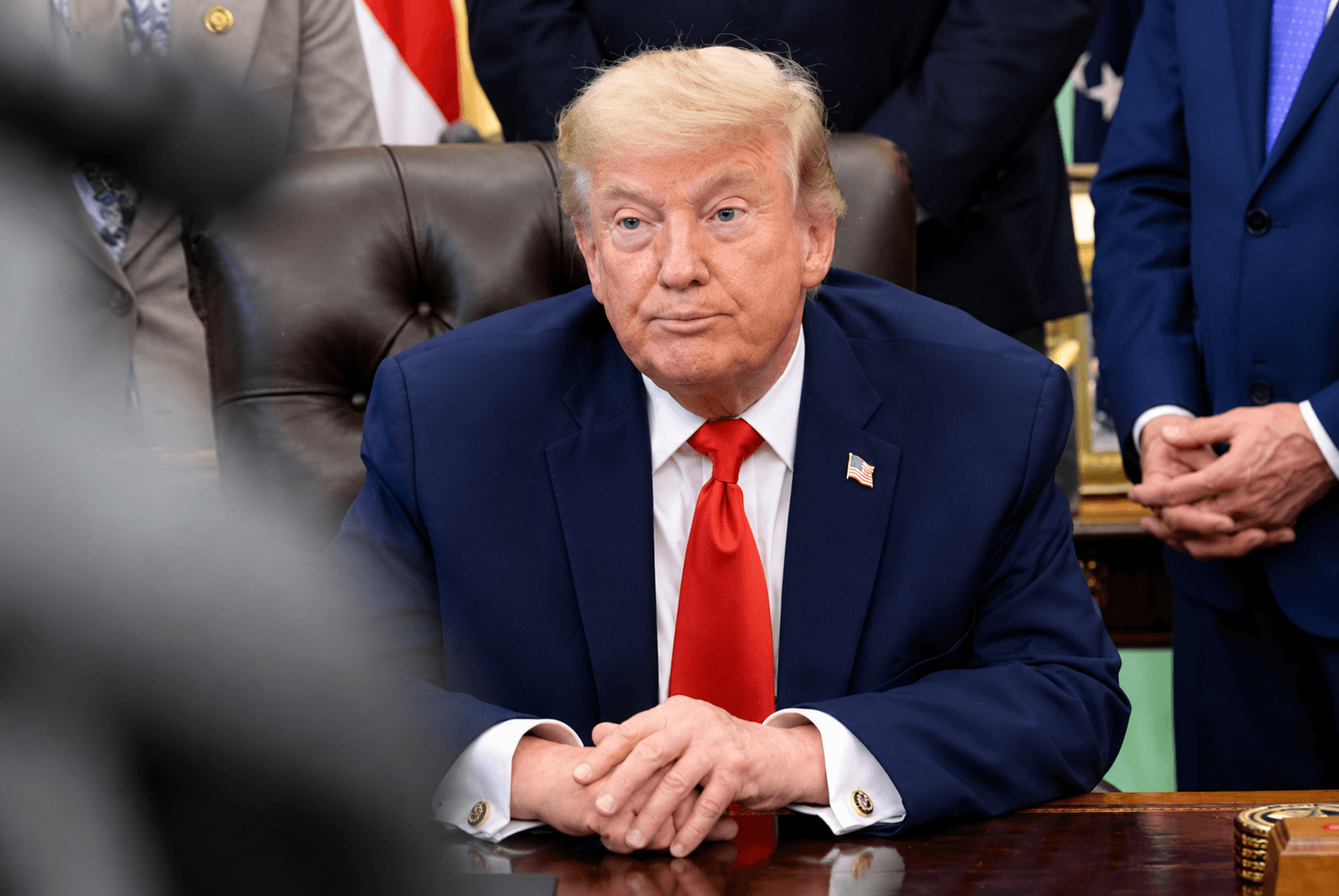
Trump’s Iran strategy has largely centred on military deterrence, economic pressure and diplomatic negotiations. However, the continuing confrontation has raised doubts about whether this approach is bringing the United States closer to its objectives or simply extending a conflict with serious regional and global consequences.
Recent developments have added another layer of uncertainty. Iran says it remains in contact with regional mediators over a proposal to reopen the Strait of Hormuz. Trump, meanwhile, has denied reports that he instructed Vice President JD Vance to begin formal peace negotiations. Washington continues to maintain pressure on Iranian ports, while Tehran is demanding stronger guarantees before agreeing to any settlement.
The dispute has also moved well beyond Iran’s nuclear programme and international sanctions. Maritime security, regional alliances, energy supplies and the future of American influence in the Gulf have all become important parts of the growing crisis.
TRUMP’S PRESSURE STRATEGY FACES A MAJOR TEST
The Trump administration has relied heavily on military pressure and economic restrictions to push Iran towards accepting Washington’s demands.
The US naval blockade of Iranian ports remains a key part of this strategy. Alongside it, sanctions are designed to limit Tehran’s oil exports and restrict the financial resources available to support its military activities. Washington believes sustained pressure could eventually bring Iran back to the negotiating table on more favourable terms.
So far, however, there has been little sign of a comprehensive breakthrough. Tehran continues to reject demands it considers unacceptable and retains considerable leverage through its ability to disrupt shipping in the Strait of Hormuz.
An ABC News analysis published in August described the administration’s approach as an increasingly prolonged economic-pressure campaign, with no clear guarantee of a quick diplomatic breakthrough. It also questioned whether the blockade would ultimately change Iran’s position.
This leaves Washington facing an important question: will continued pressure force Tehran to make concessions, or will it encourage Iran to hold its ground while increasing the economic and security costs for the United States and its allies?
STRAIT OF HORMUZ EMERGES AS A KEY FLASHPOINT
The Strait of Hormuz has become one of the most sensitive points in the ongoing confrontation.
The narrow waterway is a major route for international oil and liquefied natural gas shipments. Any disruption can quickly affect energy markets, shipping companies and countries that depend heavily on imported fuel.
On October 30, Iran’s Islamic Revolutionary Guard Corps said four tankers had been affected by naval mines in the Strait, with three reportedly catching fire. Separately, the UK Maritime Trade Operations agency received a report of a vessel on fire northeast of Khasab, Oman. The cause of that incident had not been independently established in the available reporting.
These developments highlight the growing risks for commercial shipping. Even without an officially declared closure, threats against vessels can make shipping companies reluctant to use the route. They can also push up insurance premiums, delay deliveries and create further uncertainty in global energy markets.
For Trump, restoring safe passage through the Strait is a major challenge. Washington wants shipping routes protected, but continued military pressure has yet to produce a stable maritime security arrangement.
DIPLOMATIC CONTACTS CONTINUE, BUT A BREAKTHROUGH REMAINS DISTANT
Despite the increasingly hostile atmosphere, diplomatic communication between the parties has not completely stopped.
Iranian Foreign Minister Abbas Araghchi said on October 29 that Tehran remained in close contact with regional mediators regarding a proposed seven-day plan to reopen the Strait of Hormuz. The proposal is part of broader efforts to find a way towards ending the conflict.
Trump, however, rejected reports that he had instructed Vice President JD Vance to begin formal peace negotiations. He said the communication concerned Iran’s need for medical supplies. Reuters reported that Vance had contacted Iran, although Tehran had not yet provided a substantial response to the latest communication.
Iran has also made clear that it wants firm guarantees that any agreement will be respected. Its officials remain concerned that a temporary arrangement could be followed by another round of military action.
The two sides still have significant differences. Washington is seeking concessions on security and Iran’s nuclear programme, while Tehran wants sanctions and blockade restrictions eased, along with assurances against further attacks.
Countries such as Qatar and Pakistan are trying to keep communication channels open. However, without an agreement on the main conditions, diplomatic discussions have yet to produce a lasting ceasefire or a broader political settlement.
MILITARY OPTIONS KEEP THE RISK OF ESCALATION ALIVE
The US military position remains an important part of the debate surrounding Trump's Iran policy.
According to reporting highlighted by Al Jazeera on October 30, the commander of US Central Command briefed Trump on possible military options involving Iran. The specific proposals were not made public, but the briefing suggests that military planning is continuing alongside diplomatic efforts.
Any decision to launch further strikes would carry considerable risks. Military action could weaken Iranian capabilities, but it could also trigger retaliation against American forces, Israeli interests, Gulf infrastructure or commercial shipping.
Iran's geographical position and regional relationships give it several ways to create pressure beyond its own borders. Threats involving the Houthis and reports of attacks on Saudi infrastructure have added to regional concerns, although individual claims and reports of damage require independent verification.
A wider escalation could also put neighbouring countries under greater pressure, particularly if oil facilities, ports or important shipping routes become targets.
For Washington, the challenge is to maintain a credible military deterrent without allowing the situation to develop into a much larger conflict that becomes difficult to control.
REGIONAL POWERS LOOK FOR A WAY TO PREVENT A PROLONGED WAR
Gulf countries and other regional governments are increasingly concerned about the economic and security consequences of a prolonged US-Iran confrontation.
Saudi Arabia, Türkiye and Pakistan have held discussions involving Iranian officials, while Qatar and Pakistan continue to support mediation efforts between Washington and Tehran. Gulf governments are also exploring the possibility of a broader regional security arrangement.
A report published by The Guardian on October 28 described a proposed multi-part agreement that could involve reopening the Strait of Hormuz, easing sanctions and reducing tensions linked to Yemen.
However, negotiations remain complicated. Questions surrounding nuclear monitoring, the timing of concessions and security guarantees continue to stand in the way of progress.
Pakistan has also indicated that Iran remains open to negotiations under a previously discussed interim arrangement. Tehran, however, argues that Washington's continued blockade is making diplomatic progress more difficult.
These efforts reflect a shared concern among regional governments: the conflict cannot be allowed to become a permanent source of instability in the Gulf.
Protecting energy exports, keeping trade routes open and preventing attacks on critical infrastructure are now major priorities.
For Trump, this means American policy must take into account not only its disagreements with Iran but also the security and economic interests of its regional partners.
HIGH OIL PRICES ADD TO TRUMP’S ECONOMIC AND POLITICAL CHALLENGES
The confrontation with Iran is also creating economic pressure inside the United States.
On October 30, Brent crude traded at approximately $116.08 per barrel, while US West Texas Intermediate stood at around $103.37. Reuters reported that both benchmarks were heading towards a fourth consecutive monthly gain as supply concerns and shipping disruptions continued to influence the market.
Higher oil prices can quickly affect American households through increased petrol, transport and other living costs. They can also add to inflationary pressure, making it harder for the administration to maintain its economic messaging.
The November 3 US midterm elections introduce another political consideration.
A Reuters report published on October 20 said Iranian officials believed that prolonging negotiations could increase political pressure on Trump ahead of the elections. This reflects the assessment of those officials rather than independently established evidence of Iran's ability to influence the outcome.
The administration is therefore dealing with several competing priorities. It wants to project strength against Iran, protect American and allied interests, restore safe shipping and avoid an open-ended conflict that could carry significant economic and political costs.
Whether Washington can achieve all these objectives at the same time remains uncertain.
RISKS AND KEY ISSUES TO WATCH
Military escalation: Further US or Israeli strikes could provoke Iranian retaliation and spread the confrontation across the Gulf.
Continued disruption in Hormuz: Threats to commercial vessels could affect global energy supplies, increase shipping costs and disrupt international trade.
Diplomatic deadlock: Differences over sanctions relief, maritime access and nuclear commitments could prevent negotiations from moving forward.
Threats to regional infrastructure: Attacks on oil facilities, ports and energy installations could create further economic and security problems for Gulf countries.
US domestic political pressure: Rising fuel prices and the approaching midterm elections could influence Trump's decisions and public statements.
Unclear long-term objectives: Without an agreed political end goal, military and economic pressure could continue without producing a lasting settlement.
WHAT TO WATCH NEXT
Trump’s next policy announcement: Any changes to the blockade, sanctions or military posture could influence the direction of negotiations.
CENTCOM military briefings: Further details about US military planning may indicate whether Washington is considering renewed action or maintaining its current deterrence strategy.
Iran’s response to mediation: Tehran’s position on the proposed seven-day Hormuz plan will be an important indication of whether diplomatic efforts can advance.
Shipping activity in the Strait: Vessel movements, maritime warnings and insurance costs will help show whether conditions are improving or becoming more dangerous.
Regional diplomatic efforts: Qatar, Pakistan, Saudi Arabia and Türkiye could play a growing role in securing an interim agreement.
Oil market movements: Changes in Brent and WTI prices will reflect how traders assess the prospects of further disruption or diplomatic progress.
FACT CHECK METER
95% — STRONGLY SUPPORTED
High geopolitical uncertainty. This is an editorial assessment of available reporting as of October 30, 2026, not a statistical probability.
Confirmed details
The Trump administration continues to combine economic and military pressure on Iran with diplomatic efforts.
Iran's foreign minister has discussed a seven-day proposal concerning the reopening of the Strait of Hormuz.
Trump denied reports that he had initiated formal peace negotiations through Vice President JD Vance.
The commander of US Central Command briefed Trump on military options involving Iran, according to published reports.
Oil prices remained elevated on October 30 amid concerns over shipping security and energy supplies.
Important distinctions
A military briefing does not mean Trump has authorised another attack.
Diplomatic communication does not mean a peace agreement has been reached.
Iranian statements about attacks and shipping incidents require independent verification.
Claims that Iran is attempting to influence US midterm politics reflect reported assessments by Iranian officials, not an established electoral outcome.
AWX VERDICT
The headline accurately captures the growing scrutiny of Trump's Iran strategy. Washington is attempting to combine economic pressure, military deterrence and diplomatic engagement, but continuing disruption around the Strait of Hormuz and the absence of a comprehensive agreement raise serious questions about the effectiveness and long-term costs of this approach.
THE AWX BOTTOM LINE
Trump's Iran strategy is approaching a critical point. Months of military pressure and economic restrictions have yet to deliver a lasting political settlement, while tensions around the Strait of Hormuz continue to threaten regional security and global energy supplies.
Washington wants to weaken Tehran's negotiating position, protect its regional partners and restore safe passage through one of the world's most important shipping routes. Iran, meanwhile, is seeking sanctions relief, security guarantees and greater influence over the terms of any eventual agreement.
The growing involvement of Gulf countries and regional mediators shows that the consequences of this confrontation extend far beyond Washington and Tehran.
For the global economy, the stakes are particularly high. Continued disruption around Hormuz could keep oil prices elevated, increase transportation costs and add fresh inflationary pressure to energy-importing economies, including India.
Ultimately, Trump faces a difficult choice: can sustained pressure bring Iran to a lasting agreement, or will it prolong a confrontation whose economic and security consequences are becoming increasingly difficult to contain?
ATTLAS NEWS | AWX WORLD NEWS
Real Stories. Lasting Impact.


Comments
No comments yet.