

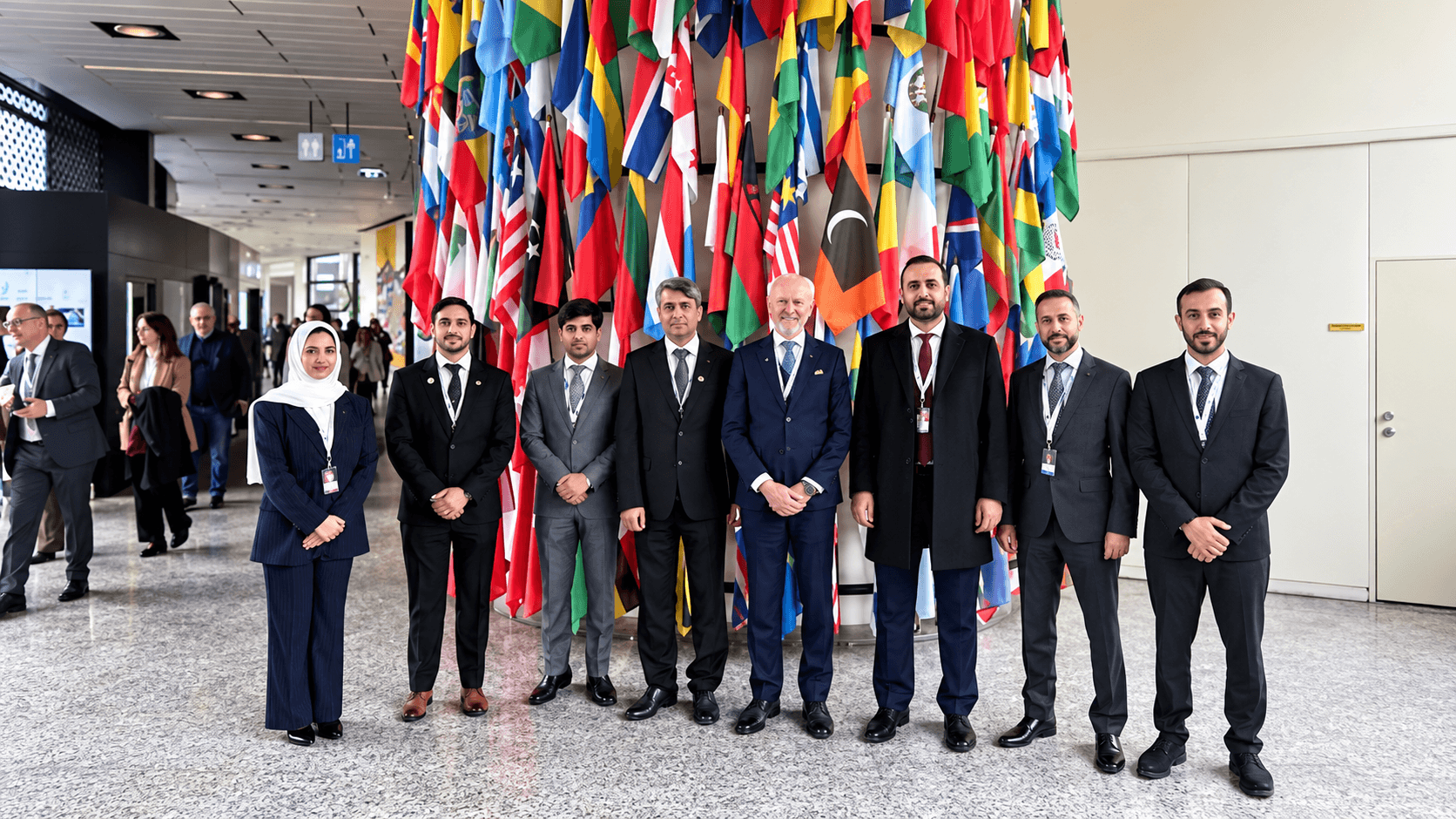
The United Arab Emirates has welcomed a positive assessment from the International Atomic Energy Agency (IAEA) of its response to a drone strike in May that disrupted external power supplies to Unit 3 of the Barakah Nuclear Power Plant. The review praised the actions taken by plant operators and national authorities, while highlighting the need to keep strengthening emergency preparedness and protecting critical infrastructure.
Dr Anwar Mohammed Gargash, Diplomatic Adviser to the UAE President, welcomed the findings, describing the country's peaceful nuclear energy programme as an example of how nuclear technology can contribute to economic development, regional stability and human progress.
The assessment followed an IAEA expert mission conducted from 12 to 20 October at the UAE government's request. A six-member team examined the response to the 17 May incident, reviewed emergency procedures and met representatives of the Emirates Nuclear Energy Corporation (ENEC) and the Federal Authority for Nuclear Regulation (FANR).
The incident involved a fire in an electrical generator outside the plant's inner perimeter in Abu Dhabi's Al Dhafra region. The damage disrupted external power supplies to Unit 3. UAE authorities reported no injuries or release of radioactive material, while the nuclear regulator confirmed that the plant's safety systems remained operational.
The findings offer an important assessment of the country's response at a time when attacks on critical infrastructure have become a growing concern across the Middle East.
However, the review was not simply a vote of confidence in the existing system. Alongside its positive findings, the IAEA identified areas where emergency arrangements, infrastructure resilience and coordination could be improved.
IAEA PRAISES THE UAE'S EMERGENCY RESPONSE
The IAEA mission examined how plant operators and national authorities responded when the drone strike disrupted the facility's external power supply.
The assessment highlighted the use of established emergency procedures, timely notifications to relevant authorities and communication with the public. Experts also reviewed FANR's role in overseeing the response and ensuring that nuclear safety requirements continued to be met.
IAEA Deputy Director General Karine Herviou said the experts found that the plant operator had managed the incident effectively, while FANR had carried out its regulatory oversight responsibilities.
The findings underline the value of having clear procedures in place before an emergency occurs. Nuclear facilities depend on trained personnel, multiple layers of protection and close coordination between operators, regulators and emergency services.
Even when a response is considered effective, however, that does not mean every potential weakness has been addressed. Reviews of real incidents can reveal where procedures need to be updated, communication improved or additional safeguards introduced.
For the UAE, the assessment provides an external perspective on how its nuclear safety arrangements performed under pressure.
BARAKAH INCIDENT HIGHLIGHTS RISKS TO CRITICAL INFRASTRUCTURE
The 17 May incident showed how damage to infrastructure outside a nuclear facility's inner perimeter can still affect its operations.
The drone strike triggered a fire in an electrical generator and interrupted external power supplies to Unit 3. Although authorities reported that the plant's safety systems remained operational, the disruption highlighted the importance of protecting supporting infrastructure alongside the reactor facilities themselves.
Nuclear power plants rely on dependable electricity supplies, backup power, cooling arrangements and carefully designed emergency procedures. Disruptions to these systems can require operators to act quickly to maintain safe conditions.
The incident also raised wider questions about the vulnerability of critical infrastructure during regional conflicts.
Electricity networks, fuel facilities, ports, communication systems and industrial installations can all be exposed to attacks, including those targeting assets outside their main operational sites.
The lessons from Barakah therefore extend beyond the UAE's nuclear sector. Governments and infrastructure operators need to consider how damage to surrounding facilities or interconnected systems could affect essential services.
The IAEA's findings reinforce the importance of preparing for disruptions that extend beyond a facility's immediate boundaries.
UAE'S NUCLEAR SAFETY FRAMEWORK UNDER SCRUTINY
The UAE has built a national system for nuclear regulation and emergency preparedness alongside the development of its civilian nuclear energy programme.
FANR acts as the country's independent nuclear regulator. ENEC oversees the development of the Barakah project, while its operating subsidiary, Nawah Energy Company, is responsible for plant operations within the applicable regulatory framework.
The country's arrangements include emergency response procedures, coordination among relevant authorities, dedicated emergency facilities and exercises designed to test readiness.
The UAE has also worked with the IAEA through technical cooperation, international assessments and emergency preparedness exercises.
In 2021, the country hosted the IAEA's ConvEx-3 international emergency exercise, which involved 75 countries and 12 international organisations. The exercise focused on strengthening international coordination during nuclear or radiological emergencies.
The latest mission adds another layer to that cooperation by examining the response to an actual incident rather than a simulated emergency.
The challenge now is to turn the review's recommendations into practical improvements. That could involve updating emergency plans, strengthening staff training, improving communication between agencies and making supporting infrastructure more resilient.
POSITIVE FINDINGS DO NOT REMOVE THE NEED FOR IMPROVEMENT
While the IAEA praised the UAE's handling of the incident, the mission also identified areas where further work is needed.
These include strengthening emergency preparedness, improving the resilience of critical infrastructure and reinforcing coordination among organisations responsible for nuclear safety and security.
Such recommendations are an important part of technical safety reviews. Their purpose is to identify opportunities to improve existing arrangements, not necessarily to suggest that the response failed.
That distinction matters in the Barakah case. The IAEA's assessment recognised the effectiveness of the response while making clear that emergency systems must continue to adapt as threats evolve.
Implementing the recommendations will require cooperation between plant management, the regulator and national emergency services. Authorities will also need to keep assessing risks to electricity supplies, communication networks and other systems that support safe plant operations.
Ultimately, the value of the review will depend on how effectively its findings are translated into stronger procedures and better protection against future incidents.
UAE REAFFIRMS ITS COMMITMENT TO PEACEFUL NUCLEAR ENERGY
Nuclear power remains an important part of the UAE's long-term energy strategy.
Located in Abu Dhabi's Al Dhafra region, the Barakah Nuclear Energy Plant supplies electricity to the national grid and complements the country's other energy sources. Nuclear generation also contributes to the UAE's efforts to provide reliable electricity while reducing the carbon intensity of power production.
The government has consistently presented its nuclear programme as a peaceful initiative supported by international cooperation and independent regulatory oversight.
Gargash's response to the IAEA findings reflects the UAE's interest in maintaining confidence in that programme.
International confidence is particularly important for countries operating nuclear facilities in regions affected by geopolitical tensions. Transparent communication, credible regulation and cooperation with international organisations all help demonstrate that safety remains a priority.
Still, confidence cannot rest on a single positive assessment. Regular inspections, emergency exercises and continued investment in supporting infrastructure remain essential.
For the UAE, the next step is to build on the findings while ensuring that lessons from the May incident lead to lasting improvements.
REGIONAL SECURITY ADDS URGENCY TO NUCLEAR PROTECTION
The assessment comes amid wider concerns about regional security and the growing exposure of civilian infrastructure to drone and missile attacks.
Recent conflicts have highlighted the risks facing electricity generation, energy transportation and industrial facilities, including assets that may not be direct military targets.
An incident at a nuclear facility can have consequences that extend far beyond the site itself, making effective emergency planning and public communication especially important.
The IAEA has consistently stressed the need to maintain nuclear safety and security during armed conflict and to protect nuclear facilities from the consequences of military activity.
The Barakah incident reinforces the importance of that message across the Gulf.
Protecting the plant requires more than maintaining the safety systems inside the facility. It also depends on cooperation among national authorities, security services, emergency responders and the operators of supporting infrastructure.
Regional cooperation can help countries share technical expertise, improve emergency planning and strengthen their ability to respond to incidents.
As security threats evolve, the challenge for governments will be to ensure that nuclear safety arrangements remain effective regardless of the wider political or military situation.
FACT CHECK METER
Accuracy assessment: Core findings align with the account presented in the IAEA assessment and official UAE statements; independent verification of all incident-specific details remains important.
Key claims to verify:
The IAEA conducted a six-member expert mission in the UAE from 12 to 20 October 2026.
The mission reviewed the response to the 17 May drone strike that disrupted external power supplies to Unit 3 at Barakah.
The IAEA praised the plant operator's response and FANR's regulatory oversight.
UAE authorities reported no injuries or release of radioactive material.
The mission recommended further improvements to emergency preparedness, infrastructure resilience and coordination.
Important distinctions:
Praise for the emergency response does not mean the incident caused no operational disruption.
The affected generator was outside the plant's inner perimeter.
The absence of reported injuries or radioactive releases does not eliminate the possibility of other operational or security risks.
Recommendations for improvement should not automatically be interpreted as evidence of a failure in nuclear safety.
The assessment concerns the response to the specific May incident and does not guarantee protection against future attacks.
AWX VERDICT: The assessment, as described, offers independent support for the UAE's handling of the Barakah incident, particularly its emergency procedures and regulatory oversight. The recommendations for further improvement remain significant, especially as regional security threats continue to put essential infrastructure at risk.
WHAT TO WATCH NEXT
Implementation of recommendations: Watch for updates on how ENEC and FANR address the IAEA's recommendations on emergency preparedness and infrastructure resilience.
Barakah operations: Follow official statements about Unit 3 and any changes to its operating arrangements.
Regulatory oversight: Monitor further inspections, assessments or announcements from FANR concerning nuclear safety and security.
Infrastructure protection: Look for measures to strengthen protection of external power supplies, generators and other supporting systems.
International cooperation: Track further engagement between the UAE and the IAEA on safety standards, technical assistance and emergency exercises.
Regional security: Follow developments that could increase risks to critical infrastructure across the Gulf.
Public communication: Watch for improvements to emergency information, public notifications and coordination among the relevant authorities.
THE AWX BOTTOM LINE
The UAE has received a positive assessment of its response to the May drone strike that disrupted external power supplies to Unit 3 of the Barakah Nuclear Power Plant.
The IAEA praised the actions taken by plant operators and national authorities, including the implementation of emergency procedures and the regulator's oversight. The absence of reported injuries or radioactive releases is an important part of the incident's reported outcome.
But the review also makes clear that an effective response is not the end of the process. Nuclear safety depends on continuous improvement, reliable supporting infrastructure and close coordination between operators, regulators and emergency services.
For the UAE, the priority is to build on the positive findings while addressing the areas identified for further work.
The central message is straightforward: a strong emergency response matters, but lasting nuclear safety depends on preparation, transparency and the ability to learn from every incident.
ATTLAS NEWS | AWX WORLD NEWS
Real Stories. Lasting Impact.


Comments
No comments yet.