

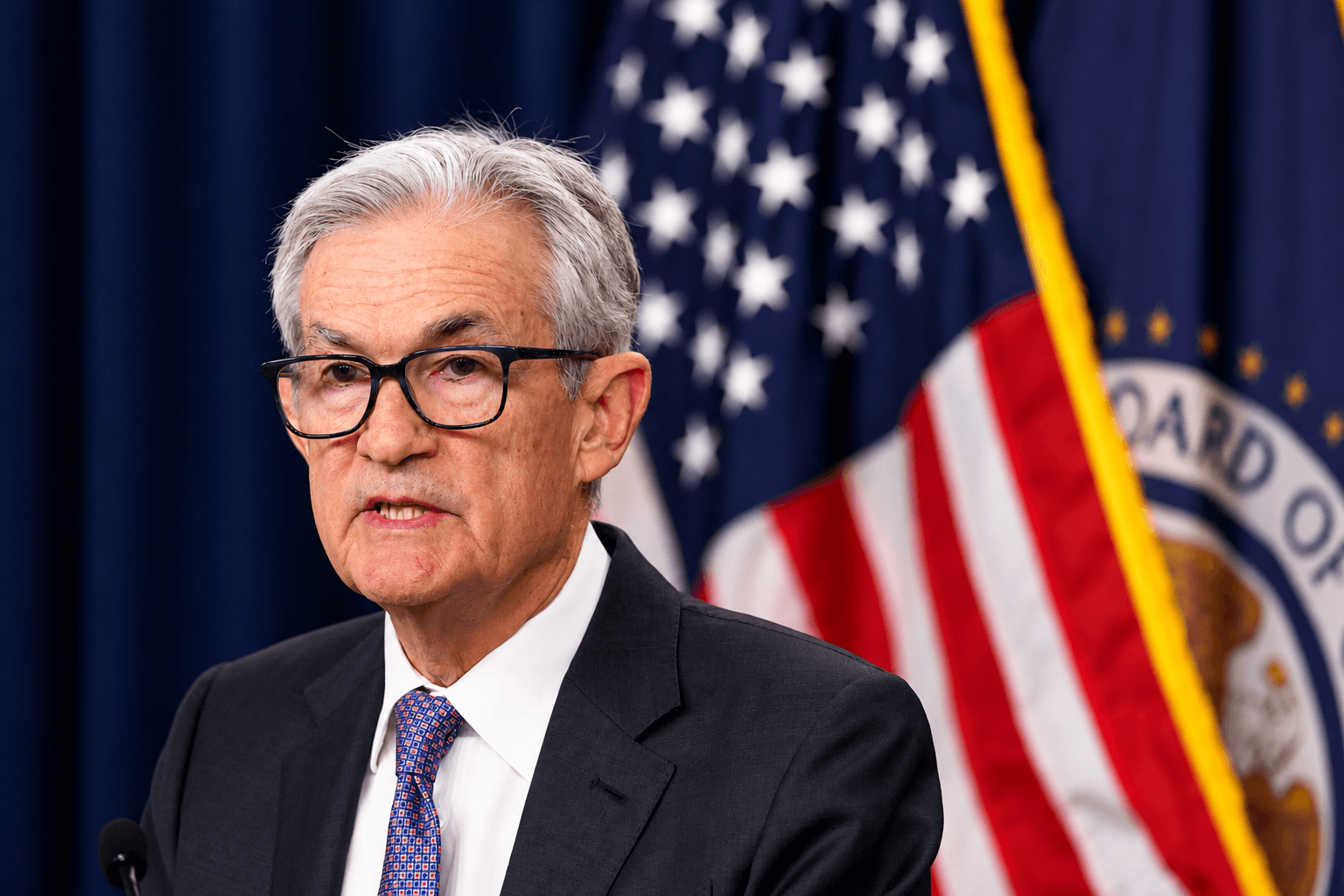
The Federal Reserve's latest interest-rate decision has put US monetary policy firmly back in focus, with investors around the world closely watching what comes next. On 28 October, the central bank decided to keep its benchmark federal funds rate within the 3.75%–4% range, giving policymakers more time to assess economic conditions before making another move.
The decision comes as inflation continues to remain above the Fed's long-standing 2% target. Although the US economy has shown considerable resilience, supported by consumer spending, business investment and relatively stable employment, rising prices remain a major concern.
Not everyone on the Federal Open Market Committee (FOMC) agreed with the decision. Two policymakers favoured an immediate quarter-percentage-point increase, signalling that there are different views within the central bank about how aggressively inflation should be tackled.
For financial markets, the focus is gradually shifting. Investors are no longer looking only for signals of potential rate cuts. The possibility of another increase is also becoming part of the conversation, particularly as energy costs remain high and inflationary pressures show limited signs of easing.
FED HOLDS RATES STEADY AS INFLATION REMAINS A CONCERN
At its 28 October meeting, the FOMC voted to maintain the federal funds rate at 3.75%–4%. In its statement, the committee described economic activity as expanding at a strong pace, with consumer spending and business investment continuing to support growth.
Employment conditions have also remained relatively stable. Job creation has broadly kept pace with the workforce, while the unemployment rate has changed little. This suggests that the US economy has managed to withstand higher borrowing costs better than many had anticipated.
Inflation, however, remains a challenge. The Fed has made it clear that bringing price increases back towards its 2% target will require careful monitoring of incoming economic data.
The decision follows a quarter-percentage-point rate increase in September. Rather than raising rates again immediately, policymakers have chosen to assess the impact of previous decisions on consumer prices, employment and economic activity.
Still, the pause should not be taken as a sign that the rate-hiking cycle is necessarily over. If inflation remains stubborn, further tightening could remain an option.
TWO DISSENTING VOTES HIGHLIGHT DIVISIONS WITHIN THE FED
The latest meeting also revealed differences among policymakers. The 10–2 vote showed that two members preferred a quarter-percentage-point increase rather than leaving rates unchanged.
Federal Reserve Governor Lisa D. Cook and Cleveland Fed President Beth M. Hammack supported the increase, reflecting concerns that inflation could remain above target for longer than expected.
Their position highlights a familiar challenge for central banks: waiting too long to address inflation can make it more difficult to bring prices under control. If businesses continue raising prices and consumers adjust their expectations accordingly, inflation could become more deeply embedded in the economy.
The majority of the committee, however, preferred to wait for further evidence before taking another step. Their decision reflects the view that the current interest-rate level may already be restrictive enough to influence economic activity.
For investors, the disagreement matters almost as much as the final decision. It suggests that the Fed does not have a completely unified view of the economic outlook, making its next policy move harder to predict.
GLOBAL MARKETS RESPOND TO THE FED'S CAUTIOUS APPROACH
Financial markets showed a relatively measured response to the announcement, partly because investors had largely expected the Fed to leave rates unchanged.
According to Reuters, major US stock indexes gained around 0.2% following the decision and the beginning of Chair Kevin Warsh's press conference. The US dollar index slipped by approximately 0.2%, while Treasury yields moved in different directions. The two-year Treasury yield declined, whereas longer-term yields edged higher.
These movements reflect the uncertainty surrounding the Fed's next steps. Keeping rates unchanged can offer some relief to stock markets by avoiding an immediate increase in borrowing costs. However, the possibility of another hike could limit investor confidence, as higher interest rates tend to make financing more expensive and put pressure on company valuations.
Bond investors are also paying close attention. Expectations of higher interest rates can push government bond yields upwards, reducing the market value of existing bonds and increasing borrowing costs across the economy.
Currency markets face similar uncertainty. Changes in US interest-rate expectations can influence where international investors choose to place their money, affecting the dollar and currencies across emerging markets.
INFLATION AND HIGHER ENERGY COSTS COMPLICATE THE OUTLOOK
Inflation remains the biggest concern for US monetary policymakers. Despite previous efforts to bring price increases under control, the latest economic conditions suggest that the journey back to the Fed's 2% target may not be straightforward.
Energy prices are adding another layer of pressure. Higher fuel costs affect transportation, agriculture, manufacturing and distribution, often increasing expenses for businesses across multiple industries.
Companies may eventually pass some of these additional costs on to consumers. If that happens across a wide range of goods and services, inflation could remain elevated for longer.
Energy-related price pressures, including the cost of diesel, have therefore become an important part of the wider economic discussion. The International Monetary Fund has also supported the importance of closely monitoring economic developments and keeping price stability at the centre of monetary policy.
The Fed now faces a difficult balancing act. Raising interest rates too aggressively could slow consumer spending, discourage business investment and weaken employment. On the other hand, allowing inflation to persist could force the central bank to take more decisive action later.
WHY THE FED'S NEXT MOVE MATTERS TO THE GLOBAL ECONOMY
The Federal Reserve's decisions have consequences well beyond the United States. The dollar's central role in international trade, investment and borrowing means that changes in US interest rates can influence financial conditions across the world.
For emerging economies such as India, higher US interest rates can make dollar-denominated investments more attractive. This could encourage international investors to move funds towards US assets, potentially putting pressure on emerging-market currencies.
A stronger dollar can also make imported commodities more expensive in local currency terms. Countries that depend heavily on imported energy may face additional challenges if international oil prices rise at the same time.
India will therefore be watching developments in the United States alongside its own inflation figures, economic growth, foreign investment flows and the performance of the rupee.
However, the Reserve Bank of India does not automatically follow the Federal Reserve's decisions. Its monetary policy is shaped by India's domestic economic conditions and inflation outlook.
For international businesses and investors, uncertainty surrounding US interest rates can also influence borrowing plans, investment decisions, currency exposure and expectations for global demand.
DECEMBER MEETING EMERGES AS THE NEXT MAJOR TEST
Attention is now turning towards the Federal Reserve's December policy meeting. Investors are trying to determine whether policymakers will maintain the current rate range or consider another increase if inflation remains persistent.
Market expectations have increasingly reflected the possibility of further monetary tightening, potentially beginning in December and extending into 2027. However, these are investor expectations rather than a confirmed commitment from the Federal Reserve.
The next decision will depend heavily on the economic information released in the coming weeks. Inflation figures, employment reports, consumer spending and broader business activity will all help shape the committee's assessment.
If prices continue rising faster than expected, pressure for another rate increase could grow. Conversely, convincing evidence that inflation is easing or economic activity is losing momentum could give policymakers a reason to maintain their current approach.
The December meeting is therefore likely to be an important moment for financial markets, offering fresh insight into how the Fed intends to approach monetary policy in 2027.
RISKS AND KEY ISSUES TO WATCH
Persistent inflation: If prices continue rising, the Fed may come under greater pressure to increase interest rates again, raising borrowing costs for households and businesses.
Slower economic growth: Additional rate increases could weaken consumer spending, business investment and employment.
Financial market volatility: Uncertainty about future monetary policy may lead to further movements in stock, bond and currency markets.
Dollar strength: Higher US interest rates could attract international investment, creating additional pressure on emerging-market currencies.
Energy-driven inflation: Rising oil and fuel prices could make it more difficult for the Fed to bring inflation under control.
Policy disagreements: Differences within the FOMC may make it harder for investors to anticipate the timing and scale of future decisions.
WHAT TO WATCH NEXT
US inflation data: Upcoming reports will provide a clearer picture of whether price pressures are easing towards the Fed's 2% target.
Employment figures: Job creation, unemployment and wage growth will help determine how much room policymakers have to adjust interest rates.
December FOMC meeting: Investors will look for clues about whether another rate increase is becoming more likely.
US Treasury yields: Movements in short- and long-term bond yields will reveal how markets are interpreting the Fed's outlook.
Dollar and emerging markets: Currency movements and international investment flows will remain important indicators for economies such as India.
Energy prices: Further increases in oil and fuel costs could complicate the inflation outlook and influence future policy decisions.
FACT CHECK METER
Editorial confidence: 96%
Status: Strongly supported
Confirmed details
The Federal Reserve maintained its benchmark interest-rate range at 3.75%–4% on 28 October 2026.
The FOMC decision resulted in a 10–2 voting split.
Two policymakers favoured a quarter-percentage-point increase.
The Fed described US economic activity as strong while acknowledging that inflation remained elevated.
The IMF supported the importance of monitoring incoming economic data and maintaining a focus on price stability.
Important distinctions
Keeping interest rates unchanged does not mean the Fed has ruled out further increases.
Expectations of a December rate hike reflect market assessments, not an official policy commitment.
Movements in global markets and emerging-market currencies are influenced by several economic factors, not US interest rates alone.
AWX VERDICT
The Fed's latest decision is confirmed, but its next move remains uncertain. Persistent inflation, higher energy costs and differing opinions among policymakers have kept the possibility of further tightening alive. The December meeting could prove particularly important for investors and financial markets worldwide.
The percentage represents AWX editorial confidence in the article's factual reporting, not a statistical probability or an official rating.
THE AWX BOTTOM LINE
The Federal Reserve's decision to leave interest rates unchanged has offered financial markets a temporary sense of stability, but the broader economic uncertainty remains. Inflation is still above the central bank's target, energy costs continue to create pressure and policymakers are divided over whether another rate increase is necessary.
The coming weeks will be important for investors, businesses and governments. Another rate hike could strengthen the dollar, increase borrowing costs and put additional pressure on emerging markets. A longer pause, meanwhile, will depend on whether economic data provides convincing evidence that inflation is finally moving in the right direction.
For now, all eyes are on the December policy meeting. Until then, markets are likely to react closely to every major inflation report, employment update and statement from Federal Reserve officials.
ATTLAS NEWS | AWX WORLD NEWS
Real Stories. Lasting Impact.




Comments
No comments yet.