

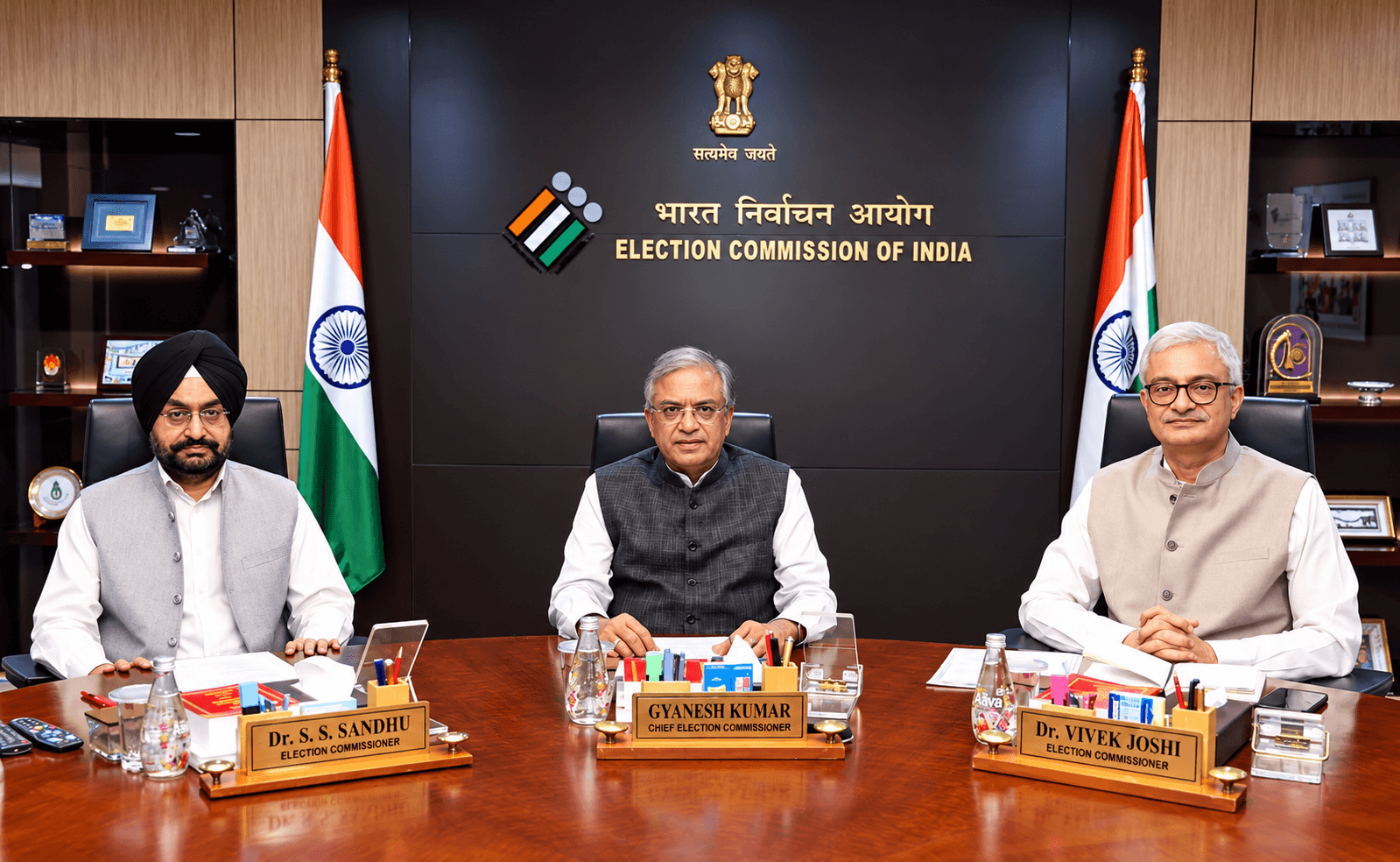
The Congress has challenged the Election Commission of India’s latest affidavit before the Supreme Court, arguing that it fails to address several concerns surrounding the Special Intensive Revision (SIR) of electoral rolls. The dispute has renewed questions about voter registration, transparency and the way the country’s election authorities make and implement decisions.
The controversy centres on an affidavit filed by the Election Commission in response to petitions questioning aspects of the SIR exercise and the poll panel’s decision-making process. The Commission has defended its actions, maintaining that its principal decisions were approved unanimously by all three Election Commissioners and that the revision process followed the law.
The Congress, however, says unanimous approval alone does not settle whether every procedural requirement was met. The party has raised concerns about Form 6, the application used by eligible citizens to register as voters, and the role of ECINET, the Commission’s digital platform for election-related operations.
On October 27, Congress general secretary Jairam Ramesh issued a six-point rebuttal, describing the Commission’s affidavit as misleading and arguing that important questions remained unanswered. The party also questioned whether concerns raised by individual Election Commissioners had been adequately considered before certain decisions were implemented.
The Election Commission has defended its procedures and rejected allegations of improper decision-making. With both sides maintaining their positions, attention is now turning to the evidence before the Supreme Court and the legal questions the judges will have to consider.
CONGRESS SAYS KEY QUESTIONS REMAIN UNANSWERED
The Congress’s main argument is that the Election Commission’s affidavit does not adequately explain how decisions relating to the SIR process were reached and implemented.
In its submission, the Commission said its three members had unanimously approved the principal orders concerning the revision of electoral rolls. It also argued that observations, queries or suggestions recorded by individual commissioners while examining files did not automatically amount to formal decisions by the Commission.
The Congress disputes whether this explanation addresses its concerns about internal consultation and the timing of certain actions. Jairam Ramesh has pointed to objections reportedly recorded by Election Commissioners Sukhbir Singh Sandhu and Vivek Joshi, questioning whether the relevant issues were properly considered before decisions were put into effect.
The party has also challenged the Commission’s account of changes to the online voter-registration process, arguing that the sequence of events requires closer examination.
These claims remain allegations made by the Congress, rather than findings established by a final court ruling. The Election Commission maintains that its decisions were taken through the prescribed procedures and that the relevant orders were properly approved.
The Supreme Court’s examination of the affidavit and supporting records will be important in determining whether the Commission’s explanations adequately address the issues raised in the petitions.
FORM 6 AT THE CENTRE OF THE DISPUTE
Form 6 has emerged as one of the key points of disagreement. The form is used by eligible citizens to apply for inclusion in the electoral roll.
The Congress has questioned the use of an additional declaration associated with Form 6 during the SIR exercise. It argues that any changes affecting voter-registration requirements must comply with the applicable rules and that the online application process raised concerns about how the additional declaration was presented to applicants.
The Election Commission has maintained that the declaration was a separate document prescribed for the revision exercise, rather than a formal amendment to Form 6 itself.
However, the Commission’s affidavit acknowledged that the way the declaration appeared online could create the impression that the statutory form had been changed. It also referred to corrective measures, including separating Form 6 from the additional SIR declaration in the online application process from October 21.
For the Congress, this explanation does not resolve the broader question of whether the process was implemented correctly from the outset. The party wants the arrangements examined against the rules governing voter registration and the concerns raised during the revision exercise.
The distinction is important because registration requirements must be clear and accessible. If applicants are uncertain about which documents or declarations they need to submit, the process can become more difficult, particularly for people trying to register for the first time.
The legal implications of the disputed arrangements will depend on the applicable rules, the evidence presented and the court’s assessment.
ECINET AND INTERNAL DECISION-MAKING UNDER SCRUTINY
The disagreement also involves ECINET, the Election Commission’s digital platform used for election-related operations and electoral-roll management.
The Congress has raised concerns about the centralisation of control over voter records and questioned whether the responsibilities of Electoral Registration Officers have been respected. It has also sought greater clarity on the role of the Commission’s information technology division and the handling of objections raised internally.
The Election Commission has rejected suggestions that its systems permit arbitrary changes to electoral rolls. In its affidavit, it maintained that voter names cannot be added, deleted or modified without an order from the competent Electoral Registration Officer.
The Commission has also defended its internal approval process, arguing that formal orders reflect the required decision-making procedure.
The issue, therefore, is not simply whether the Commission has a formal approval mechanism. It is whether the records and explanations provided sufficiently address the specific concerns raised about how decisions were carried out in practice.
That question will require an examination of the relevant documents and procedures. Statements from either side, on their own, cannot establish whether the disputed actions complied with the law.
SIR CONTROVERSY PUTS VOTER RIGHTS IN FOCUS
The Special Intensive Revision has become a significant political and legal issue because electoral rolls determine who can participate in elections.
Those supporting intensive revision argue that voter lists need regular scrutiny to correct errors, update outdated information and ensure that eligible citizens are properly registered. Accurate electoral rolls are essential to a credible election process.
Opposition parties, including the Congress, have raised concerns about the risk of eligible voters being left off the lists, the clarity of registration requirements and the transparency of the revision exercise.
For individual citizens, even an administrative error can have serious consequences. Someone whose name is missing from the electoral roll may face difficulties voting unless the issue is resolved through the prescribed procedures.
At the same time, claims of unlawful deletions or improper changes must be assessed against documentary evidence and the relevant legal provisions. Political allegations alone do not prove that the Commission has acted unlawfully.
The Supreme Court proceedings offer an opportunity to examine the disputed procedures, assess the Commission’s explanations and decide whether further legal intervention is necessary.
SUPREME COURT TO EXAMINE TRANSPARENCY AND ACCOUNTABILITY
The dispute raises broader questions about how the Election Commission records its decisions, follows statutory requirements and explains its actions when they are challenged.
As a constitutional body responsible for administering elections, the Commission plays a central role in maintaining public confidence in the democratic process. That confidence depends not only on the conduct of polling but also on reliable voter records, transparent procedures and clear explanations of important decisions.
The Congress argues that the affidavit does not adequately address its concerns about Form 6, internal consultation and the management of electoral records through digital systems. The Commission, meanwhile, has defended its procedures and maintained that its decisions were lawful and properly approved.
The Supreme Court will have to assess these competing positions in light of the applicable laws, constitutional provisions and evidence on record.
Disagreement within an institution does not automatically establish that a decision was unlawful. Equally, a claim of unanimous approval does not, by itself, answer every question about compliance with procedural requirements.
The court’s assessment could have implications for how electoral authorities document decisions, manage digital voter information and communicate changes to registration procedures.
KEY ISSUES TO WATCH
1. Clarity of voter-registration rules
The handling of Form 6 and the additional declaration will remain important. Clear instructions and consistent implementation are necessary to help eligible citizens understand the registration process.
2. Transparency in decision-making
The dispute has highlighted the importance of maintaining clear records of formal decisions, internal consultations and the implementation of electoral orders.
3. Protection of eligible voters
The SIR exercise must balance the need to correct inaccurate records with the responsibility to protect the registration rights of eligible citizens.
4. Digital management of electoral records
The role of ECINET and the authority of Electoral Registration Officers could become important parts of the court’s examination.
5. Public confidence in elections
The continuing dispute could deepen political disagreements over electoral transparency. Clear explanations and evidence-based decisions will be important in addressing public concerns.
6. Judicial scrutiny of the affidavit
The court’s assessment of the Commission’s submissions and supporting documents will help determine whether the issues raised require further legal action.
WHAT TO WATCH NEXT
Supreme Court proceedings: Further hearings or directions could clarify which aspects of the Commission’s procedures require closer examination.
Election Commission’s response: Additional explanations or documentary records may help address the specific questions raised by the Congress.
Form 6 implementation: The operation of the online registration process and the separate SIR declaration will remain under scrutiny.
Internal decision-making records: Further examination could clarify the concerns raised about consultation among the three Election Commissioners.
ECINET and voter-roll management: Any judicial observations on digital systems and the responsibilities of Electoral Registration Officers could have wider implications.
Political response: The Congress and other opposition parties are likely to keep electoral transparency in the public debate through political statements, demonstrations and legal proceedings.
FACT CHECK METER
95% — Confidence in the core reporting
STATUS: CORE DEVELOPMENTS REPORTED; ALLEGATIONS REMAIN CONTESTED
Confirmed details
The Election Commission filed an affidavit before the Supreme Court defending its handling of the SIR process and its procedures for approving major decisions.
The Commission maintained that its principal SIR orders had been approved unanimously by its three members.
Congress general secretary Jairam Ramesh issued a six-point rebuttal on October 27, challenging the Commission’s explanations.
Form 6, ECINET, internal decision-making and the management of electoral records are central to the dispute.
The Commission defended its position that the additional SIR declaration was separate from the statutory Form 6.
Important distinctions
The Congress’s allegations have not been established as final judicial findings.
The Election Commission disputes claims of unlawful decision-making and maintains that its orders were properly approved.
Unanimous approval and compliance with every applicable procedural requirement are separate questions.
The Supreme Court’s assessment of the evidence, rather than either side’s public statements, will determine the legal outcome.
AWX VERDICT: The dispute has put transparency and accountability in electoral administration under renewed scrutiny. The Congress says the Election Commission has left important questions unanswered, while the poll panel maintains that its procedures were lawful. The allegations remain contested, and the Supreme Court’s examination of the evidence will be central to determining whether further intervention is warranted.
THE AWX BOTTOM LINE
The Congress’s challenge to the Election Commission’s affidavit has brought the SIR exercise and the management of voter-registration records back into the political spotlight.
At the heart of the dispute is a question that goes beyond party politics: can the country’s election authorities clearly demonstrate that their decisions are properly documented, transparent and consistent with the law?
The Commission says its major decisions were unanimously approved and that the revision process followed the prescribed procedures. The Congress argues that concerns remain over Form 6, internal consultation and the use of digital systems to manage electoral records.
Neither side’s position should be mistaken for a final judicial finding. The Supreme Court’s examination of the submissions and supporting evidence will determine how the legal questions are resolved.
For voters, the underlying issue is straightforward. Electoral rolls must be accurate, registration requirements must be clear, and eligible citizens must have a fair opportunity to exercise their right to vote. Maintaining public confidence requires transparent administration, credible evidence and accountability under the law.
ATTLAS NEWS | AWX WORLD NEWS
Real Stories. Lasting Impact.




Comments
No comments yet.