

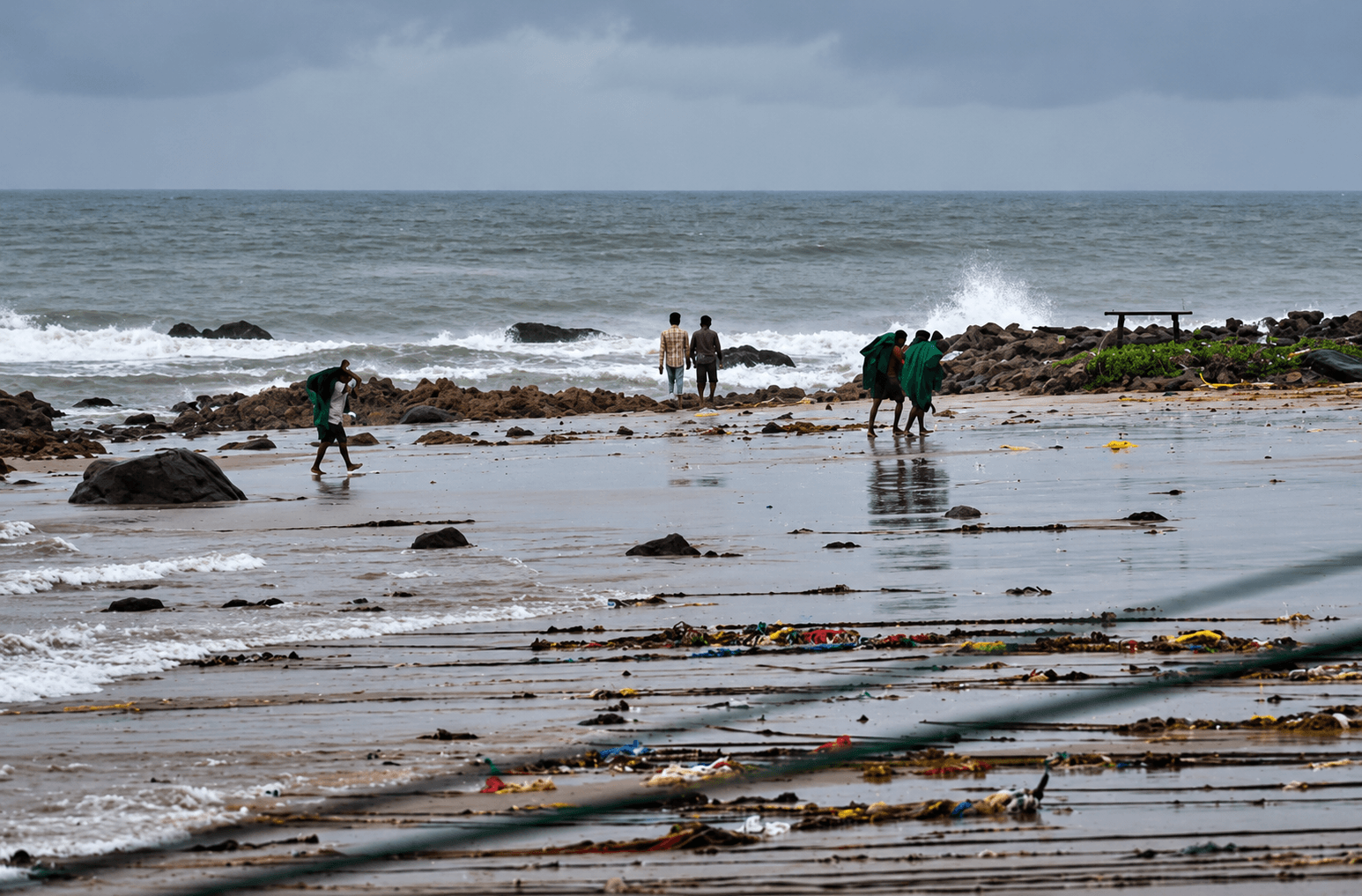
Cyclone Arnab has caused widespread damage across parts of eastern India after making landfall along the Andhra Pradesh coast on October 28. Strong winds and heavy rainfall damaged houses, roads, electricity infrastructure and agricultural fields, leaving several communities struggling to return to normal life. The storm also affected neighbouring Odisha, where evacuation efforts and emergency preparations were carried out ahead of its arrival.
According to a state government official cited by Reuters, six people had died in Andhra Pradesh as of October 29. Some local media outlets reported higher casualty figures, but the official count cited in the Reuters report remained at six.
The cyclone crossed the coast between Bapatla and Visakhapatnam, near Narsapur and southwest of Yanam. The India Meteorological Department (IMD) recorded sustained wind speeds of 125–135 km/h, with gusts reaching 150 km/h during landfall.
Although Arnab weakened after moving inland, its impact is still being felt across the affected districts. Restoring electricity, clearing damaged roads, delivering relief supplies and assessing agricultural losses have become the immediate priorities for state authorities.
CYCLONE ARNAB MAKES LANDFALL — COASTAL ANDHRA PRADESH BEARS THE BRUNT
Cyclone Arnab formed over the Bay of Bengal and gradually gained strength as it moved towards India's eastern coastline. As it intensified into a very severe cyclonic storm, authorities began preparing vulnerable coastal districts for the possibility of significant damage.
The cyclone completed its landfall process at around 8 a.m. on October 28. Several coastal areas experienced heavy rainfall, strong winds, rough sea conditions and flooding. Trees were uprooted, roads were blocked and residential buildings and other structures suffered damage.
Odisha was also affected by the storm, prompting authorities to step up precautionary measures. According to Reuters, more than 180,000 people were evacuated from Andhra Pradesh and Odisha before the cyclone made landfall. Schools were closed in some areas, while several train and flight services were cancelled or disrupted as a safety measure.
The large-scale evacuation helped move people away from vulnerable coastal settlements and low-lying areas. However, the damage caused by Arnab highlights the difficulties communities face when powerful cyclones strike densely populated regions.
DEATH TOLL REPORTED AT SIX — POWER AND TRANSPORT SERVICES DISRUPTED
The cyclone's passage brought serious risks to residents, with fatalities reported in incidents involving falling trees, damaged structures and electrocution.
Reuters reported that the official death toll in Andhra Pradesh had reached six by October 29. However, other media reports cited higher figures. A clearer picture is expected as local authorities complete their assessments and verify the reported casualties.
Electricity infrastructure was among the worst affected. Andhra Pradesh Chief Minister N. Chandrababu Naidu reportedly said that at least 15,000 electricity poles had been damaged. Power supply had been restored in most districts by Thursday, although parts of Konaseema and West Godavari were still experiencing disruptions.
Transport services also faced considerable difficulties. Several railway services and flights were cancelled or rescheduled, while fallen trees and damaged roads slowed movement across affected areas.
A cargo vessel flying the Marshall Islands flag and carrying 20 crew members remained grounded off the Andhra Pradesh coast on October 29 because of rough sea conditions.
These disruptions have affected more than just travel and daily convenience. Electricity is essential for hospitals, drinking-water supplies, communication networks, businesses and households. Restoring power and reopening important transport routes will therefore play a major role in the region's recovery.
HOMES, FARMLAND AND ROADS SUFFER WIDESPREAD DAMAGE
The damage caused by Cyclone Arnab extends well beyond power lines and transport infrastructure. Thousands of households and large agricultural areas have also been affected.
Provisional departmental figures published by the Andhra Pradesh State Disaster Management Authority (APSDMA) on October 29 provide an initial picture of the destruction.
The reported figures include:
3,631 houses damaged, according to the Housing Department.
3,009 huts damaged, also reported by the Housing Department.
3,33,268.5 hectares of crop area inundated, according to the Agriculture Department.
21,837.3 hectares of horticultural land affected, according to the Horticulture Department.
61 road breaches and scours, along with reported damage to state highways and major district roads.
These figures are based on preliminary departmental reports and may change as inspections continue. Even so, they point to the enormous recovery effort facing the affected districts, particularly farming communities.
For many farmers, the damage could have consequences lasting well beyond the cyclone itself. Flooded fields and destroyed crops may affect household incomes, disrupt local agricultural supply chains and increase financial pressure on families already dealing with damaged homes.
Authorities will need to carry out detailed inspections, assess compensation claims and provide practical support to farmers, small businesses and households facing losses.
GOVERNMENTS STEP UP RELIEF AND RESTORATION EFFORTS
With the immediate threat from the cyclone easing, authorities in Andhra Pradesh and Odisha are focusing on rescue operations, relief distribution and restoring essential services.
Before the storm arrived, disaster-response teams were deployed, vulnerable residents were moved to safer locations and emergency shelters were arranged across exposed areas.
The Odisha Chief Minister's Office said Chief Minister Mohan Charan Majhi reviewed the damage, rescue operations and relief arrangements on October 28. He instructed officials to speed up the restoration of electricity, drinking water and communication services.
The Odisha Disaster Rapid Action Force, National Disaster Response Force and fire services were also kept on alert to respond to emergencies.
In Andhra Pradesh, the disaster-management authorities have been collecting information from different government departments to understand the extent of damage to homes, agricultural land, roads and public infrastructure.
The APSDMA dashboard has also been tracking restoration activities and damage reports from affected districts. Some communities continue to face difficulties because of damaged roads and disrupted access routes.
The challenge now is to ensure that relief reaches those who need it most. Families with damaged homes will require temporary accommodation and basic supplies, while farmers and business owners may need financial assistance to recover from their losses.
FLOODING AND ROUGH SEAS REMAIN AREAS OF CONCERN
Even after a cyclone weakens, the danger does not necessarily disappear. Heavy rainfall, rising river levels and rough coastal conditions can continue to create problems for affected communities.
According to the Andhra Pradesh disaster-management dashboard, a flood alert was issued for the Nagavali River in Srikakulam, where water levels were above normal on the evening of October 29.
The alert highlights why authorities must continue monitoring rivers and low-lying areas even after the main storm system has weakened.
Conditions at sea have also remained difficult. The cargo vessel stranded off the Andhra Pradesh coast was still grounded on October 29, with rough weather making the situation challenging.
Fishing communities, coastal workers and commercial shipping operators may continue to face risks until maritime authorities confirm that conditions are safe.
Heavy rainfall could also worsen waterlogging, damage already weakened roads and make it harder for rescue and relief teams to reach remote settlements. Residents have been advised to follow local warnings, avoid flooded roads and stay away from damaged electrical installations.
The next few days will be important as authorities work to prevent further damage and move the affected region towards a more stable recovery.
RISKS AND KEY ISSUES TO WATCH
Further flooding: Continued rainfall and rising river levels could threaten low-lying settlements, agricultural land and important road connections.
Power restoration: Damage to thousands of electricity poles could prolong outages in some districts and affect hospitals, businesses and households.
Agricultural losses: Flooded fields and damaged horticultural areas may affect farmers' earnings and disrupt local supply chains.
Casualty verification: Differences between official figures and early media reports make a consolidated government assessment important.
Coastal and maritime safety: Rough seas and the stranded cargo vessel remain concerns for fishermen, port workers and commercial shipping.
Relief and rehabilitation: Families with damaged houses and huts may need temporary shelter, food, clean drinking water and financial assistance.
WHAT TO WATCH NEXT
Updated casualty figures: Further announcements from Andhra Pradesh authorities will help establish the final number of fatalities.
Restoration of essential services: Progress in Konaseema, West Godavari and other affected districts will show how quickly electricity and communication networks are returning to normal.
Agricultural damage assessment: Detailed inspections will help determine crop losses and the assistance required by affected farmers.
River and rainfall updates: Monitoring reports from disaster-management agencies will remain important for communities near rivers and flood-prone locations.
Compensation and rehabilitation: Government announcements on financial assistance, housing repairs and relief packages will be important for affected families and businesses.
Transport and maritime operations: The reopening of disrupted routes and the safe recovery of stranded vessels will be important indicators of progress.
FACT CHECK METER
96% — Strongly supported
Recovery underway
Editorial assessment based on the available reports and official updates. This percentage is not a statistical probability.
Confirmed details
Cyclone Arnab made landfall along the Andhra Pradesh coast on October 28 as a very severe cyclonic storm.
Reuters reported six officially confirmed deaths in Andhra Pradesh as of October 29.
At least 15,000 electricity poles were reported damaged, with restoration work continuing in some districts.
Andhra Pradesh's disaster-management dashboard recorded thousands of damaged homes, extensive agricultural impacts and road damage in preliminary departmental reports.
More than 180,000 people were evacuated across Andhra Pradesh and Odisha ahead of the cyclone.
Important distinctions
The official death toll cited by Reuters was six, although some other media reports gave higher figures.
Damage statistics published by the Andhra Pradesh disaster-management authorities are provisional and should not be treated as a final verified assessment.
Arnab weakened after making landfall, but flooding, damaged infrastructure and rough sea conditions continued to create problems.
AWX VERDICT
Reports of fatalities, damaged infrastructure and agricultural losses support the central claims in this headline. While Cyclone Arnab's landfall and immediate storm phase have passed, the damage left behind means that relief, restoration and rehabilitation will remain major priorities for Andhra Pradesh and neighbouring regions.
THE AWX BOTTOM LINE
Cyclone Arnab has left a difficult recovery ahead for communities along India's eastern coastline. Andhra Pradesh and parts of Odisha are dealing with damaged homes, disrupted electricity, flooded farmland and transport difficulties, while families affected by the storm begin rebuilding their lives.
Advance warnings and large-scale evacuation efforts helped move more than 180,000 people to safer locations. However, the reported deaths and extensive damage show how challenging it can be to protect communities when powerful cyclones strike populated coastal areas.
For now, the priority is clear: restore essential services, provide timely assistance to affected families and farmers, and ensure that further flooding or unsafe coastal conditions do not lead to additional losses.
Although the storm has weakened, its effects on people's homes, livelihoods and local infrastructure will take considerably longer to overcome.
ATTLAS NEWS | AWX WORLD NEWS
Real Stories. Lasting Impact.


Comments
No comments yet.