


Air pollution is once again becoming a concern for residents of the national capital. Delhi recorded an AQI of 229 on Wednesday, October 28, placing the city in the ‘poor’ category. Pollution levels remained around the same mark on Thursday, highlighting the worsening situation as winter approaches.
According to the Central Pollution Control Board (CPCB), an AQI between 201 and 300 falls under the poor category. Prolonged exposure to such conditions can cause breathing difficulties, particularly among children, older adults and people with existing respiratory or heart conditions.
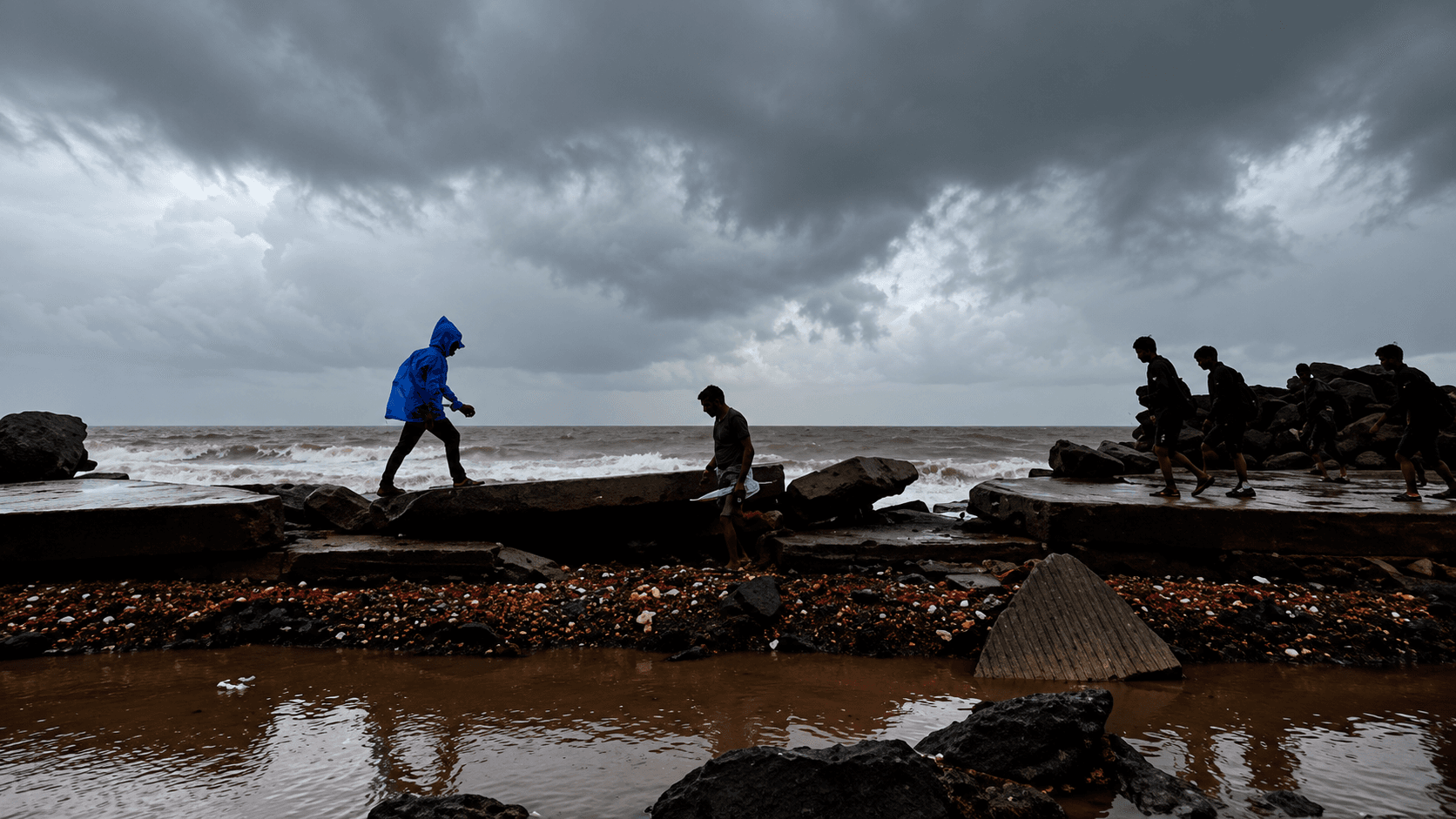
There was some positive news on Friday morning, however. Overnight rainfall helped clear pollutants from the air, bringing Delhi’s AQI down to 111 by 7 a.m. on October 30. This moved the city into the ‘moderate’ category. Safdarjung, Delhi’s main weather observation station, recorded 54.7 mm of rainfall overnight.
Despite this improvement, the broader pollution problem remains. Forecasts suggest that air quality could slip back into the poor category from November 1, keeping the coming days important for pollution monitoring and preventive measures.
AQI REACHES 229 — SEVERAL DELHI AREAS FACE HIGH POLLUTION
The AQI of 229 reflected a wider pollution problem across the capital. On Thursday morning, 39 of Delhi’s 59 air-quality monitoring stations recorded readings above 200. Three locations also reported air quality in the ‘very poor’ category.
Uttam Nagar recorded an AQI of 339, followed by Mundka at 336 and Dwarka Sector 8 at 307. Other areas, including CRRI Mathura Road and Jahangirpuri, also reported elevated pollution levels.
The CPCB classifies air quality into six categories:
Good (0–50): Air quality has minimal impact on health.
Satisfactory (51–100): Generally acceptable, with little risk to most people.
Moderate (101–200): May cause breathing discomfort among sensitive individuals.
Poor (201–300): Prolonged exposure can cause breathing difficulties.
Very Poor (301–400): Extended exposure can increase the risk of respiratory illness.
Severe (401–500): Can affect the health of even otherwise healthy people.
The differences between monitoring stations show that pollution is not equally distributed across Delhi. While some neighbourhoods recorded moderate levels, others faced much worse conditions. This makes it important for residents to pay attention to local AQI readings rather than relying only on the city's overall average.
PM2.5 AND PM10 CONTINUE TO AFFECT AIR QUALITY
Fine particulate matter remains one of the biggest concerns in Delhi's pollution situation.
PM2.5 refers to tiny particles measuring 2.5 micrometres or less. Because of their small size, they can travel deep into the lungs. PM10 includes slightly larger inhalable particles measuring up to 10 micrometres.
Both pollutants were among the prominent contributors identified in Delhi's city-level air-quality report on October 29.
Common sources include vehicle emissions, construction work, road dust, industrial activity and the burning of different fuels. Weather conditions also play an important role in determining how quickly these pollutants disperse.
The Air Quality Early Warning System for Delhi reported unfavourable atmospheric conditions, including weak average winds and a low ventilation index. When winds are weak and atmospheric mixing is limited, pollutants can remain trapped close to the ground instead of spreading out.
This is one reason Delhi can continue to experience poor air quality even when there is no major increase in emissions. Wind speed, temperature, rainfall and atmospheric conditions all influence the amount of pollution present in the air.
VEHICLE EMISSIONS, ROAD DUST AND REGIONAL POLLUTION ADD TO THE PROBLEM
Delhi's air pollution is caused by several overlapping factors, making it difficult to tackle through a single measure.
According to the Decision Support System for Air Quality Management in Delhi, transport accounted for 16.8% of identified pollution in the reported assessment. Other sources included residential emissions, industries in surrounding areas, construction activity, waste burning and road dust.
These figures are model-based estimates for a particular assessment period. They should not be treated as fixed contributions for every day.
The problem also extends beyond Delhi's borders. Pollution from neighbouring NCR districts and nearby states can affect the capital's air quality. This makes cooperation between Delhi and surrounding regions essential for achieving lasting improvements.
Crop-residue burning is another seasonal concern. Satellite observations detected 205 farm-fire incidents across six states on October 28. These included 96 incidents in Punjab, 20 in Uttar Pradesh and 57 in Rajasthan.
Although farm fires contribute to the wider regional pollution problem, these figures alone do not establish how much they affected Delhi's AQI on that particular day.
Transport emissions, industrial activity, construction dust and seasonal burning all add pressure to the region's air quality. Addressing these sources will require consistent monitoring and coordinated action across the National Capital Region.
OVERNIGHT RAIN BRINGS RELIEF — BUT HOW LONG WILL IT LAST?
Rainfall overnight on Thursday brought a noticeable improvement in Delhi's air quality. The showers helped wash some pollutants out of the atmosphere, resulting in a sharp fall in the city's AQI.
According to CPCB data reported by Business Standard, the AQI dropped from 229 on Thursday to 111 by 7 a.m. on Friday.
Several monitoring stations recorded relatively better readings. Anand Vihar reported an AQI of 86, Lodhi Road recorded 88 and Aya Nagar stood at 95. However, some locations, including Uttam Nagar and Rohini, continued to experience moderate pollution.
The India Meteorological Department (IMD) had issued an Orange Alert for all 11 districts of Delhi, forecasting further rainfall, thunderstorms and gusty winds on Friday. The combination of rainfall and stronger winds helped improve atmospheric conditions.
However, the relief may not last. The Air Quality Early Warning System forecast moderate air quality for October 30 and 31, with a possible return to the poor category from November 1. Its extended outlook also indicated that poor conditions could continue over the following six days.
This means Friday's improvement should be seen as temporary relief rather than a sign that Delhi's pollution problem has been solved. If emissions remain high and weather conditions become unfavourable again, AQI levels could rise once more.
PUBLIC HEALTH AND LONG-TERM POLLUTION CONTROL REMAIN IMPORTANT
Poor air quality can affect everyday activities, especially for people who spend a lot of time outdoors. Children, senior citizens and people with respiratory or cardiovascular conditions are particularly vulnerable to prolonged exposure.
Residents can take a few precautions when pollution levels rise. Checking daily AQI updates, limiting strenuous outdoor exercise and following official health advisories can help reduce exposure. People with existing health conditions should also follow guidance from their healthcare professionals.
However, individual precautions alone cannot solve the problem. Long-term improvement will depend on stronger pollution-control measures and consistent enforcement.
Cleaner public transport, better road-dust management, stricter industrial emission controls, improved waste disposal and action against seasonal burning all need attention.
The focus should be on reducing pollution at its source instead of relying mainly on emergency restrictions whenever air quality deteriorates.
KEY RISKS AND ISSUES TO WATCH
Air quality could worsen again: Forecasts suggest Delhi may return to the poor category from November 1 as the temporary benefits of rainfall fade.
Unfavourable weather conditions: Weak winds and limited atmospheric mixing could allow pollutants to accumulate near the ground.
Seasonal crop-residue burning: Farm fires in neighbouring states may add to regional pollution, although their contribution can vary from day to day.
Vehicle and industrial emissions: Transport, industrial activity and construction dust remain important pollution sources that require regular monitoring.
Health risks for vulnerable groups: Children, older adults and people with existing respiratory or heart conditions may face greater health risks during prolonged periods of poor air quality.
Different pollution levels across neighbourhoods: Citywide AQI figures may not reflect conditions in every locality, making individual monitoring stations important.
WHAT TO WATCH NEXT
Daily CPCB AQI updates: Whether Delhi can maintain moderate air quality after the rainfall or slips back into the poor category.
IMD weather forecasts: Changes in wind speed, rainfall and atmospheric conditions will influence how effectively pollutants disperse.
CAQM pollution-control measures: Any new restrictions or enforcement measures under the Graded Response Action Plan (GRAP) if air quality deteriorates.
Regional pollution sources: Developments in farm-fire activity, industrial emissions and transport-related pollution across Delhi-NCR and neighbouring states.
Public health advisories: Official recommendations on outdoor activities and precautions during periods of elevated pollution.
FACT CHECK METER
96% — STRONGLY SUPPORTED
Editorial assessment of the available evidence, not a statistical probability.
Confirmed details
Delhi recorded an AQI of 229 on October 28, placing the city in the poor category.
Several monitoring stations reported very poor air quality on October 29, including Uttam Nagar, Mundka and Dwarka Sector 8.
Overnight rainfall brought Delhi's AQI down to 111 by 7 a.m. on October 30.
The official forecasting system indicated that air quality could return to the poor category from November 1.
Important distinctions
The AQI of 229 refers to an earlier reading and is not Delhi's latest reading for October 30.
The improvement following rainfall does not necessarily indicate a lasting reduction in pollution emissions.
Regional farm-fire numbers and pollution-source estimates should not be treated as exact daily contributions to Delhi's AQI.
AWX VERDICT
The headline accurately reflects Delhi's recent deterioration, when the AQI reached 229. However, Friday morning brought a significant improvement following overnight rainfall, with the reading falling to 111.
While the rainfall has provided some relief, the wider pollution challenge remains unresolved. Forecasts suggest that Delhi could return to poor air quality in the coming days, keeping pollution control a major concern.
THE AWX BOTTOM LINE
Delhi's latest air-quality situation highlights the challenges of controlling pollution as the city moves towards winter. The AQI reaching 229 raised concerns among residents, while the sharp fall to 111 after overnight rainfall brought some temporary relief.
But cleaner air after rainfall does not mean the problem has disappeared. Vehicle emissions, road dust, industrial activity, regional pollution and seasonal burning continue to put pressure on the capital's air quality.
The coming days will show whether the improvement can be maintained. For Delhi, the real challenge is not simply bringing down the AQI after a spell of rain, but reducing pollution through consistent action throughout the year.
ATTLAS NEWS | AWX WORLD NEWS
Real Stories. Lasting Impact.



Comments
No comments yet.