

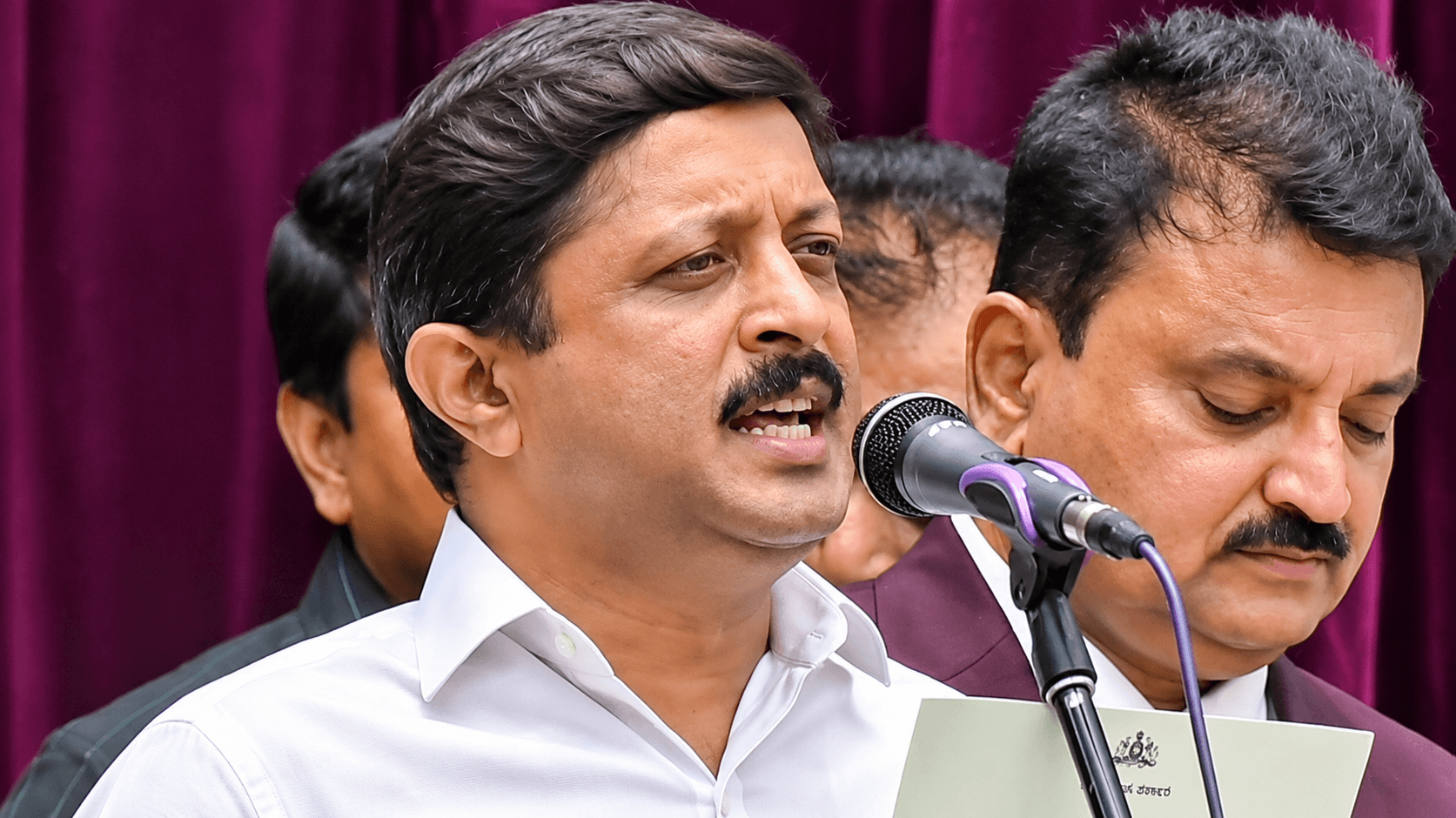
A political disagreement has emerged over Honda's investment plans in Karnataka, with state Industries Minister MB Patil rejecting claims that the Japanese automaker is preparing to withdraw from the state.
The controversy began after Union Minister for Heavy Industries and Steel HD Kumaraswamy alleged that Honda Motorcycle and Scooter India had decided to abandon its proposed electric vehicle manufacturing project in Kolar.
Responding on November 1, Patil called the allegation baseless and politically motivated. He maintained that Honda had no plans to leave Karnataka and remained interested in expanding its manufacturing activities, particularly electric two-wheeler production at its Narasapura facility in Kolar district.
The exchange has once again brought Karnataka's industrial investment climate into the political spotlight, especially as Indian states compete to attract companies operating in the fast-growing electric vehicle sector.
While Kumaraswamy has questioned the state's ability to retain major industrial projects, Patil has pointed to Honda's established manufacturing presence and proposed expansion as evidence of the company's continued interest in Karnataka.
HONDA'S LONG-STANDING PRESENCE IN NARASAPURA
Defending the state's position, Patil highlighted Honda's long-standing manufacturing operations in Karnataka.
According to the minister, the company was allotted 135 acres of land in phases at Narasapura in Kolar district, beginning in 2011. Manufacturing operations started in 2013, and the facility now produces approximately 10,000 vehicles a day while providing employment to more than 7,800 people.
Honda also operates a 35-acre spare-parts warehousing and distribution facility at Adinarayana Hosahalli in Doddaballapura taluk, catering to its requirements across southern India.
Patil said these investments reflect Honda's established presence in the state and demonstrate the importance of Karnataka to the company's manufacturing network.
He also urged Kumaraswamy to be more cautious when commenting on companies operating in Karnataka, warning that unverified statements could create unnecessary concerns among investors.
The minister stressed that Honda's existing operations remain active and that the state government has received no indication that the company is unhappy with its business environment in Karnataka.
₹600-CRORE EV PROJECT AT THE CENTRE OF THE CONTROVERSY
At the heart of the disagreement is Honda's proposed investment of approximately ₹600 crore in a dedicated electric two-wheeler manufacturing facility at Narasapura.
The investment agreement was signed during the Global Investors Meet in Bengaluru in February 2025. The proposed facility was expected to become Honda's first dedicated electric two-wheeler manufacturing unit in India.
Patil said Honda continued to show interest in expanding its electric vehicle business and was considering increasing EV production at its existing Narasapura campus. He also indicated that production was expected to begin in the coming days.
The distinction is important: the controversy concerns the status of Honda's proposed EV investment, not the closure of its existing conventional two-wheeler manufacturing operations.
Kumaraswamy claimed that Honda had decided to withdraw from the proposed project. Patil rejected the allegation, insisting that the company intended to continue its expansion plans in Karnataka.
However, as of November 3, the reports reviewed do not include an independent public statement from Honda confirming either the project's withdrawal or its final implementation schedule.
KUMARASWAMY QUESTIONS KARNATAKA'S INDUSTRIAL INVESTMENT CLIMATE
The controversy gained momentum after Kumaraswamy raised concerns about Karnataka's ability to attract new industries and retain existing investments.
Speaking in New Delhi on October 31, the Union Minister said entrepreneurs who had met him expressed difficulties in setting up businesses in the state.
He specifically referred to Honda's proposed EV manufacturing project in Kolar, alleging that the company had decided against proceeding with the investment.
Kumaraswamy also questioned the performance of Karnataka's IT and Biotechnology Department under Minister Priyank Kharge, raising concerns about the investments and employment opportunities secured by the state.
He further claimed that manufacturers of permanent magnets and other components essential to the EV industry were choosing states such as Odisha, Andhra Pradesh, Tamil Nadu and Kerala instead of Karnataka.
His remarks have triggered a wider discussion about Karnataka's industrial policies and its competitiveness as a manufacturing destination.
The disagreement also highlights the political tensions between Union and state leaders over responsibility for attracting investments, supporting businesses and generating employment.
MB PATIL HITS BACK, DEFENDS KARNATAKA'S INVESTMENT RECORD
Patil responded firmly to Kumaraswamy's allegations, accusing him of making politically motivated statements that could undermine investor confidence.
He argued that a Union Minister from Karnataka should focus on bringing more industries and investments into the state rather than making claims that could create uncertainty among existing companies.
Patil also challenged Kumaraswamy's references to businesses shifting their investments to Gujarat, Andhra Pradesh, Tamil Nadu, Telangana and Odisha.
According to the state minister, Honda has not raised concerns about Karnataka's industrial environment, and the state government has not failed in its dealings with the company.
The exchange has exposed differing views on how Karnataka's industrial performance should be assessed.
While Kumaraswamy has highlighted the possibility of companies choosing competing states, Patil has pointed to Honda's existing manufacturing facilities, workforce and proposed expansion as signs of continued investor confidence.
EV MANUFACTURING RACE INTENSIFIES AMONG INDIAN STATES
The Honda controversy comes at a time when Indian states are competing to establish themselves as major destinations for electric vehicle manufacturing.
Growing demand for electric two-wheelers, batteries, charging infrastructure and automotive components has created significant opportunities for investment, innovation and job creation.
States such as Karnataka, Tamil Nadu, Gujarat, Maharashtra, Andhra Pradesh and Telangana are working to strengthen their positions in the automotive and EV supply chains.
For Karnataka, the Narasapura industrial area is particularly important. It already supports large-scale manufacturing operations alongside a network of suppliers, logistics businesses and thousands of workers.
Honda's proposed ₹600-crore investment could further strengthen this industrial ecosystem by expanding the state's electric two-wheeler manufacturing capacity.
Any uncertainty surrounding the project could therefore attract attention from companies evaluating Karnataka as a potential manufacturing destination.
Patil's reassurance appears aimed at preventing the political dispute from affecting Honda's existing operations or its future investment decisions.
RISKS AND KEY ISSUES TO WATCH
Project implementation: Whether Honda officially confirms the status and timeline of its proposed ₹600-crore EV investment.
Investor confidence: Whether continued political disagreements create uncertainty among companies considering investments in Karnataka.
Employment security: Honda's existing workforce of more than 7,800 people makes the stability of its operations important to the local economy.
Inter-state competition: Other states are actively competing to attract EV manufacturers, battery producers and automotive suppliers.
Government coordination: The dispute raises questions about cooperation between Union and state authorities on industrial development.
EV supply chain: Access to components, manufacturing infrastructure and investment incentives could influence future project decisions.
WHAT TO WATCH NEXT
Honda's official response: Whether the company issues a statement clarifying its Karnataka investment plans.
Narasapura EV production: Whether the proposed expansion begins as indicated by MB Patil.
₹600-crore investment: Whether the state government shares further details about the project's implementation schedule.
Political developments: Whether Kumaraswamy responds to Patil's rejection of his allegations.
Fresh industrial investments: Whether Karnataka announces additional automotive and EV manufacturing projects.
Production and employment: Whether Honda increases its workforce and manufacturing capacity alongside its EV expansion.
FACT CHECK METER
EDITORIAL CONFIDENCE: 98%
Strongly supported — based on ministerial statements and corroborating media reports.
Confirmed details
MB Patil rejected claims that Honda was leaving Karnataka on November 1.
Honda's Narasapura manufacturing operations began in 2013.
The facility employs more than 7,800 people and produces approximately 10,000 vehicles daily, according to Patil.
Honda announced a proposed ₹600-crore investment in a dedicated electric two-wheeler manufacturing facility in 2025.
Patil said Honda remained interested in expanding its EV production in Narasapura.
Important distinctions
The allegation that Honda was withdrawing from the proposed EV project was made by HD Kumaraswamy.
Patil rejected the claim, but the reports reviewed do not include independent confirmation directly from Honda.
The proposed EV investment should not be confused with Honda's existing conventional two-wheeler manufacturing operations.
The project's final implementation timeline and operational status still require direct confirmation.
AWX VERDICT
The available information supports the Karnataka government's position that Honda's existing manufacturing operations remain active and that further EV expansion is expected.
However, the disagreement over the proposed ₹600-crore investment has not been fully resolved. While Patil has dismissed the exit claims, an official statement from Honda would provide the clearest confirmation of the project's future.
The percentage represents AWX editorial confidence in the factual reporting presented in this article, not a statistical probability or official rating.
THE AWX BOTTOM LINE
The Honda controversy has opened a fresh political debate over Karnataka's ability to attract and retain major industrial investments.
Union Minister HD Kumaraswamy has questioned the future of Honda's proposed EV project in Narasapura, while Industries Minister MB Patil insists that the company is not leaving Karnataka and remains interested in expanding its electric two-wheeler operations.
With an established manufacturing facility, more than 7,800 employees and a proposed ₹600-crore EV investment, Honda remains an important part of Karnataka's industrial landscape.
For now, the state government has firmly rejected speculation about the company's exit. But the final word will need to come from Honda itself, particularly regarding the proposed investment and its production timeline.
ATTLAS NEWS | AWX WORLD NEWS
Real Stories. Lasting Impact.

Comments
No comments yet.