

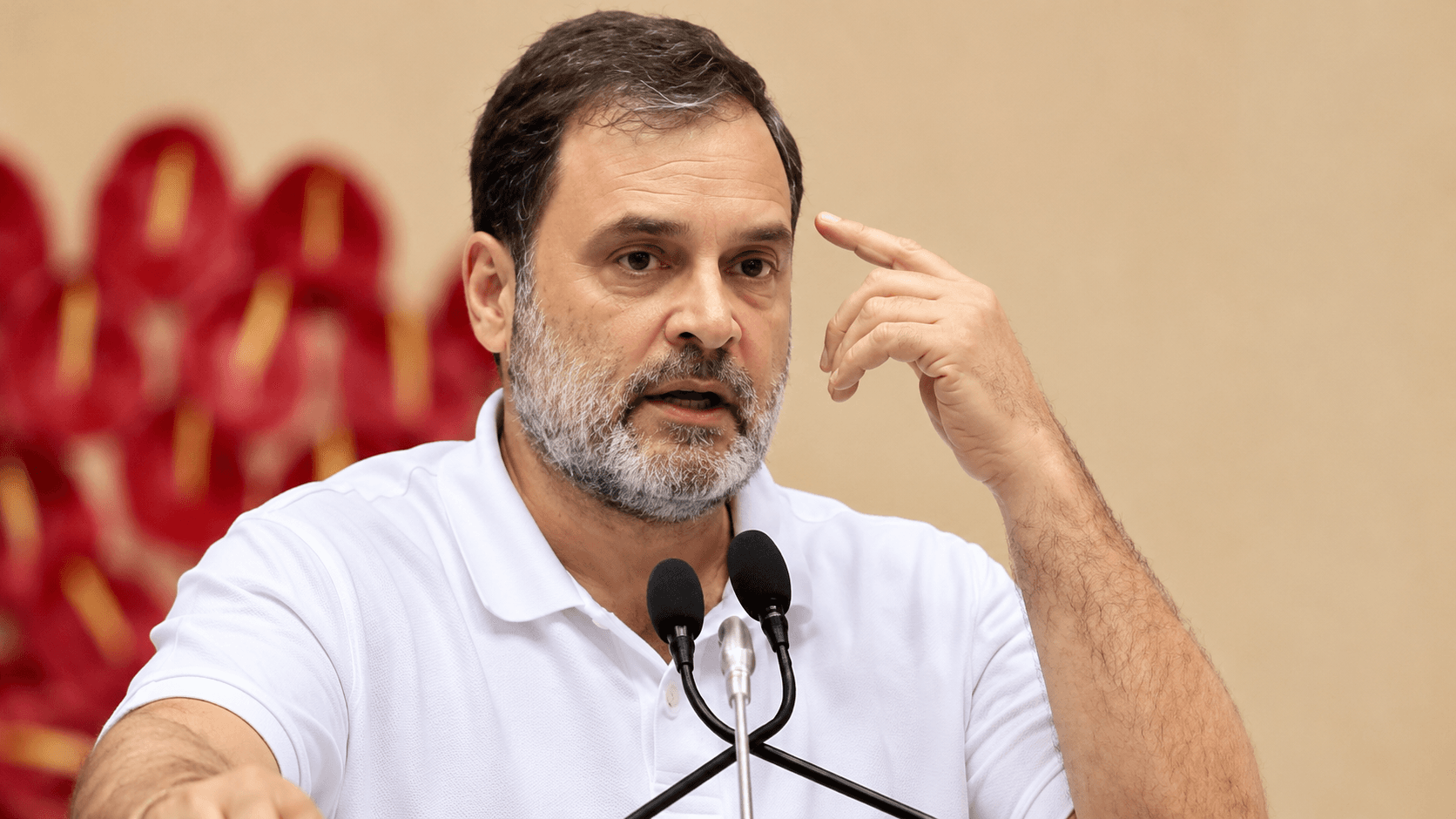
Leader of Opposition Rahul Gandhi has intensified his criticism of the Election Commission of India (ECI), questioning the credibility of the 2024 Lok Sabha election results and alleging that large-scale changes to voter lists have compromised the electoral process.
Speaking at an INDIA bloc rally in New Delhi on November 1, Gandhi repeated his claims of electoral manipulation, pointing to alleged irregularities involving electronic voting machines and voter registrations. He argued that the reported scale of voter deletions raises serious concerns about the fairness of the election that returned the BJP-led National Democratic Alliance (NDA) to power.
Gandhi also warned that Chief Election Commissioner Gyanesh Kumar would eventually lose his position and face legal consequences. His comments came a day after opposition leaders organised a symbolic public impeachment programme on October 31, calling for Kumar's removal over alleged irregularities in the electoral process.
The latest developments have brought electoral transparency, the independence of constitutional institutions and public confidence in India's democratic system back into the political spotlight.
RAHUL GANDHI SAYS 13.3 CRORE VOTER DELETIONS RAISE QUESTIONS OVER ELECTION RESULTS
At the opposition gathering on October 31, Gandhi claimed that around 13.3 crore voters, or roughly 15 per cent of the electorate, had been removed from electoral rolls during the Special Intensive Revision (SIR) exercise.
He compared this figure with the approximately 3 per cent electoral margin he cited between the opposition and the ruling alliance, arguing that such a large number of deletions could have serious implications for the credibility of the 2024 election results.
Gandhi maintained that the Election Commission's own figures raised questions about the electoral process. He also alleged that people who had voted in the 2024 elections were subsequently finding their names missing from voter records.
The Congress leader accused the Election Commission of failing to safeguard citizens' constitutional right to vote. He further alleged that electronic voting machines and changes to electoral rolls had been used to influence election outcomes.
However, these remain allegations made by Gandhi and other INDIA bloc leaders. They do not establish that the 2024 Lok Sabha election results were legally invalid or that the alleged deletions changed the outcome of the election.
INDIA BLOC HOLDS SYMBOLIC IMPEACHMENT PROGRAMME AGAINST CEC
The confrontation took another turn on October 31, when opposition leaders organised a symbolic public impeachment programme against Chief Election Commissioner Gyanesh Kumar at Congress president Mallikarjun Kharge's residence in New Delhi.
Former Lok Sabha Speaker Meira Kumar presided over the programme, which brought together Congress leaders, opposition MPs, political representatives and members of civil society.
The gathering ended with the adoption of a resolution demanding Kumar's removal and calling for criminal proceedings over alleged electoral irregularities.
Kharge accused the Election Commission of mishandling electoral rolls and questioned its independence. He also called for the suspension of the SIR exercise.
Rahul Gandhi described the event as an unusual but necessary step, arguing that opposition parties had exhausted several institutional avenues for raising their concerns.
It is important to note that the programme was symbolic, not a formal constitutional impeachment proceeding. The resolution passed by opposition leaders does not automatically remove the Chief Election Commissioner or initiate a legally binding removal process.
Even so, the event marked a significant escalation in the INDIA bloc's campaign against the Election Commission.
RAMLILA MAIDAN RALLY TAKES THE FIGHT TO THE STREETS
A day after the symbolic impeachment programme, opposition parties took their campaign to Delhi's Ramlila Maidan on November 1.
The rally, held under the banner of Vote Bachao, Desh Bachao, brought together leaders and supporters from several INDIA bloc parties.
Addressing the gathering, Gandhi repeated his allegations of electoral manipulation and questioned the legitimacy of the 2024 Lok Sabha verdict. He also reiterated that Gyanesh Kumar would eventually be removed from office and face legal consequences.
Gandhi directed his criticism towards Prime Minister Narendra Modi and Union Home Minister Amit Shah, alleging that the electoral system had been manipulated to benefit the ruling establishment.
According to the Associated Press, tens of thousands of people attended the rally. Other media reports, citing Delhi Police estimates, put the crowd at approximately 50,000.
The demonstration reflected the opposition's decision to take its concerns beyond Parliament and build a wider public campaign around electoral transparency and voters' rights.
The INDIA bloc has also called for greater accountability from constitutional institutions and stronger safeguards to ensure that eligible citizens are not denied their right to vote.
BJP REJECTS CHARGES AND DEFENDS VOTER-ROLL REVISION
The BJP has dismissed Gandhi's allegations, describing them as politically motivated and misleading.
BJP spokesperson Sambit Patra argued that the figure of approximately 13 crore did not represent votes stolen from eligible citizens. According to him, the Special Intensive Revision is intended to update electoral records by identifying deceased voters, people who have permanently relocated and duplicate registrations.
Patra also challenged the opposition's interpretation of the figures, maintaining that removing ineligible entries is a routine part of maintaining accurate voter lists.
Union Home Minister Amit Shah joined the criticism on November 2, defending the revision exercise and questioning the opposition's claims. He also challenged the INDIA bloc to take up the matter through a parliamentary debate.
The BJP has maintained that opposition parties should provide specific evidence of electoral wrongdoing rather than question the credibility of an entire election.
The disagreement has now grown beyond the issue of voter-list revisions. It has developed into a broader political debate over institutional independence, constitutional accountability and public trust in India's electoral system.
ELECTION COMMISSION DEFENDS SIR PROCESS AND ITS DECISIONS
The Election Commission has defended the Special Intensive Revision, describing it as a necessary exercise to improve the accuracy of electoral rolls.
In a press release dated September 26, the Commission stated that the decision to begin the nationwide SIR exercise had received unanimous approval from all three Election Commissioners. It also referred to a Supreme Court order dated May 27, 2026, which it said had upheld the relevant SIR order.
The Commission has also outlined steps to assist voters whose names or documents require additional verification.
These measures include home visits by Booth Level Officers in certain cases, additional help desks, special enrolment camps for vulnerable groups and online hearing facilities wherever necessary.
The ECI has said that the final number of eligible voters will become clear only after the final electoral rolls are published in the remaining states covered by the relevant phase of the exercise.
One distinction is particularly important in this debate: names flagged for verification, proposed deletions and actual removals from the final electoral rolls are not necessarily the same thing.
For this reason, the figure of 13.3 crore cited by political leaders needs to be examined alongside state-wise electoral records, the reasons for proposed deletions and the final published voter lists.
SUPREME COURT SCRUTINY ADDS A LEGAL DIMENSION
The dispute is no longer confined to political speeches and public demonstrations. It has also reached the judicial system.
The Supreme Court has been examining challenges connected with the Election Commission's decision-making process and allegations involving changes to Form 6, which is used to register new voters.
According to a report by The Indian Express, a three-judge bench headed by Chief Justice Surya Kant has scheduled the matter for November 17. The hearing will allow petitioners to respond to the Election Commission's affidavit.
The proceedings also involve requests to preserve internal communications and records relating to the Commission's decisions.
While the ECI maintains that the relevant decisions were taken unanimously, petitioners have raised questions about aspects of the decision-making process.
The case could provide greater clarity on how the SIR exercise is being implemented and the procedures governing voter registration.
However, the Supreme Court has not declared the 2024 Lok Sabha election invalid. The ongoing proceedings should not be treated as a judicial finding that the election was manipulated or stolen.
ELECTORAL TRANSPARENCY AND PUBLIC TRUST TAKE CENTRE STAGE
The dispute has developed into one of the most significant political confrontations between the Congress-led opposition and the BJP-led government.
For the INDIA bloc, the main concern is whether electoral roll revisions and the Election Commission's functioning are transparent enough to protect every eligible citizen's right to vote.
The BJP and the Election Commission, meanwhile, argue that regular verification is essential to maintain accurate voter records and remove duplicate, deceased and otherwise ineligible entries.
Both sides have raised issues that matter to the functioning of India's democratic system.
The real challenge is to maintain accurate electoral rolls without allowing genuine voters to be wrongly excluded. Achieving that balance requires transparent procedures, accessible correction mechanisms and independent scrutiny.
Ultimately, public confidence will depend on how clearly the authorities explain changes to voter lists and how effectively citizens can challenge errors in their electoral records.
RISKS AND KEY ISSUES TO WATCH
Public confidence in elections: Continued allegations and political confrontations could weaken public trust in the Election Commission and the wider electoral process.
Risk of voter disenfranchisement: Eligible citizens whose names are wrongly removed may face difficulties exercising their constitutional right to vote.
Judicial scrutiny: The Supreme Court's examination of SIR procedures and Form 6 changes could have wider implications for India's electoral administration.
Growing political confrontation: The dispute could further widen the divide between the BJP and INDIA bloc, particularly if opposition parties expand their campaign across the country.
Transparency of electoral data: Limited clarity around voter additions, deletions and pending verification could lead to further disagreements over the figures.
Institutional independence: Questions surrounding the Election Commission's decision-making and accountability may become an increasingly important issue in future political debates.
WHAT TO WATCH NEXT
Supreme Court hearing: The November 17 proceedings could offer further clarity on challenges involving the Election Commission's decisions and the SIR exercise.
Election Commission's response: Whether the ECI releases more detailed state-wise information on voter additions, deletions and pending verification.
Congress's next move: Whether Rahul Gandhi and other INDIA bloc leaders present additional documentary evidence or pursue further legal action.
BJP's response: Whether the ruling party agrees to a parliamentary discussion on voter-list revisions and electoral transparency.
Voter enrolment initiatives: Whether special camps and correction facilities help eligible citizens resolve problems with their electoral records.
Opposition mobilisation: Whether the INDIA bloc takes its campaign beyond Delhi through rallies, demonstrations and public meetings in other states.
FACT CHECK METER
Editorial confidence: 97%
Strongly supported in terms of reported statements, official records and available court reporting. Political allegations are separately identified and have not been treated as established findings.
Confirmed details
Rahul Gandhi questioned the credibility of the 2024 Lok Sabha elections during opposition events on October 31 and November 1.
He claimed that approximately 13.3 crore voters had been removed from electoral rolls.
INDIA bloc leaders organised a symbolic public impeachment programme targeting Chief Election Commissioner Gyanesh Kumar.
The BJP rejected the opposition's interpretation of the voter-deletion figures.
The Election Commission defended the SIR exercise and said the relevant decisions had received unanimous approval.
The Supreme Court is examining challenges involving aspects of the SIR process and Form 6.
Important distinctions
The figure of 13.3 crore is an opposition claim. It should not be interpreted as a verified count of eligible voters wrongly removed.
The BJP argues that voter-roll revisions include deceased, relocated and duplicate entries.
The public impeachment programme was symbolic and was not a formal constitutional removal proceeding.
The Supreme Court has not declared the 2024 Lok Sabha election invalid.
No judicial finding establishing that the 2024 election was stolen has been identified in the reports reviewed.
AWX VERDICT
Rahul Gandhi's latest remarks have turned the controversy over voter-list revisions into a broader challenge to the Election Commission's credibility. The opposition is demanding greater transparency and accountability, while the BJP and the ECI defend the revision process.
The next important developments will come from the availability of detailed electoral records and the Supreme Court's examination of the ongoing challenges. How these competing claims are addressed could have a lasting impact on public confidence in India's democratic institutions.
The 97% figure represents AWX's editorial confidence in the factual reporting presented in this article. It is not a statistical probability or an official rating.
THE AWX BOTTOM LINE
Rahul Gandhi's latest attack on the Election Commission has opened another chapter in India's ongoing political debate over electoral integrity.
By questioning the legitimacy of the 2024 Lok Sabha verdict and demanding action against Chief Election Commissioner Gyanesh Kumar, the Congress leader has taken the opposition's vote-theft campaign to a more confrontational level.
The BJP has rejected the allegations, while the Election Commission maintains that voter-roll revisions are necessary to keep electoral records accurate. Meanwhile, the Supreme Court's ongoing scrutiny has given the dispute an important legal dimension.
At the heart of the controversy is a straightforward but significant question: how can India ensure that every eligible citizen retains the right to vote while maintaining accurate and reliable electoral rolls?
The answer will depend on transparent data, credible investigations, accessible voter-verification procedures and independent judicial scrutiny. Until the competing claims are properly addressed, electoral transparency is likely to remain a major issue in India's political debate.
ATTLAS NEWS | AWX WORLD NEWS
Real Stories. Lasting Impact.

Comments
No comments yet.