

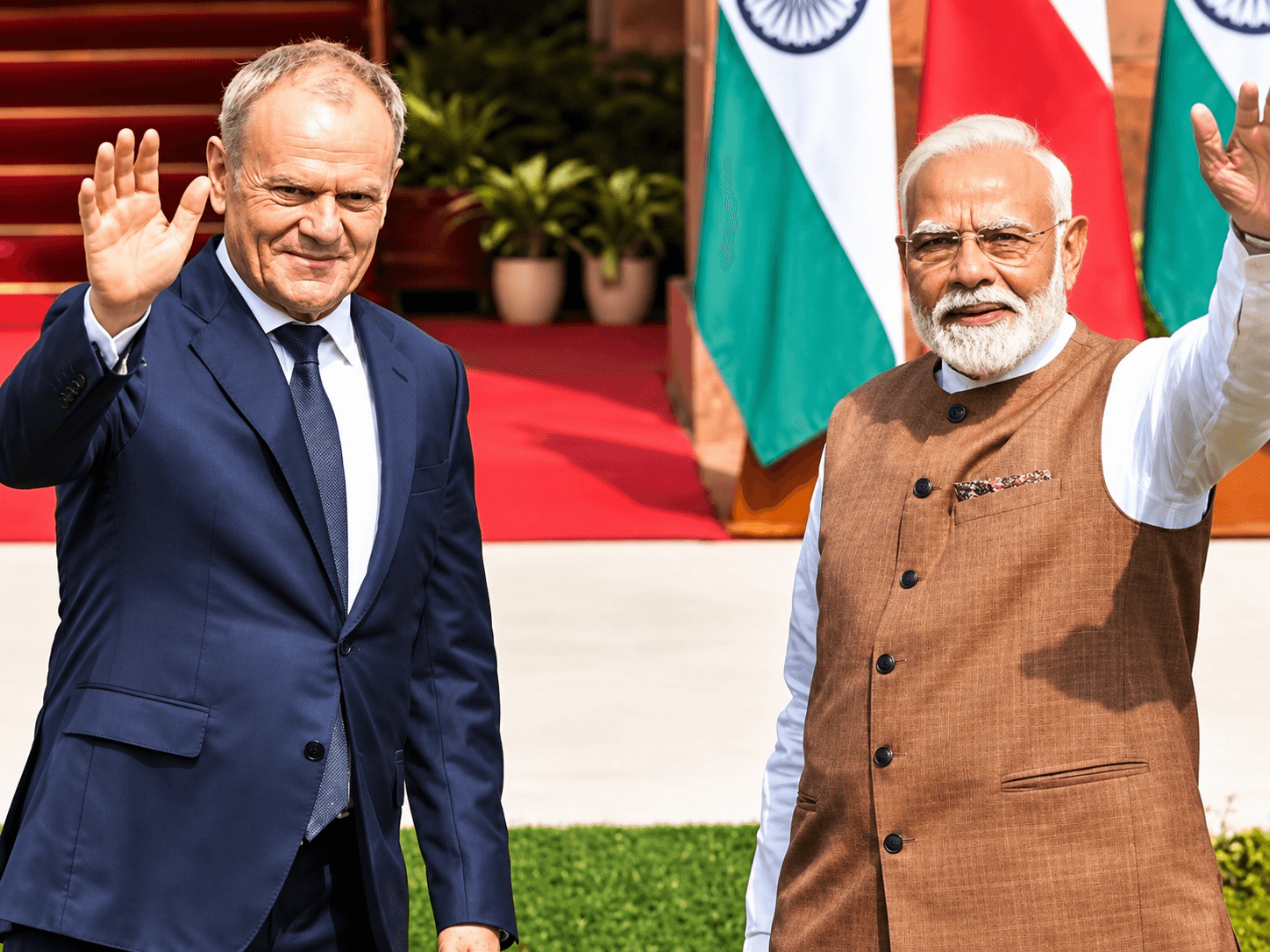
India and Poland are looking to take their relationship to the next level, with trade, defence manufacturing and emerging technologies at the centre of their latest discussions. During Polish Prime Minister Donald Tusk’s official visit to India, talks with Prime Minister Narendra Modi in New Delhi on 22 October focused on doubling bilateral trade by 2030 and expanding cooperation across several key industries.
The meeting marks another step forward since the two countries upgraded their relationship to a strategic partnership in August 2024. Both governments now want to turn that political commitment into practical results, from joint defence production and artificial intelligence research to semiconductor development, space technology and access to critical minerals.
Tusk arrived with a high-level delegation that included around 100 business leaders and industry representatives. Their presence highlighted the commercial focus of the visit, with opportunities under discussion in manufacturing, infrastructure, technology, mining and food processing.
The economic target is ambitious. Bilateral trade stands at around $6.3 billion, and the two governments want to increase that figure to approximately $12.6 billion by 2030. A future India–European Union trade agreement could provide further opportunities, although its benefits will depend on the agreement's final terms and implementation.
For now, the priority is turning political commitments into business deals, investment and long-term partnerships. The direction is clear, but achieving the targets will require sustained cooperation between governments, companies and research institutions.
TRADE TARGET PUTS ECONOMIC TIES IN FOCUS
From $6.3 billion to $12.6 billion
Doubling bilateral trade in four years will take more than diplomatic agreements. Businesses on both sides will need to find new customers, increase investment and make it easier to trade across the two markets.
India offers Polish companies access to a large consumer base, a growing manufacturing sector and an expanding technology industry. Poland, in turn, can offer Indian businesses a foothold in Central and Eastern Europe, along with connections to the wider European Union market.
During their discussions, Modi highlighted opportunities for Indian exports of machinery, chemicals, plastics and engineering products. Potential areas for Polish investment include railways, mobility, advanced manufacturing, food processing and biotechnology.
Both governments also want to strengthen ties between small and medium-sized businesses, diversify supply chains and encourage more direct partnerships between companies.
For Indian exporters, closer engagement with Poland could open doors to more European customers. Polish companies could benefit from India's growing demand for industrial equipment, technology and infrastructure.
However, the $12.6 billion figure remains a shared target, not a guaranteed result. Reaching it will depend on trade growth, investment decisions and how effectively the commitments made during the visit are put into practice.
India–EU trade agreement could open more doors
The wider India–European Union trade relationship is another important part of the picture. Both leaders stressed the importance of advancing the EU trade agreement towards signing, ratification and implementation.
Once in force, an agreement could improve market access, encourage investment and strengthen supply chains linking India with European economies, including Poland.
Businesses will need to examine the final terms, implementation timelines and applicable trade rules before making major investment decisions based on the expected benefits.
DEFENCE COOPERATION MOVES TOWARDS JOINT PRODUCTION
Defence is emerging as one of the most important areas of the expanding partnership.
India is working to strengthen domestic defence manufacturing and develop more advanced capabilities. Poland brings experience in areas such as unmanned systems, military electronics and related technologies.
During the October talks, the two governments agreed to establish a Defence Industry Dialogue to identify practical opportunities for cooperation. The initiative is expected to bring companies closer together and provide a framework for exploring technology partnerships, joint development and co-production.
The focus goes beyond buying and selling military equipment. Joint production could allow companies to share technical expertise, build local manufacturing capacity and establish industrial relationships that last beyond individual contracts.
Polish defence manufacturers could explore partnerships with Indian companies, while Indian firms could gain access to specialised European technologies and potential new markets.
The two sides have also highlighted the importance of arrangements for protecting and exchanging classified information. Such safeguards would help create the conditions needed for cooperation involving sensitive defence technologies.
Still, establishing a dialogue is only the first step. Individual projects will require commercial agreements, technical assessments, security clearances and decisions on technology transfer before production can begin.
AI AND SEMICONDUCTORS TAKE CENTRE STAGE
Artificial intelligence is another area where India and Poland see room for closer cooperation.
Both countries recognise that AI, semiconductors and other advanced technologies are becoming increasingly important to productivity, industrial competitiveness and national security.
Their joint statement called for collaborative research in artificial intelligence, semiconductor technologies and quantum technologies. It also encouraged stronger links between businesses, universities, research institutions and startups.
The two countries also announced an India–Poland Startup Bridge, designed to connect entrepreneurs and technology innovators. Planned activities include technology-focused hackathons and closer cooperation between their startup communities.
For India, these initiatives could create new opportunities to work with European researchers and technology companies. Poland could benefit from greater access to India's large technology sector, engineering talent and growing startup ecosystem.
Potential areas of cooperation include industrial automation, cybersecurity, AI-powered manufacturing and digital services. Joint research could help businesses develop solutions for specific industrial needs and bring new products to market.
But progress will depend on funding, research partnerships, access to technical expertise and the ability to turn ideas into commercially viable products. Announcing a startup initiative or agreeing to cooperate on research does not automatically translate into immediate investment or technological breakthroughs.
CRITICAL MINERALS, SPACE AND ENERGY BROADEN THE PARTNERSHIP
The discussions also covered critical minerals, space technology, nuclear energy and green technologies. These areas could help both countries strengthen their industrial capabilities and reduce vulnerabilities in important supply chains.
Critical minerals are essential for batteries, electronics, advanced manufacturing and clean-energy technologies. India and Poland are exploring opportunities in mining, mineral processing, battery recycling and recovering valuable materials from industrial waste.
An agreement covering mining and critical-minerals cooperation remains under negotiation. If finalised, it could provide a framework for companies to explore projects and build stronger links across their supply chains.
Space technology offers another potential avenue for collaboration, including research, technology development and industry partnerships.
The two leaders also expressed interest in cooperation on nuclear energy and coal gasification, drawing on their countries' industrial capabilities and technical expertise.
These sectors could create new investment opportunities, but major projects will require substantial funding, careful technical planning and regulatory approvals. Any economic benefits are likely to depend on how quickly proposed initiatives move from discussion to implementation.
The broader aim is to build stronger industrial connections between the two countries, allowing companies to collaborate across research, production and supply chains.
A STRATEGIC PARTNERSHIP WITH A WIDER GEOPOLITICAL ROLE
The growing economic relationship also reflects changing priorities in Europe and Asia.
Poland's position in Central Europe and its proximity to Ukraine give it an important role in European security discussions. India, meanwhile, is seeking stronger economic ties with European countries while maintaining its strategic autonomy and relationships with partners around the world.
During their meeting, Modi and Tusk discussed the war in Ukraine, its humanitarian consequences and its impact on global food and energy security. Modi reiterated India's support for meaningful efforts towards peace, while both leaders emphasised the importance of international law, sovereignty and territorial integrity.
The two governments also reaffirmed their support for multilateral cooperation and reforms to international institutions, including the United Nations Security Council. Poland expressed support for India's aspiration to secure a place on a reformed and expanded council.
Their relationship is therefore developing beyond traditional trade and diplomatic engagement. Defence industry cooperation, emerging technologies, investment and international diplomacy are increasingly becoming part of the same conversation.
For both countries, the goal is to build a partnership that can withstand geopolitical uncertainty while delivering practical benefits for businesses and citizens.
WHAT TO WATCH NEXT
Progress towards the $12.6 billion trade target: Future trade figures will show whether India and Poland are on track to meet their shared 2030 ambition.
Defence Industry Dialogue: Watch for concrete proposals involving joint production, technology partnerships and co-development.
India–Poland Startup Bridge: New programmes, hackathons and startup partnerships could offer early signs of progress in technology cooperation.
AI and semiconductor research: Joint research agreements, university partnerships and commercial applications will help show whether the technology agenda is gaining momentum.
Critical-minerals agreement: Progress on the proposed agreement could open opportunities in mining, mineral processing, recycling and advanced manufacturing.
India–EU trade agreement: Its eventual implementation could influence market access and investment decisions for businesses in both countries.
Private-sector investment: Signed contracts, announced projects and actual capital deployment will be the clearest signs that diplomatic commitments are turning into economic activity.
FACT CHECK METER
99% — OFFICIALLY CONFIRMED
Assessment based on the reported India–Poland joint statement and coverage dated 22–23 October 2026.
Confirmed details
Narendra Modi and Donald Tusk held bilateral talks in New Delhi on 22 October 2026.
Both governments committed to working towards doubling bilateral trade by 2030.
A Defence Industry Dialogue was identified as a mechanism for strengthening defence-industrial cooperation.
AI, semiconductors, quantum technologies, space, nuclear energy and critical minerals were highlighted as areas for closer cooperation.
The two sides announced an India–Poland Startup Bridge.
Tusk's visit included a high-level Polish business delegation of around 100 business leaders and industry representatives.
Important distinctions
The $12.6 billion trade figure is a target, not a guaranteed outcome.
The Defence Industry Dialogue is intended to develop cooperation; it does not mean that all proposed defence projects have received approval.
Plans for joint AI and semiconductor research do not establish that specific commercial breakthroughs have already occurred.
The India–EU trade agreement must complete the relevant formal steps before its provisions can be implemented.
The final economic impact will depend on investment, commercial agreements and the execution of individual projects.
AWX Verdict: The broad direction of the partnership is supported by the reported official commitments. India and Poland have outlined an ambitious agenda across trade, defence and technology, but the results will depend on how quickly both governments and their industries turn those commitments into concrete projects.
THE AWX BOTTOM LINE
India and Poland are working to turn a growing strategic relationship into a stronger economic and technological partnership. Their latest discussions set out a clear ambition: double bilateral trade by 2030, deepen defence-industrial cooperation and expand collaboration in AI, semiconductors, space and critical minerals.
There are opportunities for both sides. India brings a large market, manufacturing capacity and a growing technology sector. Poland offers industrial expertise and access to European markets. Closer cooperation could help businesses diversify supply chains, develop new products and reach more customers.
But diplomatic announcements are only the beginning. Companies will need to commit capital, research institutions will need to build lasting partnerships, and governments will have to establish the frameworks required for long-term cooperation.
The bottom line: India–Poland relations are moving beyond diplomatic engagement towards a broader industrial and technological partnership. The 2030 trade target sets the ambition; sustained investment, concrete agreements and successful joint projects will determine whether it becomes reality.
ATTLAS NEWS | AWX WORLD NEWS
Real Stories. Lasting Impact.




Comments
No comments yet.