

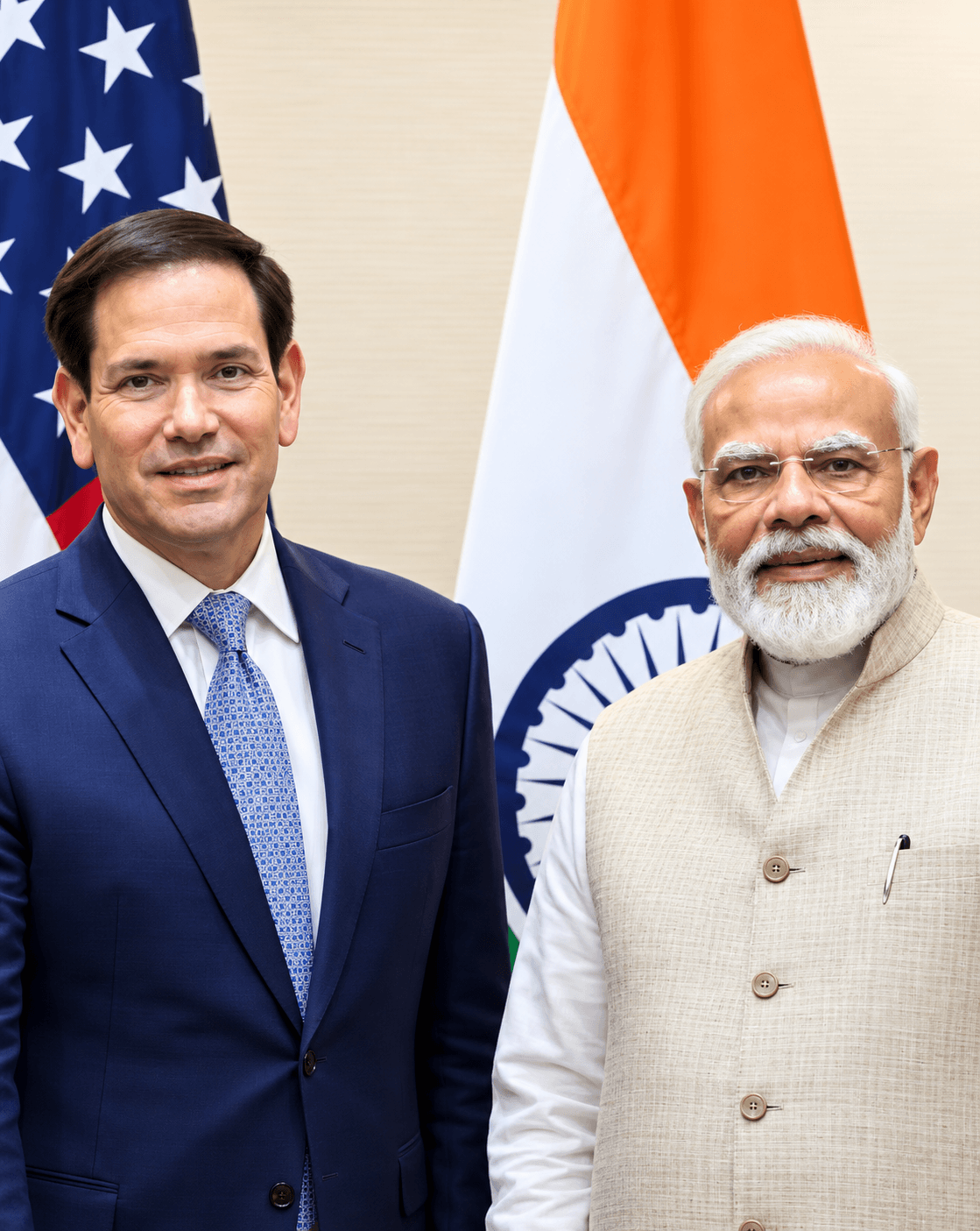
India and the United States appear to be moving closer to a trade agreement after months of difficult negotiations. Senior US officials have expressed fresh optimism, suggesting that a deal could be finalised within weeks. The remaining challenge is to settle the details on tariffs, market access and the rules that will govern trade between the two countries.
US Secretary of State Marco Rubio said this week that the agreement was “incredibly close”, adding that the remaining work could be completed within weeks. President Donald Trump has also indicated that the two sides are nearing an agreement, while noting that the proposed deal may differ from arrangements Washington has reached with other trading partners.
The latest comments mark a change in tone. Earlier this month, US Trade Representative Jamieson Greer struck a more cautious note, saying an agreement was not imminent. India has also acknowledged progress but made clear that it wants terms that allow its exporters to compete fairly with businesses from other countries.
The focus has now shifted from political assurances to the final details. Negotiators must ensure that the legal text accurately reflects what both sides have agreed, including tariff rates, product coverage and the timing of implementation.
For businesses, that distinction is important. Optimistic statements can boost confidence, but companies need a signed agreement and clearly defined rules before they can make long-term decisions about exports, investment and production.
A TRADE DEAL MORE THAN A YEAR IN THE MAKING
India and the United States began pursuing a bilateral trade agreement in early 2025, with the aim of improving market access, reducing trade barriers and making commercial ties more predictable.
Progress has been uneven, particularly as trade tensions grew and Washington imposed tariffs on Indian goods. In February 2026, the two countries announced a framework for the first phase of an agreement. However, reaching that framework did not immediately produce a signed deal.
Changes in US tariff policy added another layer of uncertainty. A US Supreme Court decision affecting the administration's use of emergency powers to impose broad tariffs raised fresh questions about the legal basis and structure of the measures affecting Indian exports.
By October, negotiations had advanced, but important work remained. India's Commerce Secretary Rajesh Agrawal said on October 15 that the first phase had been agreed in principle and was undergoing legal drafting. Commerce Minister Piyush Goyal similarly described the first tranche as being in its final stages, while stressing that the terms needed to be competitive.
The distinction is crucial: the first phase has made substantial progress, but it is not yet a completed and signed agreement.
WHY THE FINAL STAGE MATTERS
Tariffs remain a major sticking point
For Indian exporters, the US market represents a significant commercial opportunity. Engineering goods, textiles, pharmaceuticals, electronics and other manufactured products are among the sectors with a stake in the negotiations.
The February framework was associated with a reduction in the punitive US tariff rate on many Indian goods from 50% to 18%. However, the final treatment of individual products remains important, as does the wider US tariff regime.
The rate that ultimately applies to a shipment will depend on the agreement's final terms, the product involved and any other applicable tariff measures.
India is particularly concerned about maintaining its competitive position against exporters from countries such as Vietnam, Bangladesh and Indonesia. If businesses in those markets face lower US tariffs on comparable goods, Indian manufacturers could struggle to compete on price, even if the agreement improves their overall access to American customers.
For New Delhi, the goal is therefore not simply to secure a lower headline tariff. It is to ensure that Indian businesses receive clear, predictable terms that allow them to compete effectively over the long term.
Washington has its own priorities. The US administration wants better access to the Indian market and an agreement that advances American commercial interests.
Finding common ground will require both sides to look beyond headline figures and settle the details that determine how the agreement works in practice.
Market access must benefit both countries
Tariffs are only one part of the negotiations. The agreement must also establish which goods can enter each market, what conditions apply and how the new rules will be enforced.
India has been particularly careful about opening sensitive sectors, including agriculture and dairy. These industries are closely tied to rural livelihoods, making concessions politically and economically significant.
The United States, meanwhile, wants fewer barriers for American exporters and better access to India's large consumer market.
Negotiators must balance these competing priorities without undermining sectors that either government considers important to protect.
The wording of the final agreement will be critical. A general promise to improve market access is not enough. Businesses need specific provisions explaining which products qualify, when new rules take effect and how disagreements will be handled.
RUSSIAN OIL ADDS TO THE COMPLEXITY
The trade negotiations are also taking place against a wider disagreement over India's purchases of Russian crude oil.
Washington has used trade pressure as part of its broader effort to influence purchases of Russian energy. New Delhi, however, has defended its right to make energy decisions based on domestic demand, prices and supply security.
For a country with India's population and industrial needs, reliable energy supplies are essential. A significant change in sourcing can affect fuel costs, inflation and the wider economy.
This has made the trade talks more complicated, as commercial negotiations increasingly overlap with foreign policy. Tariffs affect exporters directly, while pressure over energy purchases can have consequences for businesses and consumers.
Reuters reported earlier this month that proposed US legislation could expose Indian goods to additional tariffs linked to purchases of Russian energy. The possibility has added another source of uncertainty to the negotiations.
During his visit to India, Rubio also discussed energy cooperation and the potential for India to increase purchases of US energy and technology products. Washington has presented expanded energy trade as an opportunity to diversify supplies and meet India's substantial demand.
Greater energy trade between the two countries could strengthen commercial ties, but it would not automatically resolve their differences over Russian oil. Both governments would still need to determine how energy-related concerns fit into the final agreement.
WHAT A DEAL COULD MEAN FOR BUSINESSES
A completed agreement could give exporters, importers and investors a more predictable framework for operating across the two markets.
For Indian businesses, clearer tariff rules could make it easier to price products, negotiate export contracts and plan production. Companies looking to expand their presence in the United States could also gain greater confidence when deciding whether to invest in additional capacity.
American companies could benefit from improved access to India, particularly in areas such as industrial technology, energy and machinery. A more stable trading relationship could also encourage investment and closer cooperation between businesses in both countries.
However, the benefits will depend on the final provisions. Companies will need to know which products are covered, how duties are calculated, what documentation is required and whether the changes will be introduced immediately or in stages.
Smaller exporters may have more at stake than larger firms when it comes to uncertainty. Major companies often have the resources to absorb sudden cost increases or redirect shipments. Smaller businesses may find it much harder to adjust prices, renegotiate contracts or reorganise supply chains at short notice.
Even after a deal is signed, businesses will need practical guidance on implementation. The agreement's real value will depend on whether companies can understand and use its provisions without unnecessary confusion or delays.
A TEST FOR THE BROADER INDIA–US PARTNERSHIP
The trade negotiations are part of a wider effort to stabilise relations between India and the United States following a period of tension.
Recent discussions between Rubio and India's External Affairs Minister S. Jaishankar have covered trade, energy, technology, defence and regional developments. The talks underline the breadth of the relationship, even as the two governments continue to disagree on particular issues.
For Washington, closer economic ties with India could support supply-chain diversification and strengthen cooperation with a major Indo-Pacific partner. For New Delhi, the United States remains an important export market and a valuable source of investment, technology and energy supplies.
Still, both governments face domestic pressures. The US administration must demonstrate that its trade arrangements deliver benefits for American businesses, while India needs to ensure that its exporters are not placed at a disadvantage and that sensitive sectors are adequately protected.
That helps explain why an agreement can appear close at the political level while still requiring careful negotiation. For a deal to last, both governments must be able to defend its terms at home, and businesses must be able to rely on them in practice.
THE OBSTACLES STILL TO CLEAR
Despite the recent optimism, several issues remain important.
First, the legal text must accurately capture what both governments have agreed. Even small differences in wording can create disputes later, particularly when provisions determine which products receive preferential treatment or how commitments are enforced.
Second, India wants tariff terms that compare favourably with those available to competing exporters. This is a commercial priority, not just a negotiating detail. The outcome could influence whether Indian products remain competitive in the US market.
Third, changes in US tariff policy and the outcome of relevant trade investigations could affect the conditions facing Indian goods. Businesses will need clarity on how these measures interact with the proposed agreement.
Finally, the disagreement over Russian oil could complicate the wider political relationship, even if negotiators make progress on the trade provisions.
Both sides have strong reasons to reach an agreement, but neither has established a firm public signing date. The suggestion that a deal could be completed within weeks should therefore be treated as an indication of progress, not a guarantee.
WHAT TO WATCH NEXT
Completion of legal drafting: Look for official confirmation that the first-phase text is final and ready for formal approval.
A joint announcement: A statement from both governments would offer stronger evidence of progress than separate comments from individual officials.
Tariff rates and product coverage: The published terms should clarify which Indian exports qualify for preferential treatment and when the changes will take effect.
India's competitive position: New Delhi's assessment of the tariff terms available to rival exporters will remain an important factor.
Russian oil and energy policy: Any new US measures or changes in India's energy-import strategy could affect the negotiating climate.
Signing and implementation: Businesses will need to know when the agreement will be signed, when its provisions will begin to apply and what steps are required to comply.
FACT CHECK METER
FACT METER: 94% — STRONG EVIDENCE OF PROGRESS, BUT NO SIGNED DEAL CONFIRMED
Status: The negotiations appear to be at an advanced stage. Recent comments from senior US officials support the possibility of a deal within weeks, while Indian officials have said the first phase has been agreed in principle and is undergoing legal drafting.
Confirmed details:
India and the United States have pursued a bilateral trade agreement since early 2025.
The two countries announced a framework for the first phase in February 2026.
Indian officials said in mid-October that the first phase had been finalised in principle and was undergoing legal drafting.
Marco Rubio said the agreement could be completed within weeks, while Donald Trump also described the negotiations as close to a deal.
Tariff competitiveness, market access and the final legal wording remain important to the outcome.
Important distinctions:
“Weeks away” is an expectation expressed by officials, not a binding deadline.
Progress on the first phase does not mean the entire agreement has been signed or implemented.
Final tariff rates, product coverage and implementation dates must be checked against the published terms.
A political announcement alone does not establish that every provision is already in force.
AWX Verdict: The India–US trade agreement appears closer than it did earlier this month, with recent statements pointing to renewed momentum. However, the outcome still depends on the final legal text, competitive tariff terms and the resolution of outstanding issues. Until both governments formally confirm and sign the agreement, the deal remains close—but not complete.
THE AWX BOTTOM LINE
India and the United States appear to be approaching a decisive stage in their long-running trade negotiations. Optimistic comments from Washington, combined with India's confirmation that the first phase is being drafted into legal text, suggest that an agreement could be reached in the coming weeks.
The stakes go well beyond tariffs. A deal could give exporters greater certainty, encourage investment and strengthen a strategic relationship that spans energy, technology and defence. But the real test will be the terms of the agreement, not the announcement itself.
India wants its businesses to compete on fair terms, while the United States is looking for an arrangement that advances its commercial priorities. Both governments must also navigate domestic sensitivities and continuing disagreements over Russian energy.
The next major milestone is a jointly confirmed agreement, backed by published terms and a clear implementation plan. Until that happens, there are reasons to be optimistic—but no grounds to treat the deal as settled.
ATTLAS NEWS | AWX WORLD NEWS
Real Stories. Lasting Impact.




Comments
No comments yet.