

Japan is preparing to tighten its oversight of land purchases near strategically important locations, as concerns grow over who owns sensitive property and how it might be used.
The proposed changes would require government approval before certain land transactions could go ahead near military installations, Coast Guard facilities and designated uninhabited border islands. The move reflects growing concern that monitoring land use after a purchase may not be enough to address potential national security risks.
A draft amendment presented to Japan’s ruling Liberal Democratic Party in October calls for a prior-permission system covering specified transactions. The proposal also includes possible criminal penalties for buyers who complete covered purchases without the required approval.
The plan forms part of a broader effort to improve transparency around land ownership and give authorities more control over transactions involving strategically sensitive sites. It does not amount to a nationwide ban on foreign property ownership.
That distinction matters for overseas investors, developers and foreign residents who own property or are considering buying in Japan. The proposed requirements would apply to Japanese and foreign buyers alike when a transaction falls within a designated area, although certain connections to foreign governments or militaries could attract closer scrutiny.
As of 21 October 2026, the proposed amendments have not yet become law. The government is expected to consider the legislation during the extraordinary parliamentary session, but the final provisions and implementation timeline remain uncertain.
WHY JAPAN WANTS TO TIGHTEN ITS LAND OWNERSHIP RULES
Japan already has a legal framework for monitoring land around facilities considered important to national security.
The Important Land Survey Act, enacted in 2021 and fully brought into force in 2022, allows authorities to investigate land use near designated facilities and certain remote islands. It also provides powers to respond when land use interferes with the operations of protected sites.
However, the existing framework does not generally prevent someone from purchasing land simply because it is located near a sensitive facility. That limitation has become a central issue in the latest policy debate.
Members of the Liberal Democratic Party have argued that monitoring how land is used after a purchase may leave gaps in national security protection. Drones, increasingly accessible surveillance technology and changing security risks have added urgency to those concerns.
A proposal put forward by the party in September called for a permit system covering acquisitions near selected critical facilities. The aim is to allow authorities to assess potential risks before ownership changes hands, rather than relying mainly on monitoring and intervention after a deal is completed.
If adopted, the new approach would give the government a more direct role in reviewing transactions involving strategically important land.
WHICH AREAS COULD BE AFFECTED?
Land near military bases and Coast Guard facilities
The proposed restrictions would cover designated areas around certain Self-Defense Forces installations and Japan Coast Guard facilities.
Reports suggest that regulated zones could extend approximately 1,000 metres from selected facilities, particularly those considered vulnerable to drone-related threats. The exact boundaries and list of covered locations would depend on the final legislation and subsequent government designations.
For buyers, the location of a property could become a key factor in determining whether government permission is needed.
However, the proposal does not mean that every property near every military installation would automatically be restricted. Authorities would need to identify the facilities and surrounding areas covered by the rules.
Uninhabited border islands
Japan's uninhabited border islands are another focus of the proposed measures.
These islands can have strategic importance because of their location near maritime boundaries and their potential role in monitoring or protecting surrounding waters. Their small populations and remote settings can also make ownership and land management more difficult to oversee.
Under the proposed system, certain transactions involving designated islands would require prior government approval. The goal would be to prevent acquisitions that could create security concerns.
The specific islands covered and the criteria for reviewing purchases will depend on the final legislation and related regulations.
Government and crisis-management facilities
The proposals could also expand protection to important political and administrative locations.
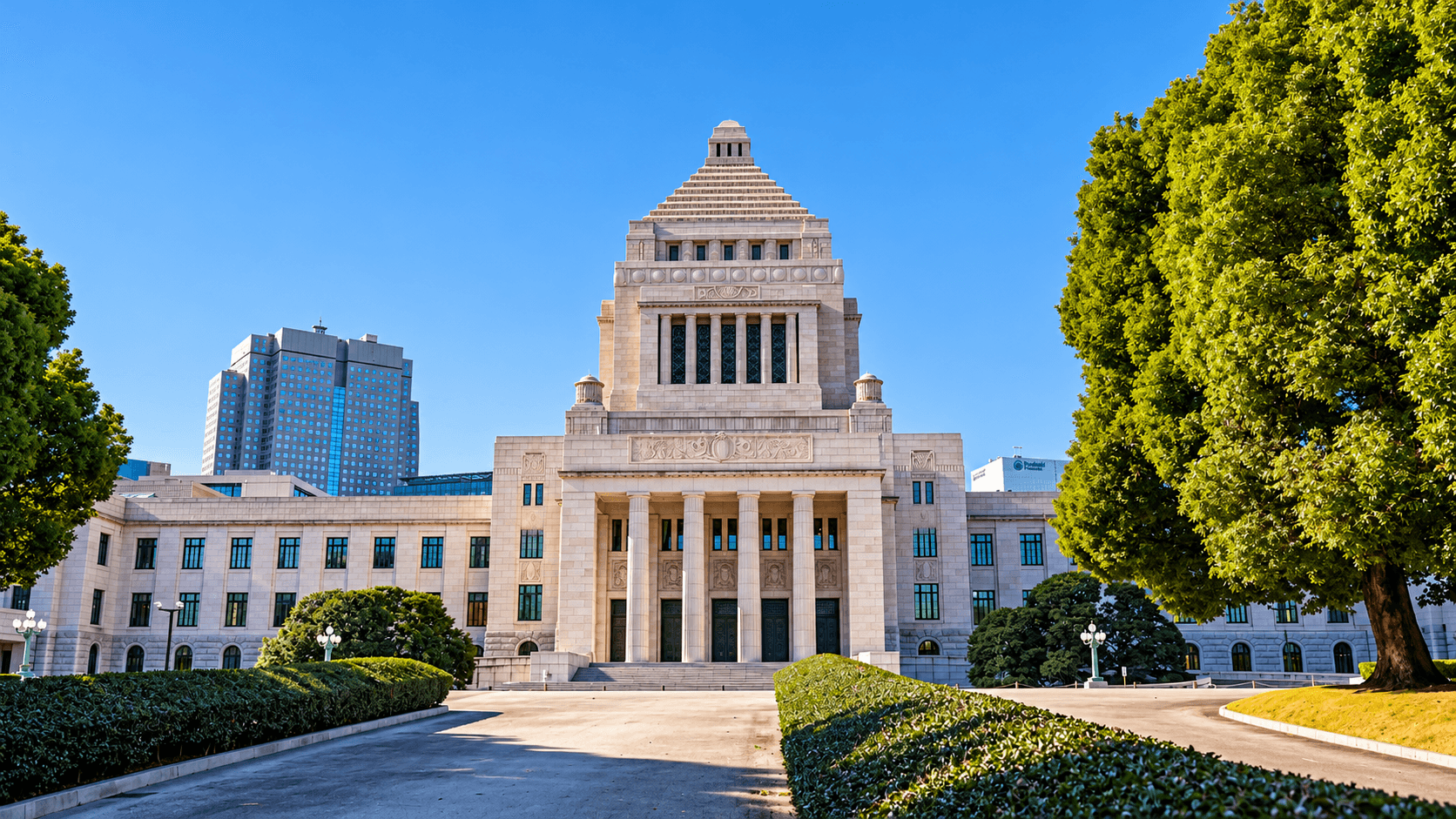
The Imperial Palace, National Diet Building, Prime Minister's Office and facilities used by crisis-management organisations have been identified in discussions about extending safeguards beyond traditional military sites.
The reasoning is straightforward: national security risks are not limited to defence installations. Locations central to government operations and emergency response may also require additional protection.
The final scope of these provisions remains to be determined.
FOREIGN BUYERS UNDER SCRUTINY — BUT NATIONALITY IS NOT THE ONLY FACTOR
One important feature of the proposal is that the permission requirement would apply regardless of nationality.
Japanese individuals and domestic companies could also need approval if they wanted to purchase land inside a designated zone. The system is intended to assess the security implications of a transaction, rather than automatically treating foreign ownership as a threat.
Even so, the draft places particular emphasis on buyers with connections to foreign governments or military organisations.
Reported provisions identify categories of people who could face restrictions, including individuals acting on behalf of foreign governments, foreign military personnel and people subject to contractual or legal obligations to cooperate with foreign governments.
For overseas investors, this could mean additional paperwork, more detailed ownership checks and longer transaction timelines when buying property in a regulated area. Companies with complex ownership structures or links to foreign state entities could face closer examination.
The key question would not simply be where a buyer comes from, but whether the transaction presents a security concern under the final rules.
UNAUTHORISED PURCHASES COULD LEAD TO CRIMINAL PENALTIES
The draft legislation would introduce stronger consequences for completing covered transactions without the necessary permission.
Reporting published on 14 October indicated that the proposed penalties could include up to three years in prison or a fine of up to ¥3 million for violations.
The measures would reportedly cover certain land transactions near designated Self-Defense Forces and Coast Guard facilities, as well as specified uninhabited border islands. The final offences, penalties and enforcement procedures will depend on the legislation passed by parliament.
If introduced, criminal sanctions would mark a significant change from a framework focused largely on monitoring land use and responding to activities that interfere with protected facilities.
For property buyers and developers, checking a property's location would become an important part of due diligence. Legal advisers and real-estate professionals may also need to verify whether a parcel falls within a regulated zone before a transaction proceeds.
Companies could face additional scrutiny over who ultimately owns or controls the purchasing entity, particularly when investment funds or layered corporate structures are involved.
Until the legislation is finalised, however, the proposed penalties should not be treated as existing law.
WHY DRONES AND SURVEILLANCE ARE PART OF THE DEBATE
The growing use of drones has changed how governments assess the risks associated with land near sensitive infrastructure.
A property that appears ordinary from a commercial perspective could offer a useful vantage point for surveillance or observation if it sits close to a military installation or other protected facility. Modern technology can make it easier to monitor sensitive locations without requiring access to the sites themselves.
This has broadened Japan's debate beyond the question of who owns a property. Officials are also considering where the land is located, how it could be used and whether a change in ownership might create a security vulnerability.
Military bases, Coast Guard facilities and government buildings have different operational needs, but the underlying concern is similar: a land transaction should not create avoidable risks around strategically important locations.
A permit system would give authorities an opportunity to examine certain purchases before they are completed.
Its effectiveness, however, will depend on how clearly the government defines restricted areas, how reliably ownership information can be verified and how efficiently applications are processed.
WILL FOREIGNERS STILL BE ABLE TO BUY HOMES AND APARTMENTS?
The proposed security measures should not be confused with a general ban on foreigners buying property in Japan.
Japan has not introduced a nationwide prohibition on foreign nationals purchasing houses, apartments or land simply because of their nationality. The proposal under discussion is focused on designated sensitive areas and transactions that could raise national security concerns.
There is a separate debate about overseas property purchases and housing affordability, particularly in Tokyo. However, the proposed sensitive-land rules are not a blanket measure to exclude foreign buyers from Japan's residential property market.
Reporting on the government's review has cited figures suggesting that overseas-resident buyers accounted for around 3% of initial registrations for newly built condominiums in Tokyo during the first half of 2025. The figure has featured in discussions about the role foreign demand plays in the city's rising housing costs.
For international investors, the distinction is important. Someone purchasing an ordinary apartment outside a designated security zone would not automatically face the same proposed approval requirements as a buyer acquiring land beside a protected military installation.
Other reporting or registration obligations may apply depending on the property, the buyer's circumstances and the nature of the transaction.
For now, the proposed restrictions are primarily a national security measure, not a general effort to shut foreign capital out of Japan's property market.
WHAT THE PROPOSAL COULD MEAN FOR INVESTORS AND DEVELOPERS
If the new rules are enacted, buying property in designated areas could become more complicated.
Investors may need to establish whether a property falls within a regulated zone, determine whether prior approval is required and provide additional information about their identity and ownership structure.
Developers could face new checks before acquiring land for commercial or infrastructure projects. Businesses that already hold property near sensitive facilities may also need to review their portfolios and compliance procedures.
Transaction timelines could be affected as well. Where government approval is required, buyers may have to wait for a decision before completing a purchase. Depending on the final legal framework, proceeding without permission could expose them to significant legal and financial consequences.
Real-estate agents, lawyers and financial institutions may need updated procedures to identify regulated properties and assess whether a proposed transaction meets the requirements.
Uncertainty over the final boundaries and approval standards could also make some investment decisions more difficult in the short term. Investors will be looking for clear guidance on which transactions are covered, what documentation is required and how applications will be assessed.
NATIONAL SECURITY VERSUS PROPERTY RIGHTS
Japan's proposal raises a familiar question: how can a government protect national security without placing unnecessary restrictions on property owners and legitimate investment?
Supporters argue that authorities need stronger tools to prevent land acquisitions that could threaten sensitive facilities. Reviewing transactions before ownership changes hands, they say, could be more effective than waiting until a security concern emerges.
Investors and critics may worry about delays, uncertainty and the extent of the government's discretion to approve or reject purchases.
The challenge will be to create a system that addresses genuine security risks without making ordinary property transactions unnecessarily difficult.
Japan's policy discussions have acknowledged the need to consider property rights and avoid restrictions that go beyond what is necessary. That makes the details of the final legislation particularly important.
Clearly defined sensitive zones, consistent approval procedures and a transparent process for challenging decisions could help balance national security concerns with the interests of property owners.
WHAT HAPPENS NEXT?
The government is preparing to advance amendments to Japan's existing land-use framework through the extraordinary parliamentary session.
The draft was presented to the ruling Liberal Democratic Party in October. The government is expected to pursue the next legislative steps, including Cabinet approval and submission of a bill to parliament. The final outcome will depend on parliamentary deliberations and any revisions made before enactment.
Several details will matter most to property owners and investors:
Which locations will be covered: The final list of designated facilities and islands will determine where the rules apply.
How restricted zones will be mapped: The proposed 1,000-metre boundaries need clear definitions.
What buyers must disclose: Application requirements will determine how much additional documentation is needed.
How foreign connections will be assessed: The final rules should clarify which government, military or contractual links may trigger restrictions.
What penalties will apply: Buyers and advisers need clarity on the consequences of completing a transaction without approval.
When the rules will take effect: The implementation date will determine when investors must comply.
Until these details are confirmed, buyers should not assume the proposed system is already in force or that every foreign-owned property will be affected.
FACT CHECK METER
FACT METER: 97% — PROPOSAL REPORTED; FINAL LAW STILL PENDING
Status: Japan is preparing legislation to strengthen oversight of land purchases in designated security-sensitive areas. The proposed permit system and criminal penalties have not yet become a fully enacted nationwide regime.
Confirmed details
Japan's ruling Liberal Democratic Party has proposed requiring prior approval for certain land acquisitions near critical facilities.
The proposed coverage includes designated areas near some Self-Defense Forces and Coast Guard facilities, as well as selected uninhabited border islands.
The proposed permission system would apply regardless of nationality, with additional scrutiny of certain foreign government and military connections.
Reports published in October have cited possible penalties of up to three years in prison or a fine of up to ¥3 million for unauthorised transactions.
Important distinctions
The proposal is not a blanket ban on foreign property ownership. The final legislation, regulated zones, approval procedures, penalties and effective date remain subject to the government's decisions and parliamentary proceedings.
AWX verdict: Japan is moving towards stronger preventive controls on land transactions that could pose security risks. The practical impact will depend on how the government defines sensitive areas and distinguishes genuine security concerns from ordinary property investment.
WHAT TO WATCH NEXT
Cabinet approval and parliamentary debate: Watch for the formal bill and any changes to the original proposal.
Final boundaries of regulated areas: The designated locations will determine which properties and transactions are affected.
Rules on foreign government connections: The final provisions should explain how ownership links and cooperation obligations will be assessed.
Penalties and enforcement: Details on unauthorised transactions, registration restrictions and criminal sanctions will be important for buyers and advisers.
Impact on property investment: Investors will watch for changes to transaction timelines and confidence in sensitive locations.
Separate housing policies: Any future measures targeting speculative purchases or housing affordability should be distinguished from the national security proposal.
THE AWX BOTTOM LINE
Japan is preparing to tighten oversight of land purchases near military installations, strategic infrastructure and vulnerable border islands. The proposed permit system would give the government greater scope to examine certain transactions before ownership changes hands.
The rules are intended to apply regardless of nationality, although buyers with links to foreign governments or militaries could face additional scrutiny. That makes the proposal more targeted than a general ban on foreign land ownership.
For international investors, the immediate priority is to distinguish existing requirements from the restrictions still being considered. The final legislation will determine where permission is needed, how buyers are assessed and what happens if a transaction goes ahead without approval.
Japan's challenge will be to protect strategically important sites without creating unnecessary uncertainty for legitimate property owners, developers and investors.
ATTLAS NEWS | AWX WORLD NEWS
Real Stories. Lasting Impact.



Comments
No comments yet.