
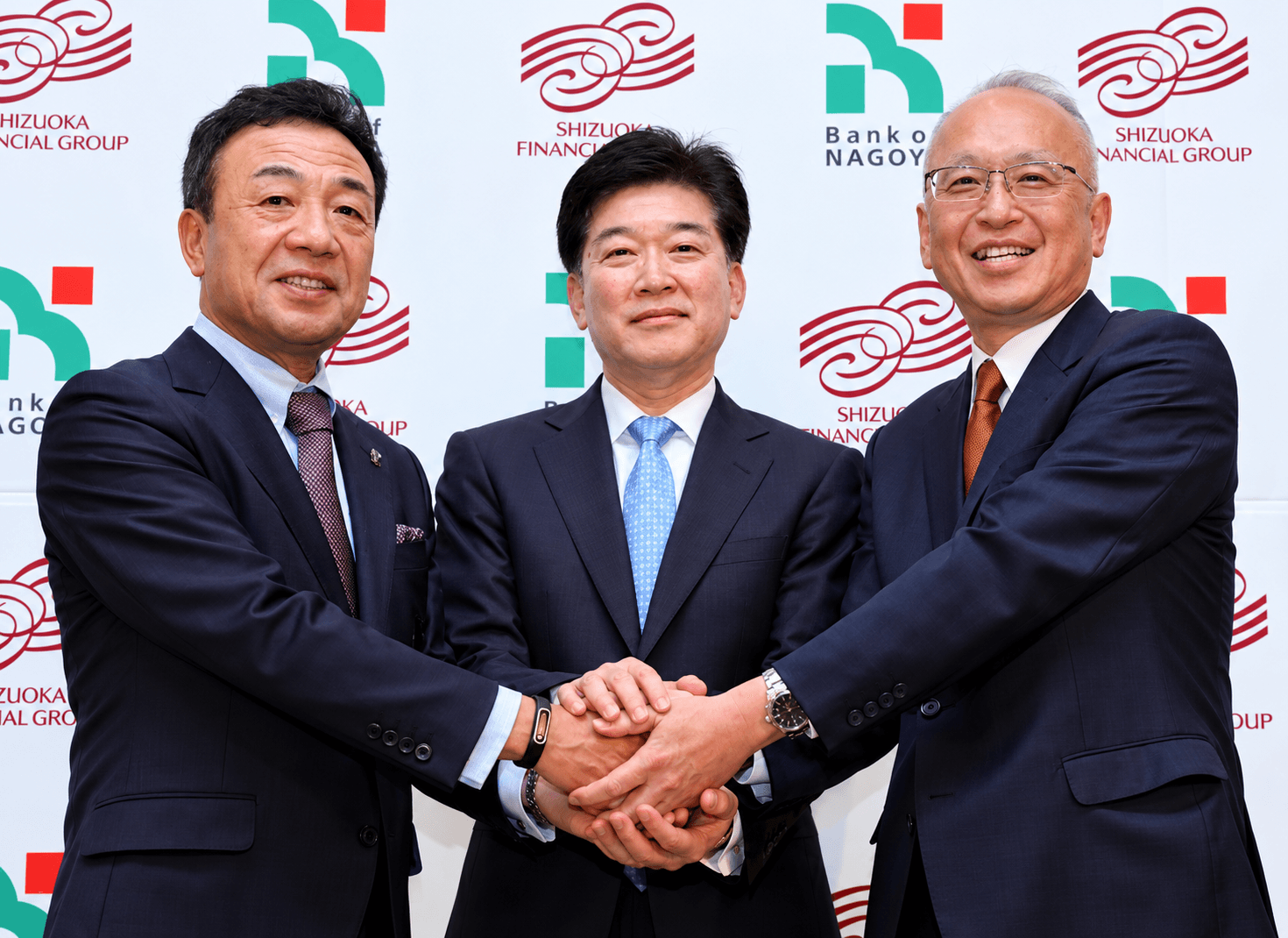
Japan’s regional banking sector could be heading for another major shake-up. Three lenders serving the northeastern Tohoku region have agreed to explore a management integration that could bring their operations under a single group.
Procrea Holdings, Bank of Iwate and Akita Bank announced on 2 October that they would begin discussions, with April 2028 set as the target for the proposed integration. Procrea Holdings is the parent company of Aomori Michinoku Bank, which operates in Aomori Prefecture.
The three institutions serve neighbouring prefectures that face many of the same challenges, including declining populations, labour shortages and pressure on local businesses. By working more closely together, they hope to strengthen their financial foundations, share resources and respond more effectively to changes in the banking industry.
The potential scale of the deal is substantial. At the end of March 2026, the three groups held combined consolidated assets of more than ¥13 trillion, equivalent to approximately US$82 billion based on the exchange rate cited in contemporaneous reporting.
If the plan moves forward, the combined group would have a broader regional presence and greater resources to invest in technology, risk management and customer services.
For now, however, the proposal remains at the discussion stage. The banks have yet to settle the final structure, financial arrangements or expected savings. How the integration might affect customers and local communities also remains unclear.
THREE BANKS, THREE PREFECTURES — ONE COMMON CHALLENGE
Each of the three institutions has an established presence in its home prefecture.
Procrea Holdings oversees Aomori Michinoku Bank, which began operating in January 2025 following the merger of Aomori Bank and Michinoku Bank. That earlier deal was itself an example of the consolidation taking place across Japan’s regional banking sector.
Bank of Iwate serves customers throughout Iwate Prefecture, while Akita Bank has deep roots in Akita Prefecture. Both have long-standing relationships with local households, businesses and public institutions.
Under the proposed plan, the three banks are considering an integration through a holding-company structure expected to be based in Morioka, the capital of Iwate Prefecture. The aim is to bring their operations under a common management framework while making better use of their existing networks.
A larger organisation could give the banks more flexibility in allocating capital, developing digital services and supporting businesses that operate across prefectural boundaries.
Still, several important details remain unresolved. The banks have not established a final name for the combined group, disclosed a share-exchange ratio or announced a specific target for cost savings.
WHY JAPAN’S REGIONAL BANKS ARE CONSIDERING CONSOLIDATION
A shrinking population is changing the banking business
Japan’s demographic decline is becoming an increasingly immediate concern for regional lenders.
As populations fall, banks can find themselves serving fewer depositors and borrowers. Local businesses face similar pressures as their customer base shrinks, workers become harder to find and business owners struggle to identify successors.
These challenges can gradually weaken the local economies on which regional banks depend. Even lenders with loyal customers may find it difficult to maintain their existing business models when the number of households and businesses continues to decline.
Aomori, Iwate and Akita face these demographic pressures. By joining forces, the three banking groups hope to build a stronger business across a wider region rather than relying on growth within their individual prefectures.
The challenge is not simply to become bigger. It is to remain financially sustainable while continuing to serve communities where demand for traditional banking services may be changing.
Technology and cybersecurity costs keep rising
Banks are under growing pressure to improve their digital services while protecting customer information and financial transactions.
That means continued investment in payment systems, secure authentication, fraud detection and cybersecurity. Artificial intelligence is also creating opportunities to automate routine work, improve customer support and identify suspicious activity.
But adopting these technologies takes money, expertise and careful oversight. Regional lenders may struggle to recruit specialist staff or justify the cost of developing and maintaining sophisticated systems independently.
A larger banking group could spread those costs across a wider organisation, reduce duplicated work and introduce common technology standards.
Bank of Iwate President Toru Iwayama has highlighted the increasingly complex challenges facing financial institutions, including the expansion of AI. His comments reflect a wider industry concern: banks must modernise without compromising security, sound risk management or customer trust.
Competition for deposits and profitability
Japan’s changing interest-rate environment is adding another layer of pressure.
As the country moves away from years of extremely low interest rates, banks must carefully manage the returns they earn on loans and investments against the cost of attracting deposits. Customers may also become more willing to compare rates and services between competing lenders.
A larger group could have greater flexibility in managing its funding, capital and investments. However, size alone will not guarantee higher profits.
The integration itself could bring significant expenses, including system upgrades, organisational changes and the cost of combining operations. If those expenses are greater than expected, they could offset some of the anticipated benefits.
For the three banks, the real test will be whether closer cooperation leads to a more efficient business without weakening the local relationships on which regional banking depends.
WHAT THE PROPOSED INTEGRATION COULD MEAN FOR BUSINESSES
Potentially broader support for smaller companies
Regional banks play an important role in financing Japan’s small and medium-sized businesses. They provide working capital, equipment loans, payment services and financial advice to companies that may have limited access to larger national or international lenders.
A combined group could draw on expertise from across all three prefectures and potentially offer a broader range of services. Businesses operating in multiple locations might also benefit from a wider banking network and more consistent support.
This could be particularly useful for companies dealing with labour shortages, digital transformation or succession planning. Access to financing can help viable businesses invest in new equipment, modernise their operations and preserve local jobs.
However, the outcome will depend on how the combined group manages its lending priorities and staffing. A larger balance sheet does not automatically mean more credit for smaller businesses.
More room to invest in digital services
Technology is another area where the proposed integration could deliver practical benefits.
By sharing systems, technical expertise and specialist teams, the banks may be able to distribute the cost of cybersecurity, compliance and digital banking across a larger organisation. Common platforms could also make it easier to improve services across their networks.
The transition will not be simple. Combining banking operations involves sensitive customer data, payment infrastructure and complex internal controls. Any disruption could affect customers and businesses that depend on reliable access to their accounts.
Careful planning will be essential. Moving too quickly could create service problems, while delays and prolonged duplication of systems could make the integration more expensive than expected.
CUSTOMERS WILL WANT TO KNOW WHAT CHANGES
For ordinary customers, the most important question is straightforward: what will the proposed integration mean for their day-to-day banking?
People will want clarity on their accounts, loans, payment services and existing relationships with bank staff. The announcement does not establish any immediate changes to these services.
Branch access will be another important issue. Regional banks often serve older residents, small business owners and customers who prefer face-to-face assistance over digital banking.
Consolidation can help reduce overlapping costs, but closing branches or centralising decisions too aggressively could leave some communities with fewer convenient ways to access financial services.
The banks will need to balance efficiency with their responsibilities to the communities they serve. Better digital services combined with dependable local support could strengthen the case for integration. Reduced access or slower customer service, on the other hand, could undermine its benefits.
Ultimately, customers will judge the deal by what changes in practice, not simply by the size of the new organisation.
A PARTNERSHIP BUILT OVER MANY YEARS
The three institutions are not starting their discussions as strangers. They have worked together for years on initiatives including shared ATM services, business matching and cybersecurity.
Reporting on the announcement indicates that their cooperation stretches back more than two decades. The banks have also pursued joint initiatives designed to connect businesses with potential partners and strengthen operational resilience. Akita Bank and Bank of Iwate entered into a broader business alliance in 2021.
These existing relationships could make it easier to identify areas where closer cooperation would be useful. Familiarity with one another’s operations may also help the banks build on systems and processes they already share.
However, a management integration goes well beyond a business alliance. It requires decisions about governance, capital allocation, operational responsibilities and how the combined organisation will measure success.
The banks must now show that their history of cooperation can translate into lasting financial and operational benefits.
JAPAN’S WIDER REGIONAL BANKING CHALLENGE
The proposed integration reflects a broader question facing Japan’s financial industry: how can regional banks remain viable as the communities they serve change?
Japan’s Financial Services Agency has encouraged financial institutions to develop sustainable business models that reflect local conditions. For some banks, closer integration with other lenders may be the right approach. Others may be able to achieve similar results through partnerships and shared services.
The challenges vary from one region to another. Some areas can benefit from tourism, manufacturing, infrastructure development and new investment. Others face more persistent declines in population and economic activity.
Regional lenders must balance two priorities: keeping essential financial services available to local communities and operating businesses that can remain profitable over time.
The proposed integration of Procrea Holdings, Bank of Iwate and Akita Bank could become an important example of how banks respond to those competing demands. It may also prompt other regional lenders to reconsider whether their current size and resources are sufficient to meet future technology and operating requirements.
The broader question is whether consolidation can help regional banks become more resilient without distancing them from the customers who rely on them.
FACT CHECK METER
FACT METER: 97% — CORE ANNOUNCEMENT REPORTED AS CONFIRMED
Status: The three banking groups have announced plans to begin management-integration discussions, with April 2028 as the target. Final arrangements remain under development.
Confirmed details
Procrea Holdings, Bank of Iwate and Akita Bank announced the start of integration discussions on 2 October 2026.
Procrea Holdings is the parent company of Aomori Michinoku Bank.
The proposed integration targets April 2028 and aims to strengthen the banks’ business foundations.
The three groups had combined consolidated assets exceeding ¥13 trillion at the end of March 2026.
Important distinctions
The banks have agreed to explore a management integration; they have not completed a merger. The final corporate structure, transaction terms, integration costs and expected financial benefits have not been fully established in the cited reporting.
AWX verdict: This is a significant development for Japan’s regional banking industry. The potential benefits extend beyond the size of the combined group, but the real test will be whether the banks can invest more effectively, support local businesses and maintain reliable services for their customers.
WHAT TO WATCH NEXT
Integration structure: Further announcements should clarify the proposed holding-company arrangements and how the three banks will operate within the group.
Financial and governance terms: Investors will be looking for details on capital allocation, management responsibilities, transaction arrangements and expected integration costs.
Technology investment: Shared digital platforms, AI capabilities and cybersecurity spending could indicate whether the integration is delivering the intended operational benefits.
Customer services: Any changes to branches, accounts, lending procedures or customer support will matter to households and businesses across the three prefectures.
Regional lending: The group’s ability to keep financing small businesses and local employers will be an important measure of its long-term contribution.
Further consolidation: Other regional lenders may reassess their options as demographic pressures and technology costs continue to reshape the economics of banking.
THE AWX BOTTOM LINE
Japan’s regional banks are facing a structural challenge. Declining populations are limiting growth in some local markets, while technology, cybersecurity and regulatory demands continue to push up operating costs.
Procrea Holdings, Bank of Iwate and Akita Bank are responding by exploring a management integration that would bring together more than ¥13 trillion in consolidated assets. Their April 2028 target marks a significant step towards building a larger financial group serving Aomori, Iwate and Akita.
But a bigger balance sheet alone will not make the deal a success. The real measure will be whether the combined organisation becomes more resilient, provides better support to regional businesses and keeps banking services accessible to local communities.
For Japan’s regional lenders, consolidation could offer a way to share costs, strengthen operations and prepare for a changing financial landscape. Whether those potential gains translate into lasting value will depend on how the integration is structured and how well the banks continue to serve their customers.
ATTLAS NEWS | AWX WORLD NEWS
Real Stories. Lasting Impact.




Comments
No comments yet.