

NATO is facing a major strategic challenge as European governments reconsider how best to defend the continent amid growing international tensions. Russia’s ongoing war against Ukraine continues to influence military planning, while questions about Washington’s future role in European security have strengthened calls for European allies to take on greater responsibility.
The discussion is no longer just about how much NATO members spend on defence. Governments are increasingly concerned about whether Europe has enough ammunition, military equipment, intelligence capabilities and air defence systems to respond effectively to a major security crisis.
For decades, European security has relied heavily on American military support. However, as Washington reassesses its military commitments and encourages its allies to carry a larger share of the burden, European capitals are being pushed to consider how the alliance would function if US support were reduced.
NATO's commitment to collective defence remains unchanged. What could change significantly, however, is how responsibility for protecting Europe is shared between its North American and European members.
EUROPEAN ALLIES UNDER PRESSURE TO BUILD STRONGER DEFENCES
European NATO members are stepping up efforts to improve military readiness, modernise equipment and expand defence production. At the 2025 Hague Summit, alliance members agreed to a long-term target of investing 5% of GDP annually in defence and security-related areas by 2035.
The commitment includes 3.5% of GDP for core defence spending and up to another 1.5% for wider security priorities, including infrastructure, resilience and related investments.
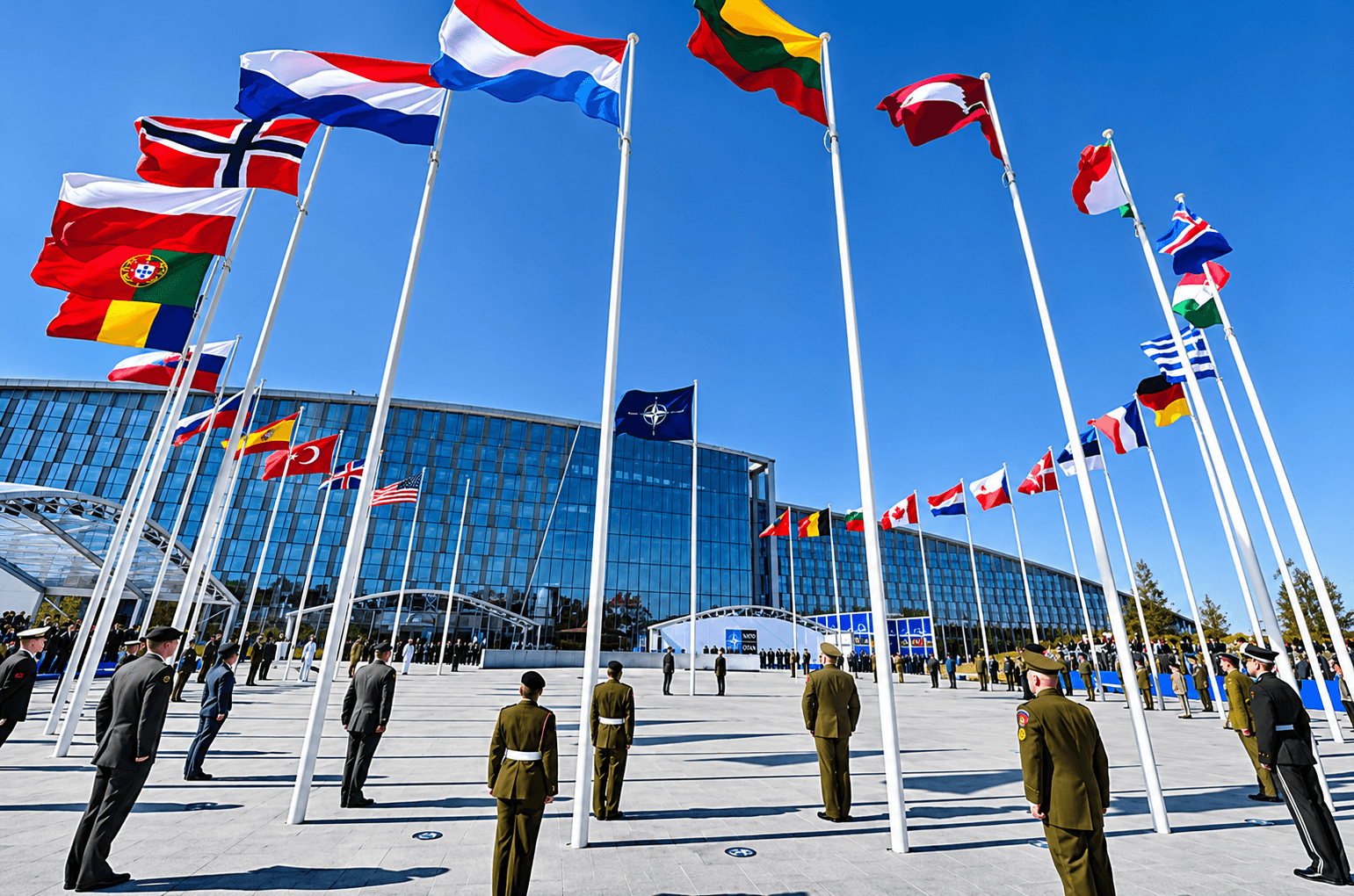
On October 26, defence committee leaders from allied parliaments met at NATO headquarters in Brussels to discuss progress towards meeting these commitments. NATO Secretary General Mark Rutte stressed the importance of investing in military modernisation, emerging technologies and stronger defence industries.
But higher budgets alone will not solve Europe's security problems. Governments must ensure that additional funding translates into military equipment, ammunition supplies, operational readiness and the ability to respond quickly when threats emerge.
For European allies, the immediate challenge is turning political promises into practical improvements on the ground.
US MILITARY REVIEW SPARKS QUESTIONS ABOUT NATO'S FUTURE
Washington's ongoing review of its military presence in Europe has become a major concern for NATO members. The Pentagon is examining troop deployments, access to military bases, intelligence cooperation and the broader requirements of American military operations across the continent.
A Reuters report published on August 27 said the review was expected to present several options to Defence Secretary Pete Hegseth by November 6, with the wider assessment scheduled for completion in December.
The review has raised questions about whether the United States could eventually reduce its military presence in Europe. Although Washington has not confirmed a final withdrawal decision, the uncertainty is already influencing discussions among European governments.
One of the biggest concerns is Europe's dependence on American capabilities in areas such as intelligence gathering, surveillance, strategic transport and long-range military operations. Replacing these capabilities would require significant investment, coordination and time.
The issue goes beyond the number of American troops stationed across Europe. NATO members also need to consider whether European forces could maintain effective deterrence and respond quickly if tensions with Russia escalate.
RUSSIA REMAINS EUROPE'S BIGGEST SECURITY CONCERN
Russia continues to dominate Europe's defence calculations. Even if the war in Ukraine eventually moves towards a ceasefire, European governments expect Moscow to remain a significant security challenge for years to come.
The conflict has exposed weaknesses in Europe's military preparedness, particularly in ammunition production, air defence, drone technology and the ability to sustain prolonged military operations.
Countries along NATO's eastern flank, especially Poland and the Baltic states, are placing greater emphasis on military investment and border security because of their proximity to Russia and Belarus.
The European Defence Agency has also warned that existing national plans are not progressing quickly enough to meet the EU's defence-readiness ambitions for 2030. Its assessment highlights shortcomings in areas including air and missile defence, ground forces, naval capabilities, ammunition stocks and drone technology.
These concerns are pushing European governments to move beyond long-term defence announcements and focus on building capabilities that can be deployed when needed.
EUROPE WANTS A STRONGER ROLE WITHIN NATO
Another major issue under discussion is the creation of a stronger European defence pillar within NATO. The idea is to give European allies greater responsibility for conventional defence while maintaining close cooperation with the United States.
This does not necessarily mean establishing a separate military alliance. Instead, the proposal focuses on improving coordination, strengthening joint military planning and ensuring that European countries can take greater responsibility for security operations on the continent.
A recent analysis by the Barcelona-based CIDOB research institute highlights different interpretations of what a European pillar could look like. Some approaches focus on increasing Europe's financial and military contributions within NATO, while others favour a longer-term reduction in dependence on Washington.
The discussion also raises difficult questions about military leadership, command structures and how European governments would coordinate their responses during a major crisis.
For NATO, the challenge will be to strengthen Europe's defence capabilities without creating divisions or undermining the alliance's existing command arrangements.
RISING DEFENCE SPENDING BRINGS ECONOMIC AND POLITICAL CHALLENGES
Increasing military investment is not an easy decision for European governments. Defence spending must compete with other priorities, including healthcare, education, infrastructure, social welfare and debt reduction.
A Reuters report published in July highlighted the uneven progress among NATO members towards meeting the alliance's spending ambitions. Poland, for example, was reported to be allocating around 4.3% of its GDP to defence, while other countries face tighter financial and political constraints.
Germany has announced plans to significantly expand its defence investment. France, Italy, Britain and Spain are also reviewing their military spending priorities, although their ability to meet future commitments will depend on economic conditions and domestic political support.
There is also the question of whether Europe's defence industry can deliver equipment quickly enough to match the increase in funding.
Fragmented procurement systems, overlapping weapons programmes and limited manufacturing capacity could slow progress and increase costs.
European governments therefore face a difficult balancing act: increasing national defence budgets while working more closely to avoid unnecessary duplication and improve military cooperation.
DEFENCE INDUSTRY AND TECHNOLOGY TAKE CENTRE STAGE
Europe's ability to manufacture its own military equipment is becoming an increasingly important part of its security strategy. Governments are looking to expand production of ammunition, air defence systems, drones, armoured vehicles and advanced electronic equipment.
The war in Ukraine has demonstrated how quickly military supplies can be depleted during prolonged fighting. It has also highlighted the growing role of drones, precision weapons, electronic warfare and integrated surveillance systems in modern conflicts.
NATO leaders are calling for greater industrial cooperation and investment to ensure that allied countries can produce essential military supplies at the scale required.
A stronger European defence industry could reduce dependence on external suppliers, protect supply chains and help governments respond more effectively to future emergencies.
However, expanding production will not happen overnight. Manufacturers need long-term government contracts, skilled workers, reliable access to raw materials and greater certainty about future demand.
Ultimately, Europe's defence ambitions will depend on whether governments can turn additional investment into lasting industrial and technological strength.
RISKS AND KEY ISSUES TO WATCH
Uncertainty over US commitments: Any reduction in American military support could leave gaps that European allies may struggle to fill quickly.
Russian military pressure: Continued instability surrounding Ukraine and NATO's eastern borders could require higher levels of military readiness.
Defence spending disagreements: Economic difficulties and domestic political opposition could prevent some countries from meeting their long-term investment targets.
Military capability shortages: Gaps in ammunition, air defence, intelligence and strategic transport could limit Europe's ability to respond to a major crisis.
Fragmented procurement: Separate national purchasing decisions could increase costs, delay deliveries and make military cooperation more difficult.
Alliance unity: Disagreements over defence spending and strategic priorities could complicate NATO's collective decision-making.
WHAT TO WATCH NEXT
The Pentagon's expected November 6 briefing on possible changes to the US military presence in Europe.
Completion of Washington's broader European force posture review, expected in December.
Whether European NATO members translate the 5% spending commitment into funded national defence programmes.
Progress in addressing Europe's shortages of air defence systems, ammunition, drones and military transport capabilities.
Whether NATO establishes a clearer division of military responsibilities between European and American forces.
How European governments respond to further Russian military activity and developments in the Ukraine conflict.
FACT CHECK METER
Editorial confidence: 97%
Strongly supported — based on NATO commitments, defence assessments and reported policy developments.
Confirmed details
NATO allies agreed to a target of investing 5% of GDP annually in defence and security-related areas by 2035.
Allied parliamentary defence committee leaders met on October 26 to review progress on implementing the spending commitments.
The Pentagon is reviewing US military deployments and wider defence arrangements in Europe.
The European Defence Agency has identified significant gaps in Europe's defence-readiness plans.
Important distinctions
The Pentagon's review does not confirm a final decision to withdraw American forces from Europe.
A stronger European pillar is a developing strategic concept, not a replacement for NATO.
The 2035 spending target covers both core military requirements and wider security-related investment.
AWX VERDICT
NATO's future is increasingly tied to Europe's ability to take greater responsibility for its own security. However, a possible reduction in American military support remains an uncertainty rather than a confirmed policy decision.
The alliance faces a difficult task: strengthening European military capabilities while maintaining the transatlantic partnership that has supported its collective defence for decades.
The coming months will be important in determining whether European governments can turn their commitments into practical military improvements.
The 97% figure represents AWX editorial confidence in the factual reporting of this article. It is not a statistical probability or an official rating.
THE AWX BOTTOM LINE
NATO is entering a period of strategic change as European allies confront a more uncertain security environment. Russia's military threat, questions about Washington's long-term commitments and weaknesses in Europe's defence capabilities are forcing governments to reconsider how the continent should protect itself.
The direction is becoming clearer: Europe needs to be better prepared to defend its territory while preserving the transatlantic partnership that remains central to NATO's strength.
That will require more than increased military budgets. Stronger defence industries, modern technology, reliable supply chains and closer coordination between allies will all play an important role.
Ultimately, NATO's credibility will depend not on the promises made by its members, but on their ability to deliver the military capabilities needed to deter threats and defend Europe.
ATTLAS NEWS | AWX WORLD NEWS
Real Stories. Lasting Impact.




Comments
No comments yet.