

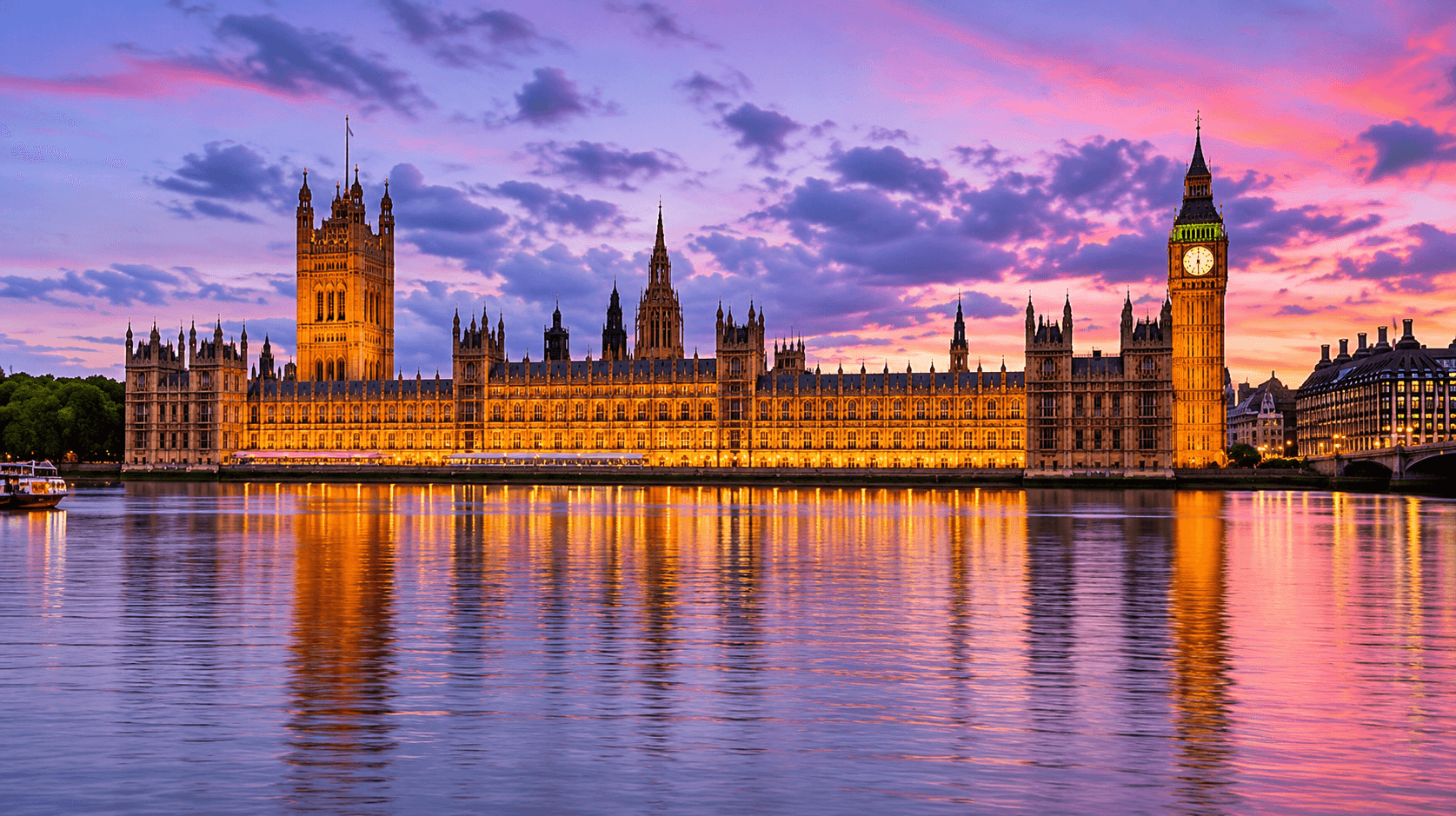
Britain's debate over devolution and its constitutional future has returned to the forefront of politics as Prime Minister Andy Burnham pushes for closer ties between the UK's four nations while giving regional authorities a greater say in local decisions.
At a devolution summit in Glasgow on October 30, Burnham met Scottish First Minister John Swinney and Welsh First Minister Rhun ap Iorwerth. Their discussions covered regional economic development, employment support and the possibility of transferring more responsibilities away from Westminster.
Burnham said he wanted England, Scotland, Wales and Northern Ireland to progress together, stressing that no part of the country should be left behind as the government expands regional decision-making.
However, the meeting also exposed differences over how further devolution should work. Swinney and ap Iorwerth insisted that decisions about transferring additional powers within Scotland and Wales must remain in the hands of their respective parliaments.
Northern Ireland First Minister Michelle O'Neill was absent following a political disagreement involving Sinn Féin and the Democratic Unionist Party (DUP). Her absence meant the latest discussions went ahead without direct representation from all four national leaders.
The developments highlight the difficult balance Burnham faces: bringing the United Kingdom closer together while respecting the political independence and constitutional arrangements of its constituent nations.
BURNHAM CALLS FOR FOUR-NATION COOPERATION
Following the Glasgow summit, Burnham stressed that his government wanted all four nations to share in the benefits of economic development and greater regional control.
He argued that while devolution is moving ahead in England, Scotland, Wales and Northern Ireland should also have opportunities to strengthen their own regional institutions.
Two areas featured prominently in the discussions.
The first was reindustrialisation, particularly the possibility of giving regional institutions greater control over innovation funding. The aim is to help local authorities attract investment, support businesses and encourage industrial growth.
The second was employment support, with particular attention to young people. Burnham believes local organisations are often better placed to understand employment challenges in their communities and provide support that reflects local needs.
He also acknowledged that Scotland and Wales must shape their own arrangements rather than have a model imposed on them by Westminster.
The broader objective is to bring national and regional institutions closer together, create more employment opportunities and improve living standards across the country.
SCOTLAND AND WALES STAND FIRM ON DEVOLVED POWERS
Although Downing Street described the Glasgow discussions as constructive, Scottish and Welsh leaders were clear that further devolution must respect the authority of their existing parliaments.
Swinney said he was willing to work with Burnham on securing additional powers for Scotland. However, he made clear that the Scottish Parliament must have the final say on decisions affecting the country's governance.
Ap Iorwerth expressed a similar position, arguing that decisions about transferring further powers within Wales should be made by the Senedd.
He has also called for Wales to receive powers comparable to those enjoyed by Scotland, saying that the country's constitutional position should be recognised rather than treated as an extension of England's regional government.
At the heart of the disagreement is a wider question about how devolution should develop across the UK. Should Westminster transfer more responsibilities directly to national governments, or should Scotland, Wales and Northern Ireland also be encouraged to pass additional powers to local councils and regional authorities?
For Scottish and Welsh leaders, such decisions must be made through their own democratic institutions, not dictated by the central government.
NORTHERN IRELAND'S ABSENCE EXPOSES POWER-SHARING CHALLENGES
Northern Ireland's absence from the Glasgow summit highlighted another obstacle to Burnham's ambition of creating a more coordinated approach to devolution.
Michelle O'Neill had been expected to attend, but a political disagreement involving Sinn Féin and the DUP prevented her participation. Northern Ireland was represented by civil servants instead.
Burnham expressed disappointment that the First Minister and Deputy First Minister were unable to attend, adding that discussions with Stormont would continue.
Northern Ireland's power-sharing system depends on cooperation between parties with different political and constitutional positions. As a result, disagreements between Sinn Féin and the DUP can have wider consequences for the region's involvement in UK-wide initiatives.
The episode also demonstrates why establishing a common framework for all four nations will not be straightforward. Scotland, Wales and Northern Ireland each have different political institutions, constitutional arrangements and relationships with Westminster.
Securing Northern Ireland's involvement will therefore be an important test of Burnham's efforts to build a genuinely four-nation approach.
INDEPENDENCE PACT ADDS A NEW DIMENSION TO THE UNITY DEBATE
The Glasgow summit took place against the backdrop of a separate constitutional development in September, when leaders from Scotland, Wales and Northern Ireland signed a memorandum of understanding supporting their right to determine their own constitutional futures.
John Swinney, Rhun ap Iorwerth and Michelle O'Neill took part in the Cardiff meeting alongside Sinn Féin leader Mary Lou McDonald.
The memorandum called on Westminster to prepare for and facilitate constitutional change, including the possibility of Scottish or Welsh independence and Irish reunification.
The agreement attracted attention because it brought together political leaders from the three devolved nations who support greater constitutional self-determination.
However, the memorandum does not automatically give Scotland or Wales the legal authority to hold independence referendums. Scotland's position remains subject to the existing constitutional and legal framework, while Northern Ireland's future is governed by the Good Friday Agreement and its principle of consent.
This creates an interesting contrast between the two developments. Burnham's devolution initiative aims to strengthen cooperation and decentralise decision-making within the United Kingdom. The September memorandum, meanwhile, keeps open the possibility that some nations may eventually choose a different constitutional future.
WESTMINSTER FACES PRESSURE OVER THE FUTURE OF DEVOLUTION
The debate has also exposed disagreements within the wider political establishment over how much authority should remain with Westminster and how much should be handed to regional and local institutions.
Defence Secretary Wes Streeting criticised the Scottish Government ahead of the Glasgow summit, arguing that Holyrood had not transferred enough of its own powers to local authorities.
His comments attracted criticism from Scottish representatives, who viewed them as an attempt by Westminster to tell devolved governments how they should use their existing powers.
In Wales, concerns have centred on the possibility of introducing an English-style mayoral system in a country with a different political and geographical structure.
Former Welsh minister Lee Waters has argued that any new arrangements must recognise the responsibilities already held by the Welsh Government rather than assume that the same regional model will work everywhere.
These disagreements show that devolution involves more than transferring funding and administrative duties. It also requires a clearer understanding of how national parliaments, regional authorities and local communities should share decision-making powers.
ECONOMIC GROWTH EMERGES AS COMMON GROUND
Despite differences over constitutional authority, economic development remains one area where the four nations could find common ground.
Burnham has placed regional investment, reindustrialisation and employment support at the centre of his devolution plans.
His government wants regional institutions to play a bigger role in directing innovation funding, supporting businesses and developing industries capable of creating jobs and attracting investment.
Youth employment is another major priority. Burnham believes local authorities and regional organisations can better understand the challenges facing young people and provide support that reflects the needs of their communities.
Scotland and Wales have shown an openness to discussing closer cooperation, provided their governments retain control over decisions affecting their domestic institutions.
The next challenge will be turning these broad commitments into practical agreements covering funding, responsibilities and accountability.
If successful, greater regional cooperation could help address economic inequalities across the UK. But if disagreements over constitutional authority continue to dominate discussions, the government's growth ambitions could face further delays.
RISKS AND KEY ISSUES TO WATCH
Constitutional disagreements: Differences over who should control further devolution could slow cooperation between Westminster and the devolved governments.
Northern Ireland's participation: Continuing tensions between Sinn Féin and the DUP could make it harder to establish a consistent four-nation approach.
Scottish independence debate: Renewed cooperation among nationalist leaders could bring constitutional questions back into the political spotlight.
Welsh demands for greater powers: Plaid Cymru may continue pushing for stronger powers and greater financial autonomy for Wales.
Regional funding disputes: Disagreements over investment and budget allocations could undermine confidence in the government's commitment to balanced development.
The future of the Union: Burnham will need to balance closer UK-wide cooperation with the different constitutional aspirations of Scotland, Wales and Northern Ireland.
WHAT TO WATCH NEXT
Further devolution talks: Burnham is expected to continue discussions with Scotland, Wales and Northern Ireland on expanding regional decision-making.
Stormont engagement: Northern Ireland's involvement will be essential if the government wants to establish a genuine four-nation framework.
Regional funding arrangements: Further details on innovation funding and employment support could emerge during upcoming negotiations.
Responses from Holyrood and the Senedd: Both parliaments will remain central to decisions about any further transfer of domestic powers.
Independence discussions: The September memorandum could keep constitutional change and self-determination firmly on the political agenda.
Relations between Westminster and devolved governments: Future disagreements over budgets, responsibilities and regional authority will test the government's commitment to cooperative devolution.
FACT CHECK METER
Editorial confidence: 98%
Strongly supported — AP, Sky News and The Guardian
Confirmed details
Burnham held a devolution summit in Glasgow on October 30.
Scottish First Minister John Swinney and Welsh First Minister Rhun ap Iorwerth took part in the discussions.
Both leaders stressed that decisions about further domestic devolution must respect their respective parliaments.
Michelle O'Neill did not attend following a political disagreement involving Sinn Féin and the DUP.
A September memorandum in Cardiff brought together political leaders from Scotland, Wales and Northern Ireland to discuss constitutional self-determination.
Important distinctions
The October summit focused on regional empowerment and economic cooperation, not an agreement on independence.
The September memorandum is politically significant but does not itself change UK constitutional law.
Northern Ireland has separate constitutional arrangements under the Good Friday Agreement.
A common four-nation devolution framework remains a political ambition rather than an agreed constitutional settlement.
AWX VERDICT
Burnham wants to bring the United Kingdom closer together through greater regional cooperation, but Scotland and Wales are insisting that their parliamentary authority must be respected. Northern Ireland's political divisions and the separate independence initiative show just how difficult it could be to agree on a shared constitutional direction.
The percentage represents AWX editorial confidence in the factual reporting, not a statistical probability or official rating.
THE AWX BOTTOM LINE
The UK's devolution debate is entering another important phase as Andy Burnham tries to strengthen cooperation between the four nations through regional empowerment and economic development.
The Glasgow summit showed that there is room for discussion on shared priorities, particularly employment, industrial investment and innovation. But it also exposed disagreements over who should control the next stage of devolution.
Scotland and Wales want their own parliaments to decide how powers are distributed, while Northern Ireland's absence has highlighted the political challenges of building a common framework.
At the same time, the September independence memorandum has added another layer to the debate, keeping the constitutional future of the United Kingdom firmly in focus.
For Burnham, the real test will be whether he can convince the four nations that greater devolution can strengthen their partnership rather than create further divisions. Much will depend on whether Westminster is willing to build relationships based on trust, respect and meaningful decision-making powers.
ATTLAS NEWS | AWX WORLD NEWS
Real Stories. Lasting Impact.



Comments
No comments yet.