

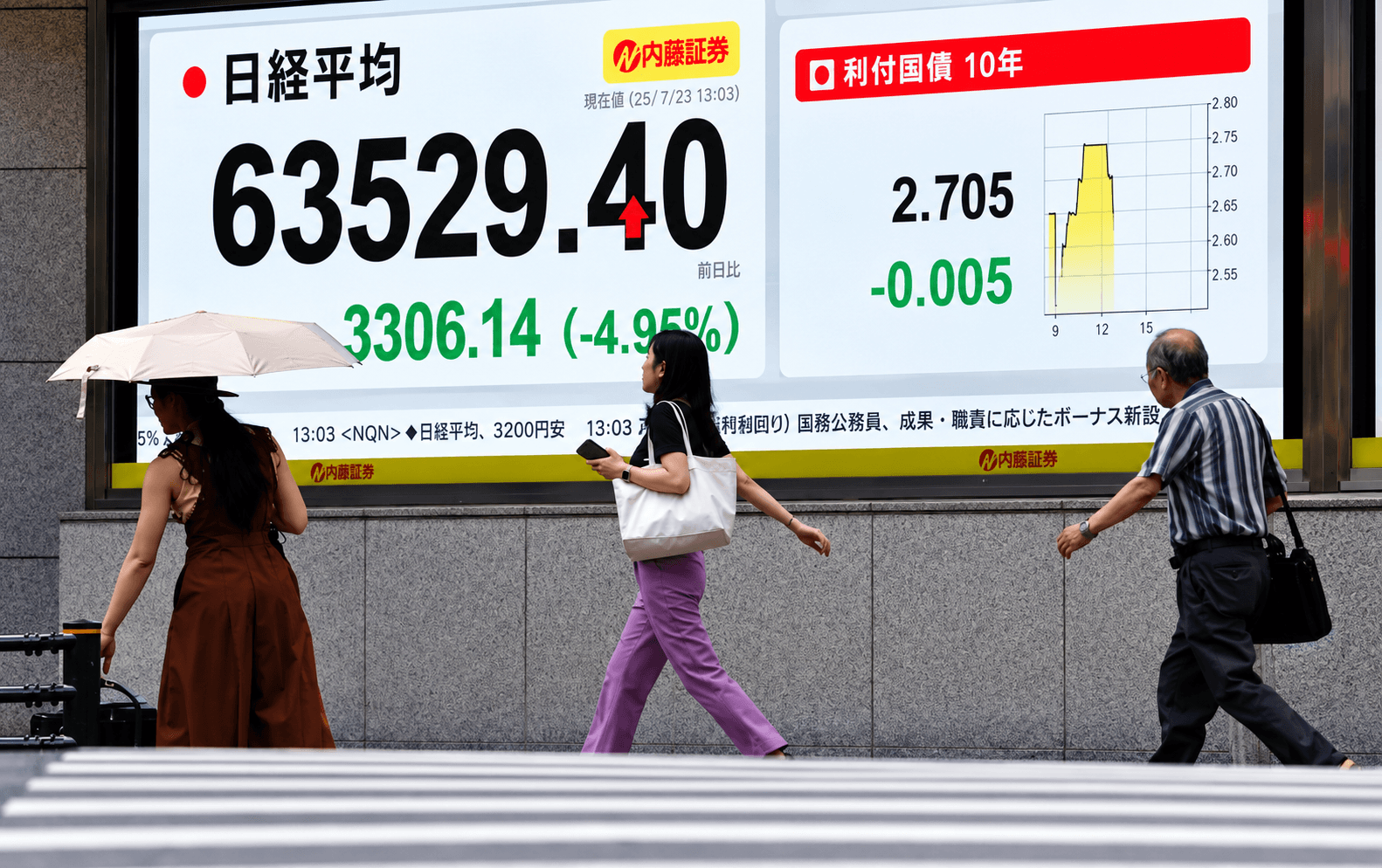
Tokyo’s stock market pulled back on Friday as investors locked in profits following a powerful rally a day earlier. The Nikkei 225 fell 647 points to close at 68,309, giving back some of its recent gains as concerns about the global economic outlook returned to the forefront.
The decline came after a strong session on 1 October, when the benchmark jumped by more than 2,200 points. Following such a sharp rise, some investors chose to secure their gains rather than take on additional risk ahead of fresh economic data from the United States.
The broader TOPIX index also ended lower, shedding 40.98 points to 4,091.00. The decline in both major benchmarks suggested that selling pressure extended beyond a handful of large companies. <Cite refs={["turn472483search1","turn472483search7"]}/>
The retreat highlights the uncertainty surrounding Japan’s recent stock market rally. Technology and semiconductor shares have benefited from enthusiasm for artificial intelligence and growing demand for advanced chips. However, investors remain sensitive to interest-rate expectations, rising global bond yields and the cost of energy.
The key question now is whether Friday’s decline was simply a pause after a strong advance or an early sign of a more volatile period for Japanese equities.
PROFIT-TAKING PUTS THE BRAKES ON THE RALLY
The Nikkei opened lower at around 68,313 and briefly recovered during the morning session. The rebound did not last, however, as selling picked up again and the index finished the day at 68,309.
Thursday’s rally had been particularly strong, with semiconductor-related shares and optimism surrounding US technology stocks helping lift Japanese equities.
After a rapid rise in share prices, some investors naturally look to secure their gains. This can be especially noticeable when a rally is driven by a relatively small group of high-profile stocks.
Investors were also looking ahead to US employment data, which could influence expectations for Federal Reserve interest-rate decisions and shape sentiment across global financial markets. <Cite refs={["turn472483search1","turn472483search7"]}/>
The decline in the TOPIX reinforced the sense that Friday’s weakness was not limited to a single corner of the market. Investors were reassessing their exposure to Japanese shares as they weighed the recent gains against a less certain economic outlook.
TECHNOLOGY STOCKS REMAIN IN THE SPOTLIGHT
AI enthusiasm meets valuation concerns
Artificial intelligence has become a major force in global equity markets, and Japanese technology companies have benefited from demand for semiconductor equipment, advanced materials and data-centre infrastructure.
Expectations of continued AI investment have helped strengthen the outlook for parts of Japan’s technology supply chain. Companies involved in chip manufacturing and related equipment have attracted investor interest as businesses around the world expand their computing capacity.
But enthusiasm has its limits. When share prices climb quickly, investors may begin to question whether valuations have moved too far ahead of the earnings companies can realistically deliver.
Even relatively small changes in sentiment can trigger profit-taking when expectations are high. Companies whose valuations depend heavily on sustained AI-related growth may be particularly vulnerable to these shifts.
Friday’s pullback highlighted the tension between confidence in the long-term potential of AI and concerns about how much future growth is already reflected in share prices.
US technology trends continue to influence Tokyo
Japan’s stock market remains closely linked to developments in the United States, particularly in the technology and semiconductor sectors.
Changes in US investor sentiment can affect Japanese shares through expectations for global demand, portfolio positioning, currency movements and bond yields.
A strong session on Wall Street can provide support for Tokyo, but it does not guarantee that Japanese stocks will rise. Domestic economic conditions, company valuations and currency fluctuations can all influence the direction of trading.
For investors, the challenge is to determine whether the latest decline is a temporary adjustment or a sign that expectations for technology-related earnings are beginning to weaken.
RISING BOND YIELDS ADD TO THE PRESSURE
Bond yields are another factor investors are watching as they assess the outlook for inflation and interest rates.
When government bond yields rise, fixed-income investments can become more attractive relative to stocks. Higher yields can also increase borrowing costs for businesses and reduce the value investors place on earnings expected in the future.
This can weigh particularly heavily on growth stocks, where much of the investment case rests on profits that may not materialise for several years.
Japan faces these pressures alongside changes in its own monetary policy. Investors must consider domestic interest rates, movements in the yen and the potential effect of borrowing costs on businesses and households.
Higher yields do not automatically mean share prices must fall. Companies delivering strong earnings growth can continue to attract investors even in a higher-rate environment. But when valuations are already stretched, rising yields can make investors more reluctant to pay a premium for future growth.
Friday’s decline showed how quickly sentiment can turn when profit-taking coincides with concerns about financial conditions.
ENERGY PRICES AND INFLATION REMAIN KEY RISKS
Energy costs continue to complicate Japan’s economic outlook. As a major importer of fuel, the country is particularly exposed to swings in global oil and gas prices.
Higher energy prices can raise operating costs for manufacturers, transport companies and utilities. Households may also feel the pressure through higher fuel and electricity bills, leaving less money available for other spending.
Companies may try to pass these additional costs on to customers, but doing so can be difficult when demand is weak. If they cannot raise prices enough to cover the increase, profit margins may come under pressure.
Currency movements add another layer of complexity. A weaker yen can increase the value of overseas earnings when converted into the domestic currency, potentially benefiting exporters with substantial international sales.
At the same time, a weaker yen makes imported energy and raw materials more expensive. That creates a difficult trade-off for Japan as it tries to support business activity while protecting household purchasing power.
Investors therefore need to watch oil prices, the yen, inflation expectations and monetary policy together rather than treating them as separate issues.
If energy costs climb while borrowing remains expensive, companies could face pressure on several fronts. A decline in commodity prices, by contrast, could offer some relief if consumer and business demand remain resilient.
US ECONOMIC DATA COULD SHAPE THE NEXT MOVE
Investor caution on Friday was also linked to expectations surrounding US employment figures.
Economic data from the United States can move markets worldwide by changing expectations for Federal Reserve policy, the dollar and the strength of consumer and business demand.
Stronger-than-expected employment figures could reinforce concerns that inflation will remain persistent, potentially keeping interest rates higher for longer. Weaker data could strengthen expectations of rate cuts, although a sharp deterioration in the labour market might also raise fears about slowing economic growth.
For Japanese equities, the implications are not straightforward. A healthy US economy supports demand for Japanese exports, while interest-rate expectations affect global liquidity, bond yields and currency movements.
Investors will be looking beyond the headline jobs figure to wage growth, unemployment and other indicators that offer a clearer picture of the US economy’s underlying health.
Until those signals become clearer, traders may be reluctant to make aggressive bets after the sharp advance in Japanese shares.
WHAT THE DECLINE MEANS FOR JAPANESE INVESTORS
A 647-point drop is a notable move, particularly after a strong rally. But the number of points lost alone does not establish whether the market has entered a sustained downturn.
Investors also need to consider the percentage decline, trading volumes, the balance between advancing and declining shares, and how different sectors performed.
The fall in the TOPIX suggested that weakness extended beyond the largest stocks influencing the Nikkei. Even so, a single trading session is not enough to confirm a lasting change in market direction.
Long-term investors may view the pullback as a normal part of an advancing market. Short-term traders, meanwhile, may respond more quickly to weakening momentum and reduce their exposure as volatility increases.
The same market move can therefore mean different things to different investors, depending on their time horizon, portfolio concentration and tolerance for risk.
JAPAN’S MARKET OUTLOOK: CAN THE RALLY HOLD?
Several forces are pulling Japan’s equity market in different directions.
On the positive side, continued investment in AI infrastructure, semiconductors and advanced manufacturing could support earnings at selected companies. Strong overseas demand may also benefit exporters, depending on global economic conditions and currency movements.
The risks are harder to ignore. Higher energy costs, uncertainty about interest rates and concerns over elevated valuations could make further gains more difficult. If global investors become more cautious, markets that have risen sharply may face additional selling as portfolios are rebalanced.
The yen will remain an important part of the picture. A weaker currency can boost the reported value of overseas earnings, but it also raises import costs for companies that rely on foreign energy and raw materials.
Corporate earnings guidance will be equally important. Investors will want to see whether companies can turn enthusiasm for AI and other growth opportunities into stronger revenue and profits.
Ultimately, the question is whether earnings can keep pace with the expectations already built into share prices.
FACT CHECK METER
FACT METER: 97% — MARKET MOVEMENT AND KEY FIGURES CORROBORATED
Status: Published market reports support the reported decline in the Nikkei 225 and the broader weakness in Japanese equities.
Confirmed details
The Nikkei 225 closed at 68,309 on 2 October 2026, down 647 points. <Cite refs={["turn472483search1","turn472483search7"]}/>
The TOPIX fell 40.98 points to close at 4,091.00. <Cite refs={["turn472483search1"]}/>
The decline followed a sharp rally on 1 October, with profit-taking contributing to the pullback.
Caution ahead of US employment data, rising global bond yields and energy-price concerns formed part of the reported market backdrop. <Cite refs={["turn472483search1","turn472483search7"]}/>
Important distinctions
The market decline and index figures are reported facts. However, the exact contribution of each factor cannot be determined from the index movements alone. It would also be premature to conclude that the pullback marks the beginning of a prolonged downturn.
AWX verdict: Tokyo’s stock market appears to be taking a breather after a powerful rally. Investors are balancing long-term optimism about technology against concerns over interest rates, inflation and global growth. The coming sessions and new economic data should offer a clearer picture of whether the weakness will prove temporary.
WHAT TO WATCH NEXT
US employment data: The latest labour-market figures could change expectations for Federal Reserve policy and influence global investor sentiment.
Japanese bond yields: Further increases could put pressure on growth-stock valuations and raise financing costs for businesses.
Semiconductor performance: Earnings and guidance from chipmakers and equipment suppliers will help determine whether AI-related demand can support current valuations.
Oil prices: A sustained increase could squeeze corporate margins and leave households with less money to spend.
The yen: Currency movements will remain important for exporters and businesses dependent on imported commodities.
Market breadth: Investors should watch whether further declines remain concentrated in technology shares or spread across the wider market.
Corporate earnings: Strong results could support share prices, while disappointing forecasts may leave recently rallied stocks vulnerable to further selling.
THE AWX BOTTOM LINE
Tokyo’s latest session is a reminder of how quickly sentiment can change after a powerful rally. The Nikkei 225’s 647-point decline on 2 October was a setback, but it does not, on its own, mean Japan’s broader stock market advance has come to an end.
Investors were taking profits while weighing rising bond yields, energy-price risks and uncertainty about the global economy. At the same time, long-term interest in AI, semiconductors and Japanese exporters continued to shape the market’s investment outlook.
The next move will depend partly on whether corporate earnings can justify current valuations and whether inflation and borrowing costs become less of a concern.
For now, Tokyo’s message is clear: after a rapid climb, investors want stronger evidence before pushing share prices higher.
ATTLAS NEWS | AWX WORLD NEWS
Real Stories. Lasting Impact.




Comments
No comments yet.