

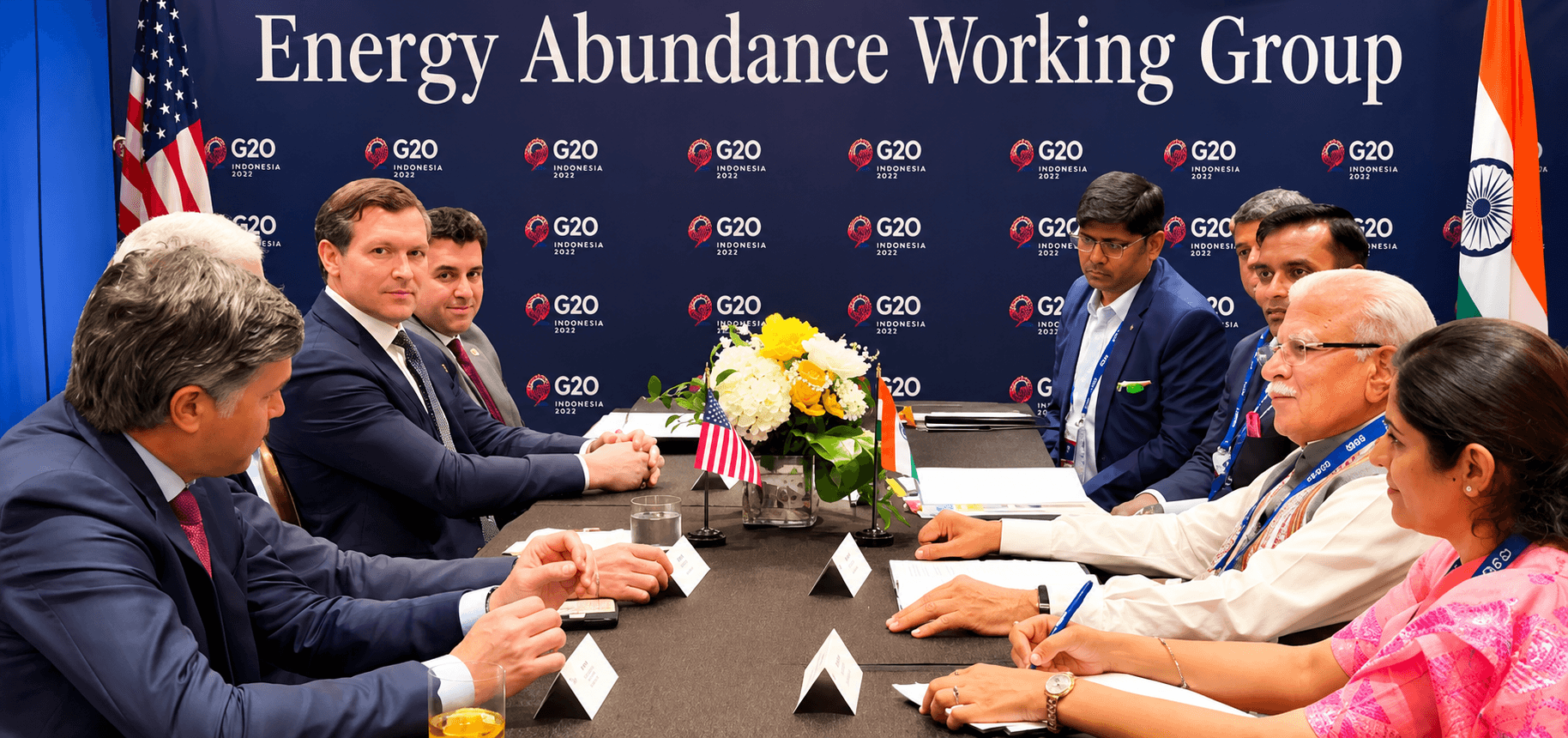
The United States and India are looking to deepen their energy partnership as uncertainty continues to cloud the global energy market. Recent diplomatic talks have put oil and gas trade, supply-chain diversification and civil nuclear cooperation firmly on the agenda, highlighting how closely energy security is tied to the two countries’ wider strategic relationship.
The latest discussions gained momentum when US Secretary of State Marco Rubio met Indian External Affairs Minister S. Jaishankar in Mumbai on 20 October. According to the US State Department, Rubio highlighted the potential for increased energy trade to help India diversify its supplies and meet its growing energy needs. He also welcomed progress in civil nuclear cooperation and encouraged greater use of American technologies and systems.
The timing is significant. Tensions across West Asia have renewed concerns about the security of major shipping routes and the risks of relying too heavily on a limited number of energy suppliers. For India, which imports much of the oil and gas it consumes, access to reliable and competitively priced supplies remains essential.
Washington also has a clear commercial interest in closer cooperation. Stronger energy ties could open up new opportunities for American exporters while reinforcing economic and strategic links with one of the world's largest energy-consuming economies.
ENERGY SECURITY MOVES UP THE AGENDA
India's energy needs continue to rise as industries expand, cities grow and demand for transport and electricity increases. Renewable energy is becoming a bigger part of the country's power mix, but oil and natural gas remain essential to many parts of the economy.
The United States could help India widen its supply options through exports of crude oil, liquefied natural gas (LNG), liquefied petroleum gas (LPG) and petrochemical feedstocks.
However, stronger diplomatic relations do not automatically mean higher energy purchases. Indian buyers still have to weigh prices, shipping costs, contract conditions and the reliability of deliveries before committing to new supplies.
Recent industry analysis has also pointed to weaker US crude oil shipments to India in 2026 compared with the previous two years. That suggests there is room for trade to grow, but any increase will depend on whether American supplies make commercial sense for Indian buyers.
For Indian refiners, the decision ultimately comes down to value. US crude must compete with supplies from the Middle East, Russia and other producing regions, giving India a range of options as it manages its energy needs.
OIL AND GAS TRADE COULD OPEN NEW OPPORTUNITIES
Crude oil is likely to remain one of the most immediate areas for cooperation. Buying more US oil could give Indian refiners greater flexibility when prices shift or supplies from other regions face disruption.
LNG and LPG offer further opportunities. Longer-term supply contracts could give buyers and sellers more certainty, while improvements in shipping and import infrastructure could make additional trade easier to manage.
There is, however, a practical challenge: distance. Shipping energy products from the United States to India can be more expensive than sourcing them from some closer suppliers. Freight rates, insurance costs and the final delivered price will all influence whether additional purchases are worthwhile.
That is why India is unlikely to view American energy as a replacement for its existing suppliers. A broader mix of sources offers a more practical way to manage risk, strengthen negotiating power and reduce dependence on any single region.
The focus will be on securing supplies that are both reliable and affordable, rather than simply increasing imports from one particular country.
CIVIL NUCLEAR COOPERATION ADDS A LONG-TERM DIMENSION
The energy relationship extends beyond oil and gas. Civil nuclear cooperation remains another important part of the discussions between Washington and New Delhi.
Nuclear power can provide a steady source of low-carbon electricity, complementing renewable energy from solar and wind. For India, expanding nuclear capacity could help meet rising power demand while supporting its longer-term efforts to reduce emissions.
American technology, technical expertise and industrial partnerships could contribute to future projects. But turning diplomatic interest into operational nuclear facilities is a complex process.
Regulatory approvals, financing, technology choices, safety requirements and legal arrangements all need to be addressed before projects can move forward. Nuclear developments also take years to plan and build, making concrete milestones more meaningful than broad political statements.
For now, closer engagement signals an area of potential cooperation, but the scale and timing of future projects will depend on what both governments and industry partners can agree upon.
WEST ASIA TENSIONS PUT SUPPLY DIVERSIFICATION IN THE SPOTLIGHT
Instability across West Asia has highlighted how quickly geopolitical tensions can affect global energy markets. Disruptions near major maritime chokepoints can delay shipments, increase insurance and freight costs, and push oil and gas prices higher.
India faces particular risks because a substantial share of its imported energy comes from overseas producers, including countries in the Gulf. US supplies can provide an alternative for some of these imports, although they cannot shield India entirely from global price swings or shipping disruptions.
New Delhi must also balance several important relationships. Russia remains an energy supplier, Gulf countries play a major role in India's energy trade, and cooperation with Western economies is important to its wider economic and strategic ambitions.
Managing these relationships requires a careful balance between affordability, energy security and strategic independence.
Closer cooperation with Washington could give India more options when supplies are disrupted. But the benefits will depend on whether the two countries can establish commercial arrangements that remain competitive and dependable during periods of market stress.
THE ECONOMIC AND STRATEGIC STAKES
For the United States, stronger energy exports to India could benefit producers, shipping companies, infrastructure operators and technology providers. A larger commercial relationship could also support cooperation in trade, investment and advanced technology.
For India, the potential gains are more diverse supply options, greater purchasing flexibility and improved resilience when regional crises disrupt established trade routes.
There are challenges on both sides. Businesses need competitive prices, reliable logistics and clear contract terms before committing to long-term purchases. Progress could also be affected by disagreements in the wider bilateral trade relationship.
The key question is whether diplomatic momentum will lead to measurable commercial outcomes. New contracts, higher shipment volumes and clearly defined nuclear projects would provide stronger evidence of progress than statements of intent alone.
FACT CHECK METER
Accuracy assessment: 95% — The central diplomatic developments are supported by official statements, while commercial outcomes remain subject to confirmation.
Confirmed details:
US Secretary of State Marco Rubio met Indian External Affairs Minister S. Jaishankar in Mumbai on 20 October 2026.
The US State Department said the discussions covered international and regional issues, energy trade, supply-chain diversification and civil nuclear cooperation.
Both countries highlighted the importance of their broader strategic relationship.
Important distinctions:
Discussions about expanding energy cooperation do not establish that a new oil, LNG or LPG purchase agreement has been signed.
No new supply volumes, contract values or nuclear project commitments are presented as confirmed without supporting announcements.
Future trade will depend on pricing, transportation costs, contract terms and the implementation of any agreed initiatives.
AWX VERDICT: Recent official statements support the view that energy cooperation is an important part of the US-India relationship. The potential commercial benefits are clear, but specific deals and project commitments should be treated as unconfirmed until formally announced.
WHAT TO WATCH NEXT
Oil and gas contracts: Watch for confirmed agreements covering US crude oil, LNG, LPG and other energy exports to India.
Bilateral trade talks: Look for progress on the broader trade framework and any specific energy commitments.
Indian refinery purchases: Monitor whether Indian refiners increase their purchases of US-origin crude as prices and shipping costs change.
Civil nuclear projects: Track regulatory developments, technology partnerships and concrete project announcements.
Shipping costs and energy prices: Follow developments in West Asia and their impact on freight, insurance and delivered fuel prices.
India's supplier mix: Assess whether India expands its range of energy suppliers while maintaining access to affordable imports.
THE AWX BOTTOM LINE
The United States and India are putting energy security at the heart of a broader strategic partnership. Washington wants to expand its energy exports and deepen commercial ties, while New Delhi is looking for reliable supplies, competitive prices and greater flexibility in an unpredictable global market.
Oil and gas offer the most immediate opportunities for trade, while civil nuclear cooperation could provide a longer-term path for collaboration. But stronger diplomatic ties alone will not deliver results. Progress will depend on commercially viable contracts, dependable supply arrangements and practical steps to move proposed projects forward.
For India, the goal is not simply to buy more American energy. It is to build a more resilient supply network that can withstand global shocks without putting affordability at risk.
ATTLAS NEWS | AWX WORLD NEWS
Real Stories. Lasting Impact.




Comments
No comments yet.