

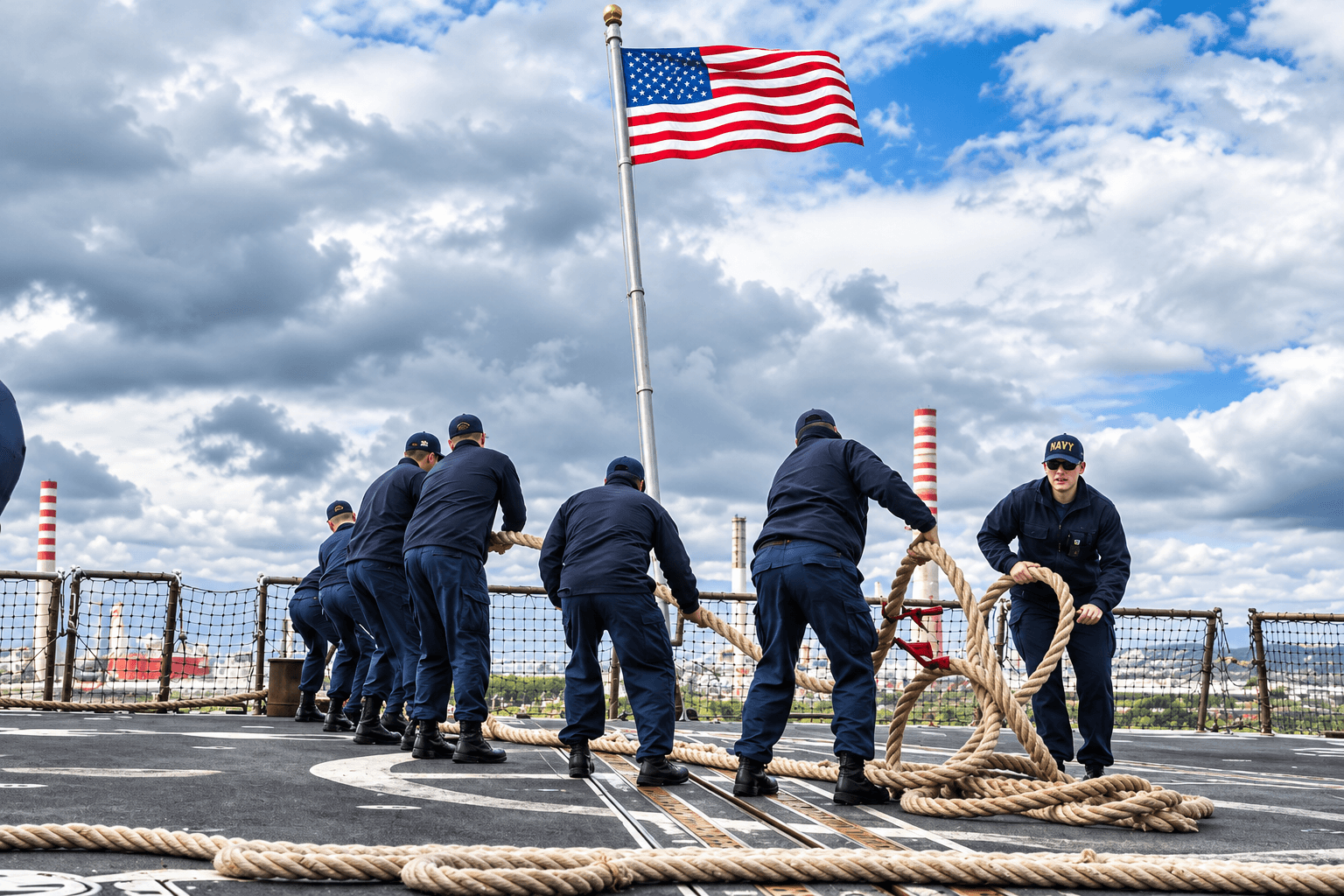
Tensions between the United States and Iran have escalated following a series of American strikes on Iranian targets near the Strait of Hormuz. The operation, carried out on November 2, has raised fresh concerns that the eight-month-long conflict could intensify, even as diplomatic efforts continue behind the scenes.
US officials described the strikes as limited and defensive, saying American forces targeted Iranian military positions after they allegedly used surface-to-air missiles against US assets. Explosions were reported on Qeshm Island, Hengam Island and parts of the mainland near Bandar Abbas.
The developments come at a politically sensitive time for President Donald Trump, following the November 3 midterm elections. His administration now faces growing pressure to balance military action with efforts to bring Iran back to the negotiating table.
Washington has stressed that the strikes do not necessarily mark the beginning of a new large-scale military campaign. Tehran, however, has warned that it will not accept further attacks without a response.
US STRIKES IRANIAN TARGETS NEAR THE STRAIT OF HORMUZ
The latest strikes mark another serious development in the growing confrontation between Washington and Tehran.
According to US officials, American forces targeted Iranian military positions near the Strait of Hormuz after Iranian forces allegedly opened fire on a US aircraft. Washington described the operation as a defensive response rather than the start of a renewed bombing campaign.
However, the strikes show that the risk of direct military confrontation remains high, despite continued diplomatic contacts between the two countries.
Reports indicated that American forces had carried out several limited operations in recent weeks, including some that had not been publicly disclosed at the time.
Iranian state media reported explosions around Qeshm and Hengam islands, while officials in Tehran condemned the attacks as acts of aggression.
TEHRAN WARNS OF RETALIATION AS MILITARY TENSIONS RISE
Iran has made it clear that it does not intend to ignore the latest American strikes.
Deputy Foreign Minister Kazem Gharibabadi said Tehran retains the right to legitimate self-defence until what it considers foreign military aggression comes to an end.
Iran's Supreme Leader Mojtaba Khamenei has also warned that American hostility will continue regardless of the outcome of the US midterm elections. Iranian officials maintain that the country's armed forces remain prepared for any further military action.
What remains uncertain is how Tehran might respond. Possible options include targeting US military assets, taking action against regional interests or relying on allied groups operating across the Middle East.
Any such response could push the confrontation beyond the immediate US-Iran conflict, putting Gulf countries, commercial shipping and critical infrastructure at greater risk.
STRAIT OF HORMUZ BECOMES A MAJOR FLASHPOINT
The Strait of Hormuz has once again become one of the most sensitive points in the conflict.
The narrow waterway connects the Persian Gulf to international shipping routes and serves as a vital passage for global oil and gas supplies. Any disruption could have serious consequences for energy markets and international trade.
On November 5, Iran's Islamic Revolutionary Guard Corps claimed that two oil tankers and a tugboat caught fire after attempting to pass through what it described as an unauthorised route. The IRGC also claimed that its electronic warfare units had captured two US drones intact. These claims had not been independently verified in the reporting available at the time.
The situation has raised concerns among shipping companies and energy traders. Further disruption could delay tanker movements, increase insurance premiums and put additional pressure on global supply chains.
With US forces maintaining a naval blockade targeting Iranian oil shipments, the Strait of Hormuz has become a major source of both military and economic pressure.
DIPLOMATIC TALKS CONTINUE DESPITE FRESH MILITARY ACTION
Despite the latest escalation, diplomatic efforts to prevent a wider war have not completely broken down.
Qatar has been playing an important role in efforts to bring Washington and Tehran closer to a possible agreement. Mediators have reportedly put forward a framework focused on reducing military tensions, improving maritime security and creating space for further negotiations.
Under the proposed arrangement, Iran could agree to halt attacks in the Strait of Hormuz in exchange for steps by Washington to ease its naval blockade. Tehran is also seeking broader assurances, including a ceasefire covering other areas of the region.
President Donald Trump has expressed confidence that a negotiated settlement is still possible. Iranian officials, however, insist that any agreement must address their key security and political demands.
The two sides remain far apart on several major issues. Iran wants guarantees that the United States will not launch further attacks during negotiations, while Washington is seeking firm commitments on maritime security and Iranian military activity.
For now, diplomacy remains one of the few available routes to prevent another major escalation.
GULF COUNTRIES FEAR A WIDER REGIONAL CONFLICT
Governments across the Gulf are watching the situation closely as fears of renewed US-Iran fighting grow.
Saudi Arabia, the United Arab Emirates, Qatar, Bahrain and Oman could all face serious security and economic consequences if the confrontation spreads. Attacks on energy facilities, ports, airports or shipping routes could disrupt regional trade and threaten critical infrastructure.
Some US allies have reportedly cautioned Washington against further escalation, warning that a broader military campaign could trigger retaliation from Iran-aligned groups.
The threat is not limited to the Persian Gulf. Houthi forces in Yemen could intensify attacks on Saudi targets and commercial vessels in the Red Sea, while Iran-aligned militias in Iraq could become involved in a wider confrontation.
Regional governments therefore face a difficult challenge: maintaining their security partnerships with Washington while avoiding direct involvement in a conflict that could destabilise the entire region.
OIL MARKETS AND GLOBAL TRADE FACE FRESH UNCERTAINTY
The growing confrontation is also creating uncertainty for international energy markets.
The Strait of Hormuz is a crucial route for global oil shipments, making any disruption a potential threat to energy supplies and price stability.
The conflict has already contributed to higher energy costs and uncertainty for businesses and consumers. A further escalation could push shipping insurance premiums higher, delay tanker movements and increase transportation expenses.
At the same time, oil markets have shown some sensitivity to diplomatic developments. Reports of possible progress towards negotiations have helped ease concerns at certain points, highlighting how closely traders are following the situation.
For major energy-importing countries such as India, prolonged disruption could add to fuel costs, inflationary pressure and the country's import bill.
TRUMP FACES A DIFFICULT MILITARY AND POLITICAL CHOICE
The latest escalation comes at a challenging moment for the Trump administration.
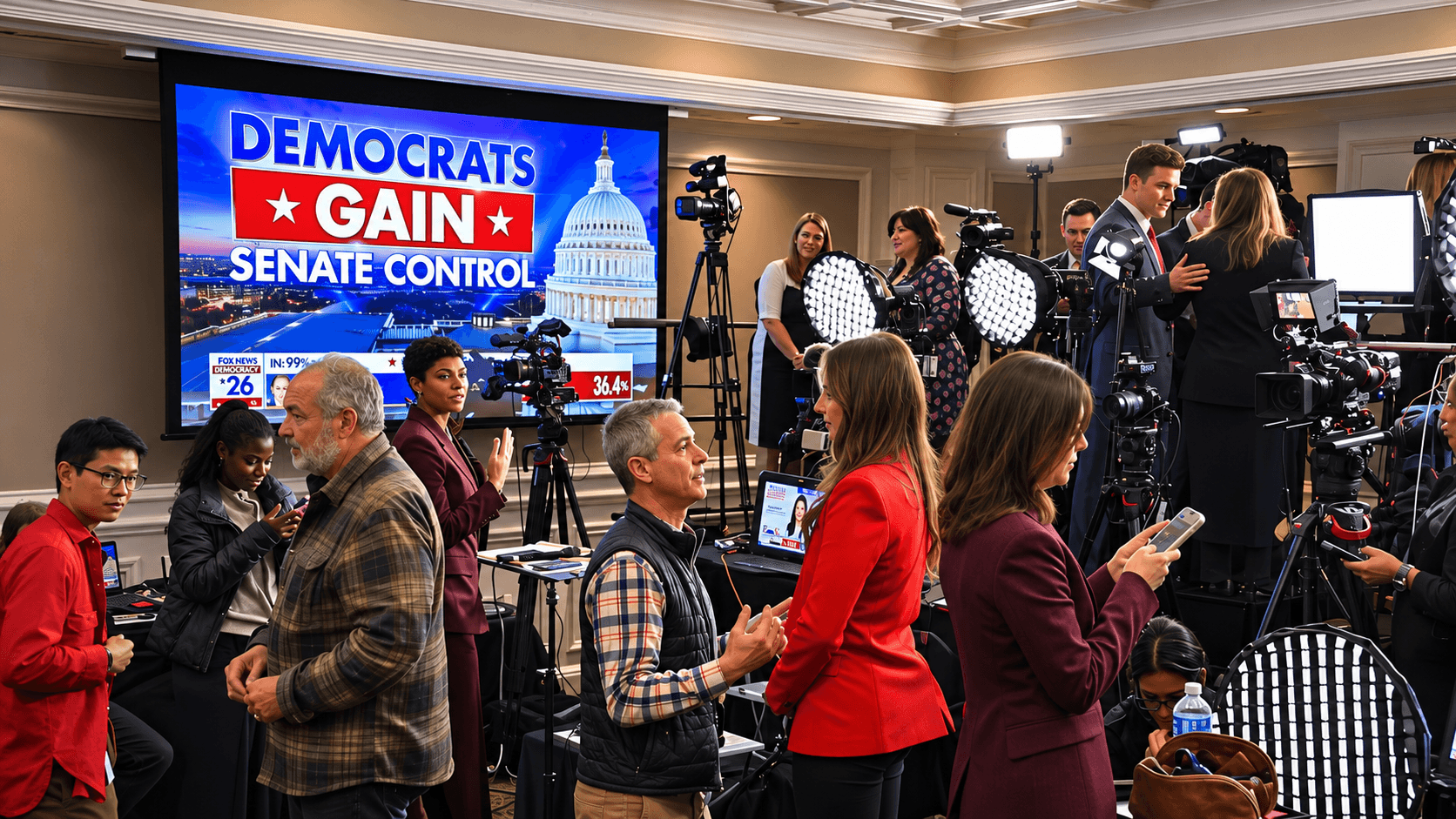
Republicans suffered major setbacks in the November 3 midterm elections, with Democrats securing control of both chambers of Congress. The results have increased political pressure on the White House, particularly over the economic and military consequences of the Iran conflict.
According to reporting by the Associated Press, around 60% of voters viewed US military action against Iran as a mistake. Concerns about living costs and government corruption also played an important role in the election.
Trump now faces the difficult task of reassessing his approach without abandoning the administration's stated security objectives.
Vice President JD Vance has expressed optimism about the possibility of a negotiated settlement, while Trump has continued to warn that further military action remains an option if diplomatic efforts fail.
The administration's next moves could determine whether the conflict heads towards a limited agreement or enters another prolonged period of military escalation.
RISKS AND KEY ISSUES TO WATCH
Further US strikes: Additional American military action could trigger a stronger Iranian response.
Iranian retaliation: US military installations, regional allies and strategic infrastructure could face increased threats.
Strait of Hormuz disruption: Restrictions or attacks on commercial shipping could affect global energy supplies.
Gulf security: Saudi Arabia, the UAE and other regional countries may face growing pressure to strengthen their defences.
Proxy-group involvement: Houthi forces and Iran-aligned militias could extend the conflict into the Red Sea and neighbouring countries.
Diplomatic breakdown: A failure to reach an agreement could close an important opportunity to reduce tensions.
Global economic impact: Higher oil prices and shipping costs could add to inflation and disrupt international trade.
WHAT TO WATCH NEXT
Qatar-led mediation: Whether Washington and Tehran accept the latest proposals for reducing tensions.
US military decisions: Whether Trump authorises further strikes or continues with limited defensive operations.
Iran's response: Any confirmed retaliation or changes in the country's military deployments.
Shipping developments: Whether commercial vessels can safely return to normal operations through the Strait of Hormuz.
Gulf diplomatic efforts: Whether regional governments can prevent the conflict from spreading.
Global oil prices: How energy markets react to further military developments and progress in negotiations.
FACT CHECK METER
Editorial confidence: 95%
Strongly supported — based on recent international reporting.
Confirmed details
US forces carried out limited strikes on Iranian targets near the Strait of Hormuz on November 2.
American officials described the operation as defensive.
Iran publicly maintained its right to respond.
Qatar-led diplomatic efforts have continued despite the military escalation.
Maritime security and regional energy supplies remain major concerns.
Important distinctions
Claims about captured US drones and burning vessels were attributed to Iranian authorities and had not been independently verified in the cited reporting.
The latest American strikes were described as limited operations, not confirmation of a full-scale renewed bombing campaign.
Diplomatic discussions are continuing, but no final agreement has been confirmed.
AWX VERDICT
The US-Iran military confrontation is supported by reporting from international news organisations, including the Associated Press, Reuters and CBS News. However, the extent of any further escalation remains uncertain.
While military tensions are rising, diplomatic negotiations continue to offer a possible route towards de-escalation. The situation remains fluid, and claims from the parties involved should be treated carefully until independently verified.
The 95% figure represents AWX's editorial confidence in the factual reporting presented in this article. It is not a statistical probability or an official rating.
THE AWX BOTTOM LINE
The US-Iran confrontation has entered another dangerous phase. Fresh American strikes, warnings from Tehran and growing uncertainty around the Strait of Hormuz have raised fears of a wider Middle Eastern conflict.
The consequences could extend well beyond the two countries. Gulf security, international shipping, global energy supplies and economic stability are all at risk if the fighting intensifies.
For the Trump administration, the challenge is to maintain pressure on Iran without triggering a wider regional war. Tehran, meanwhile, faces the task of defending its position while seeking stronger guarantees in any potential agreement.
The coming days could prove decisive. Whether Washington and Tehran can find common ground through diplomacy or move towards another round of military confrontation will have significant implications for the entire region.
ATTLAS NEWS | AWX WORLD NEWS
Real Stories. Lasting Impact.


Comments
No comments yet.