

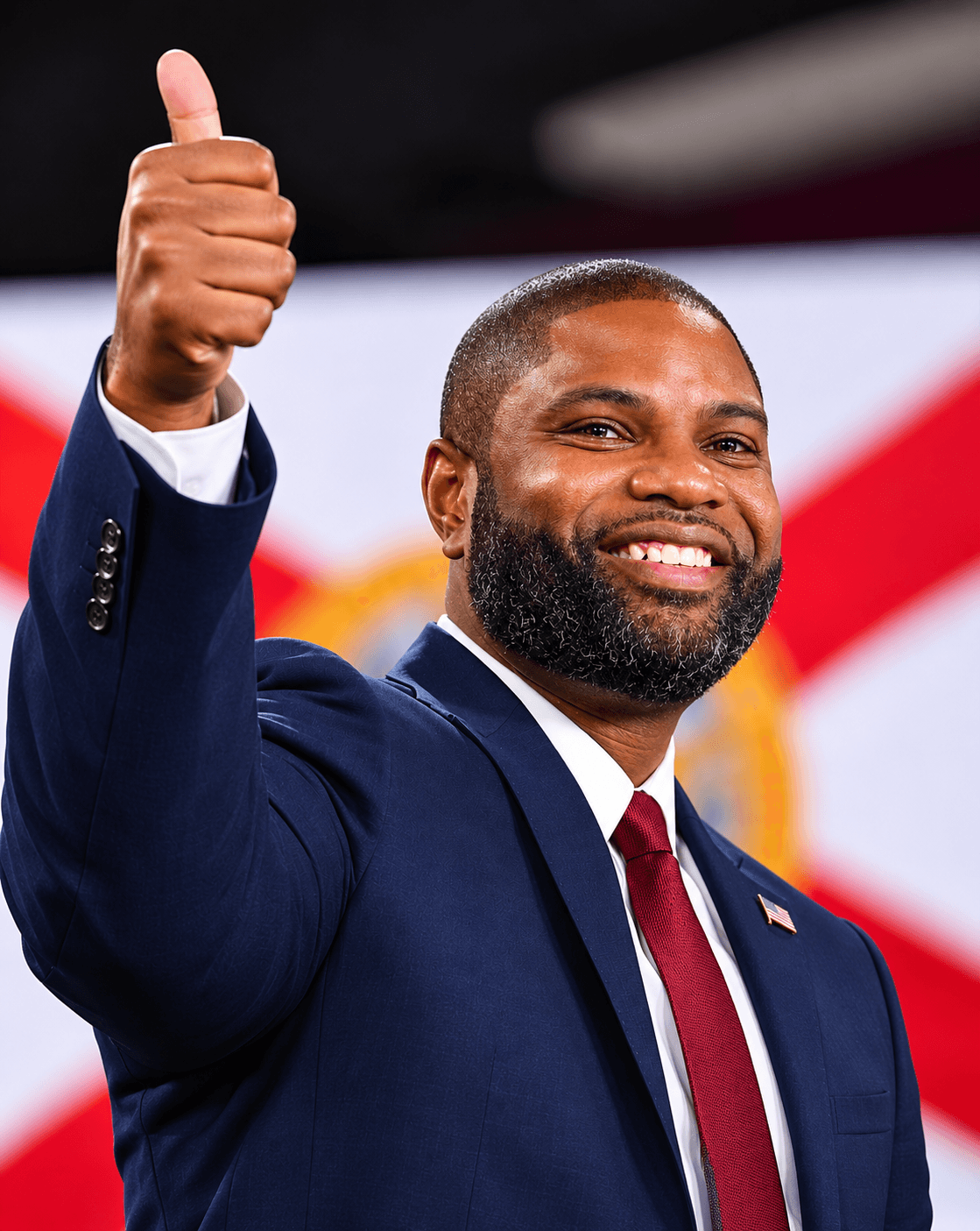
Florida has witnessed a historic political moment in the 2026 US midterm elections. Republican Congressman Byron Donalds has defeated Democratic challenger David Jolly to win the state's governorship, becoming Florida's first Black governor and the first Black Republican elected to a governorship in American history.
The victory marks a significant milestone for Donalds and a new chapter in Florida politics. He will take over from outgoing Republican Governor Ron DeSantis, whose administration has pushed the state in a more conservative direction and strengthened the Republican Party's influence.
According to election-night results, Donalds secured approximately 50.1% of the vote, compared with 48.7% for Jolly. The close contest proved more competitive than many Republicans had expected, testing the party's strength in a state that has increasingly leaned Republican in recent elections. Jolly conceded the race, while Donalds thanked President Donald Trump for his support during his victory speech.
A HISTORIC FIRST FOR FLORIDA AND THE REPUBLICAN PARTY
Donalds' victory breaks an important racial barrier in Florida's political history. While Black Americans have previously served as governors in the United States, no Black Republican had ever been elected to lead a state before this result.
His win adds to the historic milestones of the 2026 midterm elections and highlights the growing visibility of Black conservative leaders within the Republican Party. Donalds has become one of the party's most prominent Black political figures, and his election is likely to attract national attention.
For Florida Republicans, the result also means retaining control of the governor's office and continuing much of the political direction established during DeSantis' tenure.
Beyond party politics, however, Donalds now faces major decisions on the state's economy, education system, immigration policies, public safety and future development. How he handles these issues will shape his administration's early reputation.
FROM CONGRESSMAN TO GOVERNOR
Before entering the governor's race, Donalds represented Florida in the US House of Representatives, where he established himself as a rising figure in Republican politics.
A strong supporter of Trump, Donalds received the president's endorsement during the campaign and emerged as the party's preferred candidate to succeed DeSantis.
His political rise reflects the influence of Trump's conservative movement in Florida. Throughout the campaign, Donalds positioned himself as a supporter of Republican priorities, promising to maintain the state's focus on economic growth, public safety and conservative governance.
His opponent, David Jolly, offered a different vision. A former Republican congressman who later left the party and joined the Democrats, Jolly presented himself as a more moderate alternative. His campaign focused on attracting independent voters and Republicans who were unhappy with the state's political direction.
Despite Jolly's efforts to make the contest competitive, Donalds managed to secure a narrow victory.
TRUMP'S ENDORSEMENT AND REPUBLICAN SUPPORT
Trump's endorsement played an important role in Donalds' campaign, helping strengthen his position among Republican voters and reinforcing his connection with the party's national leadership.
During his victory speech, Donalds thanked the president and described Florida as firmly Republican. His campaign also worked to broaden his appeal among Black voters while maintaining support from the party's conservative base.
The victory offers Republicans a positive result following Democratic gains in several other major races during the midterms. It also gives Trump an important political win in a state that has become central to his political influence.
Donalds' close relationship with the president could help strengthen cooperation between Florida and Washington, although it may also bring additional political scrutiny.
COST OF LIVING AND HOME INSURANCE SHAPE THE CONTEST
Economic pressures were among the biggest issues throughout the Florida campaign. Rising household expenses, expensive housing and increasing homeowners' insurance premiums remained major concerns for voters.
Home insurance has become particularly important in Florida, where frequent hurricanes and severe weather events have put pressure on the property insurance market. Many homeowners have struggled with higher premiums and concerns about finding affordable coverage.
Jolly made these concerns a central part of his campaign, arguing that Florida needed a different approach to economic and insurance policy. He also proposed that the state take on part of the windstorm risk associated with homeowners' insurance.
Donalds defended the Republican record and criticised Jolly's proposals, arguing that his approach offered a stronger path forward.
The narrow election result suggests that affordability and insurance costs remain significant challenges for Florida Republicans, even as Donalds secured the governor's office.
DATA CENTRES EMERGE AS AN UNEXPECTED ELECTION ISSUE
The rapid growth of large data centres, particularly those supporting artificial intelligence, became another unexpected issue in the governor's race.
Jolly proposed a one-year pause on major data centre developments, arguing that communities needed more time to understand the potential impact on electricity supplies, water resources and local infrastructure.
Donalds opposed a broad development freeze. Instead, he supported a regulatory approach requiring technology companies to cover the additional energy costs associated with their facilities. He also argued that local governments should retain authority over development decisions.
The debate attracted attention from voters concerned about the growing influence of major technology companies and the pressure that large projects could place on local communities.
It also created an unusual challenge for Donalds, whose campaign had received support from interests connected to the technology sector.
Despite the disagreement, he maintained enough voter support to win the election.
A REPUBLICAN STATE ENTERS A NEW CHAPTER
Florida's political landscape has changed considerably over the past several election cycles. Once considered one of the country's most competitive battleground states, it has moved increasingly toward the Republican Party, particularly during DeSantis' time in office.
Republicans benefited from a voter-registration advantage and a strong campaign organisation, both of which helped Donalds withstand Jolly's challenge.
For Democrats, the close result offers some encouragement, although the party still faces a difficult path in a state where Republicans have built a considerable electoral advantage.
Jolly's campaign showed that issues such as insurance costs, housing affordability and development can still create opportunities for Democrats, even in an increasingly Republican state.
Donalds now has the task of turning his campaign promises into practical policies while keeping together the coalition that delivered his historic victory.
RISKS AND KEY ISSUES TO WATCH
Homeowners' insurance: Addressing rising premiums and improving stability in Florida's insurance market will be an immediate challenge.
Cost of living: Housing, energy and everyday expenses will remain important measures of the new administration's performance.
Data centre expansion: Florida must balance technology investment with concerns about electricity demand, water consumption and local infrastructure.
Political continuity: Donalds will need to decide how closely he follows DeSantis' policies and where he wants to introduce changes.
Racial representation: His election represents a historic breakthrough, bringing greater attention to political representation and inclusion.
Relationship with Washington: His close ties with Trump could improve coordination with the federal government but may also connect his administration more closely to national political controversies.
WHAT TO WATCH NEXT
Transition from DeSantis: The formation of Donalds' administration and the selection of key officials.
First policy priorities: His initial decisions on insurance, education, affordability and public safety.
Insurance reforms: Whether the incoming administration can deliver meaningful financial relief to homeowners.
Technology development: How Florida handles new data centre projects and the infrastructure required to support them.
Relationship with Washington: How Donalds works with the Trump administration on federal funding and state priorities.
Republican political strategy: Whether his victory further strengthens the party's position in Florida ahead of the 2028 presidential election.
FLORIDA GOVERNOR ELECTION — RESULTS
Florida Governor, 2026
General election | 3 November | Statewide
99.0% of expected votes counted
Byron Donalds — Winner (called by AP)
Party: Republican
Vote share: 50.0%
Votes: 4,132,355
David Jolly
Party: Democratic
Vote share: 48.7%
Votes: 4,024,669
Source: Associated Press
Updated: 5 November 2026, 02:15
FACT CHECK METER
Editorial confidence: 98%
Strongly supported — reported election result.
Confirmed details
Byron Donalds defeated David Jolly in Florida's 2026 gubernatorial election.
Donalds became Florida's first Black governor.
He became the first Black Republican elected governor in US history.
Donalds is a Republican congressman and supporter of Donald Trump.
He is set to succeed Ron DeSantis.
Important distinctions
Election-night figures showed a close contest, with Donalds leading by approximately 50.1% to 48.7%.
The reported figures represent election returns and should not be confused with final certified results.
The election maintained Republican control of Florida's governorship rather than changing the state's governing party.
AWX VERDICT
Donalds' victory represents both a historic breakthrough in political representation and an important win for the Republican Party. His election gives Florida its first Black governor while strengthening the party's hold on the state's top political office.
However, the real test begins now. Rising insurance costs, economic pressures and the expansion of technology infrastructure will demand practical solutions. How effectively Donalds addresses these challenges will determine whether his historic election develops into a successful governorship.
The 98% figure reflects AWX's editorial confidence in the article's factual reporting. It is not a statistical probability or an official rating.
THE AWX BOTTOM LINE
Byron Donalds' victory marks a historic moment for Florida and the Republican Party. Becoming the state's first Black governor and the first Black Republican elected governor in American history gives the result significance far beyond Florida.
But making history is only the beginning. Donalds will face difficult decisions on homeowners' insurance, the cost of living, technology development and the state's economic future. His ability to turn campaign promises into meaningful results will ultimately define his time in office.
ATTLAS NEWS | AWX WORLD NEWS
Real Stories. Lasting Impact.
Comments
No comments yet.