

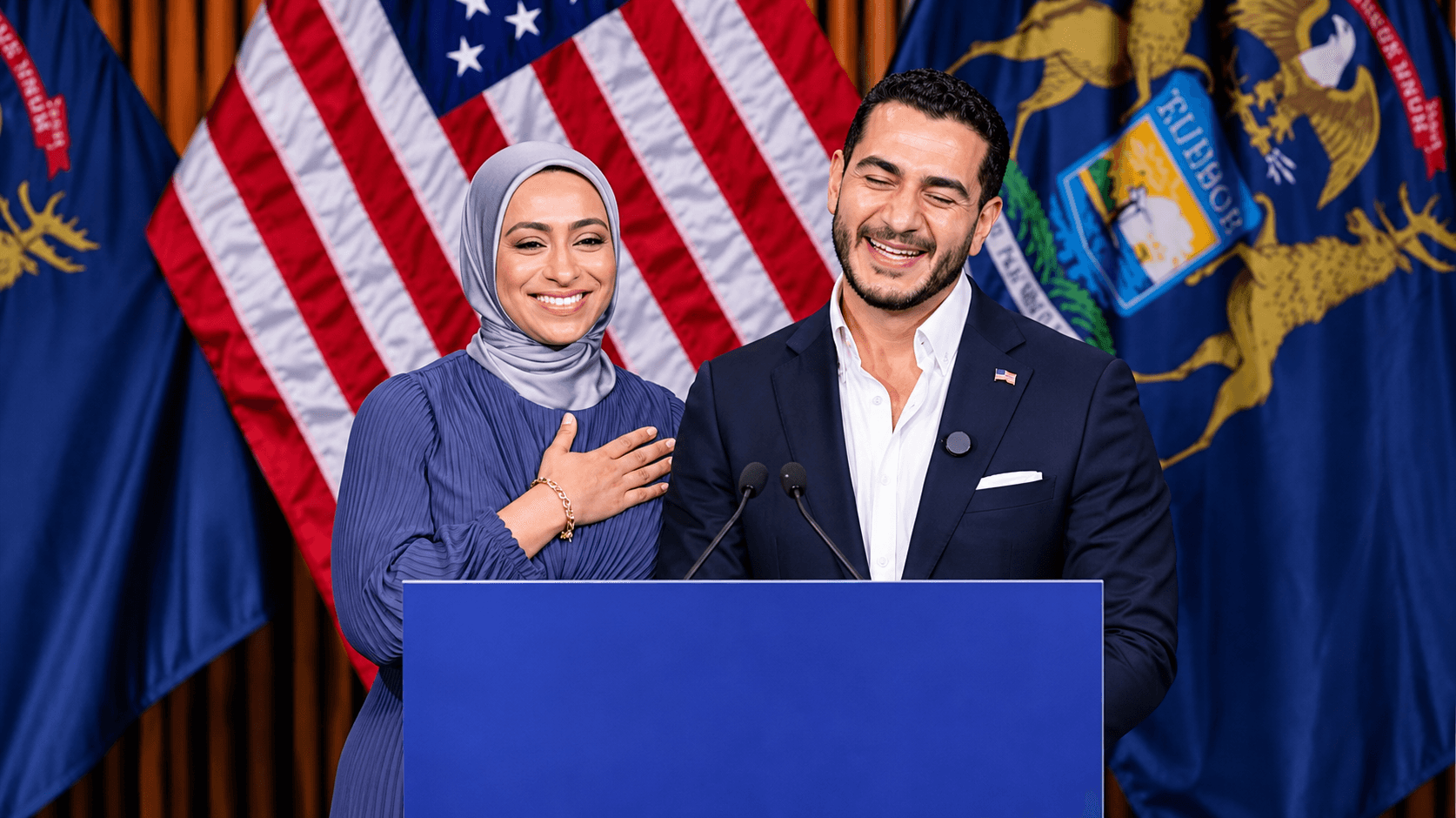
The 2026 US midterm elections have produced a landmark result for American politics. Democrat Abdul El-Sayed has won Michigan's open Senate seat, defeating former Republican Congressman Mike Rogers and making history as the first Muslim American elected to the US Senate.
The Associated Press and other major news organisations projected El-Sayed as the winner on November 4. His victory keeps the seat in Democratic hands following Senator Gary Peters' retirement and adds to the party's gains in its effort to regain control of the Senate.
At 42, El-Sayed brings a background in public health and local government to national politics. His campaign centred on issues affecting everyday Americans, including rising living costs, access to affordable healthcare and the growing influence of corporate money in politics.
The result is significant beyond Michigan. It breaks a long-standing barrier in American political representation and marks a major step forward for Muslim Americans seeking a greater presence in national government.
A HISTORIC FIRST FOR MUSLIM AMERICANS
El-Sayed's election represents a major milestone for Muslim Americans in US politics. Muslim candidates have previously won seats in the House of Representatives and held other elected positions, but no Muslim American had ever been elected to the Senate.
During his victory speech in Detroit, El-Sayed thanked voters and campaign supporters from across Michigan, highlighting the diverse communities that helped him secure the win. He presented the result as a collective achievement, built on support that extended beyond major cities into smaller towns and communities.
His religious identity had also become a prominent issue throughout the campaign. Republican opponents and conservative commentators repeatedly questioned his loyalty and attempted to associate him with Islamic extremism. El-Sayed strongly rejected those claims, stating that he had never been a member of the Muslim Brotherhood.
The controversy turned his campaign into a wider national discussion about religious freedom, political inclusion and the challenges faced by Muslim candidates in American public life.
DEFEATING MIKE ROGERS IN A HIGH-STAKES CONTEST
Michigan's Senate race was among the most closely watched contests of the 2026 midterms. El-Sayed faced Mike Rogers, a former Republican congressman and FBI agent who received strong support from President Donald Trump and senior Republican figures.
Rogers attempted to portray El-Sayed as too progressive for a politically divided state. He raised concerns about his opponent's positions on Israel, Iran and national security, hoping to appeal to voters uncomfortable with his progressive agenda.
El-Sayed took a different approach, portraying Rogers as closely aligned with Trump and arguing that his Republican opponent would put the administration's priorities ahead of the needs of Michigan families.
Rogers had also lost a Senate race in 2024. His latest defeat is another setback in his attempt to return to the US Senate.
HEALTHCARE AND AFFORDABILITY DRIVE HIS CAMPAIGN
Healthcare was one of the central issues of El-Sayed's campaign. Drawing on his experience in public health, he made Medicare for All a major part of his platform, supporting a government-funded healthcare system designed to extend coverage to every American.
He argued that access to medical care should not depend on someone's income, employment or financial circumstances. His broader agenda also included stronger protections for working families and efforts to make everyday essentials more affordable.
Economic concerns played an equally important role. Rising prices, household expenses and worries about the impact of the Iran war on fuel costs shaped much of the election debate.
El-Sayed connected these pressures to what he described as the excessive influence of major corporations over government decisions. His message resonated with younger voters and those frustrated with the traditional political establishment.
ISRAEL AND FOREIGN POLICY REMAIN CONTENTIOUS ISSUES
El-Sayed's position on the Israel-Palestine conflict became one of the most debated aspects of his campaign. He opposed US military assistance to Israel and described its actions in Gaza as genocide, drawing criticism from Republican opponents and some Jewish voters.
His campaign also faced questions over remarks and political associations that critics said raised concerns about antisemitism. El-Sayed rejected those accusations and disagreed with an outside political advertisement that connected US military aid to Israel with rising grocery prices.
The controversy highlighted divisions within the Democratic Party, particularly between progressive activists and more moderate lawmakers.
Congresswoman Haley Stevens, whom El-Sayed defeated in the Democratic primary, eventually endorsed Rogers in the general election. Despite this lack of unity within parts of his own party, El-Sayed managed to build a winning coalition.
His victory is expected to give him a prominent platform in future Senate discussions about US policy in the Middle East.
A BREAKTHROUGH FOR THE DEMOCRATIC PARTY'S PROGRESSIVE WING
El-Sayed's win is also a significant achievement for the progressive wing of the Democratic Party. Before facing Rogers, he defeated establishment-backed candidate Haley Stevens in the Democratic primary, demonstrating the strength of his support among progressive voters.
His campaign attracted backing from prominent progressive figures and people looking for an alternative to traditional party leadership. His proposals on universal healthcare, economic fairness and limiting corporate influence reflected the movement's broader priorities.
However, winning an election and passing legislation are two different challenges. El-Sayed will need support from fellow senators to turn his campaign promises into federal policy.
His election comes as Democrats prepare to take control of both chambers of Congress in January 2027. A Democratic majority would give the party greater influence over legislation, committee investigations and presidential appointments.
MICHIGAN'S POLITICAL SIGNIFICANCE
Michigan continues to play a crucial role in American national politics. Its manufacturing base, major urban centres and diverse electorate make it one of the country's most closely watched battleground states.
El-Sayed's victory shows that a progressive candidate can compete successfully in a major statewide election, even when facing questions about electability and divisions within the party.
The result also underlines the importance of healthcare, household affordability and corporate influence in a state where working-class voters remain central to electoral outcomes.
For Republicans, losing the open seat represents a missed opportunity to strengthen their position in the Senate. For Democrats, retaining Michigan provides an important boost to their majority and gives the progressive movement another influential voice in Washington.
RISKS AND KEY ISSUES TO WATCH
Healthcare legislation: Whether El-Sayed can build enough support for Medicare for All and other major healthcare reforms.
Religious representation: How his election influences the visibility and participation of Muslim Americans in national politics.
Middle East policy: His position on US military assistance to Israel and the Gaza conflict is likely to remain under scrutiny.
Party unity: His relationship with moderate Democrats could affect his ability to advance progressive proposals.
Corporate influence: Whether he can turn his promises on campaign finance and lobbying into meaningful legislative action.
Michigan priorities: Voters will expect him to focus on jobs, manufacturing, healthcare costs and household affordability.
WHAT TO WATCH NEXT
Senate swearing-in: El-Sayed is expected to take office when the new Congress convenes in January 2027.
First legislative priorities: Whether he introduces proposals addressing healthcare, living costs and campaign finance reform.
Committee assignments: Which Senate committees he joins and how those positions shape his influence.
Middle East debates: How actively he participates in discussions on US military assistance and diplomatic policy.
Democratic leadership: How progressive lawmakers influence the party's agenda under its new Senate majority.
National political profile: Whether his historic victory establishes him as one of the Democratic Party's leading voices ahead of the 2028 election cycle.
FACT CHECK METER
Editorial confidence: 99%
Strongly supported — AP, Reuters and CBS reported the result.
Confirmed details
Abdul El-Sayed defeated Republican Mike Rogers in Michigan's 2026 US Senate race.
He became the first Muslim American elected to the US Senate.
He previously worked in public health and served as Wayne County's health director.
His campaign supported Medicare for All and reducing corporate influence in politics.
His victory retained Michigan's Senate seat for the Democrats.
Important distinctions
El-Sayed is the first Muslim American elected to the US Senate, not the first Muslim to hold elected office in the United States.
Major news organisations projected him as the winner; official certification is a separate process.
His campaign proposals are policy commitments, not enacted federal laws.
AWX VERDICT
Abdul El-Sayed's victory marks a historic moment for American political representation and gives progressive Democrats an important reason to celebrate. His election breaks a significant barrier for Muslim Americans while strengthening the party's position in the Senate.
However, the real test begins after the celebrations. His ability to build support for healthcare reform, economic fairness and changes to campaign financing will determine how much of his campaign agenda becomes reality. His views on the Middle East are also likely to keep him at the centre of some of Washington's most difficult debates.
THE AWX BOTTOM LINE
Abdul El-Sayed's election is a turning point for Muslim representation in American politics. By becoming the first Muslim American elected to the US Senate, he has achieved something that goes well beyond a personal political victory.
His campaign also brought important issues such as affordable healthcare, economic inequality, corporate influence and US foreign policy into the spotlight.
Now, the focus shifts to Washington. Michigan voters have given El-Sayed the opportunity to make history. His next challenge is to turn that opportunity into meaningful results for the people he will represent.
ATTLAS NEWS | AWX WORLD NEWS
Real Stories. Lasting Impact.
Comments
No comments yet.