

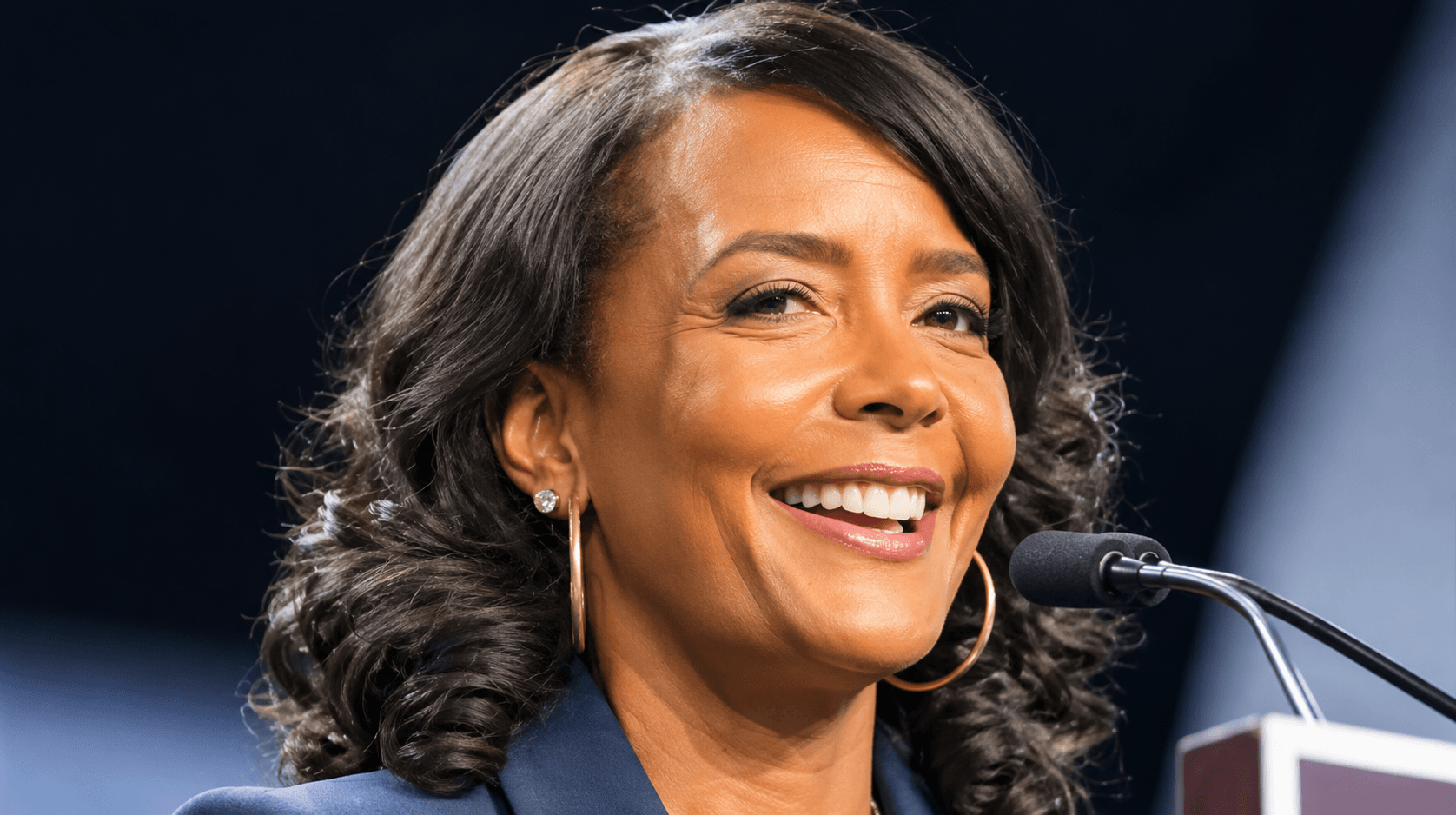
Georgia has witnessed a historic political shift in the 2026 US midterm elections. Keisha Lance Bottoms, the former mayor of Atlanta, has defeated Republican businessman Rick Jackson to become the first Black woman elected governor of a US state. She will also make history as Georgia's first female and first Black governor.
The result marks a significant turning point for one of the country's most closely watched political battlegrounds. Republicans have held Georgia's governor's office since 2002, but Bottoms' victory brings that long-running control to an end. She will succeed outgoing Governor Brian Kemp, who is completing his second term.
The Associated Press called the race for Bottoms, while Jackson conceded defeat. Her win represents both a remarkable political comeback and a major milestone for Black women in American politics, following several high-profile but unsuccessful gubernatorial campaigns over the years.
A HISTORIC BREAKTHROUGH FOR GEORGIA
Bottoms' victory opens a new chapter in Georgia's political history. Before this election, the state had never chosen a woman or a Black candidate to serve as governor.
Her election also places her among a relatively small group of Black Americans who have won gubernatorial races. Previous winners include L. Douglas Wilder in Virginia, Deval Patrick in Massachusetts and Wes Moore in Maryland.
For many Georgians, the result means more than a change in political leadership. It represents a breakthrough after generations of racial and gender barriers in American politics.
Bottoms' victory also follows the unsuccessful campaigns of Stacey Abrams, who ran for governor in 2018 and 2022. Those campaigns helped strengthen Democratic organising across Georgia and encouraged greater voter participation, contributing to the party's growing competitiveness in the state.
BOTTOMS DEFEATS A WELL-FUNDED REPUBLICAN CHALLENGER
One of the most striking aspects of the campaign was the financial gap between the two candidates. Republican nominee Rick Jackson, a billionaire healthcare executive, reportedly spent more than $200 million of his own money on the race.
Jackson campaigned as a business-minded outsider, promising lower taxes, tougher public safety measures and reduced government regulation. He also questioned Bottoms' record as Atlanta mayor, arguing that her experience in city government did not prepare her to lead an entire state.
Bottoms took a different approach, highlighting her experience in public service and focusing on the everyday concerns of Georgia families. She made affordability, healthcare and access to public services central themes of her campaign, while also linking Jackson's political positions to President Donald Trump's agenda.
Despite Jackson's enormous financial advantage, Bottoms managed to secure the win. She also received support from prominent Democratic figures, including former presidents Joe Biden and Barack Obama, and campaigned alongside Senator Jon Ossoff.
FROM ATLANTA CITY HALL TO THE GOVERNOR'S OFFICE
Bottoms served as Atlanta's mayor from 2018 to 2022, a period marked by several major challenges. Her administration dealt with the COVID-19 pandemic, protests following the killing of George Floyd, a ransomware attack on city government and growing concerns about violent crime.
Her time in office brought national recognition, but it also attracted criticism. Republicans frequently raised questions about crime in Atlanta and her decision not to seek a second mayoral term during the gubernatorial campaign.
After leaving City Hall, Bottoms joined the Biden administration as a senior adviser. She later became director of the White House Office of Public Engagement, gaining valuable national experience and building stronger relationships within the Democratic Party.
Her election as governor marks a significant return to elected office and completes a remarkable political journey from leading Atlanta to taking charge of the entire state.
AFFORDABILITY AND HEALTHCARE TOP HER POLICY AGENDA
Throughout the campaign, Bottoms placed the rising cost of living at the centre of her message. She argued that Georgia families need practical relief from increasing household expenses and outlined several proposals aimed at making everyday life more affordable.
Her plans include giving local governments the option to reduce or eliminate taxes on groceries, expanding Medicaid and improving access to affordable healthcare.
Education is another major priority. Bottoms has pledged to fully fund Georgia's pre-kindergarten programme and strengthen public schools. She has also proposed eliminating the state income tax for public school teachers.
Other commitments include raising the minimum wage to $15 an hour, increasing pay for public employees, repealing Georgia's six-week abortion ban and temporarily pausing new data centre construction while the state reviews its impact on local communities and infrastructure.
However, putting these proposals into action will not be straightforward. Several would require approval from state lawmakers, making cooperation with the legislature essential to delivering on her campaign promises.
A NEW POLITICAL CHALLENGE AT THE GEORGIA CAPITOL
Winning the governor's race does not mean Bottoms will have an easy path to implementing her agenda. Republicans continue to hold considerable influence in the Georgia General Assembly, particularly in the state Senate.
This political divide could make it difficult to move forward on issues such as Medicaid expansion, tax reform and other major policy changes. Her administration may face tough negotiations with Republican lawmakers once the new legislative session begins.
Bottoms has expressed an interest in working across party lines, particularly on healthcare and affordability. Still, disagreements over abortion rights, immigration, data centre development and executive authority could test her ability to build bipartisan support.
The transition from Kemp's administration will also be an important early step. Bottoms has spoken with the outgoing governor, who has offered assistance with the transfer of power.
GEORGIA'S ELECTION SENDS A NATIONAL POLITICAL MESSAGE
The impact of Georgia's election extends well beyond state politics. Over recent years, Georgia has emerged as one of America's most competitive battleground states, with changing voter demographics and growing metropolitan communities reshaping its political landscape.
Bottoms' victory adds to the Democratic gains recorded in the 2026 midterms and demonstrates the party's ability to compete in states where Republicans have traditionally maintained a strong position.
Her election also comes alongside other historic victories by Black candidates across the country. Together, these results represent an important moment for political representation in the United States.
For Republicans, losing the governorship after more than two decades is a significant setback. For Democrats, it creates an opportunity to influence policy in a key Southern state and build on their growing support across the region.
RISKS AND KEY ISSUES TO WATCH
Republican opposition: The GOP's continued influence in the state legislature could delay or block major parts of Bottoms' policy agenda.
Healthcare expansion: Expanding Medicaid will require legislative cooperation and a clear plan for long-term funding.
Cost-of-living relief: Voters will expect tangible progress on grocery prices, housing affordability and household expenses.
Public safety: Bottoms' record as Atlanta mayor is likely to remain under scrutiny as she develops her statewide approach to policing and crime.
Data centre development: Her proposed construction pause could create disagreements between local communities, technology companies and state economic interests.
Relations with Washington: Differences with the Trump administration, particularly over immigration enforcement, could become an early challenge for her government.
WHAT TO WATCH NEXT
Transfer of power: The transition from Governor Brian Kemp's administration and the appointment of Bottoms' incoming leadership team.
First state budget: Whether her commitments on education, healthcare and affordability receive funding in the first proposed budget.
Medicaid negotiations: Whether she can build enough support to expand healthcare coverage across Georgia.
Legislative cooperation: How Republican lawmakers respond to her proposals during the upcoming legislative session.
Federal-state relations: How her administration handles disagreements with Washington over immigration and other policy matters.
First 100 days: The executive decisions and early policy announcements that will set the tone for her governorship.
GEORGIA GOVERNOR ELECTION — RESULTS
Georgia Governor, 2026
General Election | 3 November 2026 | Statewide
99.0% of expected votes counted
Keisha Lance Bottoms — WINNER (AP projection)
Party: Democratic
Vote share: 54.3%
Votes: 2,271,388
Rick Jackson
Party: Republican
Vote share: 45.7%
Votes: 1,908,837
Source: Associated Press
Last updated: 5 November 2026, 03:16
FACT CHECK METER
Editorial confidence: 98%
Strongly supported — based on major news organisations' election projections and reporting.
CONFIRMED DETAILS
Keisha Lance Bottoms defeated Republican candidate Rick Jackson.
She became the first Black woman elected governor in US history.
She will also be Georgia's first woman and first Black governor.
She will succeed outgoing Republican Governor Brian Kemp.
IMPORTANT DISTINCTIONS
Major news organisations projected Bottoms as the winner. Official certification is a separate process.
Her campaign proposals will require legislative approval and cooperation in several areas.
Republicans continue to hold significant influence in Georgia's legislature.
AWX VERDICT
Keisha Lance Bottoms' victory is a historic moment for Georgia and a major political setback for Republicans after more than two decades in power. But the significance of her win will ultimately depend on what she delivers in office.
With Republicans retaining considerable influence in the state legislature, Bottoms will need to build political support to advance her priorities. Healthcare, education, affordability and public safety will be the first major tests of her leadership.
The percentage represents AWX's editorial confidence in the factual reporting of this article. It is not a statistical probability or an official rating.
THE AWX BOTTOM LINE
Keisha Lance Bottoms has made history in Georgia, breaking a major political barrier and ending more than two decades of Republican control of the governor's office. Her victory gives Democrats a new opportunity to shape policy in one of the most important political states in the American South.
But the real challenge begins now. Turning promises on healthcare, education, affordability and public safety into meaningful results will determine whether this historic election becomes the beginning of lasting political change in Georgia.
ATTLAS NEWS | AWX WORLD NEWS
Real Stories. Lasting Impact.

Comments
No comments yet.