

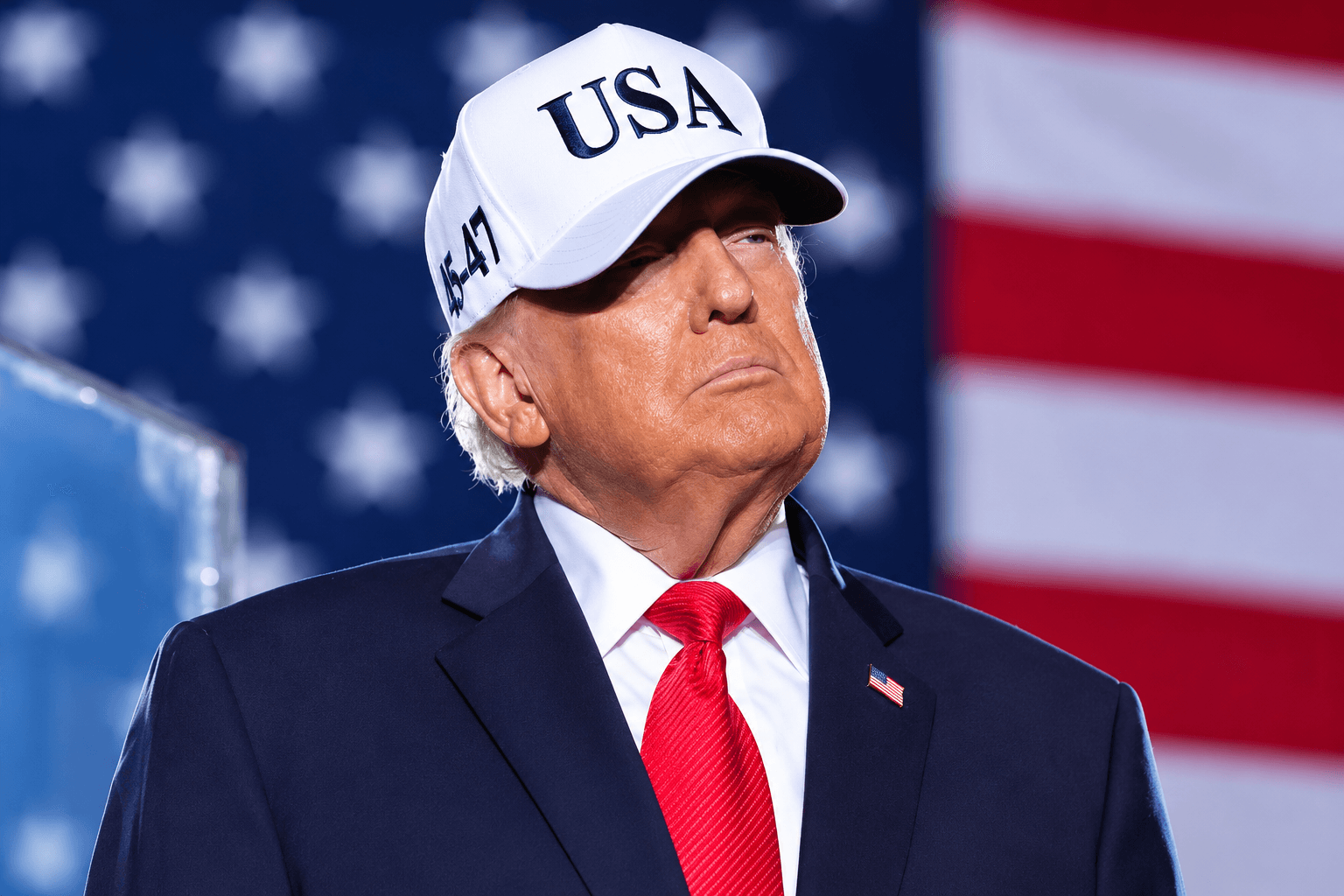
US President Donald Trump is facing growing political pressure after Republicans suffered major setbacks in the 2026 midterm elections, with Democrats securing control of both the House of Representatives and the Senate. However, Trump has been quick to distance himself from the outcome, arguing that the losses were largely the result of underperforming Republican candidates rather than dissatisfaction with his presidency.
In interviews following Election Day, Trump admitted he had expected Republicans to do better. Still, he rejected the suggestion that voters had delivered a verdict on his leadership or his administration's performance.
Speaking to Fox News, Trump said, "I don't view it as a hit on me." He also suggested that the outcome might have been different if he had personally appeared on the ballot.
His response has sparked a wider debate within the Republican Party over the president's influence on the election, the candidates he supported and the policies that may have contributed to the party's disappointing performance.
TRUMP SHIFTS RESPONSIBILITY TO REPUBLICAN CANDIDATES
Trump has placed much of the blame for the Republican defeats on the candidates who failed to secure victories. He argued that several nominees struggled to energise voters, particularly supporters of the Make America Great Again (MAGA) movement, and failed to turn his political backing into actual votes.
During the campaign, Trump personally appeared at rallies across several states, urging Republican supporters to turn out and support his preferred candidates. He repeatedly framed the midterms as a test of his own political movement, encouraging voters to treat the contests as though his name were on the ballot.
Following the losses, however, Trump questioned whether some candidates had done enough to motivate the Republican base.
He also took aim at Texas Governor Greg Abbott after Democrat Gina Hinojosa defeated him, accusing Abbott of moving away from core Republican principles.
The comments have raised questions about Trump's influence over candidate selection. In several races, his endorsements played a major role in determining the Republican nominees, making the election results a test of both the candidates and the president's political standing.
IRAN WAR AND RISING FUEL PRICES ADD TO REPUBLICAN PRESSURE
Despite rejecting personal responsibility for the election outcome, Trump acknowledged that the war with Iran and its impact on fuel prices had created difficulties for Republican candidates.
The conflict has pushed energy costs higher, adding to financial pressure on households already struggling with inflation and the rising cost of everyday essentials.
Trump described the increase in fuel prices as a temporary challenge, arguing that the military operation would deliver longer-term benefits. He also defended his decision to take military action against Iran, maintaining that it was necessary and that he would make the same decision again.
However, the economic consequences of the conflict have become a growing concern for Republicans. Some party members believe higher fuel prices and uncertainty surrounding the war played a significant role in voter dissatisfaction.
Trump's continued defence of the operation could make it harder for Republicans to distance themselves from the administration's foreign policy as they assess what went wrong in the midterms.
TRUMP TAKES AIM AT FOX NEWS AND MEDIA COVERAGE
Trump also criticised Fox News, accusing the network of giving too much attention to Democratic voices and contributing to the Republican Party's poor election performance.
His remarks came even as he later appeared in an interview with the network to discuss the results and defend his political record.
The criticism reflects Trump's continued frustration with media coverage when political outcomes do not match his expectations.
However, the election has also raised questions about whether Republican campaign messages adequately addressed voters' biggest concerns, particularly the economy, energy prices and the administration's priorities.
For Republicans, the challenge now is to understand why their message failed to connect with enough voters rather than simply blaming media coverage or individual candidates.
DEMOCRATS TAKE CONTROL AS TRUMP WARNS OF VETOES
Democrats' victories have significantly changed the political landscape for the remainder of Trump's presidency. With the opposition party set to control both chambers of Congress, the administration is likely to face stronger resistance to its legislative plans.
Trump has indicated that he is open to working with Democrats on certain issues and congratulated the party on its election performance. At the same time, he made clear that he would use his presidential veto power against legislation he considers unacceptable.
The comments point to a complicated relationship between the White House and the incoming Congress. Some cooperation may be possible, but disagreements over government spending, immigration, healthcare, trade and foreign policy could lead to repeated political confrontations.
The new balance of power will take effect when the incoming Congress convenes in January 2027. Until then, Republicans will have to confront difficult questions about their leadership, campaign strategy and future direction.
REPUBLICANS FACE AN INTERNAL BATTLE OVER THE PARTY'S FUTURE
The election losses have opened a wider debate within the Republican Party about what needs to change. Some strategists and party figures are calling for a reassessment of the administration's priorities, campaign messaging and approach to issues that may have alienated voters.
Vice President JD Vance has also begun distancing himself from the Iran war as Republican figures look towards the party's future beyond Trump's presidency.
These developments suggest that the midterm results could accelerate discussions about who will lead the Republican Party into the next presidential election cycle.
The losses are particularly significant because Trump was heavily involved in promoting candidates and encouraging voter turnout. By making the midterms a test of his political movement, he has made it difficult for Republicans to separate the results from his own leadership.
For now, Trump appears more focused on defending his record than making major changes in response to the defeats. Whether Republican lawmakers and strategists agree with that approach remains to be seen.
RISKS AND KEY ISSUES TO WATCH
Republican leadership tensions: The defeats could deepen disagreements over the party's direction and its relationship with Trump.
Economic dissatisfaction: Rising fuel prices and household expenses may continue to affect Republican support if financial pressures persist.
Iran war fallout: Further military and economic consequences could increase pressure on the administration.
Congressional gridlock: Democratic control of both chambers could complicate Trump's legislative agenda and lead to repeated veto confrontations.
Candidate selection: Republicans may reconsider how much influence Trump's endorsements should have in future elections.
The 2028 succession debate: The election could intensify competition among Republican figures seeking to shape the party's future.
WHAT TO WATCH NEXT
White House response: Whether Trump makes changes to his advisers, campaign strategy or administration priorities.
Republican leadership: How congressional Republicans respond to losing both chambers and whether new leadership challenges emerge.
Iran policy: Whether the administration changes its approach to the conflict amid growing concerns over energy costs.
Democratic agenda: Which legislative priorities Democrats pursue when the new Congress takes office.
Veto battles: Whether disagreements between the White House and Congress result in repeated legislative standoffs.
Republican succession: Whether JD Vance and other prominent Republicans begin positioning themselves more openly for the 2028 presidential race.
FACT CHECK METER
Editorial confidence: 98%
Strongly supported — based on reporting from multiple news organisations.
Confirmed details
Trump rejected the suggestion that Republican losses represented a personal political defeat.
He blamed candidate performance and criticised some Republican nominees.
He acknowledged that the Iran war and rising fuel prices had affected Republican election prospects.
Democrats secured control of both the House and Senate.
Trump expressed willingness to work with Democrats while warning that he would veto legislation he opposed.
Important distinctions
Trump acknowledged the political and economic impact of certain issues but did not accept personal responsibility for the overall result.
His criticism of Republican candidates does not establish that candidate selection alone caused the defeats.
The new congressional balance of power takes effect in January 2027.
AWX VERDICT
Trump's response to the Republican defeats highlights a growing challenge for the party: defending the president's leadership while coming to terms with voter dissatisfaction and an incoming Democratic-controlled Congress.
His decision to blame candidates, economic pressures and media coverage rather than accept responsibility could deepen divisions within the party. The debate over what went wrong is likely to influence Republican strategy and leadership discussions well beyond the 2026 midterms.
The percentage represents AWX editorial confidence in the article's factual reporting, not a statistical probability or official rating.
THE AWX BOTTOM LINE
Donald Trump's response to the Republican Party's midterm defeats shows little willingness to accept that the results may reflect dissatisfaction with his leadership. By pointing to candidate performance, rising fuel prices and media coverage, he has offered several explanations for the losses while rejecting the idea that his presidency was at the centre of the political backlash.
But the political consequences are becoming increasingly difficult to ignore. With Democrats preparing to take control of both chambers of Congress, Trump faces a more challenging final two years in office. Republicans, meanwhile, must decide whether to stand behind the current political strategy or rethink their approach before the next major electoral battle.
ATTLAS NEWS | AWX WORLD NEWS
Real Stories. Lasting Impact.
Comments
No comments yet.