

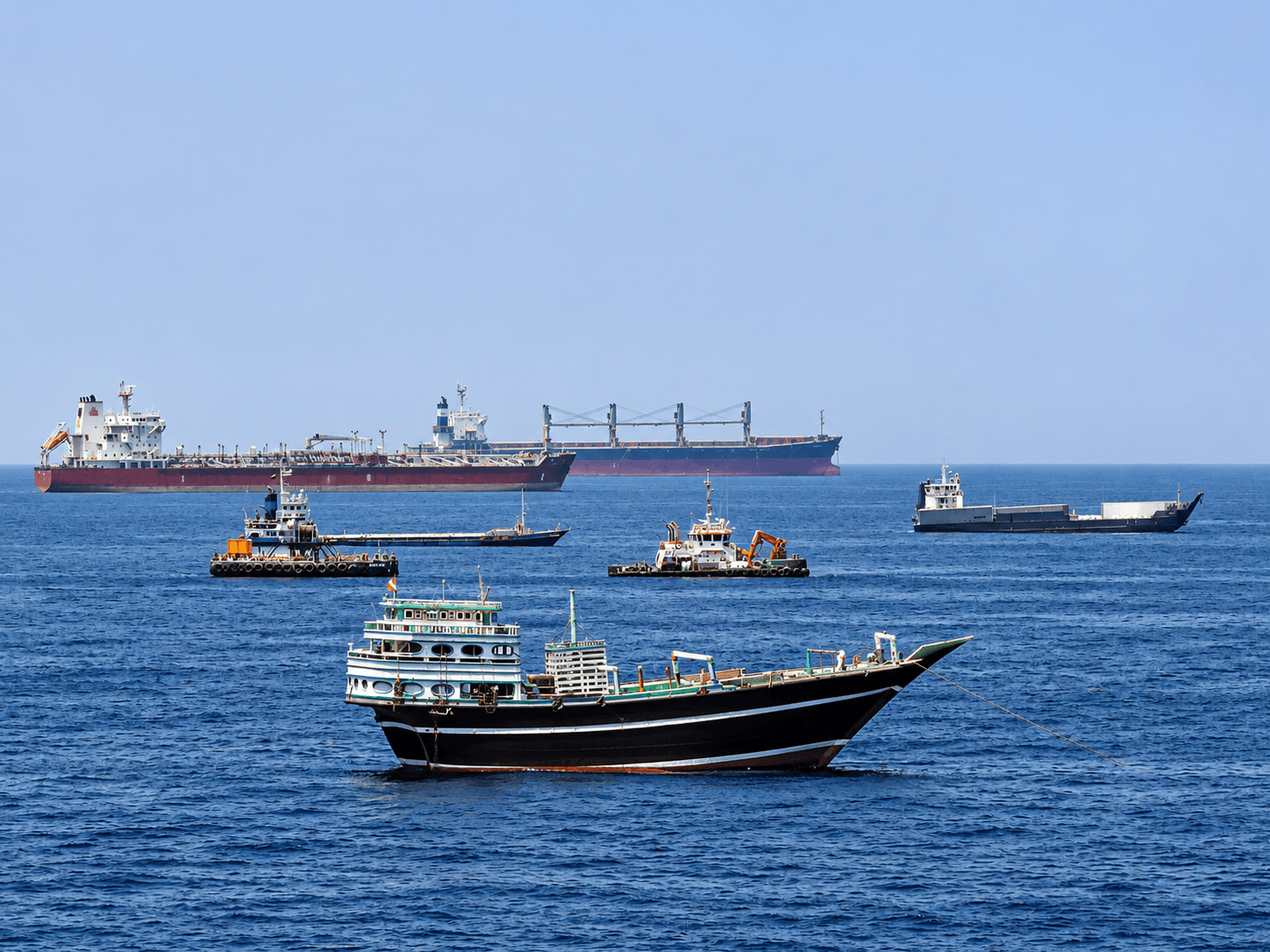
The Strait of Hormuz is once again at the centre of growing maritime security concerns. A series of incidents involving commercial vessels has raised fresh questions about the safety of ships travelling through this vital international shipping corridor.
The impact is already becoming visible. Shipping activity slowed considerably over the weekend, with maritime tracking data showing just five commodity vessels crossing the Strait on Saturday and no recorded crossings on Sunday. The previous weekend saw 31 transits, according to data from maritime analytics firm Kpler cited by Reuters.
The slowdown comes after several incidents involving tankers and other commercial vessels in the Persian Gulf, the Strait of Hormuz and the Gulf of Oman. Shipping companies, energy producers and governments are increasingly concerned that the escalating regional confrontation could cause further disruption to international trade.
Recent reports include an Iranian military claim that two tankers exploded after hitting mines in the Strait, a separate attack on a tanker near Saudi Arabia's coast and an earlier incident in which a vessel was reportedly damaged by limpet mines near Oman.
Although some details remain unverified, the growing number of incidents is adding to concerns across the global maritime industry.
TANKER ATTACKS RAISE FRESH SECURITY CONCERNS
The latest alarm came on November 1, when Iran's Islamic Revolutionary Guard Corps (IRGC) Navy claimed that two oil tankers had exploded after striking mines while travelling through what it described as an unauthorised route in the Strait of Hormuz.
The claim was carried by Iranian state media and reported by Reuters. However, independent confirmation of the alleged mine strikes remains unavailable, and limited details have emerged about the vessels involved.
The announcement came as restrictions on maritime movements through the Strait continued to affect commercial shipping.
In a separate incident late on November 1, the United Kingdom Maritime Trade Operations agency (UKMTO) reported that a tanker had been struck by two unidentified projectiles around 72 nautical miles east of Ras Al Khafji, Saudi Arabia.
The vessel's master reported the incident. All crew members were safe, and there was no reported environmental damage. The identity of the vessel and the origin of the projectiles had not been established in the available reports.
Together, these incidents suggest that the security threat extends beyond the narrow Strait itself. Commercial vessels operating across the wider Gulf are also facing growing uncertainty.
LIMPET-MINE ATTACK NEAR OMAN ADDS TO SHIPPING RISKS
An earlier incident on October 29 had already raised concerns about the safety of commercial tankers.
Reuters reported that a small boat attached two limpet mines to the hull of a tanker in the Strait of Hormuz. The explosion caused a fire in the vessel's engine room and temporarily left it unable to operate normally.
The vessel was identified as the Panama-flagged Louise 1. The incident took place around 25 nautical miles northeast of Khasab, Oman.
According to UKMTO, the fire was brought under control, the crew remained safe and no environmental damage was reported. The tanker subsequently continued towards its next port of call.
Maritime security sources told Reuters that limpet mines had been used in the attack, although responsibility was not immediately established.
The incident highlights a particularly difficult challenge for shipping operators. Small boats can approach commercial vessels in busy waterways, making attacks involving devices attached directly to a ship's hull difficult to prevent.
For tanker operators, the incident is another reason to strengthen surveillance, review sailing routes and tighten onboard security procedures.
SHIPPING TRAFFIC DROPS AS OPERATORS RETHINK THEIR ROUTES
The growing security risks are beginning to affect the movement of commercial vessels through the region.
Kpler data cited by Reuters recorded only five commodity vessel crossings on Saturday, followed by none on Sunday. By comparison, 31 vessels crossed during the previous weekend.
These figures are well below the more than 130 ships that reportedly passed through the Strait each day before the conflict began in February 2026.
There is one important limitation to the tracking data: some vessels may be switching off their Automatic Identification System (AIS) transponders, meaning their movements are not always captured.
Even so, the sharp decline in recorded crossings reflects the uncertainty facing shipping companies.
Operators must now weigh several risks before sending vessels through the region, including possible missile strikes, mines, unidentified projectiles, navigation interference and restrictions imposed by competing authorities.
Some ships have reportedly followed routes permitted by Iran, while others have changed their movements in response to security warnings.
For the maritime industry, the situation has become a difficult balancing act involving crew safety, insurance costs, delivery schedules and the reliability of available routes.
QATARI LNG CARRIER INCIDENT ADDS TO ENERGY SECURITY FEARS
The concerns are not limited to oil tankers. Vessels carrying liquefied natural gas (LNG) are also facing increased scrutiny.
Qatar's LNG carrier Al Mayeda was struck by unidentified objects in the Persian Gulf on October 30, according to reports citing its operator, Nakilat.
The company said the crew were safe, the vessel remained operational and no environmental damage had been reported.
The incident attracted particular attention because Qatar is a major global LNG supplier and has also been involved in diplomatic efforts to reduce tensions between Iran and the United States.
Saudi Arabia subsequently condemned the attack, adding to regional calls for stronger protection of commercial shipping.
Any prolonged disruption to LNG transportation could affect international energy supplies, delivery schedules and buyers that depend on shipments from the Gulf.
However, the objects involved in the reported incident have not been identified, and their origin remains unconfirmed.
GLOBAL ENERGY MARKETS AND INTERNATIONAL TRADE UNDER PRESSURE
The Strait of Hormuz is one of the most important energy corridors in the world. Before the conflict, roughly one-fifth of global oil and LNG shipments passed through the waterway, making it particularly important to international energy markets.
A prolonged disruption could have consequences well beyond the Middle East.
The main areas of concern include:
Oil and gas: Delays to Gulf exports could tighten supplies and increase price volatility.
Shipping: Longer routes and additional security measures could push up fuel consumption and operating costs.
Insurance: Rising war-risk premiums could make voyages through the region significantly more expensive.
Manufacturing: Delayed energy and industrial material deliveries could affect production schedules.
Food and essential goods: Higher freight and energy costs could eventually feed into consumer prices.
The risks are especially significant for countries that rely heavily on Gulf energy supplies.
For India and other major energy-importing economies, continued disruption could increase import bills, complicate supply planning and put additional pressure on domestic fuel markets.
Asian manufacturing centres, European energy buyers and international shipping companies could also feel the effects if the situation continues.
DIPLOMATIC EFFORTS CONTINUE AS IRAN-US TENSIONS PERSIST
Despite the worsening maritime situation, diplomatic channels remain open.
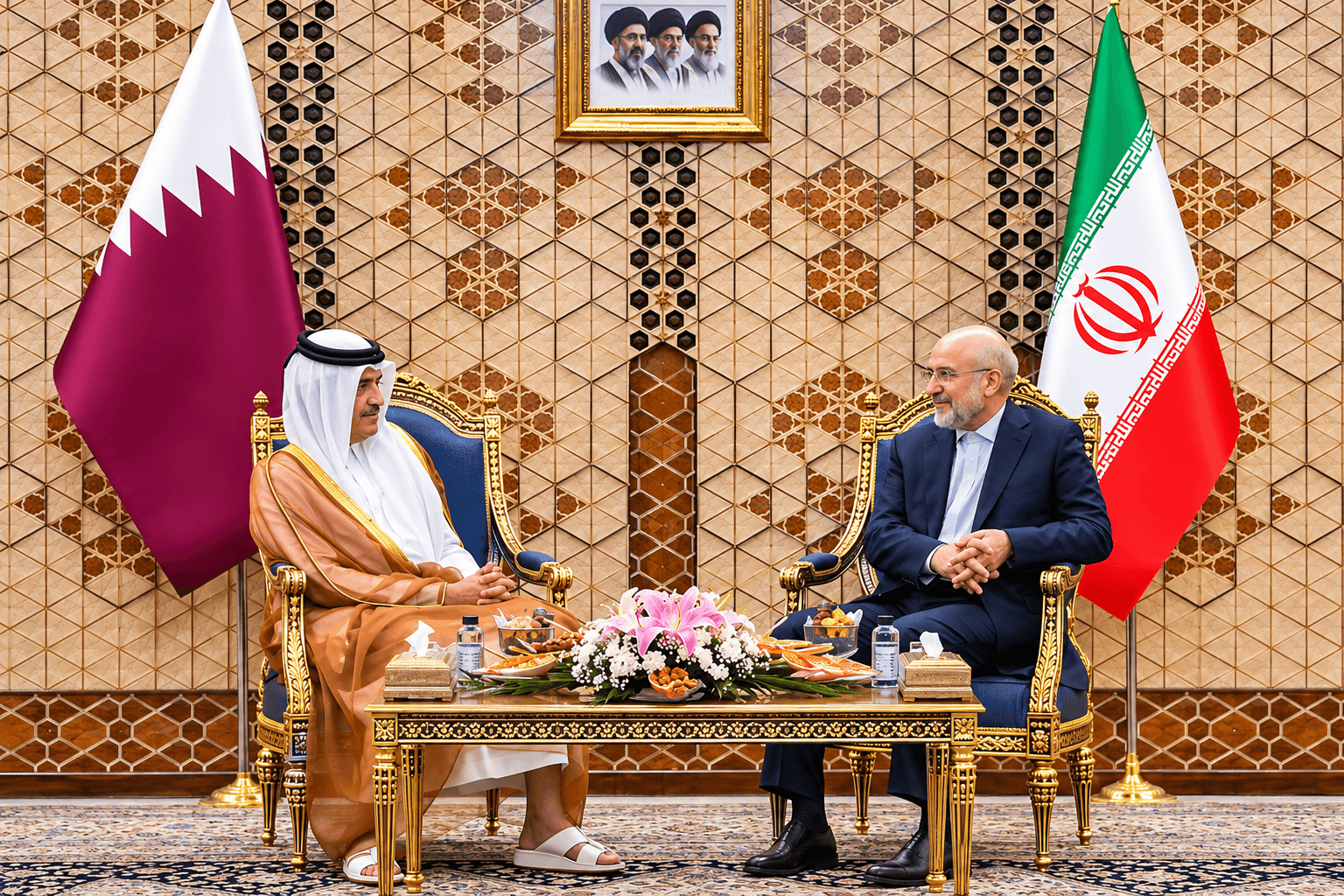
Iranian Foreign Minister Abbas Araghchi has indicated that discussions with mediators over a proposed two-day plan to reopen the Strait of Hormuz are continuing. He has also expressed hope that Washington will choose diplomacy over further escalation.
According to Al Jazeera's November 2 reporting, the proposal remained under discussion, with no confirmed agreement to restore normal navigation through the waterway.
Qatar has been working to facilitate communication between the parties, while Pakistan has also been involved in wider regional mediation efforts.
However, reaching an agreement will not be easy. Washington and Tehran remain divided over maritime restrictions, security arrangements and the broader conditions required to end the conflict.
The United States continues to maintain pressure on Iranian ports, while Iran has asserted restrictions over vessel movements through the Strait.
For Gulf governments and international shipping companies, the priority is clear: a reliable arrangement that allows commercial vessels to travel safely and without unpredictable restrictions.
INTERNATIONAL MARITIME WARNINGS HIGHLIGHT GROWING DANGERS
The United States Maritime Administration has warned that commercial vessels continue to face significant risks across the Persian Gulf, Strait of Hormuz and Gulf of Oman.
Its advisory highlights several potential threats, including missile strikes, armed drones, unmanned surface vessels, small-boat operations and interference with navigation systems.
Another major concern is disruption to global navigation satellite systems. GPS spoofing and jamming can affect the positioning information used by ships, making navigation more difficult in already high-risk waters.
The International Maritime Organization (IMO) is also monitoring the situation and gathering information about incidents affecting commercial vessels and seafarers.
The organisation relies on reports from flag states, coastal states and credible third-party sources to assess and verify maritime incidents. It has also highlighted the difficulties faced by crews aboard vessels unable to leave the Strait of Hormuz.
These warnings show that the crisis is about more than energy supplies and international trade. The safety and welfare of thousands of seafarers working in increasingly dangerous conditions are also at stake.
RISKS AND KEY ISSUES TO WATCH
Further tanker attacks: More incidents could discourage shipping companies from using the Strait and surrounding Gulf waters.
Unverified mine reports: If Iran's claims are independently confirmed, the possible presence of naval mines could create additional navigational hazards.
Falling shipping activity: Continued restrictions and delays could disrupt international energy and commodity deliveries.
Higher insurance costs: Growing security risks could push up war-risk premiums and freight charges.
Energy price volatility: A prolonged crisis could put further pressure on global oil and LNG markets.
Navigation interference: GPS spoofing and jamming could increase the risk of maritime accidents.
Diplomatic setbacks: A breakdown in negotiations between Washington and Tehran could prolong restrictions and increase the risk of further incidents.
WHAT TO WATCH NEXT
UKMTO updates: Whether maritime authorities report additional attacks or establish who was responsible for recent incidents.
Iran-US negotiations: Whether mediation involving Qatar and other regional partners leads to a workable agreement on reopening the Strait.
Shipping movements: Whether commercial vessel crossings recover after the sharp decline recorded over the weekend.
Energy markets: How oil, LNG, freight and maritime insurance prices respond to further developments.
International naval response: Whether the United States and regional partners announce additional measures to protect commercial vessels.
Seafarer safety: Whether shipping companies receive new guidance on sailing routes, onboard protection and emergency procedures.
FACT CHECK METER
EDITORIAL CONFIDENCE: 97%
Status: Strongly supported — based on maritime advisories and reported vessel incidents.
Confirmed details
Kpler tracking data cited by Reuters showed five commodity vessel crossings on Saturday and none recorded on Sunday.
UKMTO reported that a tanker was struck by two unidentified projectiles east of Ras Al Khafji on November 1.
Reuters reported that the tanker Louise 1 was damaged in a limpet-mine incident near Oman on October 29.
Iran's IRGC Navy claimed that two tankers had exploded after striking mines in the Strait of Hormuz.
Diplomatic discussions over a proposal to reopen the Strait were continuing as of November 2.
Important distinctions
The IRGC's claim about two tankers striking mines has not been independently verified.
The projectiles involved in the November 1 tanker incident have not been identified.
The Louise 1 incident and Iran's reported mine explosions concern separate incidents.
Vessel tracking figures may not capture every crossing, particularly when AIS transponders are switched off.
No comprehensive agreement restoring normal shipping through the Strait had been confirmed in the reports reviewed.
AWX VERDICT
The Strait of Hormuz is facing a serious maritime security challenge. A series of attacks and reported incidents across the wider Gulf, combined with a sharp drop in recorded vessel movements, is putting additional pressure on international shipping and energy markets.
Diplomatic efforts offer a possible path towards restoring normal traffic, but the absence of a confirmed agreement means shipping operators must continue dealing with considerable uncertainty.
The 97% figure represents AWX's editorial confidence in the factual reporting presented in this article. It is not a statistical probability or an official rating.
THE AWX BOTTOM LINE
The Strait of Hormuz has become a major flashpoint in the wider Middle East conflict, with growing maritime security risks threatening one of the world's most important trade and energy routes.
Tanker attacks, reported mine explosions and falling shipping activity are forcing commercial operators to rethink how they move goods through the Gulf. The consequences could extend far beyond the region, affecting energy supplies, transportation costs and economies that depend on Gulf trade.
Diplomatic efforts involving Qatar and other regional partners offer some hope of a breakthrough. But until Iran and the United States reach an agreement that guarantees safe and predictable passage, the Strait of Hormuz will remain a major concern for global shipping and the wider economy.
ATTLAS NEWS | AWX WORLD NEWS
Real Stories. Lasting Impact.


Comments
No comments yet.