

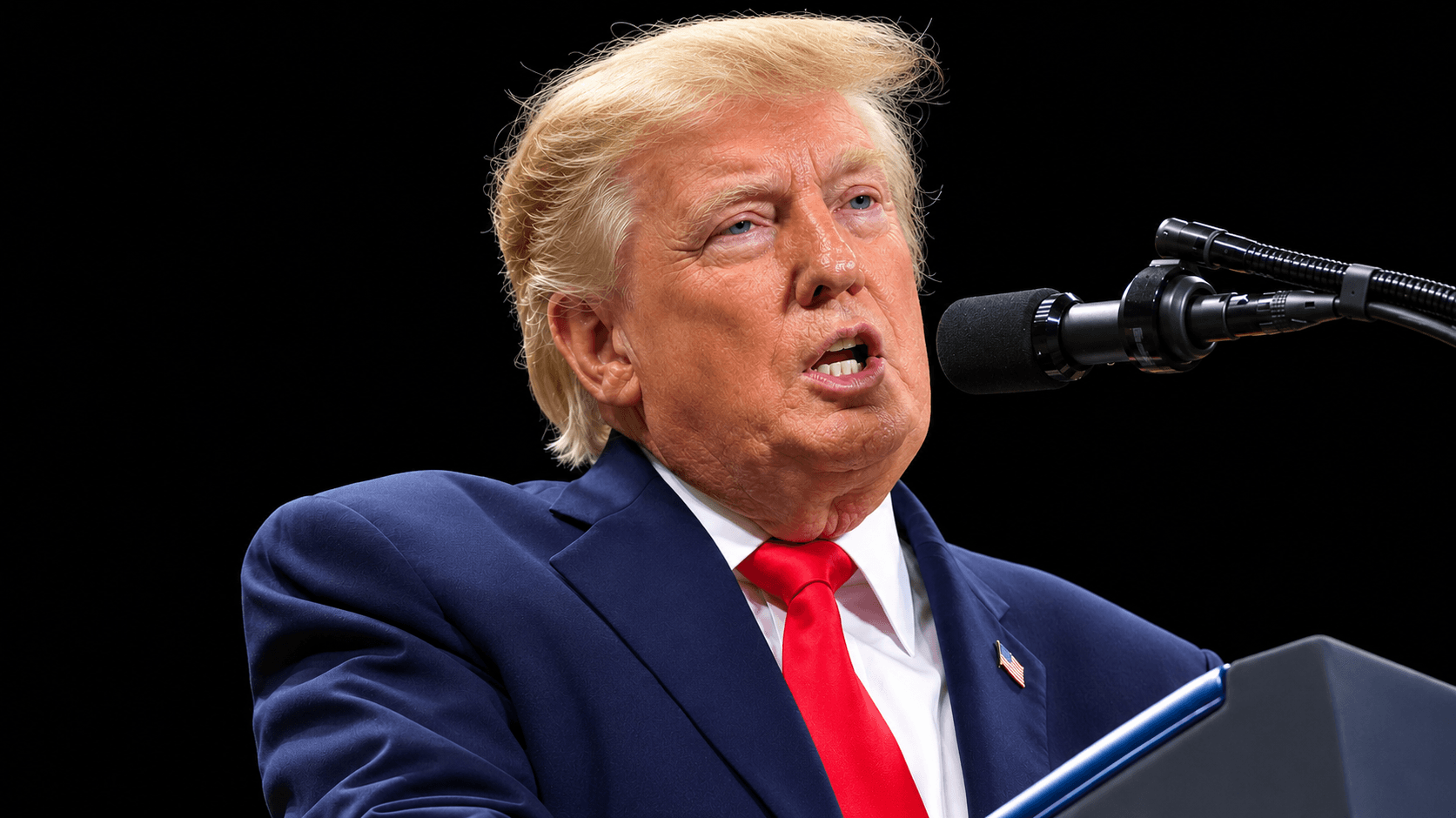
US President Donald Trump's administration has announced a major financial support package for American farmers, offering more than $15 billion in payments, loans and agricultural initiatives as mounting production costs put pressure on the farming sector.
The measures are aimed at helping farmers, ranchers and other agricultural businesses cope with rising diesel and fertiliser expenses, as well as the economic uncertainty created by trade tensions and international conflicts.
The biggest part of the package is an $8 billion one-time diesel relief programme intended to help farmers manage higher fuel costs during the harvest season. Other initiatives include loan guarantees, conservation payments, investments in domestic fertiliser production and funding for meat-processing facilities.
The announcement comes just as Americans head to the November 3 midterm elections. Rural communities have traditionally been an important source of Republican support, but rising operating expenses and uncertainty surrounding agricultural exports have left some farmers increasingly frustrated.
While the new package could offer much-needed financial relief, questions remain over when the money will reach eligible producers and whether temporary assistance will be enough to address the wider challenges facing American agriculture.
$15 BILLION FARM SUPPORT PACKAGE — WHAT DOES IT INCLUDE?
The announced assistance is spread across several programmes rather than being delivered as one direct payment to every farmer.
The largest initiative is the proposed $8 billion Harvest Fuel Relief programme, which aims to compensate eligible farmers for part of the additional costs associated with rising diesel prices.
Other announced measures include:
$8 billion: One-time payments to farmers facing higher diesel expenses.
At least $5 billion: Guaranteed loans for ranchers and fishermen.
$1.8 billion: Conservation payments for eligible producers and landowners.
$573 million: Support for domestic fertiliser manufacturing projects.
$57 million: Funding to expand meat-processing capacity.
$86.6 million: Grants for innovative projects benefiting specialty-crop producers.
Up to $472.5 million: Planned agricultural commodity purchases to support producers and charitable programmes.
Separately, the US Department of Agriculture (USDA) expects to provide approximately $13.8 billion in existing safety-net payments to eligible producers for the 2025 crop year.
These payments are part of an existing support system and are separate from the newly announced $15 billion-plus package.
Together, the initiatives are designed to support different parts of the agricultural industry, including crop production, livestock operations, food processing and land conservation.
$8 BILLION DIESEL RELIEF PROGRAMME TAKES CENTRE STAGE
The proposed $8 billion Harvest Fuel Relief programme is the centrepiece of Trump's latest effort to support American farmers.
Trump announced the initiative during a campaign rally in Kansas on October 19, presenting it as financial assistance for farmers struggling with the rising cost of operating tractors, harvesters, trucks and other diesel-powered machinery.
According to USDA information reported by Reuters, payments are expected to be calculated using estimated average fuel consumption and a formula based on agricultural production data. The programme is intended to cover part of the additional expenses farmers have faced because of higher diesel prices.
However, the money is unlikely to arrive immediately.
USDA official Richard Fordyce told Reuters that the payment schedule had not yet been finalised and indicated that farmers could receive the assistance towards the end of the year.
That means most eligible producers are unlikely to receive the promised diesel relief before the November 3 midterm elections.
The delay has raised questions about the programme's immediate impact. Although the announcement offers financial reassurance, farmers will still have to manage their current expenses while waiting for the promised payments.
RISING FUEL AND FERTILISER COSTS PUT FARMERS UNDER PRESSURE
American farmers have faced a difficult financial environment throughout 2026, with higher input costs making agricultural production increasingly expensive.
Diesel remains essential for operating farm machinery, transporting produce and carrying out harvesting activities. As fuel prices rise, farmers face additional expenses at almost every stage of production.
Figures cited by the Associated Press showed that diesel averaged $6.32 per gallon on the Friday before its November 1 report, roughly 70% higher than a year earlier.
Fertiliser prices have added to the pressure, increasing the cost of preparing farmland and maintaining crop production.
Trade tensions have created further difficulties. Earlier tariff measures raised costs for agricultural equipment and other essential inputs, while disputes with China contributed to weaker demand for some American agricultural exports.
The conflict involving Iran has also added uncertainty to international energy markets, putting further pressure on fuel costs.
For farmers already dealing with tighter margins, these combined pressures have made it harder to maintain profitability.
The latest government assistance could provide some breathing room, particularly for producers facing immediate harvesting expenses. However, temporary payments alone are unlikely to resolve the broader problems of rising input costs and unpredictable export markets.
MIDTERM ELECTIONS BRING RURAL VOTERS INTO FOCUS
The timing of the agricultural relief announcements has added a political dimension to the administration's support measures.
The November 3 midterm elections will determine whether Republicans retain control of Congress. Agricultural states and rural communities are particularly important in several closely contested races.
Trump has made appearances in states including Iowa and Kansas, where he has highlighted government assistance for farmers and addressed concerns about rising production costs.
Kansas has attracted particular attention because Republican Senator Roger Marshall is facing a competitive challenge from Democrat Adam Hamilton. Iowa is also among the states where agricultural concerns have become part of the wider election debate.
For many farmers, the issue goes beyond the latest relief announcement. They are also concerned about the cost of fuel, access to affordable fertiliser, international trade conditions and the long-term stability of agricultural markets.
Political observers say financial assistance could reassure some rural voters, but it may not completely reverse dissatisfaction among producers who feel that existing economic policies have contributed to their difficulties.
Some frustrated voters may reconsider their political support, while others could remain with Republicans but express their dissatisfaction through lower turnout or independent voting.
The administration's latest package is therefore both an economic support measure and an important political effort to maintain confidence among rural communities.
TEMPORARY RELIEF RAISES QUESTIONS ABOUT LONG-TERM FARM STABILITY
While the announced assistance could help farmers cover immediate expenses, questions remain about whether one-time payments can provide lasting financial security.
Agricultural businesses often make production decisions months before harvesting begins. Farmers also rely heavily on loans to purchase seeds, fertiliser, fuel and machinery.
Lenders, in turn, look at whether agricultural businesses can generate consistent income over several growing seasons.
A government payment may improve a farm's finances in the short term, but it does not necessarily guarantee profitability in the next planting season.
The National Farmers Union has also raised concerns about depending too heavily on emergency assistance, arguing that trade disruptions and rising production costs require more predictable, long-term solutions.
The administration's broader initiatives, including domestic fertiliser manufacturing investments and agricultural market support, could help address some of these structural challenges.
However, their effectiveness will depend on how quickly the programmes are implemented and whether they eventually bring down costs for producers.
For American agriculture, the bigger challenge is finding a balance between immediate financial assistance and policies that provide greater stability over the long term.
RISKS AND KEY ISSUES TO WATCH
Payment delays: The $8 billion diesel relief programme is expected to deliver payments after the election, leaving farmers waiting for assistance.
Eligibility and distribution: The USDA must finalise payment calculations and ensure that eligible producers receive the support fairly.
Rising production costs: Further increases in fuel, fertiliser and equipment prices could reduce the benefits of government assistance.
Trade uncertainty: Disruptions in international agricultural markets could continue affecting American exports and farm incomes.
Federal spending: Expanding government support raises questions about the long-term financial burden of emergency agricultural programmes.
Political consequences: How rural voters respond to the package could influence closely contested congressional races.
WHAT TO WATCH NEXT
USDA programme details: Farmers will be looking for further guidance on eligibility requirements, payment calculations and distribution timelines.
Diesel relief payments: Confirmation of when the $8 billion programme will begin making payments will be an important development.
Midterm election results: Results from agricultural states such as Kansas and Iowa could offer insight into rural voter sentiment.
Fuel and fertiliser prices: Further increases could put additional pressure on farm businesses.
Agricultural export markets: Developments in US-China trade relations and other international markets will remain important for American producers.
Long-term agricultural policies: The impact of fertiliser investments, conservation payments and other support initiatives should become clearer over the coming months.
FACT CHECK METER
Editorial confidence: 98%
Strongly supported — based on AP and Reuters reporting.
Confirmed details
The administration announced more than $15 billion in agricultural payments and support initiatives.
The largest component is an $8 billion one-time diesel relief programme.
Additional assistance includes loans, conservation payments and manufacturing grants.
The USDA separately plans approximately $13.8 billion in existing 2025 crop-year safety-net payments.
The diesel relief payments are expected after the November 3 election.
Important distinctions
The $15 billion figure represents several announced initiatives, not a single direct-payment programme.
The separate $13.8 billion safety-net allocation should not be confused with the newly announced package.
Announced funding does not mean all payments have already been distributed.
The package's impact on rural voters remains uncertain.
AWX VERDICT
Trump's agricultural support package is substantial, but its real impact will depend on how quickly the promised assistance reaches farmers.
The measures could ease immediate financial pressure, particularly for producers dealing with high diesel expenses during harvest season. However, broader concerns about fuel prices, trade uncertainty and long-term farm profitability remain unresolved.
The package offers short-term financial support, but restoring confidence in American agriculture will require more than one-time payments.
The percentage represents AWX editorial confidence in the article's factual reporting, not a statistical probability or official rating.
THE AWX BOTTOM LINE
Trump's more than $15 billion agricultural support package arrives at a critical moment for both American farmers and the Republican Party.
The $8 billion diesel relief programme is the biggest component, while additional loans, conservation payments and manufacturing investments aim to support the wider agricultural sector.
But the timing matters. With the November 3 midterm elections underway, farmers will be judging the administration not just on the financial assistance it has announced, but also on the economic pressures they continue to face.
The package could provide some breathing room for struggling agricultural businesses. Whether it can restore confidence among rural voters and address the deeper challenges facing American farming remains to be seen.
ATTLAS NEWS | AWX WORLD NEWS
Real Stories. Lasting Impact.




Comments
No comments yet.