

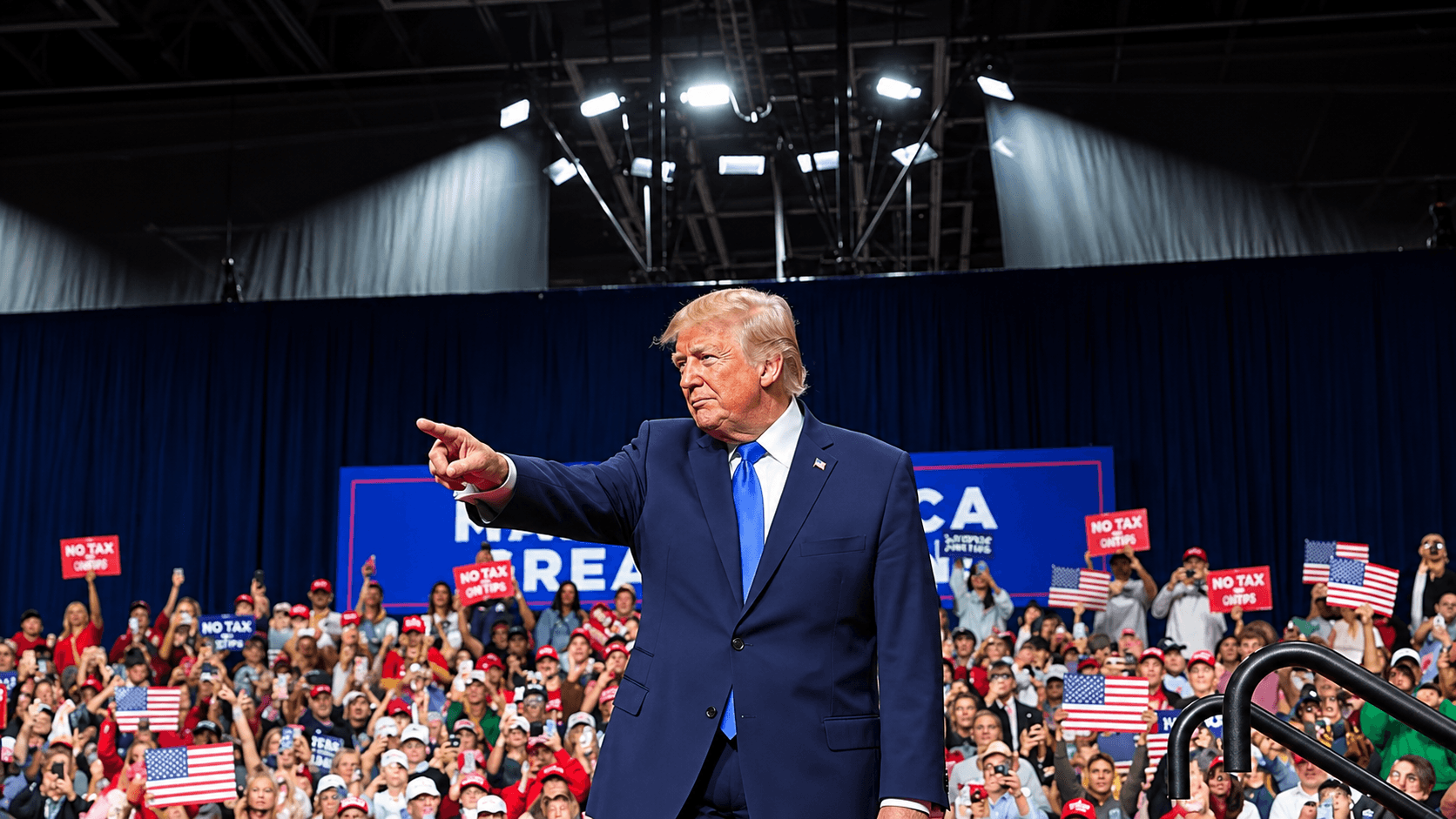
The 2026 US midterm elections have reached a critical stage, with President Donald Trump making a final effort to protect Republican control of Congress as voters decide which party will hold the balance of power in Washington.
All 435 seats in the House of Representatives and 35 of the Senate's 100 seats are being contested. Republicans entered the election controlling both chambers, but Democrats are hoping to turn the tide and gain greater influence over the administration's legislative agenda.
Trump has spent the final weeks of the campaign rallying support for Republican candidates, appearing at political events and reaching voters through telephone campaigns. His efforts come at a difficult time for the party, with concerns about household expenses, economic uncertainty and declining approval ratings weighing on the campaign.
The election is increasingly being viewed as a judgment on Trump's performance during the first two years of his second term. Losing control of either chamber could make it considerably harder for the President to push through his priorities.
TRUMP MAKES FINAL CAMPAIGN PUSH AS ELECTION DAY ARRIVES
Trump wrapped up his campaign with appearances in Republican-leaning states, including Iowa and Kansas, before delivering his final major public message in Washington on November 2.
The closing stretch was focused on energising Republican supporters and encouraging voters to back candidates facing tough challenges. According to the White House, Trump had campaigned in 20 states over the previous 32 days.
Vice President JD Vance and other senior Republican figures also joined the final campaign effort, while Democrats concentrated on mobilising supporters across key battleground states.
Trump's final appearance at the Lincoln Memorial Reflecting Pool drew attention for its focus on renovations to the historic Washington landmark and other projects in the capital, rather than a detailed discussion of economic policy.
The campaign's closing days have been particularly challenging for Republicans, as voter frustration over prices and the administration's economic record continues to create political pressure.
DEMOCRATS FAVOURED TO WIN HOUSE — SENATE REMAINS UNCERTAIN
The fight for control of Congress is taking different directions in the House and Senate.
Democrats appear to have the advantage in the House of Representatives, where Republicans currently hold a narrow majority. Several national polls have shown Democratic candidates leading their Republican opponents, raising expectations that the opposition could regain control.
The Senate contest, however, remains much harder to predict. Democrats face an uphill battle in several states while also trying to defend seats of their own.
Races in Michigan, Maine, Ohio, Alaska, Texas, Iowa and Kansas could prove decisive in determining which party controls the upper chamber.
A Reuters/Ipsos poll completed on November 2 found that 46% of registered voters preferred Democratic congressional candidates, compared with 38% who supported Republicans. The same survey put Trump's approval rating at 32%.
Meanwhile, more than 57 million Americans had already voted through early in-person voting and postal ballots by Monday afternoon, according to University of Florida Election Lab figures cited by Reuters.
While the polling points to an advantage for Democrats, national figures do not necessarily reflect what will happen in individual districts or states. A strong turnout in closely contested areas could still change the outcome.
COST OF LIVING EMERGES AS THE BIGGEST VOTER CONCERN
The rising cost of everyday life has become one of the most important issues shaping the election.
Democrats have made household affordability a central part of their campaign, arguing that tariffs, higher energy costs and the economic impact of the war with Iran have added to the financial pressure on American families.
Republicans, meanwhile, have defended the administration's economic policies and criticised the Democrats' approach. However, convincing voters that current policies are improving their financial situation has proved difficult.
A Reuters/Ipsos survey found that 78% of respondents considered the cost of living either a very important or the most important factor in deciding how to vote.
The issue is particularly significant in rural and industrial communities, where rising fuel, transportation and production costs have affected both families and businesses.
Trump's reported 32% approval rating in the latest Reuters/Ipsos poll has added to concerns within the Republican Party that dissatisfaction with the economy could translate into losses at the ballot box.
MICHIGAN SENATE RACE EXPOSES DEMOCRATIC DIVISIONS
Michigan has become one of the most closely watched Senate battlegrounds, with an unexpected political development creating fresh challenges for Democrats.
Democratic Congresswoman Haley Stevens, who lost her party's Senate primary to Abdul El-Sayed, endorsed Republican candidate Mike Rogers shortly before Election Day.
The decision exposed divisions within the Democratic Party, particularly over El-Sayed's views on Israel and the wider debate surrounding the conflict in the Middle East.
Trump welcomed Stevens's endorsement and used the development to criticise Democratic leadership.
El-Sayed, however, has continued his campaign, focusing on voter turnout and economic concerns affecting Michigan residents.
The outcome of the race could have implications well beyond the state. Michigan is among the contests that may determine whether Democrats have a realistic chance of taking control of the Senate.
WHAT A DEMOCRATIC VICTORY COULD MEAN FOR TRUMP
A Democratic takeover of either chamber of Congress would significantly change the political landscape for the remaining two years of Trump's presidency.
If Democrats regain the House, they would take control of committee leadership, congressional hearings and investigative processes. This would give them greater power to scrutinise administration policies, federal spending and executive decisions.
A Democratic majority in the Senate could have additional consequences, particularly when it comes to confirming cabinet members, ambassadors and federal judicial nominees.
However, even if Democrats win control of both chambers, Trump's presidential powers would remain unchanged. He would retain the ability to veto legislation and exercise executive authority within constitutional and legal limits.
A divided Congress could also lead to difficult negotiations over government funding, federal spending and the national debt ceiling.
A Reuters analysis suggests that Democratic control would provide the opposition with stronger oversight and greater negotiating power, but it would not automatically allow the party to reverse the administration's policies.
ELECTION SECURITY AND LEGAL DISPUTES ADD TO TENSIONS
The election campaign has also been accompanied by disputes over the federal government's role in election administration.
The Trump administration has pursued investigations into suspected noncitizen voter registration and supported legal challenges involving ballot handling and election procedures.
Several of these efforts have faced resistance in the courts. The Supreme Court rejected an emergency administration request concerning disputed California mail ballots, while other judicial decisions have blocked proposed changes to voting procedures.
Democrats and voting-rights organisations have expressed concerns about possible voter intimidation and federal interference at polling locations. The administration, however, has rejected suggestions that federal immigration agents are planning operations targeting polling places.
With more than 57 million ballots already cast before Election Day, early voting has been a major feature of this year's election.
Election officials have urged voters to follow state-specific rules and deadlines, particularly when submitting postal ballots. Legal disputes over election oversight and certification could also continue after polling ends.
RISKS AND KEY ISSUES TO WATCH
Republican losses in the House: A Democratic majority could lead to more congressional investigations and make it harder for Trump to advance his legislative agenda.
Senate battlegrounds: Results in Michigan, Maine, Texas, Alaska and other competitive states could decide control of the upper chamber.
Economic dissatisfaction: Rising living costs, fuel prices and concerns over tariffs could influence voters who supported Trump in 2024.
Turnout and early voting: The number and distribution of early ballots could play an important role, particularly in closely contested districts.
Election-related litigation: Disputes over ballot counting, voting procedures and certification could delay final results in some races.
Government gridlock: A divided Congress could complicate negotiations over federal spending, debt limits and government appointments.
WHAT TO WATCH NEXT
Election Day turnout: Participation across competitive states will offer important clues about the relative strength of both parties.
House control: Results in closely contested congressional districts will determine whether Democrats regain the chamber.
Senate results: Key statewide contests will establish whether Republicans can hold on to their majority.
Trump's response: The President's reaction to the results could influence the political atmosphere and the administration's next priorities.
Post-election legal challenges: Close races could lead to recounts, court proceedings and delays in official certification.
Congressional transition: The new balance of power will shape committee leadership, investigations and legislative negotiations when the next Congress begins in January 2027.
FACT CHECK METER
Editorial confidence: 98%
Strongly supported — Reuters, AP and election reporting.
Confirmed details
November 3 is Election Day for the 2026 US midterm elections.
All 435 House seats and 35 Senate seats are being contested.
Republicans entered the election controlling both chambers of Congress.
More than 57 million ballots had been cast before Election Day.
Economic concerns and Trump's approval ratings are major campaign issues.
Important distinctions
Polling advantages should not be confused with confirmed election results.
Democrats are favoured to regain the House, but the Senate remains uncertain.
A Democratic congressional majority would not take away Trump's presidential powers.
Final results could take longer in closely contested races.
AWX VERDICT
The 2026 midterms are a major test of Donald Trump's political standing and the strength of his second-term agenda. Economic dissatisfaction has given Democrats an opportunity to make gains, but competitive Senate races and voter turnout could ultimately determine whether Republicans retain control of Congress.
The results will reveal how much support Trump still commands among American voters and whether Republicans can maintain their influence over the legislative process.
The percentage represents AWX editorial confidence in the factual reporting, not a statistical probability or official rating.
THE AWX BOTTOM LINE
The 2026 US midterm elections could reshape the final two years of Donald Trump's presidency.
Trump has made an aggressive effort to protect Republican control of Congress, but rising living costs, tariff concerns and frustration over the administration's economic performance have put his party under pressure.
Democrats appear better positioned to regain the House, while the Senate remains a closely contested battleground. The outcome will determine whether Trump continues governing with Republican support in both chambers or faces a more challenging political environment.
Beyond the immediate battle for congressional seats, the election will provide an important indication of how Americans view Trump's leadership, economic policies and the direction of his second term.
ATTLAS NEWS | AWX WORLD NEWS
Real Stories. Lasting Impact.



Comments
No comments yet.