

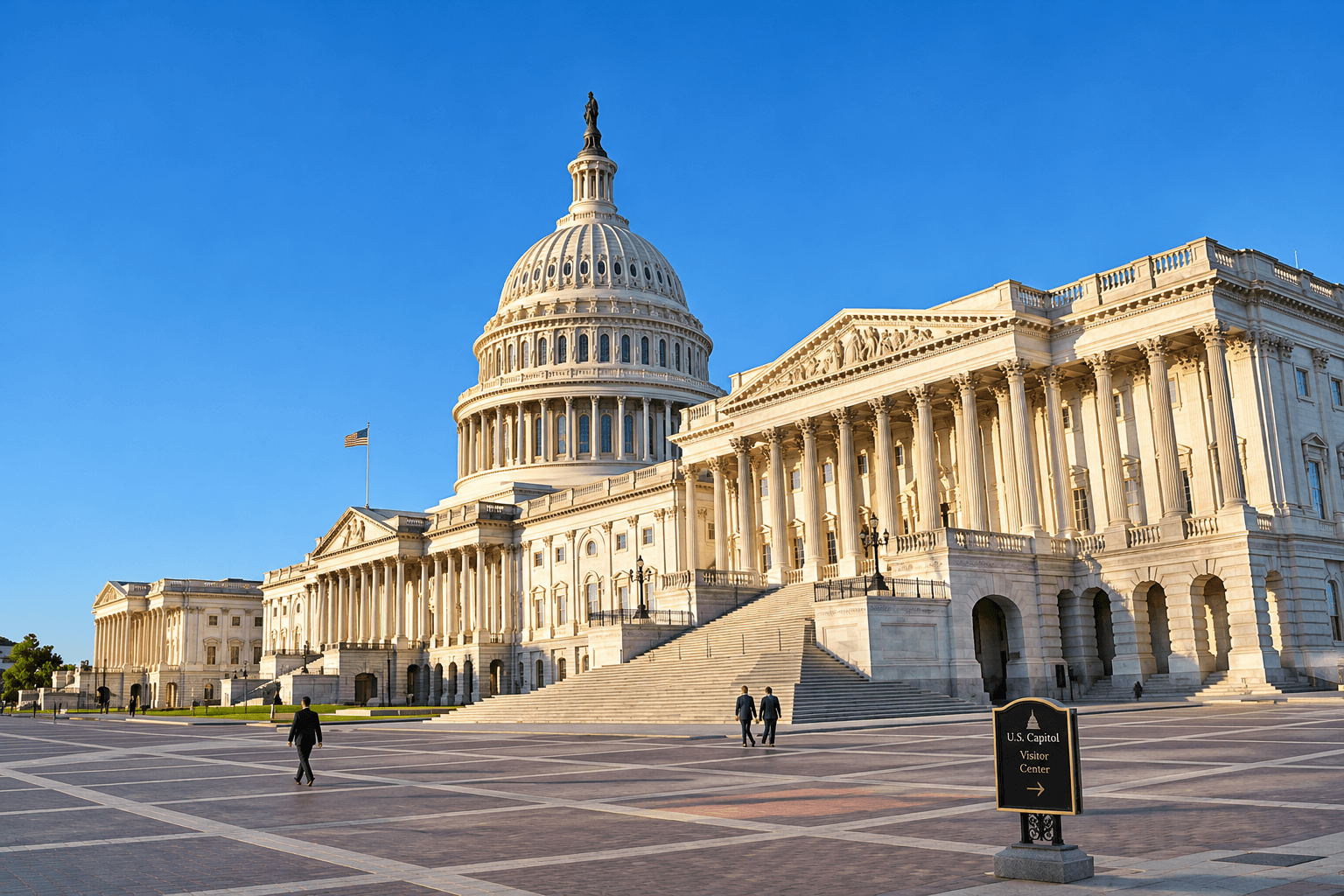
Washington is bracing for a new chapter of political confrontation after Democrats secured majorities in both chambers of Congress. The victory ends two years of Republican control and puts Trump's domestic agenda under greater pressure as he enters the final two years of his presidency.
The shift will significantly change the relationship between the White House and Capitol Hill. Democrats will now have greater control over congressional committees, legislative priorities and investigations into the administration. They will also have more influence over whether presidential nominees receive Senate approval.
For Democratic leaders, the result offers an opportunity to turn campaign promises into action, particularly on healthcare, living costs and government accountability. But delivering meaningful changes will not be easy, especially with Trump retaining the executive powers of the presidency.
DEMOCRATS TAKE CONTROL OF WASHINGTON’S LEGISLATIVE AGENDA
The Democratic victory has reshaped the balance of power on Capitol Hill. With majorities in both the House and Senate, the party is preparing to take charge of congressional proceedings and set the direction of the legislative agenda.
House Democratic Leader Hakeem Jeffries is expected to become Speaker of the House, while Senate Democratic Leader Chuck Schumer will play a central role in steering the party's priorities through the upper chamber.
The change will have an immediate impact on congressional committees. Democrats will be able to appoint committee chairs, organise hearings, request government documents and issue subpoenas to obtain testimony from administration officials.
In the Senate, the party will also have greater influence over confirmation proceedings involving Cabinet members, ambassadors and federal judges.
For Trump, this means that major appointments and policy proposals could face considerably tougher opposition than they encountered under Republican control.
TRUMP’S POLICY PRIORITIES FACE STRONGER RESISTANCE
Several key parts of Trump's domestic agenda are likely to face renewed challenges from Democratic lawmakers.
Immigration enforcement, trade tariffs, federal spending, healthcare and the use of executive powers are expected to become major points of disagreement between Congress and the White House.
Democrats have signalled that they want to challenge selected Republican policy changes, introduce measures to ease household expenses and examine how the administration has exercised its presidential authority.
However, winning control of Congress does not give Democrats the power to overturn every presidential decision. Trump can still veto legislation, and Congress would need a two-thirds majority in both chambers to override that veto.
The president also retains considerable executive authority, particularly over immigration enforcement and foreign policy. As a result, Washington could face an extended political battle over how far presidential powers can be challenged by Congress.
CONGRESSIONAL INVESTIGATIONS COULD INTENSIFY
One of the biggest consequences of the election could be a fresh round of congressional investigations into the Trump administration.
Democratic leaders are expected to examine government decisions, possible conflicts of interest, allegations of corruption and the conduct of senior officials.
With control of congressional committees, Democrats will have greater scope to organise public hearings, request records and seek testimony from government departments and administration representatives.
Such investigations could put considerable political pressure on the White House, particularly if they attract sustained public attention or bring previously undisclosed information to light.
However, an investigation alone does not prove misconduct. Any conclusions will depend on the evidence gathered, the responses of those involved and whether further legal proceedings follow.
HEALTHCARE AND COST-OF-LIVING MEASURES TOP DEMOCRATIC AGENDA
Household affordability is expected to be one of the first major priorities for Democrats when the new Congress begins work in January 2027.
The party is preparing to focus on reducing everyday expenses, protecting healthcare programmes and challenging selected Republican spending cuts affecting health-related services.
During the election campaign, voters repeatedly raised concerns about grocery bills, housing costs, medical expenses and fuel prices. Democratic leaders believe the result gives them a stronger mandate to address these issues through legislation and closer oversight of federal economic policies.
Still, turning these promises into law could prove difficult. Democrats will need to maintain unity within their own ranks while dealing with presidential vetoes and potential procedural hurdles in the Senate.
The real test will be whether the new majority can deliver practical improvements in people's lives rather than simply spend the next two years opposing the administration.
FOREIGN POLICY AND IRAN WAR FACE CONGRESSIONAL SCRUTINY
The conflict involving Iran could become another major source of friction between Congress and the White House.
The war, along with its impact on global energy markets and fuel prices, featured prominently in the midterm debate. Trump has acknowledged that the conflict and rising gasoline prices contributed to Republican losses.
Democratic lawmakers are expected to seek clearer explanations of military decisions, the financial cost of the conflict and the administration's long-term strategy.
Questions surrounding presidential authority to conduct military operations could also receive greater attention, particularly regarding the level of congressional oversight required for future decisions.
However, Democrats cannot independently control every aspect of US foreign policy. The president retains substantial constitutional authority as commander-in-chief, while Congress has important responsibilities involving military funding, oversight and declarations of war.
The Iran conflict could therefore become an important test of the relationship between the executive and legislative branches.
REPUBLICANS FACE A NEW POLITICAL REALITY
The Republican Party now faces the challenge of adjusting to life in the congressional minority after suffering significant electoral losses.
The defeat has raised questions about the party's campaign strategy, its reliance on Trump's political influence and its ability to attract voters ahead of the 2028 presidential election.
House Speaker Mike Johnson is not expected to continue as Republican leader in the next Congress, according to reporting by The Washington Post. Republicans will need to choose new leadership and develop a strategy for dealing with the incoming Democratic majority.
The election result could also accelerate discussions about the party's future beyond Trump, who is constitutionally barred from seeking a third presidential term.
For now, Republicans must find a way to maintain party unity while deciding which administration policies to defend and where cooperation with Democrats might be possible.
RISKS AND KEY ISSUES TO WATCH
Legislative deadlock: Disagreements between Congress and the White House could delay major spending decisions and policy changes.
Government investigations: Democratic-led committees may launch extensive inquiries into administration decisions and senior officials.
Presidential vetoes: Trump could block legislation that conflicts with his priorities, restricting Democratic efforts to introduce reforms.
Federal appointments: Senate Democrats could delay or reject presidential nominees, including candidates for judicial positions.
Foreign policy confrontation: The Iran conflict could deepen disagreements over military authority, funding and congressional oversight.
Budget and debt ceiling battles: Negotiations over government funding and borrowing limits could become major political flashpoints in 2027.
Party divisions: Democrats will need to balance moderate and progressive demands, while Republicans face their own leadership challenges.
WHAT TO WATCH NEXT
January 2027 congressional transition: The new Congress is scheduled to begin on January 3, with Democrats assuming control of both chambers.
Leadership appointments: Hakeem Jeffries and Chuck Schumer are expected to take leading roles in shaping the Democratic agenda.
Committee investigations: New committee chairs will decide which administration policies and decisions receive closer scrutiny.
First legislative proposals: Healthcare, affordability and government accountability are likely to feature prominently.
White House response: Trump's approach to negotiations and his willingness to use presidential veto powers will shape relations with Congress.
2028 political positioning: Both parties are expected to begin preparing for the next presidential election against the backdrop of the changed balance of power.
FACT CHECK METER
Editorial confidence: 97%
Strongly supported — major news reporting.
Confirmed details
Democrats secured control of both chambers of Congress.
The incoming majority will have greater control over congressional committees and legislative priorities.
Trump retains presidential veto powers and substantial executive authority.
Democrats have indicated plans for stronger oversight and an affordability-focused legislative agenda.
Important distinctions
Congressional investigations do not automatically establish wrongdoing.
Democratic control does not mean the party can implement its entire policy agenda without opposition.
The new Congress takes office in January 2027, rather than immediately after election day.
AWX VERDICT
The Democratic victory has fundamentally changed Washington's political balance. Trump's administration will face tougher congressional oversight, greater legislative resistance and potentially more frequent investigations.
However, the president still holds significant constitutional powers, meaning Democrats will have to navigate political and legal limits as they attempt to reshape federal policy.
The percentage represents AWX editorial confidence in the article's factual reporting, not a statistical probability or official rating.
THE AWX BOTTOM LINE
The 2026 midterm elections have opened a new chapter in American politics. By taking control of both chambers of Congress, Democrats have gained a stronger platform to challenge Trump's decisions, investigate his administration and push their own legislative priorities.
For Trump, the result means the final two years of his presidency are likely to be far more complicated. His proposals will face stronger resistance, his administration will come under closer scrutiny and negotiations with Congress could become increasingly difficult.
Democrats, meanwhile, have an opportunity to show voters that their election victory can translate into meaningful changes. Their ability to deliver on healthcare, affordability and government accountability will help determine whether this political breakthrough becomes a lasting advantage.
Washington's balance of power has shifted. The next two years will test the relationship between the presidency and Congress, the strength of America's political institutions and the ability of both parties to govern in an increasingly divided political environment.
ATTLAS NEWS | AWX WORLD NEWS
Real Stories. Lasting Impact.
Comments
No comments yet.