

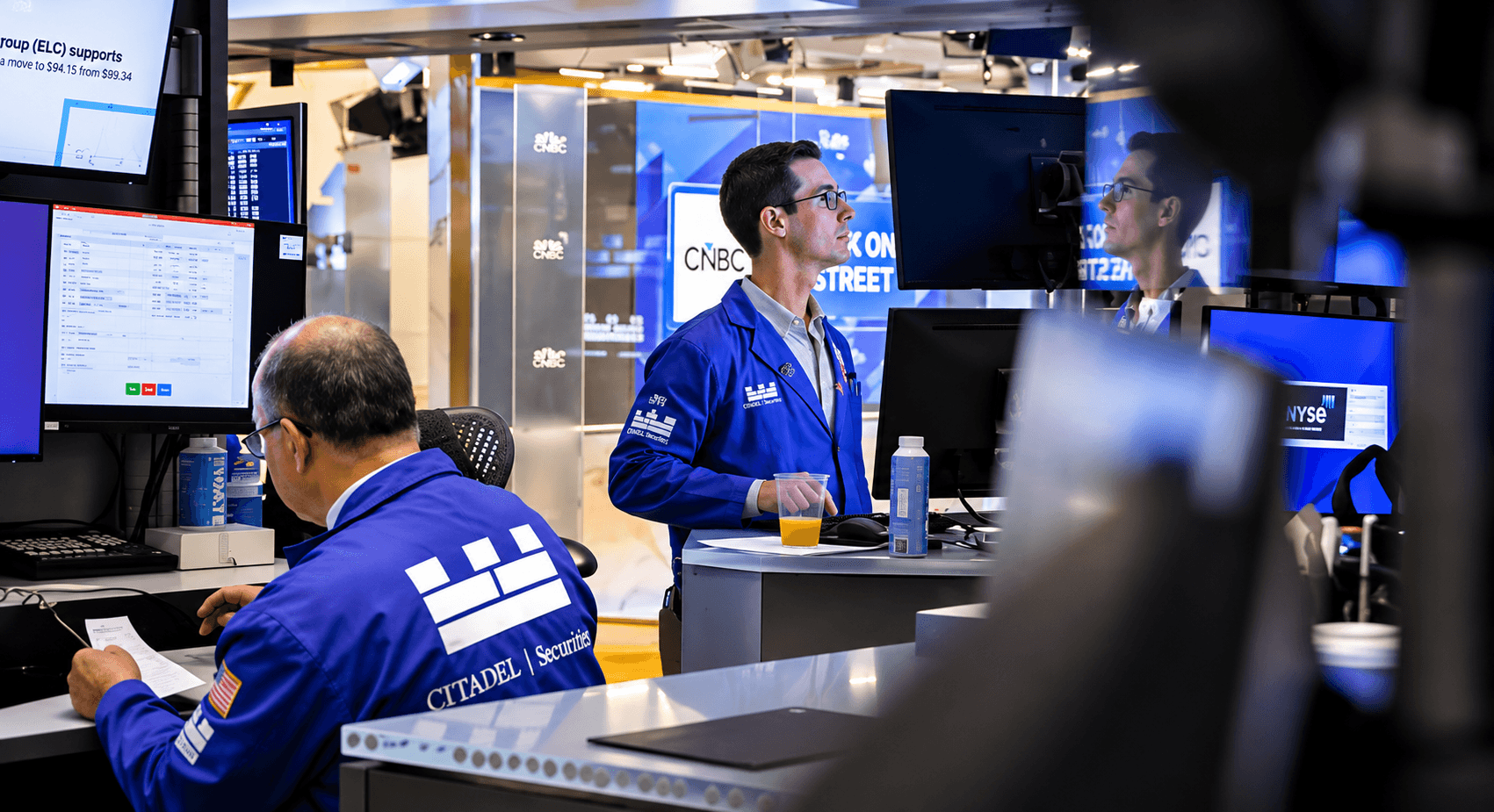
America’s rapidly expanding artificial intelligence industry is facing a fresh wave of uncertainty following the Democratic Party’s strong performance in the November 3 midterm elections. The results have prompted investors to reconsider the outlook for AI-related businesses, particularly as the incoming congressional majority prepares to push for greater oversight of the technology sector.
Wall Street suffered a major technology-led selloff on Thursday, November 5. The Nasdaq Composite dropped approximately 5.5%, recording its worst single-day performance in 18 months and moving into correction territory. The S&P 500 declined around 4.4%, while the Dow Jones Industrial Average lost approximately 3.4%.
The selloff erased more than $2 trillion in Nasdaq market value, according to market reports. Semiconductor manufacturers, data-centre operators and companies supplying equipment and electricity to AI facilities were among the hardest hit.
The sudden downturn reflects growing concerns that America's AI boom could face new challenges. After a period of rapid expansion and heavy investment, the industry is now confronting questions about regulation, infrastructure costs and whether companies can generate enough revenue to justify their enormous spending.
DEMOCRATIC VICTORY CHANGES THE POLITICAL OUTLOOK FOR AI
The Democrats' takeover of both chambers of Congress has shifted expectations surrounding technology policy in Washington. Several Democratic lawmakers have been calling for stronger safeguards on artificial intelligence, including independent testing of AI systems, greater transparency and better protection for consumers affected by automated technologies.
Data-centre expansion is another issue attracting attention. These facilities require enormous amounts of electricity, water and land, raising concerns about their impact on local communities and public infrastructure.
The election results could give lawmakers seeking tighter controls greater influence over future policy decisions. Democratic victories in states with significant data-centre development, including Texas, have also added to investor concerns.
Texas governor-elect Gina Hinojosa has pledged to halt new data-centre construction. Other Democratic lawmakers have called for measures to prevent the rapid expansion of AI infrastructure from pushing electricity costs higher for ordinary households.
For investors, the concern is straightforward: additional restrictions or lengthy approval processes could delay projects and increase the cost of expanding AI infrastructure.
NASDAQ SUFFERS A MAJOR TECHNOLOGY-LED SELLOFF
The sharp decline in the Nasdaq reflects growing uncertainty about the future profitability of AI investments.
On November 5, the index fell approximately 5.5%, its steepest single-day drop in 18 months. It also moved more than 10% below its October 6 record closing high, placing it in correction territory.
The wider stock market also recorded significant losses. The S&P 500 fell 4.4% to 7,353.73, while the Dow Jones Industrial Average dropped 1,833 points to 51,523.06.
Technology stocks led the decline as investors reduced their exposure to companies whose valuations depend heavily on continued AI expansion.
The market reaction was particularly striking because US stocks had initially responded positively on November 4, following the election results. However, sentiment changed quickly as investors began weighing the possible consequences for technology companies and their infrastructure plans.
The reversal highlights how sensitive the market has become to developments that could affect the future of artificial intelligence investment.
CHIPMAKERS AND AI INFRASTRUCTURE COMPANIES TAKE HEAVY LOSSES
Semiconductor companies were among the biggest losers during Thursday's trading session.
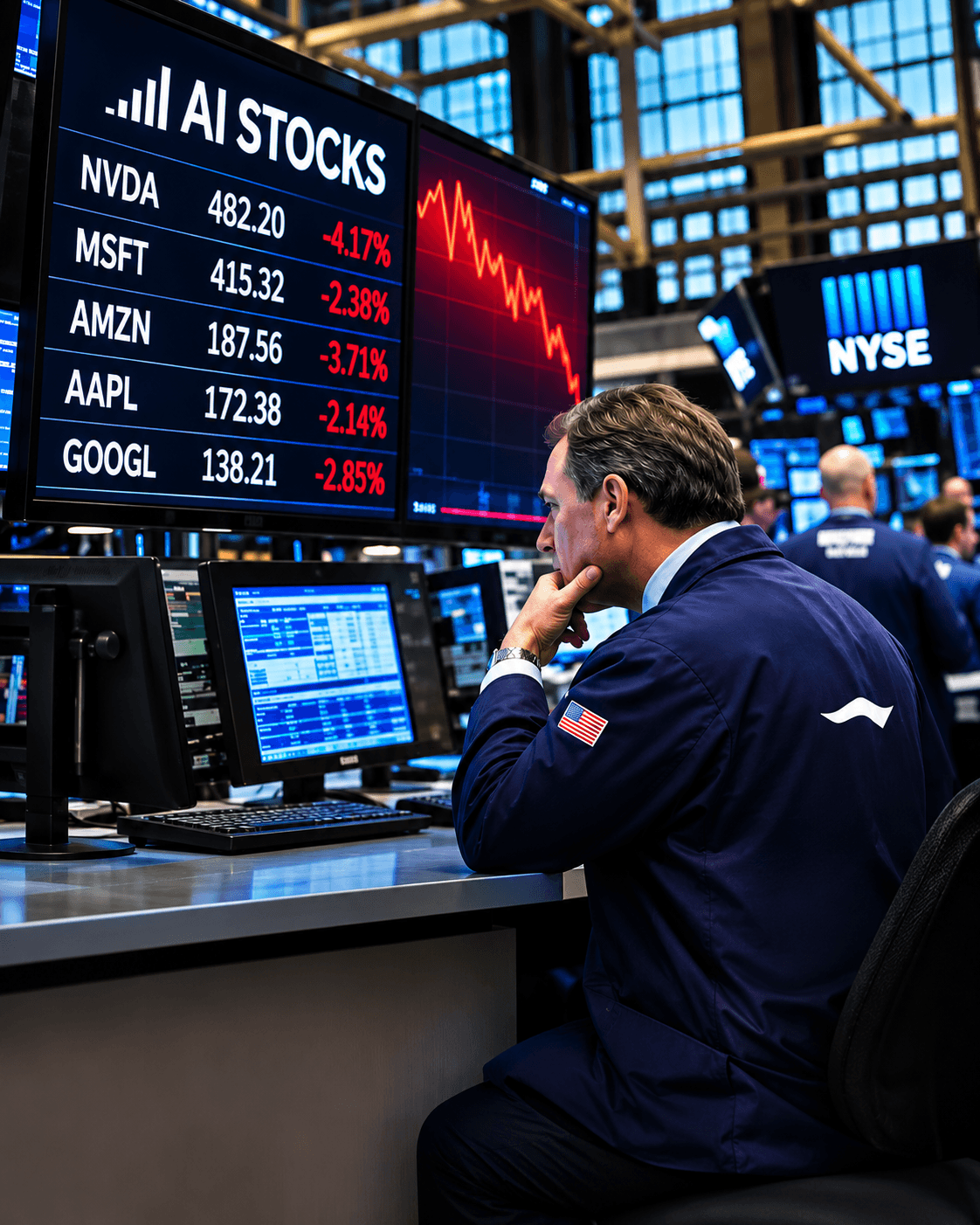
Nvidia shares dropped approximately 9%, while AMD and Micron Technology recorded losses exceeding 17%. Intel also moved lower, and the Philadelphia Semiconductor Index plunged by more than 12%.
The pressure extended beyond chipmakers to companies involved in building and operating AI infrastructure. Data-centre businesses such as IREN, Applied Digital and Nebius Group recorded significant declines, while AI server manufacturer Dell also faced selling pressure.
These losses reflect concerns about what could happen if data-centre construction slows. Reduced investment in new facilities could affect demand for advanced processors, servers, networking equipment, cooling systems and other specialised technology.
Investors are also becoming more cautious about the enormous sums being committed to AI infrastructure. The key question is whether the expected commercial returns will justify the scale of investment.
Even companies with strong AI products and established businesses could face pressure if investors begin to question the pace at which future growth can be achieved.
DATA-CENTRE EXPANSION FACES GROWING PUBLIC AND POLITICAL RESISTANCE
The challenges facing America's AI industry are no longer limited to technology and financial markets. The rapid growth of data centres has become an increasingly important public and political issue.
Large facilities consume substantial amounts of electricity and water. Their expansion has raised concerns about pressure on power grids, environmental damage, land use and potentially higher energy bills for households.
In communities experiencing rapid data-centre development, residents and local officials are increasingly demanding greater transparency and stronger environmental protections before approving new projects.
Democratic lawmakers are expected to use their increased influence in Congress to examine the industry's infrastructure requirements and the impact of large-scale AI development on consumers.
Any move towards stricter approval procedures, construction pauses or additional operating requirements could create difficulties for companies that have already committed billions of dollars to long-term infrastructure projects.
For the industry, balancing continued expansion with public concerns is becoming an increasingly important challenge.
BIG TECHNOLOGY COMPANIES FACE A NEW INVESTMENT TEST
The latest market decline has also brought renewed attention to the financial sustainability of the AI boom.
Major technology companies have invested heavily in data centres, advanced processors and cloud computing capacity to meet growing demand for artificial intelligence services. Until recently, investors largely supported this spending, expecting AI to create new revenue opportunities and strengthen the competitive position of major technology groups.
However, the scale of these investments is now attracting closer scrutiny. Shareholders increasingly want evidence that spending on AI infrastructure will translate into consistent revenue growth and long-term profits.
Some established technology companies initially performed better than smaller infrastructure operators following the election, as investors considered whether a slower expansion of data centres might reduce costs for larger businesses.
This highlights an important difference within the AI industry. Companies developing AI software and commercial services do not necessarily face the same financial risks as businesses that depend primarily on constructing and operating the infrastructure required to support them.
Going forward, investors are likely to pay closer attention to earnings, capital expenditure and the actual returns generated by AI-related investments.
GLOBAL MARKETS FEEL THE IMPACT OF WALL STREET'S AI ROUT
The technology selloff quickly became a concern for international markets. Asian shares came under pressure on Friday, November 6, as investors reacted to the sharp decline in US technology stocks.
Japan's Nikkei and South Korea's Kospi faced significant early losses, reflecting their exposure to semiconductor manufacturing, electronics exports and global technology spending.
The impact could spread across the wider technology supply chain, affecting chip manufacturers, memory producers, equipment suppliers and companies providing electricity and cooling solutions for data centres.
For international investors, the latest decline raises an important question: is this simply a correction in technology valuations, or does it signal a broader reassessment of global AI investment?
Much will depend on corporate earnings, future infrastructure spending, regulatory developments and whether AI businesses can demonstrate that their investments are delivering sustainable commercial returns.
RISKS AND KEY ISSUES TO WATCH
Tighter AI regulation: A Democratic-controlled Congress could push for stricter rules covering AI development, system testing and consumer protection.
Data-centre construction restrictions: Changes in federal and local policies could delay infrastructure projects and affect companies supplying the industry.
Rising electricity demand: Expanding AI facilities could put additional pressure on power grids and household energy costs.
AI valuation concerns: Investors may continue reassessing companies whose market valuations rely on expectations of rapid future growth.
Semiconductor volatility: Further declines in chip stocks could affect technology markets around the world.
Infrastructure financing: Smaller data-centre operators could face difficulties if borrowing costs rise or expected project revenues weaken.
Global market spillover: Continued weakness in US technology stocks could create additional pressure on Asian and European technology companies.
WHAT TO WATCH NEXT
US regulatory proposals: Whether Democratic lawmakers introduce new measures covering AI safety, data-centre development and electricity costs.
Corporate investment plans: Whether major technology companies reconsider or revise their AI infrastructure spending forecasts.
Chipmaker earnings: Nvidia, AMD, Intel and other semiconductor companies will remain important indicators of market confidence.
Data-centre approvals: Decisions by state governments and local authorities could influence the pace of new construction.
Market recovery: Investors will look for signs that technology shares are stabilising after the sharp correction.
AI profitability: Upcoming earnings reports will be closely watched for evidence that heavy investment in AI is producing sustainable returns.
FACT CHECK METER
Editorial confidence: 98%
Confirmed details
The Nasdaq fell approximately 5.5% on November 5, recording its steepest daily decline in 18 months.
The S&P 500 dropped approximately 4.4%, while the Dow declined around 3.4%.
Semiconductor and data-centre-related stocks suffered substantial losses.
Investor concerns included possible AI regulation and a slowdown in data-centre expansion.
Important distinctions
The election results contributed to investor concerns but were not necessarily the only reason behind the market selloff.
Proposed restrictions should not be confused with legislation that has already been enacted.
A market correction does not automatically mean that the long-term outlook for artificial intelligence has weakened.
AWX VERDICT
The market decline is well documented, and the election has added to concerns surrounding AI infrastructure spending, regulation and profitability. However, the longer-term impact on America's technology industry remains uncertain.
The 98% figure represents AWX editorial confidence in the article's factual reporting, not a statistical probability or an official rating.
THE AWX BOTTOM LINE
America's artificial intelligence industry is entering a more challenging phase as political uncertainty and investor concerns collide with the enormous financial commitments behind the technology boom.
The Democrats' election victory has strengthened calls for greater oversight of AI systems, data-centre development and electricity consumption. At the same time, Wall Street is questioning whether the industry's massive infrastructure investments can deliver the returns that investors have been expecting.
The latest selloff does not mean the AI revolution is coming to an end. However, it signals a shift in investor expectations. Going forward, technological innovation alone may not be enough to sustain market confidence. Profitability, regulatory clarity, infrastructure costs and public acceptance will play an increasingly important role in determining the industry's future.
ATTLAS NEWS | AWX WORLD NEWS
Real Stories. Lasting Impact.



Comments
No comments yet.