

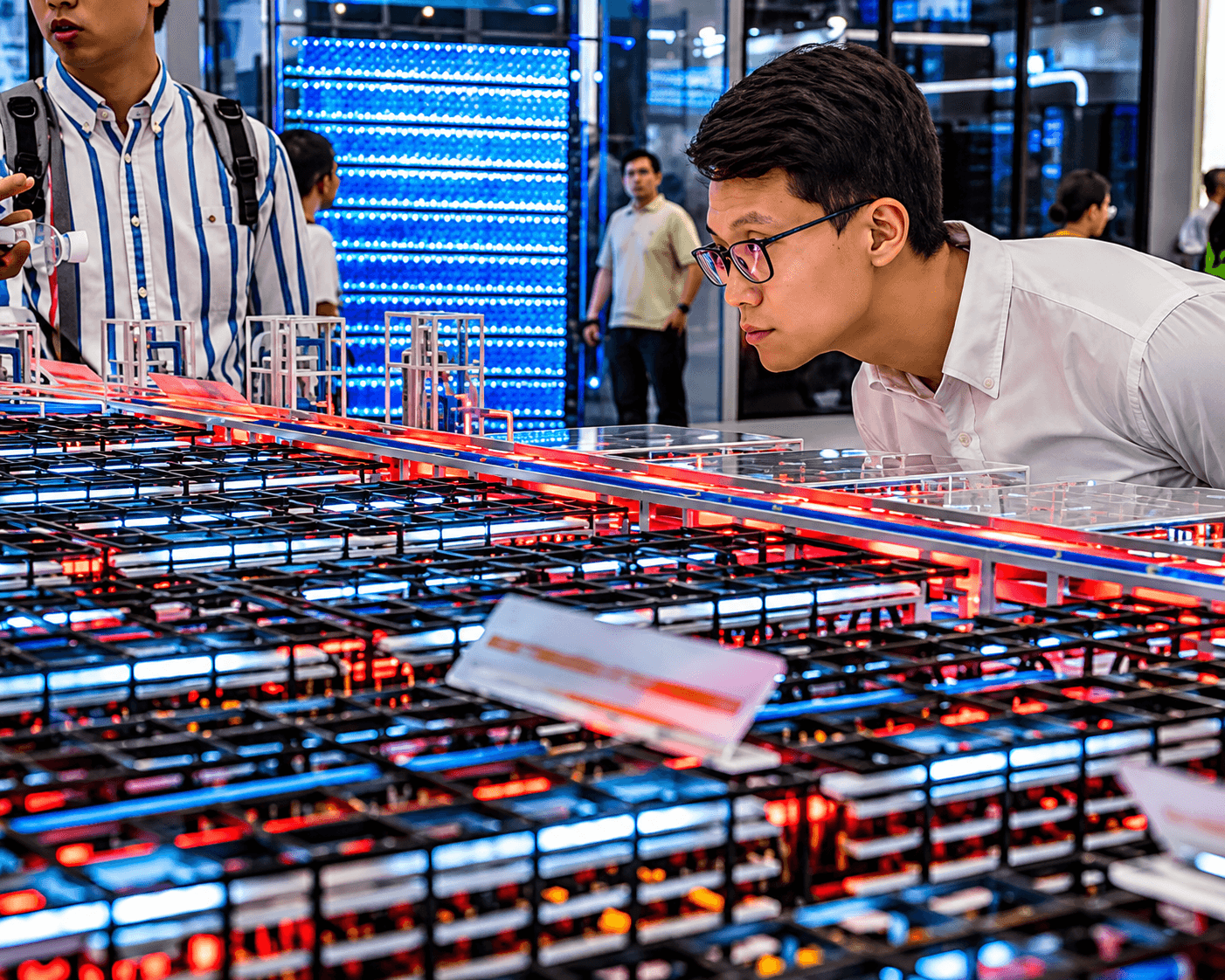
The global semiconductor industry is facing renewed uncertainty as technology shares across Asia tumble amid growing questions about the sustainability of the AI investment boom.
South Korea's KOSPI plunged more than 8% in early trading on November 6, triggering a 20-minute trading halt after the index dropped below the 5,000-point mark. Japan's Nikkei also recorded steep losses, while Taiwan's technology-heavy market came under pressure as investors rushed to sell shares in major chipmakers and equipment manufacturers.
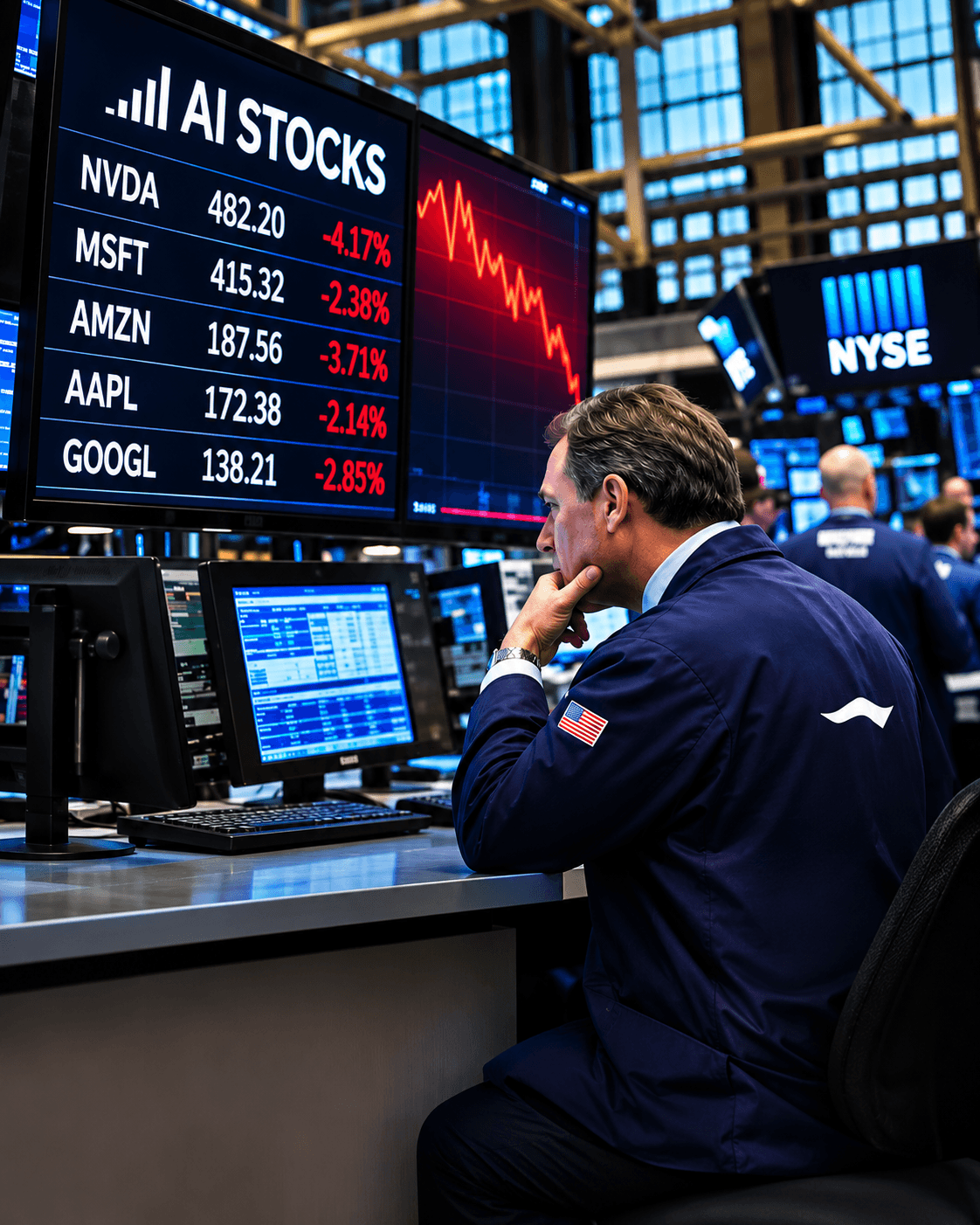
The decline followed a difficult session on Wall Street on November 5. The Nasdaq Composite fell 5.5%, the S&P 500 lost 4.4%, and the Philadelphia Semiconductor Index dropped 12.2%. It was the semiconductor index's sharpest single-day decline since March 2020, highlighting how quickly investor confidence in technology and AI-related stocks has weakened.
The sell-off has once again exposed Asia's dependence on global technology spending. South Korea, Taiwan and Japan play crucial roles in supplying the memory chips, processors and semiconductor equipment needed to power modern data centres and advanced computing systems.
SOUTH KOREA'S CHIP GIANTS LEAD THE DECLINE
South Korea has been particularly hard-hit by the latest market downturn, with major semiconductor companies Samsung Electronics and SK Hynix facing heavy selling pressure.
Samsung shares dropped sharply, while SK Hynix also recorded substantial losses as investors reconsidered the outlook for memory chips and AI infrastructure. Both companies are major players in the global semiconductor supply chain, particularly in high-bandwidth memory, which is essential for advanced AI processors.
The sharp decline in the KOSPI triggered an automatic trading halt intended to prevent excessive market volatility. The index later recovered some ground as domestic investors stepped in to buy shares.
South Korean authorities also moved quickly to address concerns. Finance Minister Lee Hyoung-il convened an emergency meeting with senior economic officials, who agreed to temporarily ease rules affecting leveraged retail investments in an effort to limit forced selling and stabilise the market.
The scale of the losses has raised questions about whether investors are beginning to move away from high-growth technology stocks after months of strong gains.
JAPAN AND TAIWAN TECHNOLOGY STOCKS ALSO UNDER PRESSURE
The downturn quickly spread to other major Asian technology markets.
Japan's Nikkei fell sharply, with semiconductor equipment manufacturers and technology investment companies among the biggest losers. Equipment supplier Advantest and memory chipmaker Kioxia came under particular pressure, while SoftBank Group also suffered a significant decline because of its exposure to technology and AI investments.
Taiwan's semiconductor industry was hit just as hard. Shares of Taiwan Semiconductor Manufacturing Company (TSMC), one of the world's leading contract chipmakers, fell as much as 10% during the session, dragging the broader Taiex index lower.
TSMC occupies a critical position in the global technology supply chain. It manufactures advanced processors for major technology companies, including businesses developing AI chips and next-generation consumer electronics.
The widespread losses show how quickly concerns in the US technology market can affect Asian manufacturers, many of which depend heavily on international demand for advanced chips and computing equipment.
AI INVESTMENT CONCERNS SHAKE INVESTOR CONFIDENCE
At the heart of the sell-off is a growing debate over whether the enormous sums being invested in artificial intelligence will eventually generate sufficient returns.
Technology companies have committed billions of dollars to building data centres, purchasing advanced processors, expanding memory capacity and strengthening cloud-computing infrastructure. However, investors are beginning to question whether this level of spending can continue indefinitely.
High construction costs, financing pressures and uncertainty surrounding future regulations are adding to those concerns.
The outcome of the US midterm elections has also introduced another layer of uncertainty. Democratic gains have prompted investors to consider whether future policy changes could bring tighter oversight of AI development, data-centre construction, electricity consumption and environmental standards.
There are also concerns that local opposition to large data-centre projects could slow construction, particularly in regions already struggling with electricity shortages and pressure on existing infrastructure.
Still, the latest sell-off does not necessarily mean that demand for AI technology is disappearing. Rather, investors appear to be taking a closer look at the pace of future expansion and asking technology companies to demonstrate that their enormous infrastructure investments can translate into lasting profits.
QUALCOMM EARNINGS ADD TO SEMICONDUCTOR PRESSURE
Company-specific concerns have added to the pressure on semiconductor stocks.
Qualcomm shares fell 9.5% on November 5 after its smartphone chip sales came in below Wall Street expectations. The results raised concerns about uneven demand in traditional semiconductor markets, even as investment in AI infrastructure continues to grow.
Other major technology companies also suffered significant losses. Nvidia dropped approximately 9.3%, while AMD and several memory and storage-related companies recorded even steeper declines.
The combination of disappointing earnings, elevated valuations and uncertainty over future AI spending has made investors increasingly cautious about the technology sector.
The latest market reaction suggests that strong growth expectations alone may no longer be enough to support semiconductor valuations. Investors are increasingly looking for clear evidence of profitability and sustainable demand.
GOVERNMENTS MOVE TO CONTAIN MARKET VOLATILITY
Authorities across Asia are closely monitoring the situation as concerns grow that continued selling could affect wider financial markets.
In South Korea, officials held emergency discussions and introduced temporary measures aimed at reducing pressure on leveraged retail investors. The KOSPI's partial recovery later in the session suggested that domestic buying helped offset some of the selling pressure.
Taiwanese officials have also indicated that the island's market stabilisation fund could consider an emergency meeting if conditions deteriorate further.
These steps reflect growing concern that a prolonged decline in technology shares could spread beyond semiconductor companies and affect broader investor confidence.
However, government intervention alone cannot resolve the uncertainty surrounding global technology spending. Investors will continue watching corporate earnings, AI infrastructure commitments, regulatory developments and the financial health of major chipmakers.
GLOBAL SUPPLY CHAINS FACE A NEW TEST
Asia remains at the centre of the global semiconductor industry. South Korea is a major supplier of memory chips, Taiwan leads advanced contract chip manufacturing, and Japan plays an important role in providing semiconductor materials and production equipment.
A prolonged market downturn could put pressure on businesses throughout the supply chain, from chip designers and equipment manufacturers to data-centre operators and electronics producers.
Smaller suppliers could face particular difficulties if major customers postpone orders or scale back expansion plans. Companies that rely heavily on external financing may also struggle if borrowing costs remain high.
At the same time, the current share-price decline should not be mistaken for an immediate collapse in semiconductor demand. Much of the market reaction reflects changing investor expectations, concerns about future spending and a reassessment of technology stocks that had attracted substantial investment.
The bigger question is whether the industry can maintain its growth momentum while delivering the financial returns investors have come to expect.
RISKS AND KEY ISSUES TO WATCH
Further semiconductor losses: Continued declines in Samsung, SK Hynix, TSMC and other chipmakers could deepen volatility across Asian markets.
A slowdown in AI investment: Delays in data-centre construction could weaken future demand expectations for advanced processors, memory chips and networking equipment.
Regulatory uncertainty: Potential changes to US AI and data-centre policies could influence investment decisions and disrupt established technology supply chains.
Foreign investor withdrawals: Continued capital outflows from Asian technology markets could put additional pressure on regional currencies and stock indexes.
Supply-chain disruption: Prolonged market weakness could affect smaller semiconductor suppliers and businesses dependent on new financing.
Valuation corrections: Investors may increasingly favour companies with proven earnings and sustainable demand over businesses whose valuations depend largely on future growth expectations.
WHAT TO WATCH NEXT
KOSPI recovery: Whether South Korea's benchmark index can stabilise following the trading halt and whether foreign selling begins to ease.
Samsung and SK Hynix: Whether major memory-chip manufacturers recover as investors reassess the long-term outlook for AI-related demand.
TSMC performance: Whether Taiwan's technology market stabilises after the sharp decline in its leading semiconductor company.
US technology policy: Whether Democratic electoral gains lead to specific regulatory or infrastructure proposals affecting AI development.
Corporate earnings: Whether upcoming financial results provide clearer evidence that AI investments are generating sustainable returns.
Global market sentiment: Whether investors return to technology stocks or continue shifting towards safer assets and companies with stronger financial fundamentals.
FACT CHECK METER
Editorial confidence
97%
Confirmed details
South Korea's KOSPI fell more than 8% in early trading on November 6, triggering a 20-minute trading halt.
Samsung Electronics and SK Hynix experienced substantial share-price declines.
TSMC, Kioxia and other Japanese technology companies faced heavy selling pressure.
The Philadelphia Semiconductor Index dropped 12.2% on November 5.
South Korean authorities convened an emergency meeting to address market volatility.
Important distinctions
The sell-off reflects concerns about future AI investment and profitability. It does not establish that semiconductor demand has collapsed.
Potential changes to US AI regulations remain an area of uncertainty. They should not be presented as confirmed future policy.
Falling share prices do not necessarily indicate an equivalent deterioration in the underlying performance of semiconductor companies.
AWX VERDICT
The global semiconductor industry is going through a significant market correction as investors reconsider the financial outlook for artificial intelligence infrastructure.
Asian chipmakers are particularly exposed because of their central role in global technology supply chains. South Korea, Taiwan and Japan are all vulnerable to changes in international demand and investor sentiment.
The industry's next move will largely depend on whether AI investment remains strong enough to justify current valuations and whether major technology companies can turn their infrastructure spending into sustainable profits.
THE AWX BOTTOM LINE
The latest technology sell-off has exposed just how closely Asia's semiconductor industry is tied to global investment sentiment. South Korea, Japan and Taiwan are facing mounting pressure as investors question whether the AI infrastructure boom can maintain its current pace.
Heavy losses among major chipmakers have highlighted the risks of expensive valuations, concentrated investment and uncertainty over future technology spending. Yet semiconductors remain essential to the future of artificial intelligence, cloud computing and advanced electronics.
For now, the challenge is to restore investor confidence and demonstrate that the enormous sums being invested in AI can deliver lasting financial returns. How the industry responds could help determine the next chapter of global semiconductor competition.
ATTLAS NEWS | AWX WORLD NEWS
Real Stories. Lasting Impact.


Comments
No comments yet.