

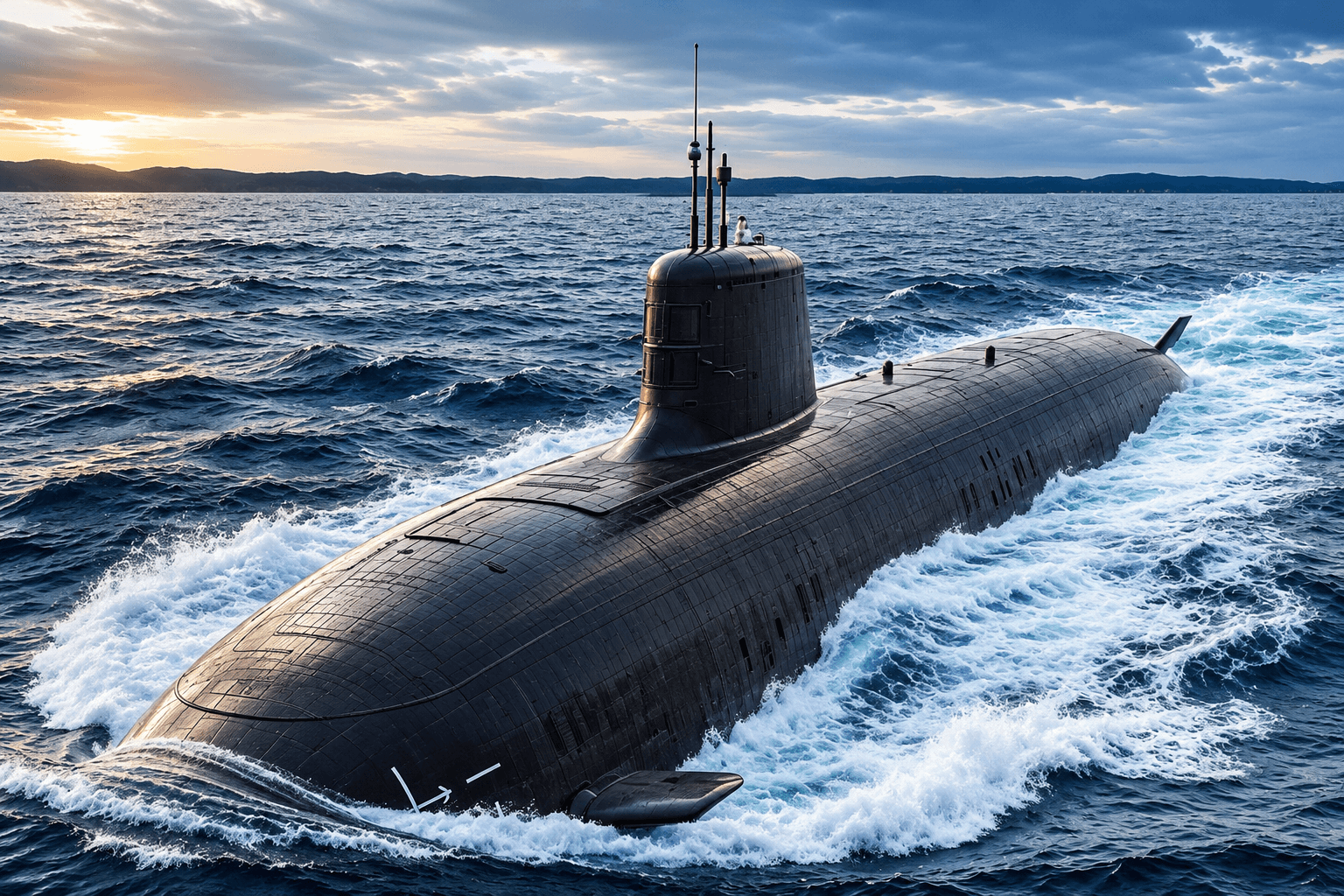
Australia’s ambitious AUKUS defence partnership is facing one of its biggest political tests since it was announced in 2021. The agreement between Australia, the United States and the United Kingdom is designed to provide Australia with nuclear-powered submarines while strengthening cooperation in advanced military technologies.
However, the programme has come under renewed pressure following the release of an independent public inquiry on November 4. Led by former Australian Labor MP Peter Garrett and former defence chief Admiral Chris Barrie, the inquiry recommended scrapping the submarine programme, suspending preparations for new facilities and establishing a royal commission to examine the agreement.
The commissioners described AUKUS as an extremely expensive and risky defence commitment, arguing that Australia had not given the deal sufficient public or parliamentary scrutiny before signing up.
The findings have reignited a national debate over Australia's defence priorities, its growing reliance on American military capabilities and the long-term financial burden of acquiring nuclear-powered submarines.
INDEPENDENT INQUIRY PUTS AUKUS UNDER THE SPOTLIGHT
The November 4 report has raised fresh questions about the strategic and financial reasoning behind AUKUS.
According to the inquiry, the programme could cost Australia approximately A$368 billion, leaving the country exposed to considerable financial and geopolitical risks. Among its key recommendations are ending the submarine programme, reviewing advanced technology-sharing arrangements and reconsidering Australia's approach to China.
The commissioners also called for a royal commission and stronger parliamentary oversight to ensure greater transparency around the agreement's costs and long-term implications.
Another major concern is Australia's growing military integration with the United States. The inquiry warned that this relationship could limit Canberra's ability to make independent foreign policy decisions, particularly during a potential conflict involving China.
However, the report comes from an independent review rather than a government-appointed royal commission. Its recommendations do not automatically change Australia's existing commitments under AUKUS.
The Albanese government has rejected the inquiry's conclusions, questioning its credibility and maintaining that the partnership remains essential to Australia's national security.
US SUBMARINE PRODUCTION DELAYS RAISE QUESTIONS
One of the biggest challenges facing AUKUS is whether American shipyards can produce enough Virginia-class submarines to meet US naval requirements while also supplying Australia.
Under the agreement, Australia is expected to receive Virginia-class nuclear-powered submarines from the United States during the 2030s. These vessels will serve as an interim capability before Australia begins operating its own next-generation SSN-AUKUS submarines.
The problem is that US submarine production has struggled to keep pace with demand. American shipyards are currently producing approximately 1.1–1.2 Virginia-class submarines annually, well below the estimated 2.33 boats per year needed to support the AUKUS plan.
Workforce shortages, limited shipyard capacity and maintenance backlogs have added to the pressure. Officials and former defence representatives from the three countries have acknowledged that these industrial challenges could affect the programme's timeline.
Australia has already committed billions of dollars towards strengthening the American submarine industry. Even so, questions remain over whether these investments will increase production quickly enough to meet the expected delivery schedule.
AUSTRALIA REVISES ITS VIRGINIA-CLASS PURCHASE PLAN
Australia has already made changes to its submarine acquisition strategy.
In June 2026, the government announced that it planned to purchase three Virginia-class submarines already in service with the US Navy. This replaced an earlier proposal involving two second-hand submarines and one newly built vessel.
Defence Minister Richard Marles said the revised approach could reduce costs and make maintenance and training arrangements easier to manage. However, he acknowledged that the change would not significantly alter the overall financial commitment involved in AUKUS.
Australian officials have indicated that the submarines transferred to Australia would be around six years old and would undergo major maintenance before entering service. Their expected operational lifespan is between 30 and 33 years.
The government believes these vessels will help maintain Australia's submarine capabilities until its own SSN-AUKUS fleet becomes available.
Critics, however, remain concerned about the availability, remaining service life and maintenance requirements of second-hand American submarines. They also question how much operational independence Australia will have while relying on another country's naval technology and support systems.
NATIONAL SOVEREIGNTY AND CHINA RELATIONSHIPS TAKE CENTRE STAGE
The debate over AUKUS is about much more than submarines and defence spending. At its heart are questions about Australia's relationship with China and its ability to make independent strategic decisions.
Supporters argue that nuclear-powered submarines will give Australia a stronger ability to monitor maritime activity, protect important shipping routes and deter potential threats across the Indo-Pacific.
Critics take a different view. They warn that deeper military integration with the United States could draw Australia more directly into a future regional conflict, particularly over Taiwan or disputes in the South China Sea.
The independent inquiry also raised concerns that Australia could face greater risks of retaliation if tensions between Washington and Beijing escalate into a military confrontation.
The government rejects the suggestion that AUKUS compromises Australian sovereignty. It maintains that the partnership is a necessary investment in the country's long-term defence capabilities.
With China's military presence and regional influence continuing to grow, Canberra faces a difficult balancing act: strengthening national security without adding unnecessarily to tensions across the Indo-Pacific.
RISING COSTS AND INFRASTRUCTURE CHALLENGES
The financial demands of AUKUS remain another major concern.
The programme involves substantial spending on submarine construction, maintenance facilities, workforce training, nuclear stewardship and supporting defence infrastructure.
Australia is developing major facilities at Osborne in South Australia while upgrading HMAS Stirling in Western Australia to prepare for future submarine operations.
The independent inquiry has questioned whether the expected strategic and economic benefits justify such a significant investment. It has also highlighted concerns about the long-term handling of radioactive waste and the need for greater transparency around future costs.
Supporters of AUKUS argue that the programme will strengthen Australia's defence industry, create highly specialised jobs and improve national security for decades.
However, the scale of the investment has raised questions about whether other defence priorities could receive less funding. These include air defence, drone technology, cyber capabilities, surface naval vessels and military personnel.
For Australia, the challenge is not simply finding the money to build a submarine fleet. It is ensuring that the investment does not leave other important areas of national defence underfunded.
THREE-NATION PARTNERSHIP FACES A LONG-TERM TEST
Despite growing criticism, AUKUS continues to receive support from senior defence figures in Australia, the United States and the United Kingdom.
At the partnership's fifth anniversary in September, former officials involved in its development pointed to progress in building institutions, training personnel and strengthening industrial cooperation. However, they also acknowledged that production delays and workforce shortages remain serious obstacles.
Beyond submarines, AUKUS includes a second pillar focused on advanced military technologies. This covers artificial intelligence, quantum technology, cyber capabilities, electronic warfare and undersea systems.
The broader objective is to strengthen military and technological cooperation between the three countries, rather than relying solely on submarine acquisitions.
The real test now is whether the partners can turn years of planning, investment and political commitments into working military capabilities within the promised timeframe.
Without improvements in industrial capacity, more reliable delivery schedules and continued political support, the partnership could face further delays and mounting financial pressure.
RISKS AND KEY ISSUES TO WATCH
Submarine delivery delays: Continued production problems at American shipyards could disrupt Australia's planned acquisition schedule.
Rising programme costs: Spending on shipyards, infrastructure, maintenance and specialist training could place additional pressure on Australia's defence budget.
National sovereignty: Greater dependence on American technology and military systems could intensify concerns about Australia's ability to make independent defence decisions.
Tensions with China: Beijing could view AUKUS as a growing strategic challenge, adding to existing friction across the Indo-Pacific.
Domestic political opposition: Demands for a royal commission and greater parliamentary scrutiny could increase pressure on the Albanese government to justify its commitments.
Competing defence priorities: The enormous submarine investment could limit funding for other military capabilities and more immediate security requirements.
WHAT TO WATCH NEXT
Australian government response: Whether the Albanese government introduces further reviews or provides additional explanations to Parliament following the inquiry.
US submarine production: Whether American shipyards can increase output and demonstrate that planned Virginia-class deliveries to Australia remain achievable.
Calls for a royal commission: Whether opposition politicians and other critics gain enough support to push for a formal investigation into the agreement.
HMAS Stirling and Osborne projects: Whether Australia's major submarine infrastructure developments remain on schedule and within budget.
US and UK commitments: Whether Washington and London reaffirm their long-term industrial and strategic responsibilities under AUKUS.
Indo-Pacific security developments: Whether tensions involving China, Taiwan and regional maritime disputes strengthen or weaken political support for the partnership.
FACT CHECK METER
Editorial confidence: 97%
Strongly supported — based on reported inquiry findings and official programme developments.
Confirmed details
AUKUS was announced in 2021 by Australia, the United States and the United Kingdom.
An independent public inquiry released its recommendations on November 4, 2026, including a proposal to end the submarine programme.
The inquiry estimated the programme could cost Australia approximately A$368 billion.
Australia announced plans in June 2026 to acquire three Virginia-class submarines already in service.
US submarine production capacity and workforce shortages remain major challenges.
Important distinctions
The inquiry's recommendations do not represent Australian government policy.
The Albanese government remains committed to AUKUS and has rejected the inquiry's conclusions.
The A$368 billion figure is the inquiry's estimate, not a newly announced government cost revision.
Future delivery schedules and submarine availability will depend on industrial capacity and political approvals.
AWX VERDICT
AUKUS remains a cornerstone of Australia's defence strategy, but its enormous financial commitment and reliance on American submarine production are raising serious questions about whether the programme can deliver as promised.
The independent inquiry has added momentum to calls for greater transparency and accountability. The government, meanwhile, continues to defend the partnership as essential to Australia's long-term security.
Ultimately, the programme's success will depend on whether its ambitious strategic promises can be matched by practical results.
The 97% figure represents AWX editorial confidence in the article's factual reporting. It is not a statistical probability or an official rating.
THE AWX BOTTOM LINE
Australia's AUKUS submarine programme is approaching a defining moment. What was once celebrated as a landmark defence partnership with the United States and the United Kingdom is now facing intense scrutiny over its cost, delivery schedule, strategic risks and implications for national sovereignty.
The independent inquiry has strengthened calls to reconsider the agreement, but the Australian government has made clear that it intends to continue with the programme. Meanwhile, delays in US submarine production and the complexity of developing Australia's own nuclear-powered fleet remain major obstacles.
The bigger question is no longer simply whether Australia needs nuclear-powered submarines. It is whether the country can secure the promised military capabilities while maintaining financial accountability, strategic independence and stability across the Indo-Pacific.
ATTLAS NEWS | AWX WORLD NEWS
Real Stories. Lasting Impact.

Comments
No comments yet.