

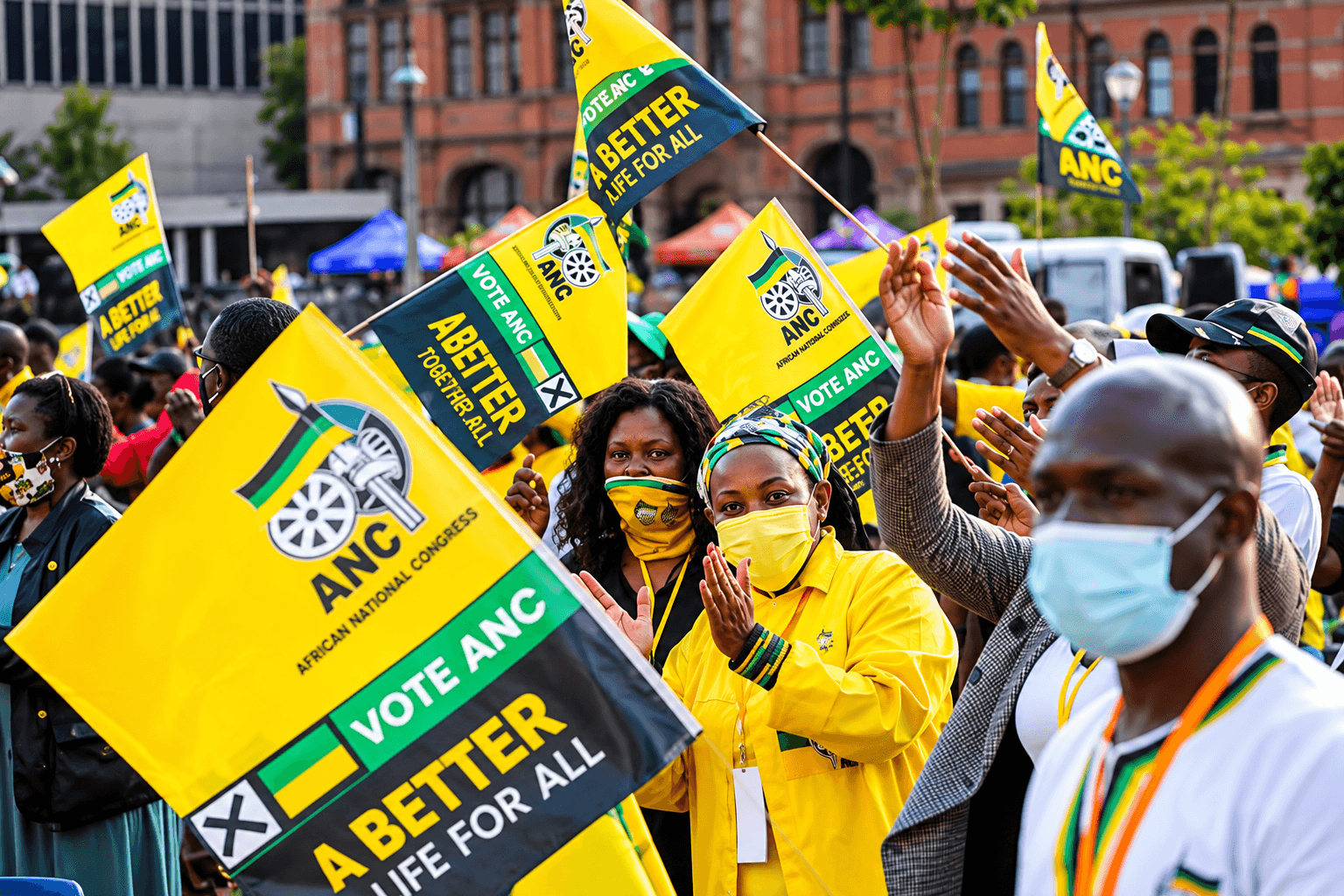
South Africa is witnessing a notable political shift as early results from the November 4 municipal elections highlight the ANC’s declining electoral support. The party, which led the country through the end of apartheid in 1994, is now facing growing competition after years of public frustration over corruption, unemployment and failing public services.
According to election figures reported on November 5, the ANC had secured around 32% of the national vote after more than 60% of ballots had been counted. The Democratic Alliance was polling at approximately 25%, while former president Jacob Zuma’s uMkhonto weSizwe (MK) Party had received around 8.5%. These figures remain provisional and are subject to change as counting continues.
The results underline the growing difficulties facing the ANC, which lost its parliamentary majority in the 2024 general election and was subsequently forced to form a Government of National Unity with other political parties.
The latest municipal contest could further reduce the party’s influence in major cities and make coalition arrangements increasingly important across the country.
ANC'S HISTORIC SUPPORT BASE COMES UNDER PRESSURE
The ANC’s declining support reflects growing dissatisfaction with its performance, particularly at the local government level. For decades, the party benefited from its historic role in ending apartheid and establishing democratic rule. However, that legacy is no longer enough to guarantee voter loyalty.
Many South Africans are increasingly demanding better governance, greater accountability and reliable access to basic services.
The ANC won approximately 46% of the vote in the 2021 municipal elections, falling below the 50% mark for the first time in a local government election since 1994. Its support declined further in the 2024 general election, when it secured just over 40% of the national vote.
The early 2026 figures suggest that the downward trend may be continuing. With the ANC polling at around 32% in the November 5 count, the party could be heading towards its weakest municipal election performance since the end of apartheid.
President Cyril Ramaphosa and the party's leadership now face mounting pressure to address concerns over corruption, poor municipal management and declining public confidence.
DA EMERGES AS THE ANC'S STRONGEST CHALLENGER
The Democratic Alliance has strengthened its position as the ANC’s main national rival in the provisional results. Its performance in major urban areas could give it greater influence over local administrations and strengthen its position ahead of the next general election.
The DA was polling at approximately 25% nationally in figures reported on November 5. Projections from South Africa’s Council for Scientific and Industrial Research also indicated that the party was performing strongly in several metropolitan areas.
Cape Town remains a key DA stronghold, while the party has also made progress in Johannesburg. Its campaign focused on improving municipal efficiency, maintaining infrastructure, tackling crime and ensuring more reliable public services.
However, winning votes is only part of the challenge. The party will also need to build workable coalitions and demonstrate that it can deliver improvements in municipalities where it does not have an outright majority.
MK PARTY AND OPPOSITION GROUPS CHANGE THE POLITICAL EQUATION
The growing influence of the MK Party has added another layer to South Africa’s changing political landscape. Led by former president Jacob Zuma, the party has attracted voters who previously supported the ANC, particularly in KwaZulu-Natal.
Provisional figures placed MK at approximately 8.6% nationally, while the Economic Freedom Fighters (EFF) were polling at around 6.1%. The Inkatha Freedom Party (IFP), ActionSA and several smaller parties are also competing for seats and influence in municipal councils.
KwaZulu-Natal has become a particularly important political battleground. The ANC is facing pressure from both MK and the IFP, raising questions about its ability to retain influence in a province that has traditionally played an important role in its electoral support.
With more parties gaining ground, local government is becoming increasingly fragmented. As a result, coalition negotiations are likely to play a much bigger role in determining who governs many municipalities.
JOHANNESBURG EMERGES AS A KEY ELECTION BATTLEGROUND
Johannesburg is among the most closely watched cities in the election. South Africa’s financial hub has struggled with infrastructure failures, water shortages, electricity interruptions and repeated political instability.
The DA, led in its campaign by veteran politician Helen Zille, sought to turn growing public frustration into electoral support. Early results showed the party leading in Johannesburg, although counting was still underway and the final balance of power in the city council remained uncertain.
ActionSA, the EFF and other parties could also play an important role in deciding which political group forms the next administration.
The outcome matters beyond party politics. Johannesburg needs a stable municipal government capable of addressing infrastructure maintenance, public transport, sanitation, financial management and the wider business environment.
Without effective leadership, ongoing political disagreements could make it even harder to resolve the city's long-standing problems.
UNEMPLOYMENT AND POOR PUBLIC SERVICES DRIVE VOTER FRUSTRATION
For many voters, everyday living conditions have become more important than political loyalties or historical affiliations.
Residents across several communities continue to raise concerns about unreliable water supplies, power cuts, damaged roads, overflowing rubbish, poor sanitation and inadequate municipal services.
Unemployment and crime have also featured prominently during the campaign. Reports from Johannesburg and other urban centres suggest that many voters are frustrated with deteriorating neighbourhood conditions and the inability of local authorities to address basic problems.
These concerns have gradually weakened public confidence in established political parties, particularly the ANC, which has governed South Africa for most of the democratic era.
For many residents, the election was an opportunity to demand accountability and better local leadership. The real challenge for the winning parties will be to turn their campaign promises into visible improvements in people's daily lives.
COALITION POLITICS COULD SHAPE SOUTH AFRICA'S NEXT POLITICAL PHASE
South Africa’s increasingly fragmented political landscape is making coalition negotiations central to the future of local government.
With no single party expected to secure outright control in several major metropolitan councils, smaller parties could hold the balance of power. Negotiations over mayoral positions, council leadership and policy priorities are likely to become increasingly complicated.
Reports indicate that parties will have two weeks after the official declaration of results to negotiate governing arrangements. Johannesburg and other major municipalities could face particularly challenging discussions.
Although the ANC and DA are both part of the national Government of National Unity, their political differences remain significant. Disagreements over economic policy, transformation and governance could make cooperation at the municipal level difficult.
There are also concerns that unstable coalitions could lead to repeated leadership changes, delayed budgets and stalled infrastructure projects. Ultimately, residents could bear the cost of political disagreements if essential services are disrupted.
TURNOUT AND FINAL RESULTS WILL HELP DETERMINE THE ANC'S FUTURE
Approximately 15.9 million of South Africa’s 29.2 million registered voters participated in the municipal elections, putting estimated turnout at 54.5%, compared with 46% in 2021.
The higher participation suggests that public interest in local politics remains strong, particularly as voters look for alternatives to the country's established political leadership.
An election results tracker updated on November 6 showed around 66% of voting districts counted. The ANC was polling at 31.7%, followed by the DA at 25.1% and the MK Party at 8.6%. These numbers are provisional and should not be treated as final certified results.
For the ANC, the immediate priority will be understanding why so many voters are turning away and deciding how to rebuild public confidence. Its response to local governance failures could play a major role in determining whether the party recovers or continues losing support ahead of the 2029 general election.
RISKS AND KEY ISSUES TO WATCH
Further decline in ANC support: A final result close to the current provisional figures could trigger stronger internal criticism and demands for major organisational changes.
Coalition instability: Fragmented municipal councils may struggle to agree on leadership, budgets and long-term development priorities.
DA's growing influence: Strong performances in major cities could strengthen the party's ambitions to become a more powerful national political force.
MK's expanding support: Further gains in KwaZulu-Natal could weaken the ANC's traditional electoral base.
Continued service delivery failures: Political disputes could delay improvements to water systems, electricity, sanitation and public transport.
Pressure on Ramaphosa: The results could intensify scrutiny of the president and the ANC leadership as the country moves towards the 2029 election.
WHAT TO WATCH NEXT
Final election results: Whether the ANC's national vote share remains close to the provisional 32% level once counting is complete.
Johannesburg coalition negotiations: Which parties can secure enough support to form a stable municipal administration.
KwaZulu-Natal's political balance: Whether MK and the IFP consolidate their influence at the ANC's expense.
The DA's next move: Whether the party can translate its electoral gains into effective local government.
ANC leadership response: Whether the party introduces organisational changes or a fresh strategy to regain public trust.
Preparations for 2029: Whether opposition parties use the municipal results to strengthen alliances and mount a stronger challenge to the ANC.
FACT CHECK METER
Editorial confidence: 96%
Confirmed details
South Africa held municipal elections on November 4, 2026.
Provisional figures reported on November 6 placed the ANC at 31.7% and the DA at 25.1%.
The MK Party was polling at approximately 8.6%, while the EFF stood at around 6.1%.
Estimated voter turnout was 54.5%, higher than the 46% recorded in the 2021 municipal elections.
Coalition negotiations are expected to influence the leadership of several municipalities.
Important distinctions
The figures are provisional and based on approximately 66% of voting districts counted. They are not final certified results.
A party's national vote share does not automatically determine control of individual municipal councils.
The ANC remains part of South Africa's national Government of National Unity, despite competing against its partners in local elections.
AWX VERDICT
South Africa’s municipal elections have delivered a serious warning to the ANC. Falling support, stronger opposition performances and the growing importance of coalition politics point to a political landscape that is becoming far more competitive.
The final results will reveal how much influence the ANC can retain and whether opposition parties can turn their electoral gains into stable and effective local governments.
The 2029 general election is still ahead, but the political pressure on the ruling party is already increasing.
The 96% figure represents AWX editorial confidence in the article's factual reporting. It is not a statistical probability or an official rating.
THE AWX BOTTOM LINE
South Africa's political landscape is changing as the ANC faces mounting pressure from opposition parties and voters who are increasingly frustrated with poor local governance.
The provisional election figures point to a significant loss of support for the ruling party, while the DA and MK Party are strengthening their positions in different parts of the country.
The results could accelerate South Africa's shift towards coalition-based government and intensify political competition ahead of 2029. However, winning elections and securing council seats will not, by themselves, solve the country's deep-rooted problems.
The real test for every political party will be its ability to improve public services, create employment opportunities, strengthen accountability and restore public trust. For the ANC, rebuilding its political credibility has become an urgent task.
ATTLAS NEWS | AWX WORLD NEWS
Real Stories. Lasting Impact.


Comments
No comments yet.