

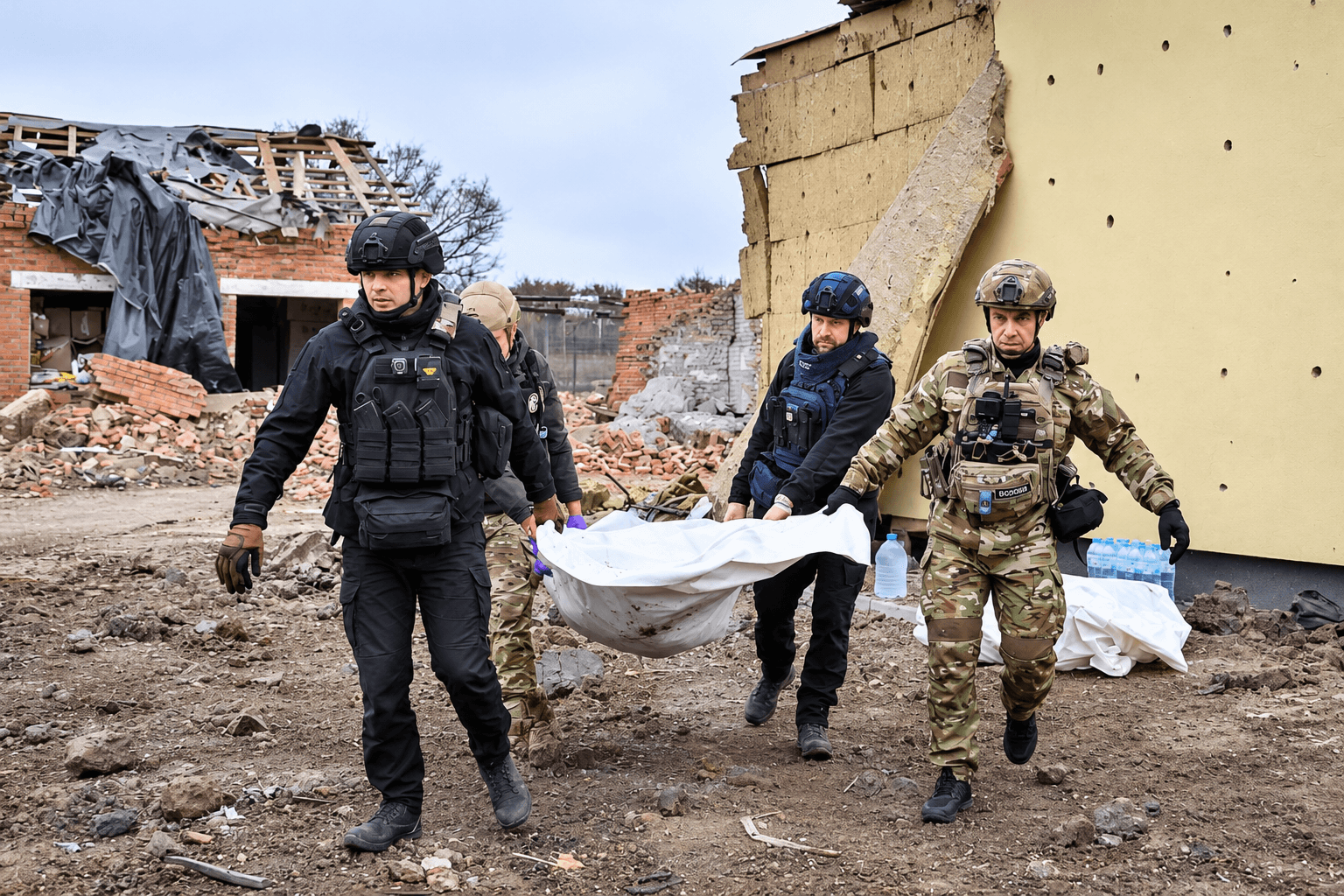
Ukraine's humanitarian crisis has taken another devastating turn after a Russian airstrike hit a school building being used as a humanitarian aid distribution centre in Komyshuvakha, in the southeastern Zaporizhzhia region. The November 2 attack struck while local residents were gathering to collect essential supplies. Civilians and emergency responders were among those killed.
According to Ukrainian officials cited by Reuters, the death toll had reached 40 by November 4, with another 59 people reported missing. The building served as both a shelter and a regular distribution point for humanitarian assistance.
The attack has renewed concerns about the protection of civilians and essential relief operations as Russia's full-scale invasion continues. Humanitarian organisations are facing increasingly difficult conditions, with aid warehouses, medical supplies and distribution centres all vulnerable to further strikes.
DEADLY STRIKE HITS HUMANITARIAN AID CENTRE
The attack took place in Komyshuvakha, around 17 kilometres from the nearest Russian positions, Reuters reported. Ukrainian President Volodymyr Zelensky said Russian forces initially struck the school building as residents arrived to collect humanitarian assistance. A second strike reportedly hit a nearby underground shelter where people had sought protection.
The United Nations said the November 2 attacks had killed at least 29 civilians at the aid distribution site. Subsequent strikes also claimed the lives of two rescuers and four police officers who had arrived to help. When the UN issued its statement on November 3, nearly 50 people were still reported missing.
Rescue teams faced additional difficulties as further attacks in the surrounding area disrupted search operations. Emergency workers had to continue their efforts in dangerous conditions while searching through the damaged building for survivors.
Russia's Defence Ministry said its forces had targeted Ukrainian military units in the area and claimed that servicemen were killed. Ukraine, however, maintained that the building was being used to provide humanitarian assistance and shelter civilians. The conflicting accounts have not yet been independently reconciled.
HUMANITARIAN WAREHOUSES ALSO UNDER THREAT
The danger facing aid operations extends well beyond distribution centres near the frontline. Humanitarian organisations have reported repeated attacks on warehouses containing medical equipment, hygiene products and other essential relief supplies.
On September 4, the World Health Organization (WHO) reported that three warehouses supporting humanitarian operations in Ukraine had been destroyed or damaged over a three-month period. One warehouse in the Kyiv region was destroyed on September 3, while an earlier strike on a WHO facility in Dnipro destroyed around half of the medical supplies and equipment stored there.
Those supplies were intended to support approximately 225,000 people living in frontline and hard-to-reach communities.
WHO also reported that at least 20 attacks had affected warehouses storing humanitarian supplies during 2026, including 15 verified attacks on facilities holding health-related supplies.
The repeated damage is forcing aid organisations to rethink how they store and distribute essential materials. In September, the UN humanitarian coordinator in Ukraine told Reuters that the organisation was considering moving some supplies underground to protect them from further attacks. Ten UN warehouses had reportedly been hit during the year, resulting in the loss of supplies worth millions of dollars.
RESCUE WORKERS AND AID PERSONNEL FACE GROWING RISKS
Delivering humanitarian assistance in Ukraine has become increasingly dangerous, not only for civilians but also for the people working to save lives.
The Komyshuvakha attack brought these risks into sharp focus. According to Ukrainian emergency services and UN reporting, two rescue workers and four police officers were killed in subsequent strikes after responding to the initial attack.
The European Commission's humanitarian department reported that the UN had recorded 168 incidents affecting humanitarian access across Ukraine between January and June 2026. Seven humanitarian workers were killed and another 19 injured during that period.
These figures highlight the difficult conditions facing organisations trying to reach communities affected by the war.
Aid agencies have been forced to change storage locations, strengthen security arrangements and look for alternative delivery routes. While these steps can help reduce risks, they also increase operating costs and slow down the delivery of assistance to people who urgently need it.
MEDICAL SUPPLIES AND CIVILIAN SERVICES UNDER PRESSURE
Damage to humanitarian infrastructure is creating problems that extend far beyond the immediate areas affected by attacks. Medical warehouses, in particular, play a critical role in supplying hospitals and clinics, especially in regions where healthcare facilities have already been damaged by fighting.
When these storage facilities are destroyed, the consequences can spread across entire communities. Hospitals may face delays in receiving medicines, medical equipment and other essential supplies, leaving patients with fewer treatment options.
WHO said the destroyed warehouse in Dnipro had contained medical supplies intended to support approximately 225,000 people. Its wider medical supply programme had reached an estimated three million people through more than 300 healthcare facilities across Ukraine during 2026.
The disruption also affects the delivery of hygiene kits, children's supplies and other basic necessities. For families living close to the frontline, even a short interruption in humanitarian assistance can make an already difficult situation worse.
INTERNATIONAL CONCERN OVER THE SAFETY OF HUMANITARIAN OPERATIONS
The United Nations has condemned the attack on the Komyshuvakha relief distribution site, expressing concern over the deaths of civilians and emergency responders. UN Humanitarian Coordinator Matthias Schmale described the incident as a flagrant attack and voiced concern for those killed, injured and still missing.
International humanitarian law requires all parties to a conflict to distinguish between civilians and combatants and to protect civilian infrastructure. Humanitarian workers and facilities are also entitled to protection when they meet the relevant legal requirements. Deliberate attacks against civilians or civilian objects may constitute serious violations of international humanitarian law.
The growing number of incidents affecting aid distribution and storage facilities has therefore become a major concern for international humanitarian organisations.
Beyond investigating individual attacks, agencies are calling for conditions that allow relief workers to reach vulnerable communities safely and deliver essential assistance without facing further danger.
RISKS AND KEY ISSUES TO WATCH
Further attacks on aid centres: Additional strikes on distribution points could interrupt food supplies and emergency assistance for communities near the frontline.
Rising casualties among humanitarian workers: Rescue personnel, medical teams and aid workers continue to face serious risks while operating in conflict-affected areas.
Medical supply shortages: Damage to warehouses could delay the delivery of medicines, medical equipment and other essential healthcare supplies.
Growing civilian displacement: Continued attacks around frontline settlements could force more families to abandon their homes and seek safety elsewhere.
Disrupted humanitarian access: Damaged roads, unsafe routes and ongoing military activity could make it harder for aid organisations to reach vulnerable communities.
International humanitarian law concerns: Attacks affecting civilian and humanitarian facilities could lead to further international condemnation and calls for independent investigations.
WHAT TO WATCH NEXT
Investigation into Komyshuvakha: Whether Ukrainian and international investigators establish more details about the attack and the circumstances surrounding the casualties.
Search and rescue operations: Whether emergency teams locate those still missing and complete the identification of victims.
Security of humanitarian warehouses: Whether the UN and WHO move more supplies into underground or otherwise protected storage facilities.
International response: Whether governments and humanitarian organisations increase pressure for stronger safeguards for aid workers and civilian infrastructure.
Peace negotiations: Whether the planned US-mediated Ukraine-Russia talks in Abu Dhabi on November 10–11 lead to progress on de-escalation and humanitarian arrangements.
FACT CHECK METER
Editorial confidence: 96%
Confirmed details
A Russian strike hit a school building being used as a humanitarian distribution centre in Komyshuvakha on November 2.
Reuters reported 40 deaths and 59 people missing as of November 4, citing Ukrainian officials.
The United Nations reported civilian and first-responder deaths at the site.
WHO reported that three humanitarian warehouses had been destroyed or damaged over a three-month period.
Important distinctions
Russia said it had targeted Ukrainian military units in the area, while Ukraine identified the site as a humanitarian distribution centre and civilian shelter.
Casualty figures have been attributed to Ukrainian authorities and UN reporting.
The reported attacks raise serious humanitarian and legal concerns, although responsibility and intent in individual incidents require further investigation.
AWX VERDICT
The attack on Komyshuvakha highlights the growing dangers facing humanitarian operations in Ukraine. Repeated strikes affecting aid distribution centres and medical warehouses are threatening the services that civilians depend on for food, healthcare and basic assistance.
Protecting humanitarian workers, civilians and essential relief supplies must remain an immediate priority as the conflict continues.
The percentage represents AWX editorial confidence in the article's factual reporting, not a statistical probability or official rating.
THE AWX BOTTOM LINE
The war in Ukraine is increasingly putting the very systems that vulnerable communities depend on at risk. The deadly attack on the Komyshuvakha humanitarian centre, alongside repeated damage to medical warehouses and aid supplies, has exposed just how dangerous it has become to deliver assistance in conflict-affected areas.
For families living near the frontline, these facilities are more than buildings or storage centres. They are often the only reliable source of food, medical supplies and emergency support. Losing them can mean delayed treatment, fewer essential supplies and even greater uncertainty for people already struggling to survive.
As diplomatic efforts continue, protecting humanitarian operations must be part of any meaningful attempt to reduce tensions. Without safer conditions for aid workers and reliable access to essential supplies, Ukraine's humanitarian crisis risks becoming even more severe.
ATTLAS NEWS | AWX WORLD NEWS
Real Stories. Lasting Impact.




Comments
No comments yet.