

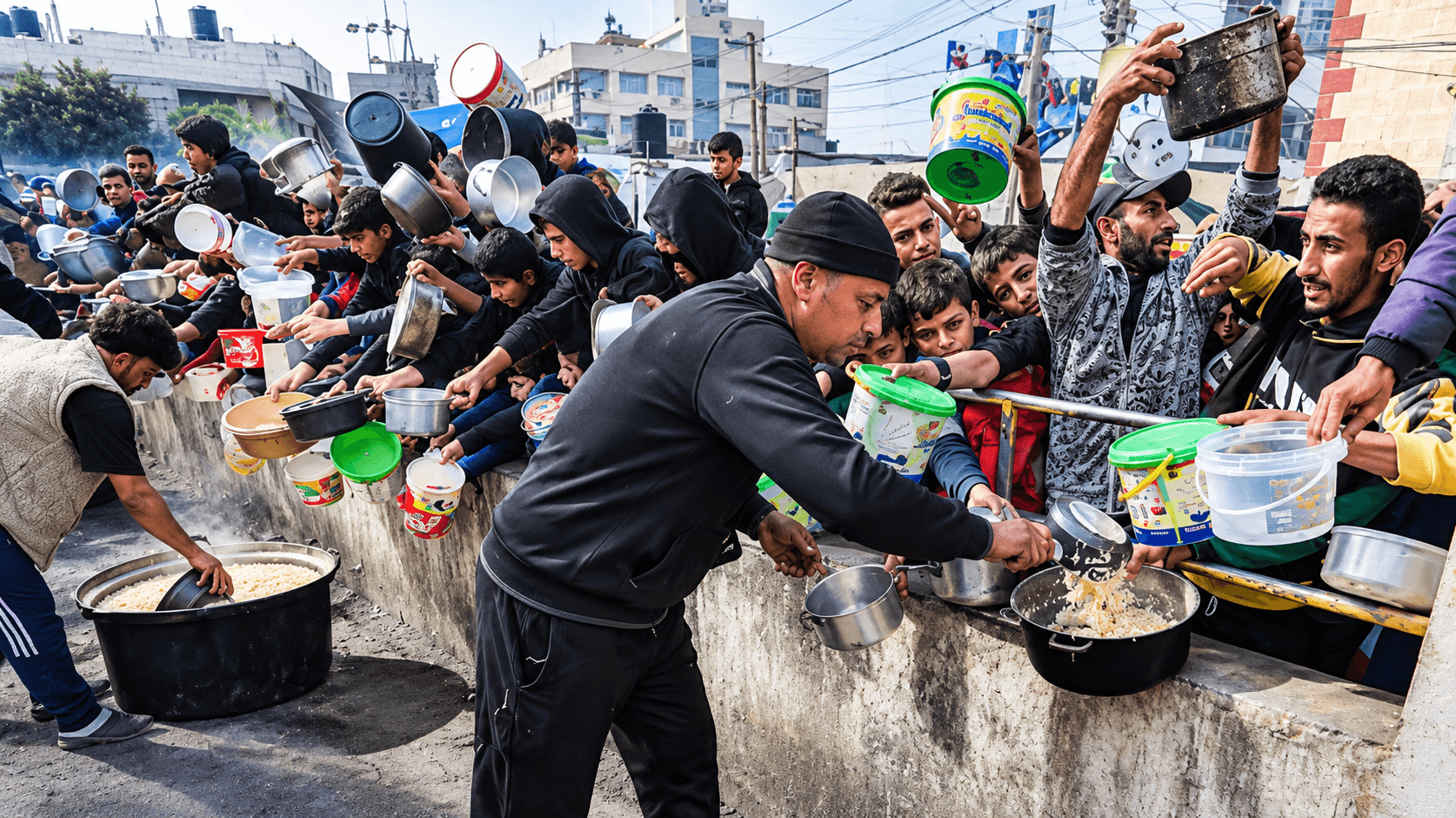
The humanitarian situation in Gaza remains deeply concerning as fresh Israeli military strikes continue to claim civilian lives, damage infrastructure and undermine hopes for a lasting ceasefire. Although the agreement was meant to create an opportunity for reconstruction and humanitarian recovery, continued attacks and unresolved political disagreements have made a return to normal life increasingly difficult.
On November 1, Israeli strikes killed at least eight Palestinians, including five police officers, in separate incidents in Gaza City and Khan Younis, according to medical sources and the Hamas-run interior ministry. At least four more Palestinians were reportedly killed in strikes across Khan Younis, Al-Mussadar and Gaza City the following day.
Israel's military said the operations targeted militants, while Hamas rejected accusations that it was rebuilding its weapons stockpile or violating the ceasefire.
The latest developments have renewed concerns about civilian safety, particularly for families living in temporary shelters and damaged buildings. More than two million people continue to face the consequences of the conflict, with large parts of Gaza still struggling to recover from years of destruction.
FRESH STRIKES PUT THE CEASEFIRE UNDER PRESSURE
The latest attacks highlight just how fragile the ceasefire remains. Israeli forces have continued military operations in several parts of Gaza, while disagreements over Hamas's disarmament, an Israeli troop withdrawal and future security arrangements have slowed efforts to reach a lasting settlement.
According to figures reported by Reuters on November 2, Gaza health officials said at least 1,580 Palestinians had been killed in Israeli attacks since the ceasefire came into effect in October 2025. Israel has also reported that four of its soldiers have died since the agreement began.
Despite the formal truce, these figures reflect the continuing human cost of the conflict.
Israel maintains that its military operations are aimed at militant groups and preventing further attacks. Hamas, however, denies violating the agreement and accuses Israel of weakening the ceasefire through continued military action.
DISPLACED FAMILIES FACE GROWING HUMANITARIAN RISKS
For Gaza's displaced residents, the danger does not end when the airstrikes stop. Thousands of families are still living in makeshift tents, damaged buildings and overcrowded displacement camps, often without dependable access to clean water, sanitation, electricity or healthcare.
A United Nations update on November 4 reported that gunfire had damaged several tents at a displacement site in northern Rafah. The incident reportedly caused injuries and forced a humanitarian organisation to suspend its work in the area. The organisation had been carrying out preparations to reduce flooding risks ahead of the rainy season.
The UN also reported small-arms fire near a UN-contracted facility in Deir al-Balah and close to a UN-organised convoy in Rafah. These incidents highlight the growing security challenges facing humanitarian workers and the people they are trying to assist.
With colder and wetter weather approaching, damaged shelters and poor drainage could make conditions even worse. Flooding, exposure to cold and the spread of disease are becoming serious concerns, particularly for children, older people and those with disabilities.
FOOD SHORTAGES AND HEALTHCARE NEEDS ADD TO THE CRISIS
Food security remains a major concern across Gaza. Humanitarian organisations have warned that the limited progress made in addressing malnutrition could quickly be lost if food and commercial supplies entering the territory are interrupted.
A UNICEF assessment published in October highlighted how vulnerable young children remain. It found that only around one in three children under the age of two was receiving a sufficiently varied diet. Chronic malnutrition also remains a concern among young children.
UNICEF has called for border crossings to remain open and for food and essential supplies to enter Gaza regularly to prevent further deterioration.
Access to medical treatment is another pressing issue. Gaza's Health Ministry has urged authorities to reopen the Rafah crossing so that seriously ill and injured Palestinians can travel abroad for treatment.
In a report published on October 29, Al Jazeera cited the ministry as saying that more than 21,000 patients and injured people needed medical treatment outside Gaza, including thousands requiring urgent attention.
Hospitals and medical teams are under immense pressure as they deal with conflict-related injuries, shortages of essential supplies and the growing healthcare needs of a population repeatedly forced to leave its homes.
INTERNATIONAL CALLS FOR CIVILIAN PROTECTION AND HUMANITARIAN ACCESS
International humanitarian organisations continue to call for stronger protection of civilians, medical facilities, aid workers and relief infrastructure. The United Nations has repeatedly stressed that civilian facilities and humanitarian vehicles must be protected from attacks and unnecessary risks.
In October, more than 100 humanitarian and civil society organisations issued a joint statement warning that the ceasefire had failed to provide adequate protection or create the conditions needed for Gaza's recovery.
The organisations pointed to continuing casualties, widespread shelter shortages and restrictions affecting humanitarian assistance and reconstruction.
Diplomatic efforts are also facing major obstacles. Negotiators have yet to reach agreement on several critical issues, including Hamas's disarmament, the withdrawal of Israeli forces and the arrangements needed for Gaza's future administration and reconstruction.
Without progress on these questions, humanitarian assistance alone may not be enough to prevent the situation from worsening.
RISKS AND KEY ISSUES TO WATCH
Further civilian casualties: Continued airstrikes and exchanges of fire could lead to more deaths and injuries, especially in densely populated areas.
Growing pressure on the ceasefire: Disagreements over security arrangements, disarmament and troop withdrawals could further weaken the agreement.
Winter shelter emergency: Damaged tents, inadequate drainage and a shortage of shelter materials could leave displaced families exposed to flooding, cold weather and disease.
Food and nutrition shortages: Any disruption to humanitarian and commercial supplies could reverse the fragile progress made in tackling child malnutrition.
Limited healthcare access: Delays in medical evacuations could leave seriously ill and injured Palestinians without the treatment they urgently need.
Safety of humanitarian workers: Continued insecurity around aid facilities and convoys could interrupt relief operations and make it harder to reach vulnerable communities.
WHAT TO WATCH NEXT
Ceasefire negotiations: Whether international mediators can bring the parties back to the negotiating table and secure progress on the next stage of the agreement.
Israeli military operations: Whether strikes across Gaza continue, particularly near displacement sites and civilian infrastructure.
Humanitarian crossings: Whether sufficient quantities of food, medicine, fuel and shelter materials can enter Gaza without major interruptions.
Medical evacuations through Rafah: Whether arrangements improve to allow patients requiring specialised treatment to leave the territory.
New UN humanitarian assessments: Further updates on civilian casualties, displacement, shelter conditions and the delivery of essential relief supplies.
FACT CHECK METER
Editorial confidence: 94%
Strongly supported by recent reporting and humanitarian updates.
Confirmed details
Israeli strikes reportedly killed at least eight Palestinians on November 1 and at least four on November 2, according to medical sources cited by Reuters.
The UN reported damage to tents at a displacement site and security incidents affecting humanitarian operations on November 4.
Humanitarian organisations continue to raise concerns about shelter conditions, food security and access to medical treatment.
Important distinctions
Israel says its strikes are directed at militants, while Hamas disputes the allegations and accuses Israel of undermining the ceasefire.
Casualty figures are attributed to Gaza health officials and have not been independently verified in every reported incident.
The ceasefire remains a formal framework, but continued violence and stalled negotiations highlight how far the situation remains from lasting stability.
AWX VERDICT
Gaza's humanitarian emergency remains severe, with continued military operations, unsafe living conditions and limited access to essential services putting civilians at further risk.
A lasting ceasefire, reliable humanitarian access and meaningful progress on reconstruction are urgently needed. Without these steps, the situation could become even more difficult for the millions of people struggling to survive the consequences of the conflict.
The 94% figure represents AWX's editorial confidence in the factual reporting presented in this article. It is not a statistical probability or an official rating.
THE AWX BOTTOM LINE
Gaza's humanitarian crisis is far from over. Despite the ceasefire agreement, fresh Israeli strikes and continuing insecurity are putting civilian lives at risk. Meanwhile, displaced families are struggling to find safe shelter, secure enough food and access essential medical treatment.
The approaching winter makes an already difficult situation even more urgent. Protecting civilians, ensuring uninterrupted humanitarian assistance and creating the conditions for reconstruction must remain immediate priorities.
Without meaningful progress towards a lasting political settlement, Gaza's humanitarian suffering is likely to continue.
ATTLAS NEWS | AWX WORLD NEWS
Real Stories. Lasting Impact.


Comments
No comments yet.