

India is moving ahead with plans to modernise its immigration and border management systems, placing greater emphasis on national security, digital services and easier access to government facilities for foreign nationals.
One of the key developments is the expansion of the Foreigners Regional Registration Office (FRRO) network. Union Home Minister Amit Shah has set a target of establishing FRRO offices in every state capital by 2027. The network has already grown to 20 offices, with further expansion planned.
The Ministry of Home Affairs announced the latest developments on 2 November 2026, highlighting the need to improve immigration-related services for foreign nationals visiting India for tourism, medical treatment, education and other purposes.
The broader strategy combines stronger immigration monitoring with better coordination between central and state authorities, expanded digital services and improved border surveillance.
The government's aim is to make the system more accessible for people following immigration rules while giving authorities better tools to deal with illegal entry, visa violations and other security concerns.
FRRO NETWORK TO EXPAND ACROSS ALL STATE CAPITALS BY 2027
Expanding the FRRO network is a central part of the government's immigration reform plans.
Five new offices have been established in state capitals since 2025. Jaipur, Chandigarh and Guwahati received offices in 2025, followed by Aizawl in Mizoram and Amravati in Andhra Pradesh in 2026.
The Centre has also notified three additional offices in Kohima, Agartala and Bhubaneswar. These locations were previously covered by FRRO offices in Kolkata or Hyderabad.
With these additions, India now has 20 FRRO offices. The government is working towards extending the network to nine remaining states:
Bihar
Goa
Himachal Pradesh
Jharkhand
Madhya Pradesh
Uttarakhand
Arunachal Pradesh
Manipur
Meghalaya
The expansion is expected to reduce the need for foreign nationals to travel long distances for immigration-related assistance. It should also make it easier for state administrations to coordinate with central immigration authorities.
35 ONLINE SERVICES MAKE IMMIGRATION PROCEDURES EASIER
The government is also relying on digital services to simplify immigration procedures and reduce paperwork.
Through the e-FRRO platform, eligible foreign nationals can currently access 35 online services. These include:
Registration after arriving in India.
Visa extensions and conversions.
Changes to passport and residential details.
Other eligible immigration applications and permissions.
The online system allows users to complete several procedures without repeatedly visiting government offices.
FRRO offices also deal with important matters such as Registration Certificates and Residential Permits, permissions to visit protected and restricted areas, and exit permits for individuals whose visas have expired or who have overstayed.
As international travel to India continues to grow, the government hopes that combining online services with a wider network of physical offices will make immigration administration more efficient.
IMMIGRATION AND FOREIGNERS ACT, 2025 SETS THE LEGAL FRAMEWORK
The reforms are also supported by the Immigration and Foreigners Act, 2025, which brought together four earlier laws dealing with the entry, stay, movement and departure of foreign nationals.
The legislation provides a common legal framework for managing immigration and clarifies the responsibilities of the authorities involved.
The Bureau of Immigration oversees the country's main immigration functions, while authorised FRRO officers help monitor and manage the lawful stay of foreign nationals.
The framework also provides the basis for addressing cases involving visa violations, overstays and other breaches of immigration requirements.
By expanding the FRRO network and improving coordination with state administrations, the government wants immigration rules to be implemented more consistently across the country.
SMART BORDER PROJECT AIMS TO IMPROVE SURVEILLANCE
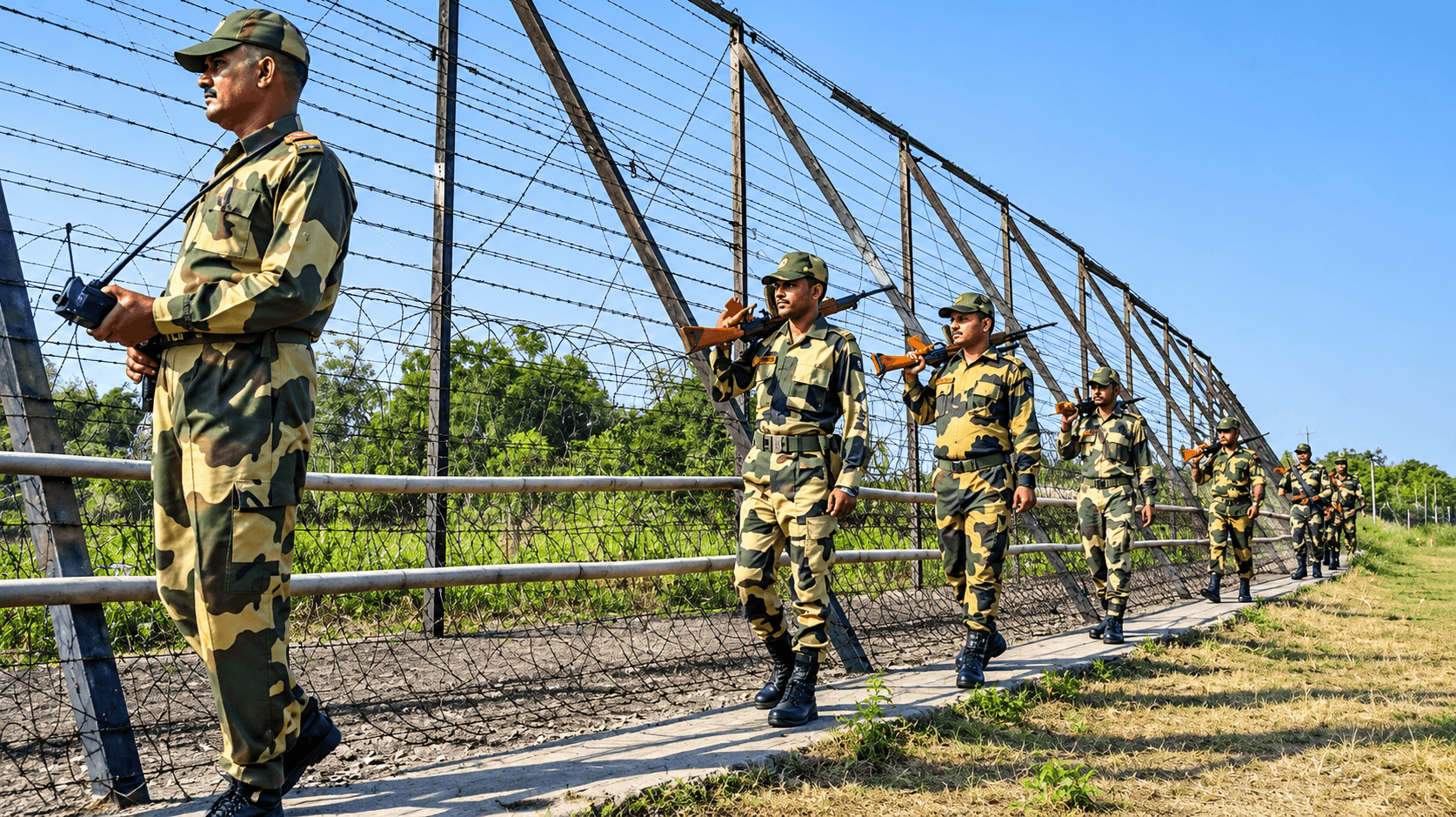
The government's plans go beyond immigration offices. It is also looking at ways to modernise surveillance along India's international borders.
In May 2026, Amit Shah outlined a proposed Smart Border Project aimed at strengthening security along the borders with Pakistan and Bangladesh.
The initiative is expected to make greater use of modern surveillance and monitoring technologies, including:
Unmanned aerial vehicles and drones.
Advanced radar systems.
Modern surveillance cameras.
Digital monitoring and information-sharing platforms.
Better coordination between border forces, intelligence agencies and local administrations.
The idea is to move towards a more connected security system rather than relying entirely on conventional border patrols. Such a network could help authorities identify infiltration routes and respond more quickly to suspicious cross-border activity.
The government has also raised concerns about narcotics trafficking, weapons smuggling, counterfeit currency, drone-related threats and organised criminal networks.
However, the Smart Border Project remains a proposed modernisation initiative, with implementation expected to take place in phases.
AIRPORT IMMIGRATION FACILITIES TO RECEIVE AN UPGRADE
Improving immigration procedures at international airports is another part of the government's wider strategy.
During a review meeting in July 2026, Amit Shah and Civil Aviation Minister Ram Mohan Naidu discussed ways to improve airport security arrangements and streamline immigration procedures.
Officials were directed to establish authorised immigration checkpoints at Agartala and Jewar airports at the earliest.
The government is also looking to expand awareness and enrolment under the Fast Track Immigration–Trusted Traveller Programme (FTI-TTP). The programme is designed to speed up immigration clearance for eligible international passengers.
One proposal involves working with airlines to share information about the programme with passengers through WhatsApp messages when they book international tickets.
Authorities have also discussed improving coordination between airline check-in counters, security screening areas and immigration facilities to reduce unnecessary delays.
The overall objective is to make airport journeys smoother while maintaining proper identity checks and security procedures.
BORDER DISTRICTS AND LOCAL AUTHORITIES TO PLAY A GREATER ROLE
India's border security strategy increasingly depends on cooperation between central security agencies, state governments, district administrations and local communities.
At the Land Border Districts' Superintendents of Police Conference in July 2026, Shah highlighted the importance of bringing these groups together through a coordinated security framework.
The government has described this approach as a quadrangular security grid, designed to improve information sharing and help authorities identify potential threats at the local level.
The strategy also recognises the importance of developing communities in border areas. Better infrastructure, economic opportunities and improved connectivity are expected to encourage local participation in national development.
Separately, the Ministry of Home Affairs has highlighted plans to fence the 1,610-kilometre India–Myanmar border, backed by a proposed investment of ₹31,000 crore.
These efforts reflect a wider approach that links border surveillance with infrastructure development, local intelligence and immigration enforcement.
INDIA SEEKS TO BALANCE NATIONAL SECURITY WITH INTERNATIONAL ACCESS
India's immigration reforms come at a time when the country is working to attract more international tourists, students, medical visitors and business travellers.
A wider FRRO network could make it easier for foreign nationals to complete registration formalities, seek visa assistance and obtain the necessary permissions during their stay.
At the same time, improved monitoring and coordination could help authorities identify visa violations, overstays and other immigration-related issues.
Finding the right balance will be important. Stronger enforcement should not create unnecessary difficulties for people visiting India legally.
An efficient and accessible immigration system will also support India's ambitions in tourism, international education, investment and global business engagement.
RISKS AND KEY ISSUES TO WATCH
Implementation deadlines: Establishing FRRO offices in every state capital by 2027 will require sufficient staff, infrastructure and coordination.
Digital security: The e-FRRO platform must protect sensitive passport, identity and residential information.
Consistent enforcement: Immigration rules need to be applied fairly and uniformly across different states.
Border technology: The proposed Smart Border Project will depend on reliable surveillance equipment, regular maintenance and effective information sharing.
Airport efficiency: New facilities must reduce passenger delays without compromising security checks.
Centre-state coordination: Cooperation between central agencies and state administrations will be essential.
Legal safeguards: Immigration enforcement must follow applicable laws and respect due process.
WHAT TO WATCH NEXT
FRRO expansion: Whether the government meets its 2027 target of establishing offices in the remaining nine states.
Digital immigration: Further improvements to the existing 35 e-FRRO services.
Smart Border rollout: Updates on the deployment of surveillance technology along the Pakistan and Bangladesh borders.
Airport immigration: Progress towards operationalising authorised checkpoints at Agartala and Jewar airports.
FTI-TTP expansion: Efforts to increase registrations among eligible international travellers.
Myanmar border fencing: Progress on the proposed 1,610-kilometre border project.
Immigration enforcement: How the Immigration and Foreigners Act, 2025 is implemented through the expanded FRRO network.
FACT CHECK METER
Editorial confidence: 99%
Strongly supported — Ministry of Home Affairs and PIB announcements
Confirmed details
India's FRRO network has expanded to 20 offices.
The government has set a target of establishing FRRO offices in every state capital by 2027.
Three additional offices have been notified in Kohima, Agartala and Bhubaneswar.
The e-FRRO platform offers 35 online services.
The Immigration and Foreigners Act, 2025 provides a consolidated legal framework.
The government has announced plans for Smart Border modernisation and airport immigration improvements.
Important distinctions
The 2027 FRRO expansion is a government target, not a completed nationwide rollout.
The Smart Border Project is a proposed modernisation programme.
The 35 e-FRRO services are already available and should not be described as entirely new.
Immigration administration and physical border surveillance are connected policy areas, but they are separate operations.
AWX VERDICT
India's immigration reforms mark an important effort to strengthen administrative capacity, expand digital services and improve coordination across the country's security network.
The wider FRRO presence could make immigration procedures more accessible, while improved surveillance and information sharing could help authorities respond more effectively to security concerns.
However, the programme's success will depend on timely implementation, reliable technology and consistent enforcement of immigration laws. Maintaining a balance between national security and the rights of legitimate visitors will be equally important.
The percentage represents AWX editorial confidence in the article's factual reporting, not a statistical probability or official rating.
THE AWX BOTTOM LINE
India's latest immigration and border security plans point towards a more technology-driven and coordinated approach to managing the country's borders and foreign national registrations.
The expansion of FRRO offices, 35 existing online immigration services, proposed Smart Border Project and improvements to airport facilities are all part of this broader effort.
For the Modi government, the task ahead is clear: strengthen national security without making legitimate international travel unnecessarily complicated. Progress towards the 2027 FRRO expansion target will be an important test of how effectively these reforms are delivered.
ATTLAS NEWS | AWX WORLD NEWS
Real Stories. Lasting Impact.
Comments
No comments yet.