

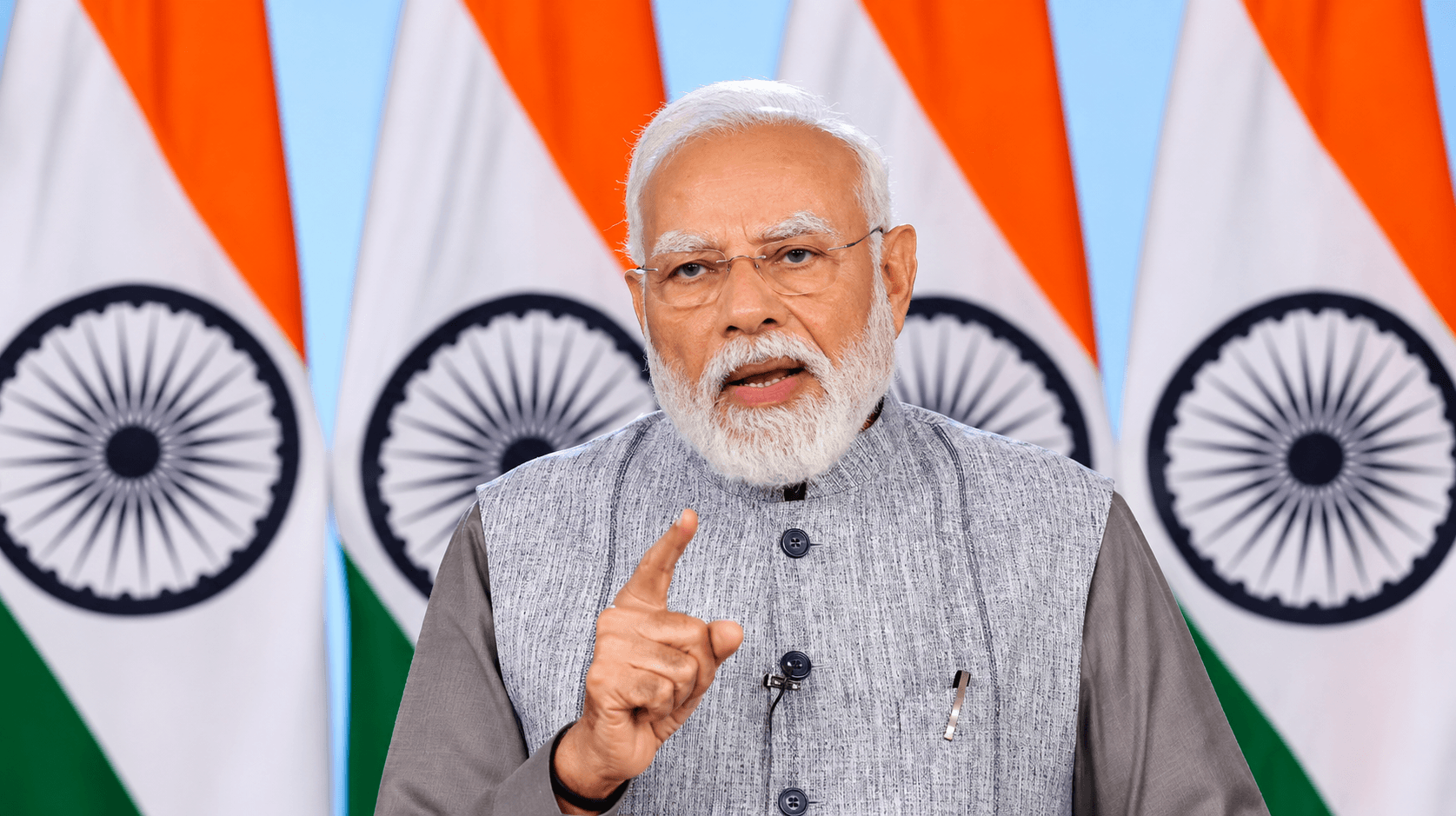
Pune's public transport network is set for a major upgrade as the city moves ahead with an ambitious Metro expansion programme. Prime Minister Narendra Modi inaugurated Metro Line 3 and launched the next phase of development, with projects worth approximately ₹21,800 crore.
The inauguration ceremony was held virtually on 3 November 2026, while passenger services on the new Hinjewadi–Shivajinagar corridor began on 4 November. Built at an estimated cost of ₹8,313 crore, the Pink Line is expected to make daily travel easier between Pune's major IT hub and central parts of the city.
During the same programme, Modi laid the foundation stone for four additional corridors under Pune Metro Phase II, involving an estimated investment of ₹13,500 crore.
The expansion is part of a broader effort to ease traffic congestion, reduce dependence on private vehicles and provide better transport connections across Pune's rapidly growing metropolitan region.
PINK LINE BRINGS HINJEWADI CLOSER TO CENTRAL PUNE
The newly inaugurated Metro Line 3 is an important addition to Pune's public transport network. Stretching approximately 23 kilometres, the elevated corridor connects Maan in Hinjewadi with the District Court Metro station at Shivajinagar.
The line has 23 stations and is designed to provide a direct public transport link to one of the city's biggest employment centres.
Hinjewadi is home to numerous technology companies, IT parks and business centres. Thousands of employees travel to the area every day, with many facing long delays because of heavy traffic, particularly during peak hours.
The new Metro service is expected to offer commuters a more convenient alternative to road travel. It could also reduce pressure on busy routes and improve connections between workplaces and residential neighbourhoods.
Passenger services initially began at 17 stations. The remaining six stations are expected to become operational in phases by January 2027, according to the announced rollout plan.
FOUR NEW CORRIDORS SET TO EXPAND PUNE'S METRO NETWORK
Pune Metro Phase II is expected to add approximately 44.39 kilometres to the existing network through four proposed corridors. The expansion will connect several important residential, commercial and employment centres.
The planned corridors include:
Line 2A: Vanaz to Chandani Chowk.
Line 2B: Ramwadi to Vitthalwadi.
Line 4: Kharadi to Khadakwasla.
Line 4A: Nal Stop to Manik Baug.
The new routes are expected to improve access to areas such as Kharadi, Magarpatta, Hadapsar, Swargate, Warje and Nanded City.
They will also provide connections with existing Metro services and selected intercity bus facilities, making it easier for passengers to travel between different parts of Pune.
The expansion is particularly important for the city's eastern and western growth corridors, where rising residential development and commercial activity have increased demand for reliable public transport.
₹21,800-CRORE INVESTMENT TO SUPPORT PUNE'S GROWTH
The combined infrastructure programme represents an estimated investment of ₹21,800 crore, covering the newly inaugurated Pink Line and the proposed Phase II corridors.
Metro Line 3 accounts for approximately ₹8,313 crore, while the four additional corridors are estimated to cost around ₹13,500 crore.
Beyond improving transportation, the investment is expected to generate employment during construction and support businesses across the infrastructure supply chain. Engineering firms, contractors, equipment manufacturers and other service providers could benefit as the projects move forward.
Modi highlighted the importance of modern public transport in supporting economic development. Better connectivity and shorter commuting times, he noted, can improve productivity and make growing cities more efficient.
As Pune continues to expand, connecting residential neighbourhoods with workplaces, educational institutions and commercial centres will remain an important infrastructure priority.
WOMEN-LED OPERATIONS AND SOLAR POWER IN FOCUS
Pune Metro Line 3 also stands out for its focus on inclusive employment and environmental sustainability.
One of its notable features is the plan to have women train operators manage services across the entire Pink Line. The initiative is expected to create greater opportunities for women in the public transportation sector, particularly in technical and operational roles.
The corridor is also designed to meet approximately 30% of its electricity requirements through solar power. The move is intended to reduce reliance on conventional energy sources and make Metro operations more environmentally sustainable.
Together, these initiatives reflect an effort to make infrastructure development more inclusive while keeping energy efficiency and environmental concerns in focus.
MODI HIGHLIGHTS INDIA'S RAPIDLY EXPANDING METRO NETWORK
During the inauguration programme, Modi pointed to the significant growth of India's Metro network over the past decade.
Figures cited during his address showed that the country's operational Metro network has expanded from approximately 248 kilometres in 2014 to around 1,200 kilometres in 2026.
The number of cities with Metro services has also increased from five to 26, while more than one crore passengers now use Metro systems across the country every day.
Highlighting Maharashtra's infrastructure development, Modi said that around 200 kilometres of Metro lines are operational in the state, with more than 680 kilometres currently under construction.
He described public transportation as an important driver of urban development, economic activity and improved living standards.
PUNE'S ECONOMY SET TO BENEFIT FROM BETTER CONNECTIVITY
Pune has grown into one of India's leading centres for information technology, automobile manufacturing, pharmaceuticals, education and start-ups.
However, this rapid growth has also placed considerable pressure on the city's roads and existing transport systems. Traffic congestion and lengthy daily commutes continue to affect residents, employees and businesses.
The expanding Metro network is expected to improve connections between industrial areas, technology parks, commercial districts and residential neighbourhoods.
Better transport links could also benefit local businesses by making workplaces more accessible to employees, customers and suppliers.
However, the real impact will depend on how effectively the new corridors connect with existing Metro lines, bus services and other forms of public transport.
RISKS AND KEY ISSUES TO WATCH
Despite the scale of the investment, several factors will determine whether the expansion delivers its expected benefits.
Project execution: Completing all four Phase II corridors on schedule will be essential to improving connectivity.
Passenger access: The remaining six stations on Line 3 need to open according to the announced timeline.
Last-mile connectivity: Convenient connections between Metro stations, IT parks, residential areas and bus services will be crucial.
Ridership growth: The new services must attract commuters who currently rely on private vehicles.
Financial management: Keeping the ₹21,800-crore programme within approved budgets will remain important.
Environmental performance: The planned solar contribution and reduced dependence on road transport should translate into measurable environmental benefits.
WHAT TO WATCH NEXT
Pink Line operations: Passenger numbers, service frequency and commuter response following the November 4 launch.
Remaining stations: The phased opening of the six outstanding stations, expected by January 2027.
Phase II construction: Progress on the proposed Lines 2A, 2B, 4 and 4A.
Funding and approvals: Financing arrangements and implementation progress for the new corridors.
Last-mile integration: Better connections with buses and other public transport services.
Urban development: The impact of improved Metro access on Pune's IT, commercial and residential growth.
FACT CHECK METER
Editorial confidence: 99%
Strongly supported by government announcements and published project details.
Confirmed details
The Pink Line was inaugurated on 3 November 2026.
Passenger services began on 4 November.
Metro Line 3 covers approximately 23 kilometres and includes 23 stations.
Initial passenger operations began at 17 stations.
Four additional corridors were announced under Phase II.
The combined infrastructure programme involves an estimated ₹21,800-crore investment.
Important distinctions
The ₹13,500-crore Phase II expansion is at the foundation-stone stage and is not yet operational.
The remaining six Line 3 stations are scheduled to open in phases by January 2027.
The 30% solar-energy contribution is a project target, not a confirmed operational achievement.
AWX VERDICT
Pune Metro's latest expansion marks a significant step in Maharashtra's urban infrastructure development. The Pink Line brings a much-needed public transport connection to Hinjewadi's busy IT hub, while the proposed Phase II corridors could improve access across a much wider part of the metropolitan region.
However, the success of the programme will depend on timely construction, effective integration with existing transport services and the ability to attract more daily commuters.
THE AWX BOTTOM LINE
Prime Minister Narendra Modi's Pune Metro expansion push represents a major investment in the city's future. The launch of Line 3 is expected to make travel to Hinjewadi more convenient, while the four proposed Phase II corridors promise better connectivity across Pune's residential and commercial centres.
With approximately ₹21,800 crore committed to the programme, the expansion could support employment, strengthen local businesses and improve urban mobility.
Ultimately, its success will be measured by what matters most to residents: shorter journeys, easier connections and a reliable public transport system.
ATTLAS NEWS | AWX WORLD NEWS
Real Stories. Lasting Impact.
Comments
No comments yet.